
Sign up to save your podcasts
Or

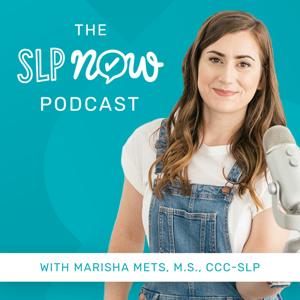


Show Notes: slpnow.com/274
Planning for every student or every group can eat up your whole week. In this episode, I walk through the caseload segmentation strategy. You split your caseload into a few segments, and each segment gets one unit. You plan it once and use it with every group in that segment for the whole month.
I share what this looks like for a preschool through 5th grade caseload and for a 6th through 12th grade caseload. We also talk about how to keep your segments flexible and why using the same text across groups makes your clinical thinking sharper.
Show Notes: slpnow.com/273
Therapy planning can take over nights and weekends when every session starts from scratch. In this episode, Marisha explains how large caseloads, session by session planning, and missing systems can lead to inconsistent sessions, decision fatigue, and reactive therapy.
She shares a better approach: plan by units that cover a full month. For most SLPs, three to four units can cover an entire caseload, while a streamlined data system and the right teaching tools make it easier to individualize instruction and bring your clinical magic into the mix.
Sign up for a free trial of SLP Now at slpnow.com/pod!
Show Notes: slpnow.com/272
How do I make literacy-based therapy work with expository text for older students? In this episode, I walk through the simple swaps I make to keep the framework relevant for upper elementary and secondary students.
I share how I adapt the five steps of Dr. Ukrainetz's framework, and how I use structure-matched graphic organizers to help students organize what they read. We also talk about repurposing the text through newscasts, debates, and other age-appropriate activities, plus how clinical judgment helps us choose the best fit for each group.
Sign up for a free trial of SLP Now at slpnow.com/pod!
Show Notes: slpnow.com/271
In this episode, I break down how I use one book or article to target every goal in a mixed group. Every activity in a literacy-based therapy framework is language-rich, so I do not need a different activity for every student. One activity can work for everyone.
I walk through a real example of using WH question cards to target articulation, past tense verbs, and categories in the same session. I also share how I choose texts for different age bands so therapy planning feels simpler and more sustainable.
Sign up for a free trial of SLP Now at slpnow.com/pod!
Show Notes: slpnow.com/270
What does literacy-based therapy actually look like in a real session? In this episode, I walk through Dr. Ukrainetz's five-step framework and share how I use it across about a month of therapy. We cover Pre-Story Knowledge Activation, Shared Reading, Post-Story Comprehension, Focused Skill Activities, and the Parallel Story.
I also share a real example from my work with sixth graders and explain why background knowledge can make or break comprehension. If you want a simple, practical way to plan mixed groups, this framework can help you work smarter, not harder.
Sign up for a free trial of SLP Now at slpnow.com/pod!
Show Notes: slpnow.com/269
In this episode, I break down what literacy-based therapy actually is. I share how I use one text, like a picture book, article, or reading passage, to anchor a full unit of therapy. That gives students meaningful, language-rich practice instead of isolated drills.
I also talk about why this approach works. We look at Dr. Ukrainetz's framework, repeated exposure, background knowledge, and one study showing stronger gains in comprehension and story retell with contextualized intervention. I also share how this helped me plan for a triple-digit caseload while still individualizing sessions.
Resources mentioned:
Sign up for a free trial of SLP Now at slpnow.com/pod
Show Notes: slpnow.com/268
When a session goes sideways, I do not assume I did something wrong. In this episode, I walk through how I use my five-step session structure, Check-in, Assess, Teach, Practice, and Wrap Up, as a flexible guide and a reflection tool.
I share how to spot where a session got stuck, what to adjust next time, and why backtracking is a normal part of clinical decision-making. We also talk about using documentation to remember what worked, so we can keep working smarter, not harder.
Resources:
Listen in: slpnow.com/pod
Show Notes: slpnow.com/267
In this episode, I break down why I collect probe data at the start of the session, not the end. A quick, clean baseline helps me see exactly where each student is, how much support they need, and how to use our time wisely.
I also share how I use goal cards to keep students engaged while I gather probes, plus how this routine makes planning, data collection, billing, progress notes, and IEPs so much easier. Working smarter, not harder.
Resources:
Soft CTA: slpnow.com/pod
Show Notes: slpnow.com/266
In this episode, I walk through the 5-step session framework I use to plan speech therapy that is simple, flexible, and easy to adapt for any group. We talk about Check-in, Assess, Teach, Practice, and Wrap Up, plus why it does not have to be perfectly linear.
I also share how quick probes, goal cards, and a simple wrap-up routine help me make better clinical decisions in the moment, collect solid data, and support students based on what they need that day.
Resources mentioned:
slpnow.com/pod
Show Notes: slpnow.com/265
If you feel like you're reinventing the wheel every session, this episode is for you. I'm sharing why that happens, what it costs us, and the simple fix that made a huge difference for me.
A lot of the stress comes from not having a repeatable routine. When we're making a million decisions on the spot, sessions feel harder than they need to. In this episode, I give a sneak peek at my five-step framework: Check-in, Assess, Teach, Practice, and Wrap Up. It works for any group, any grade, any goal.
From the publisher's feed

1,854 Listeners

158 Listeners
7,035 Listeners

10,460 Listeners
2,090 Listeners

6,690 Listeners

14,912 Listeners

1,160 Listeners

173 Listeners

3,138 Listeners
4,759 Listeners

109 Listeners

41,362 Listeners

18,923 Listeners

5,530 Listeners