
Sign up to save your podcasts
Or

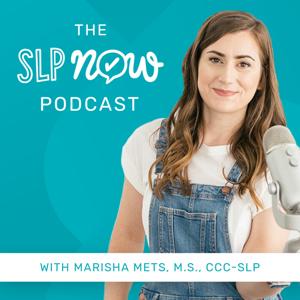


Sequencing goals are common in IEPs, but do they actually lead to meaningful outcomes? In this episode, I share why I no longer write traditional sequencing goals and what I do instead to support generalization, comprehension, and real-world language use. We’ll look at how isolated sequencing tasks fall short and how embedding sequencing within narrative-based therapy can better support students’ communication skills.
In this episode, you’ll learn:
Listen in to rethink how you target sequencing and walk away with ideas you can apply in therapy right away.
Every January, thousands of SLPs come together for the SLP Summit, and this year’s lineup is packed with fresh insights and practical strategies you can use right away. In this episode, I’m sharing what to expect, how to access two on-demand courses immediately, and why the live sessions (January 12–14) are truly worth tuning into. Whether you're craving evidence-based ideas or simply want to feel inspired again, this Summit has something for you.
Sign up at slpsummit.com!
Show Notes: slpnow.com/242
Want to access the free materials mentioned in the podcast? Go to slpnow.com/pod!
In this episode, we break down six evidence-based strategies you can use to teach summarizing with clarity and confidence. From explicit instruction to picture-supported scaffolds, you’ll get practical tools you can use in your very next session.
In this episode, you’ll learn:
✏️ How to explicitly define summaries, main ideas, and key details
✏️ Ways to use visuals and graphic organizers to boost comprehensio
✏️ Why modeling metalinguistic thinking accelerates learning
✏️ How sentence frames and text structures support generalization
Show Notes: slpnow.com/241
Want to access the free materials mentioned in the podcast? Go to slpnow.com/pod!
Did you know that just a handful of prefixes and suffixes account for most derivational words students encounter? In this episode, we break down simple, effective strategies for teaching morphology in speech therapy — so you can help students become confident “word detectives” without adding more to your plate.
In this episode, you’ll learn:
Tune in and bring a little more clarity (and confidence) to your vocabulary instruction!
Show Notes: slpnow.com/240
Did you know that nearly half of English words have more than one meaning? In this episode, we break down simple, evidence-backed strategies to help students infer meaning, build vocabulary, and strengthen comprehension—all without adding more prep to your plate.
In this episode, you’ll learn:
If you want ready-to-use activities for these strategies, start a free SLP Now trial (slpnow.com/pod) and explore the Multiple Meaning Words Skill Pack.
What if teaching describing could feel simpler and more effective? In this episode, we break down evidence-based strategies and share practical tools you can start using right away. From visual supports to vocabulary journals, you’ll learn how to build stronger describing skills with confidence.
In this episode, you’ll learn how to:
Sign up for the free trial at slpnow.com/pod to download the Describing Helper and start using it in your sessions today!
Show Notes: slpnow.com/238
In this episode, I’m sharing five simple, research-backed strategies you can use to target basic concepts in a way that really sticks. You’ll learn how to keep instruction focused, embed concepts in meaningful contexts, and use gestures and visuals to boost understanding. I’ll also walk you through how to put it all together with one of my favorite books, Zoe Gets Ready, using a literacy-based therapy framework.
Tune in to discover practical ways to target basic concepts while keeping therapy fun, functional, and evidence-aligned.
Go to slpnow.com/trial to download the skill pack and therapy plans! It's free!
Access the Sentence Pack (for free!) here: slpnow.com/pod
Show Notes: slpnow.com/237
In this episode, we’re diving into five evidence-based strategies to boost your students’ Mean Length of Utterance (MLU) — in a way that’s fun, functional, and easy to track! 🎯
You’ll learn how to:
✅ Use language samples to identify targets and monitor progress
✅ Embed MLU practice into play, books, songs, and routines
✅ Model just above the child’s level for natural growth
✅ Use sentence frames and visuals to support longer utterances
✅ Give students space with contingent responses and wait time
Plus, I’ll show you how it all comes together in a Little Blue Truck therapy plan.
✨ Resources Mentioned
Free Language Sample Sheet: slpnow.com/free-language-sample-hack
Sentence Pack: slpnow.com/materials/sentence-pack/
Therapy Plans (including Little Blue Truck): slpnow.com/pod
Show Notes: slpnow.com/236
Even our youngest students use complex syntax, but what happens when they don’t? In this episode, Marisha breaks down why syntax matters (even for kindergartners!) and shares practical strategies to assess and target structures like passive voice, relative clauses, and adverbial clauses. You’ll learn evidence-based techniques such as focused stimulation, sentence combining, and sentence decomposition — plus how to easily embed these skills into your literacy-based therapy sessions using SLP Now resources.
Help your students master compound sentences! In this episode, Marisha shares five evidence-backed strategies—from visuals and sentence combining to movement and classroom collaboration—that make teaching conjunctions clear, fun, and effective.
From the publisher's feed

1,854 Listeners

158 Listeners
7,035 Listeners
10,460 Listeners
2,090 Listeners

6,690 Listeners

14,912 Listeners

1,160 Listeners

173 Listeners

3,138 Listeners

4,759 Listeners

109 Listeners

41,362 Listeners

18,923 Listeners

5,530 Listeners