
Sign up to save your podcasts
Or

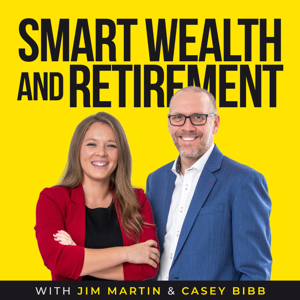


Running out of money ranks near the top of retirement fears, whether a retiree enters retirement with $500,000 or $5 million. While many assume running out of money only happens to irresponsible spenders, responsible retirees who saved for decades can still find themselves facing financial stress.
In this episode of Smart Wealth & Retirement, financial planners Jim Martin and Casey Bibb break down five silent risks that can derail an otherwise strong retirement plan and explain how proactive planning, regular updates, and dynamic guardrails can protect your financial future.
00:40 — The universal fear of running out of money
01:54 — Why smart, disciplined savers still face financial stress
04:12 — Sequence of returns risk & the bucketing strategy
06:56 — Lifestyle creep & gradual spending inflation
08:28 — The hidden impact of taxes & pre-tax accounts
10:06 — Underestimating healthcare & long-term care costs
11:40 — Failing to adapt and update the retirement plan
13:14 — 4 critical questions to review every year
13:58 — When one spouse outlives the other
18:45 — The biggest retirement money misconceptions
To learn how to protect your portfolio against these retirement risks and build a dynamic financial plan, visit www.martinwealth.com.
Many people assume that retirement is just about reaching a specific account balance or hitting a certain magic number on their financial statements. However, real retirement readiness involves much more than portfolio balances alone. In this episode of Smart Wealth & Retirement, Jim Martin and Casey Bibb explain the five key questions you should be able to answer before deciding whether you are genuinely ready to hand in the keys.
Jim and Casey discuss why relying strictly on account balances is a moving target that overlooks vital real-world factors. They walk through practical considerations regarding monthly spending needs, sequence-of-returns market risk, proactive tax planning strategies, and the crucial psychological shift of knowing what you are retiring to.
The goal isn't to guess your way into retirement or leap blindly into free time. It's to evaluate your preparedness across income, healthcare, market drops, and tax strategy to determine if continuing to work is truly necessary.
01:06 — Why Retirement Readiness Is Bigger Than an Account Balance
02:08 — Question 1: Can Your Retirement Paycheck Fund Your Life?
03:48 — Question 2: Is Your Healthcare Solved?
05:00 — Question 3: Could You Still Retire If the Market Dropped Tomorrow?
06:23 — Question 4: Do You Have a Retirement Tax Strategy?
07:12 — Question 5: Do You Know What You're Retiring To?
10:28 — Scoring Your Answers: Are You Ready to Retire?
12:38 — The Most Critical Missing Answer (The Retirement Paycheck)
13:53 — Tax Preparation vs. Tax Strategy: The Common Misunderstanding
Want to understand how income, market risk, and tax strategy fit into your retirement plan? Learn more about working with Jim Martin and Casey Bibb at www.martinwealth.com.
Many people assume they have to keep working until age 65 because that's when Medicare begins. But Medicare eligibility and retirement are two different decisions. In this episode of Smart Wealth & Retirement, financial planners Jim Martin and Casey Bibb explain how to price the healthcare gap, the main coverage options before 65, and why healthcare may be a solvable bridge rather than a reason to postpone your retirement.
Jim and Casey discuss the common assumption that health insurance costs make early retirement impossible and walk through practical steps to evaluate your options. They break down pre-Medicare options such as spousal plans, COBRA, retiree coverage, and the ACA marketplace. They also detail how retirement withdrawals and Roth conversions can impact healthcare subsidies and IRMAA surcharges.
The goal isn't to automatically work until 65 out of fear. It's to price the actual healthcare bridge, integrate it into a comprehensive financial plan, and determine whether continuing to work is truly necessary.
01:06 — The Healthcare Trap: Rebecca & Todd's Story
02:08 — Medicare Eligibility vs. Retirement Date
03:48 — 4 Main Pre-65 Healthcare Coverage Options
05:00 — How to Build a Healthcare Bridge
05:25 — Evaluating Spousal Plans and COBRA Costs
06:23 — ACA Marketplace Subsidies and Income Planning
07:12 — 5 Key Healthcare Factors to Price Before Retiring
10:28 — How Pre-65 Healthcare Conflicts with Roth Conversions
12:38 — What to Do First If Healthcare is Holding You Back
13:53 — The #1 Healthcare Mistake Pre-Retirees Make
14:27 — Why "Going Cheap" on Healthcare Coverage Backfires
Want to understand how healthcare and Medicare fit into the rest of your retirement plan? Learn more about working with Jim Martin and Casey Bibb at martinwealth.com.
Retirement isn’t just one big milestone—it is a series of interconnected choices. In this episode of Smart Wealth & Retirement, financial planners Jim Martin and Casey Bibb break down the big seven retirement decisions every future retiree must face.
Jim and Casey explain how a single change to your retirement date can trigger a domino effect impacting your healthcare options, portfolio withdrawals, tax brackets, and even your Medicare premiums. The hosts provide a quick-hitting guide to navigating these high-stakes planning areas with data, not opinions, so that you can transition into your next chapter with complete confidence.
00:00 — The Overwhelming Nature of Retirement Decisions
03:53 — Decision 1: When Can You Afford to Retire?
06:04 — Decision 2: When Should You Claim Social Security?
07:45 — Decision 3: Turning Savings Into a Retirement Paycheck
10:29 — Decision 4: How Should Your Money Be Invested?
13:48 — Decision 5: Controlling and Reducing Taxes
18:09 — Decision 6: Navigating Healthcare Costs & Medicare
20:25 — Decision 7: Protecting Your Spouse, Family, and Legacy
22:22 — How the Big Seven Decisions Are Interconnected
25:09 — Overwhelmed? Where You Should Start First
27:10 — How to Coordinate Your Strategy
Want to understand how these seven decisions fit into your personal retirement plan? Learn more about working with Jim Martin and Casey Bibb at martinwealth.com
Taxes don't disappear when retirement begins. In fact, some of the most expensive tax surprises can emerge after the paycheck stops.
Social Security taxation, Medicare IRMAA surcharges, required minimum distributions, the financial impact of losing a spouse, and even income from supposedly "safe" investments can interact in ways many retirees don't anticipate. In this episode of Smart Wealth and Retirement, financial planners Jim Martin and Casey Bibb unpack five overlooked retirement tax traps and explain how proactive planning can help reduce unwanted surprises.
The first trap involves Social Security taxation. Depending on combined income, a portion of Social Security benefits can become taxable. IRA and 401(k) withdrawals, pension income, part-time work, and Roth conversions can potentially increase that income, meaning an additional withdrawal for a car, vacation, or family expense could have tax consequences beyond the withdrawal itself.
Then there's IRMAA, the Income-Related Monthly Adjustment Amount that can increase Medicare costs for higher-income retirees. Jim shares an example illustrating how capital gains and investment income can push income higher and result in additional Medicare charges, even when those gains weren't being used to fund everyday spending.
One of the most underestimated issues may be the widow or widower tax trap. When one spouse dies, household expenses don't necessarily fall proportionately, but the survivor's tax situation can change significantly. Filing status may eventually shift from married filing jointly to single, potentially creating less room within tax brackets while retirement-account distributions continue.
Required minimum distributions can create another domino effect. RMD income may affect federal taxes, Social Security taxation, and Medicare IRMAA charges. That makes the period between retirement and the beginning of RMDs an important window for evaluating potential tax-planning strategies.
Finally, "safe" doesn't necessarily mean tax-free. CDs, savings accounts, money markets, bonds, and other conservative investments can generate taxable income. More interest may be welcome, but it can also change the retiree's broader tax picture.
The goal isn't to avoid taxes entirely. It's to understand how the pieces interact so taxes don't quietly dictate the retirement plan.
00:00 — 5 Retirement Tax Traps You May Not Expect
02:00 — Tax Preparation vs. Tax Strategy
04:00 — Tax Trap #1: Social Security Taxation
06:00 — Coordinating Retirement Withdrawals
07:00 — Tax Trap #2: Medicare IRMAA
09:00 — Large IRA Withdrawals and Medicare
10:00 — Tax Trap #3: The Widow or Widower Tax Trap
12:00 — Planning for the Surviving Spouse
14:00 — Tax Trap #4: The RMD Domino Effect.
15:00 — The Tax-Planning Window Before RMDs
17:00 — Tax Trap #5: Taxes on "Safe" Money.
18:00 — When More Interest Creates More Tax Problems
20:00 — Build Your Retirement Tax Map
21:00 — The Most Underestimated Retirement Tax Trap
22:00 — Stress-Testing Your Retirement Plan
23:00 — Planning Ahead Instead of Reacting
If you're approaching retirement and want to understand how taxes could affect your income and long-term financial plan, connect with Jim Martin and Casey Bibb at www.martinwealth.com.
If you're between ages 60 and 63 in 2026, you may have an opportunity to put significantly more money into your workplace retirement plan before the end of the year. The new super catch-up contribution rules can apply to 401(k)s, 403(b)s, governmental 457 plans, and the TSP, creating an important planning opportunity for people approaching retirement.
Jim and Casey also explain why this shouldn't be treated as an isolated savings decision. Before increasing contributions, retirees and pre-retirees should consider their cash reserves, debt, upcoming expenses, retirement date, tax strategy, and overall income plan. Maxing out every available retirement contribution can be valuable, but not when doing so leaves everyday cash flow stretched too thin.
02:00 — How Much Can You Contribute in 2026?
06:00 — Which Retirement Plans May Qualify?
07:00 — Questions to Ask Your HR Department
08:00 — The Roth Catch-Up Rule for Higher Earners
10:00 — Pre-Tax vs. Roth Contributions
15:00 — Mistake #2: Thinking "Catch-Up" Means You're Behind
20:00 — What Should You Do First?
If you're approaching retirement and want to determine how the 2026 super catch-up rules fit into your broader retirement strategy, connect with Jim Martin and Casey Bibb at martinwealth.com.
In this episode of Smart Wealth and Retirement, financial planners Jim Martin and Casey Bibb break down six classic pre-retirement mistakes and explain how better coordination between investments, Social Security, taxes, healthcare, and retirement income can help create a more confident transition into retirement.
One of the biggest changes approaching retirement is recognizing that a portfolio has a different job than it did during the accumulation years. Growth still matters, but so do income, liquidity, risk management, and the ability to withstand market downturns without disrupting the retirement plan.
00:00 — Six Classic Pre-Retirement Mistakes
If you're approaching retirement and want help coordinating your investments, income, taxes, Social Security, and retirement strategy, connect with Jim Martin and Casey Bibb at martinwealth.com
Jim and Casey walk through the common questions, mistakes and things to consider when it comes to rolling over a 401(k). They explain some of the potential advantages and disadvantages of each choice, including investment options, fees, taxes, access to funds, and long-term retirement planning considerations.
Rather than assuming a rollover is always the right answer, this episode helps listeners understand the questions they should ask before making a decision with retirement savings they may have spent decades building.
http://retirewithmartin.com/ ← Learn about working with us
www.planwellretirehappy.com
00:00 Introduction: What should you do with an old 401(k)?
Opinions expressed herein are solely those of Martin Wealth Solutions, unless otherwise specifically cited. Material presented is believed to be from reliable sources, but no representations are made by our firm as to another parties' informational accuracy or completeness. Content provided herein is for informational purposes only and should not be used or construed as investment advice or a recommendation regarding the purchase or sale of any security. There is no guarantee that any statements, opinions or forecasts provided herein will prove to be correct. All information or ideas provided should be discussed in detail with an advisor, accountant or legal counsel prior to implementation. Past performance may not be indicative of future results. Indices are not available for direct investment. Any investor who attempts to mimic the performance of an index would incur fees and expenses which would reduce returns. Securities investing involves risk, including the potential for loss of principal. There is no assurance that any investment plan or strategy will be successful.
In this episode of the Smart Wealth & Retirement Podcast, financial advisors and retirement planners Jim Martin & Casey Bibb of Martin Wealth Solutions discuss an important decision many people face after leaving a job or approaching retirement: what should you do with an old 401(k)?
Jim and Casey walk through the common questions, mistakes and things to consider when it comes to rolling over a 401(k). They explain some of the potential advantages and disadvantages of each choice, including investment options, fees, taxes, access to funds, and long-term retirement planning considerations.
Rather than assuming a rollover is always the right answer, this episode helps listeners understand the questions they should ask before making a decision with retirement savings they may have spent decades building.
http://retirewithmartin.com/ ← Learn about working with us
www.planwellretirehappy.com
00:00 Introduction: What should you do with an old 401(k)?
Opinions expressed herein are solely those of Martin Wealth Solutions, unless otherwise specifically cited. Material presented is believed to be from reliable sources, but no representations are made by our firm as to another parties' informational accuracy or completeness. Content provided herein is for informational purposes only and should not be used or construed as investment advice or a recommendation regarding the purchase or sale of any security. There is no guarantee that any statements, opinions or forecasts provided herein will prove to be correct. All information or ideas provided should be discussed in detail with an advisor, accountant or legal counsel prior to implementation. Past performance may not be indicative of future results. Indices are not available for direct investment. Any investor who attempts to mimic the performance of an index would incur fees and expenses which would reduce returns. Securities investing involves risk, including the potential for loss of principal. There is no assurance that any investment plan or strategy will be successful.
In this episode of the Smart Wealth & Retirement Podcast, financial advisors and retirement planners Jim Martin & Casey Bibb of Martin Wealth Solutions discuss one of today's fastest-growing technologies: artificial intelligence (AI) and what it could mean for your financial future.
Jim and Casey explore how AI is changing the financial industry, from investment research and financial planning tools to fraud detection and client service. They also discuss the limitations of AI, why human judgment remains essential in retirement planning, and how investors should think about AI-driven advice versus personalized financial guidance.
Whether you're curious about using AI yourself or wondering how it's reshaping the financial world, this episode provides a balanced look at the opportunities, risks, and practical implications for retirees and pre-retirees.
http://retirewithmartin.com/ ← Learn about working with us
www.planwellretirehappy.com
00:00 Introduction to today's topic
Opinions expressed herein are solely those of Martin Wealth Solutions, unless otherwise specifically cited. Material presented is believed to be from reliable sources, but no representations are made by our firm as to another parties' informational accuracy or completeness. Content provided herein is for informational purposes only and should not be used or construed as investment advice or a recommendation regarding the purchase or sale of any security. There is no guarantee that any statements, opinions or forecasts provided herein will prove to be correct. All information or ideas provided should be discussed in detail with an advisor, accountant or legal counsel prior to implementation. Past performance may not be indicative of future results. Indices are not available for direct investment. Any investor who attempts to mimic the performance of an index would incur fees and expenses which would reduce returns. Securities investing involves risk, including the potential for loss of principal. There is no assurance that any investment plan or strategy will be successful.
From the publisher's feed

447 Listeners

801 Listeners
1,303 Listeners

458 Listeners
540 Listeners
754 Listeners

551 Listeners

698 Listeners
189 Listeners

830 Listeners

198 Listeners
35 Listeners

594 Listeners

1,071 Listeners
103 Listeners