
Sign up to save your podcasts
Or



Based on Podcast App listening data
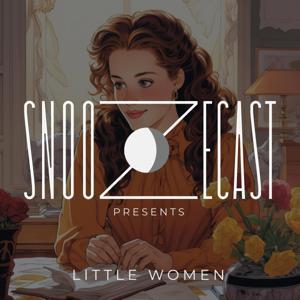
Tonight, we’ll read an adaptation of Alexandre Dumas’ “The Nutcracker of Nuremberg” story, originally published in 1844.
Dumas’ version of The Nutcracker was itself adapted from the original, written by E.T.A. Hoffman. However it was Dumas adaptation that gave inspiration to the famous “Nutcracker” ballet composed by Tchaikovsky. This episode originally aired in December of 2021.
— read by 'V' —
Sign up for Snoozecast+ to get expanded, ad-free access by going to snoozecast.com/plus!
Learn more about your ad choices. Visit megaphone.fm/adchoices
See Privacy Policy at https://art19.com/privacy and California Privacy Notice at https://art19.com/privacy#do-not-sell-my-info.
Tonight, we’ll read another excerpt from “Woodcraft” published by George Washington Sears, under the pen name "Nessmuk." Sears was a writer and adventurer who penned essays on hunting, fishing, and camping for popular journals and magazines.
This chapter is called “Canoeing”. In contemporary times, the author lives on not just through his writing but through his canoe. In fact, one of the most celebrated canoes in American canoeing annals and referred to as “the Nessmuk”. Historic replicas of this canoe can be purchased so that canoeists can paddle in one just like the one commissioned by the author for his famous 1880 Adirondack cruise.
This type of craft has come to be generically known as the Adirondack Pack canoe, and is the best way to obtain the smallest, lightest solo recreation paddle craft. Incredibly handy to paddle and transport, the Nessmuk is still known to surprise paddlers with her quickness and seaworthiness.
— read by 'N' —
Sign up for Snoozecast+ to get expanded, ad-free access by going to snoozecast.com/plus!
Learn more about your ad choices. Visit megaphone.fm/adchoices
See Privacy Policy at https://art19.com/privacy and California Privacy Notice at https://art19.com/privacy#do-not-sell-my-info.
Tonight, we’ll read the tenth chapter to “Anne of Green Gables” the classic 1908 novel by Lucy Maud Montgomery. This chapter is titled “Anne’s Apology”.
In the last episode, titled “Mrs. Rachel Lynde Is Properly Horrified”, Anne has been settling in at Green Gables for the last couple weeks, when Mrs. Rachel Lynde pays a visit. She would have visited sooner, but had been laid up with a bout of grippe, which is an archaic term for the flu.
Mrs. Lynde sees any orphan as suspicious as a rule, and when Anne comes in from playing outside, she is messy, dirty, and in ill-fitting orphanage clothes. The lady does not hold her tongue on how she perceives Anne- as a homely, pathetic creature with “hair as red as carrots”. Anne in return also does not hold back- and calls Mrs. Lynde fat, clumsy and without imagination. Later, Marilla talks to Anne privately and insists that while Mrs. Lynde may have deserved what she got, she was still Anne’s elder and must be treated with an expected amount of courtesy. Otherwise, it would harm not only Anne’s reputation in the community but also Marilla’s. Thus, Anne would need to muster up the courage to apologize
— read by 'N' —
Sign up for Snoozecast+ to get expanded, ad-free access by going to snoozecast.com/plus!
Learn more about your ad choices. Visit megaphone.fm/adchoices
See Privacy Policy at https://art19.com/privacy and California Privacy Notice at https://art19.com/privacy#do-not-sell-my-info.
Tonight, we’ll read from “For Luncheon and Supper Guests” written by Alice Bradley published in 1923. “Luncheon” is the formal word for lunch, a light mid-day meal.
In the Middle Ages, before electric lighting and industrialization, the mid-day meal was large and considered dinner. There was no lunch, so later in the evening a lighter meal was had called “supper”.
But by the 1800s, the large meal of dinner was pushed into the evening and thus, not only was supper squeezed out, but there was a need for something to eat in between breakfast and dinner.
Up until the early 1800s, luncheon was generally reserved for ladies, who would often have lunch with one another when their husbands were out. The meal was often made up of left-overs from the previous night's plentiful dinner. Beginning in the Victorian era, afternoon tea supplemented this luncheon at four o'clock.
This episode first aired in November of 2021.
— read by 'V' —
Sign up for Snoozecast+ to get expanded, ad-free access by going to snoozecast.com/plus!
Learn more about your ad choices. Visit megaphone.fm/adchoices
See Privacy Policy at https://art19.com/privacy and California Privacy Notice at https://art19.com/privacy#do-not-sell-my-info.
Tonight, we’ll read the opening to “The Clock Strikes Thirteen” part of the “Penny Parker” anthology written by Mildred Wirt, also known by Mildred Benson. It was originally published in 1942.
Penny Parker was a high school student turned sleuth who also sporadically worked as a reporter for her father's newspaper.
In this story, Penny investigates mysterious riders who are bothering farmers at night. Meanwhile, a man makes a suspiciously generous donation to the Riverview orphan's camp.
— read by 'V' —
Sign up for Snoozecast+ to get expanded, ad-free access by going to snoozecast.com/plus!
Learn more about your ad choices. Visit megaphone.fm/adchoices
See Privacy Policy at https://art19.com/privacy and California Privacy Notice at https://art19.com/privacy#do-not-sell-my-info.
Tonight, we’ll read the final part to “The Boxcar Children” written by school teacher Gertrude Chandler Warner and originally published in 1924. We are reading this original, full version, and in it the children’s last name is Cordyce. Later, in 1942, the stories were revised shorter, and the children’s last name was changed to Alden.
As Warner wrote the story, she read it to her first grade class and rewrote it many times so the words were easy to understand. Some of her pupils spoke other languages at home, so the book gave them a fun story that was easy to read. Warner once wrote that the original book "raised a storm of protest from librarians who thought the children were having too good a time without any parental control! That is exactly why children like it!"
In the last episode, the children and their grandfather are reunited. He is not only overjoyed to invite them to live with him (rather than out in an old boxcar in the woods) but he happens to live in a mansion with plenty of extra room. We will pick up on the tail-end of their grand tour of their new home.
— read by 'V' —
Sign up for Snoozecast+ to get expanded, ad-free access by going to snoozecast.com/plus!
Learn more about your ad choices. Visit megaphone.fm/adchoices
See Privacy Policy at https://art19.com/privacy and California Privacy Notice at https://art19.com/privacy#do-not-sell-my-info.
Tonight, we’ll read from “In the Mist of the Mountains,” by Australian novelist and children’s writer Ethel Turner, published in 1906. Her best-known work is her first novel, Seven Little Australians (1894), which is widely considered as a classic of Australian children's literature. Turner was awarded a number of prestigious literary awards and could be considered one of Australia's best-loved authors. This story is set in a tiny mountain vacation town during tourist season. This episode first aired in November of 2021.
— read by 'V' —
Sign up for Snoozecast+ to get expanded, ad-free access by going to snoozecast.com/plus!
Learn more about your ad choices. Visit megaphone.fm/adchoices
See Privacy Policy at https://art19.com/privacy and California Privacy Notice at https://art19.com/privacy#do-not-sell-my-info.
Tonight, we’ll read a Snoozecast original story, unveiling the tale of a girl briefly transported into a mysterious and enchanting reality. As an adult, she grapples with a dual existence—navigating her public persona as an acclaimed artist while nurturing a clandestine passion for rediscovering the mystical realm. Commissioned for conventional paintings, she conceals a world teeming with vibrant and fantastical creations.
The unicorn is a legendary creature that has been described since antiquity as a beast with a single large, pointed, spiraling horn projecting from its forehead. In European literature and art, the unicorn has for the last thousand years or so been depicted as a white horse-like animal with a long straight horn with spiralling grooves, cloven hooves, and sometimes a goat's beard. In the Middle Ages and Renaissance, it was commonly described as an extremely wild woodland creature, and a symbol of purity and grace.
— read by 'N' —
Sign up for Snoozecast+ to get expanded, ad-free access by going to snoozecast.com/plus!
Learn more about your ad choices. Visit megaphone.fm/adchoices
See Privacy Policy at https://art19.com/privacy and California Privacy Notice at https://art19.com/privacy#do-not-sell-my-info.
Tonight, we shall read the next part to “Pride and Prejudice”, written by Jane Austen.
In the last episode, Elizabeth’s father stuns her with his congratulations on her upcoming engagement. He reads a letter he received from Mr. Collins in which Elizabeth is cautioned not to go forward with an engagement to Darcy against Lady Catherine's wishes. Mr. Bennet thinks this is simply a ridiculous rumor because he is certain that Elizabeth hates Darcy and that Darcy is indifferent to her. Elizabeth fakes laughter to hide her embarrassment about her father's misjudgment while she privately wonders if her father might be on to something. Could she have overestimated Darcy's interest?
A few days later, Darcy and Bingley visit Longbourn. They all go for a walk and Elizabeth and Darcy soon find themselves alone. Elizabeth cannot contain her gratitude any longer for all that Darcy suffered and sacrificed for Lydia. Darcy tells Elizabeth that he did everything for her.
Darcy says his feelings for her have not changed since his rejected proposal. Elizabeth confesses that her feelings have significantly changed. Darcy is overjoyed. That is where we will resume our story.
— read by 'V' —
Sign up for Snoozecast+ to get expanded, ad-free access by going to snoozecast.com/plus!
Learn more about your ad choices. Visit megaphone.fm/adchoices
See Privacy Policy at https://art19.com/privacy and California Privacy Notice at https://art19.com/privacy#do-not-sell-my-info.
Tonight, we’ll read a Snoozecast+ Deluxe original story about uncovering a special pumpkin pie recipe to feed the community at Thanksgiving. Faced with the impending sale and demolition of Acorn Hollow's textile mill, Emma O'Connell decides that the way to bring everyone together is through their stomachs.
A day of Thanksgiving in America had been a sporadic occurrence for most of the country’s history, typically being an autumn harvest feast although sometimes occurring at other times of the year. A Thanksgiving feast was primarily a social gathering, although sometimes some prayer was involved.
It wasn’t until 1863, when President Lincoln proclaimed that November 26th would be a national Thanksgiving Day, to be observed every year on the fourth Thursday of November.
Today, Thanksgiving is a time when many families come together, and many churches are open for special services. We have both Native Americans and immigrants to thank for the opportunity to observe a day of thanksgiving.
— read by 'V' —
This has been written exclusively for our Snoozecast+ Deluxe listeners. To learn more, go to Snoozecast.com/plus.
Learn more about your ad choices. Visit megaphone.fm/adchoices
See Privacy Policy at https://art19.com/privacy and California Privacy Notice at https://art19.com/privacy#do-not-sell-my-info.
From the publisher's feed
Snoozecast is the podcast designed to help you fall asleep.
Episodes air every Monday, Wednesday and Friday.
Learn about our premium listening options at
Ranked by our users in the last 21 days

1,261 Listeners

509 Listeners

913 Listeners

1,057 Listeners
1,456 Listeners

1,590 Listeners

349 Listeners
756 Listeners
3,357 Listeners
785 Listeners
611 Listeners

325 Listeners

71 Listeners
605 Listeners

20 Listeners

6 Listeners
3 Listeners
15 Listeners

2 Listeners
10 Listeners
18 Listeners
6 Listeners
1 Listeners
4 Listeners

3 Listeners
5 Listeners
8 Listeners
4 Listeners
0 Listeners
8 Listeners
0 Listeners