
Sign up to save your podcasts
Or




Based on Podcast App listening data
Tonight, we’ll read about the Persian empire at the zenith of its expansion from the book “The Retreat of the Ten Thousand” by Carl Witt, published in 1896.
The ancient Persian or Iranian empire was the largest empire the world had ever seen at its time, spanning from the Balkans and Egypt in the west to Central Asia and the Indus Valley in the east.
In the modern era, this empire has been recognized for its imposition of a successful model of centralized, bureaucratic administration; its multicultural policy; building complex infrastructure, such as road systems and an organized postal system; the use of official languages across its territories; and the development of civil services.
— read by 'V' —
Sign up for Snoozecast+ to get expanded, ad-free access by going to snoozecast.com/plus!
Learn more about your ad choices. Visit megaphone.fm/adchoices
See Privacy Policy at https://art19.com/privacy and California Privacy Notice at https://art19.com/privacy#do-not-sell-my-info.
Tonight, we shall read the next part to “Pride and Prejudice”, written by Jane Austen.
In the last episode, soon after Jane accepts Bingley’s marriage proposal, Lady Catherine De Bourgh makes a surprise visit to Elizabeth. She says almost nothing to Mrs. Bennet, coolly inspecting the rooms and property, then asks Elizabeth to take a walk. Lady Catherine rudely interrogates Elizabeth. She simply cannot believe that Darcy would choose Elizabeth as a wife, and thus, she thinks he must have been tricked by her. Elizabeth boldly asserts her freedom of mind and freedom from the class concerns of Lady Catherine. In doing so, Elizabeth suggests that individuals can define themselves regardless of class or social prejudices.
— read by 'V' —
Sign up for Snoozecast+ to get expanded, ad-free access by going to snoozecast.com/plus!
Learn more about your ad choices. Visit megaphone.fm/adchoices
See Privacy Policy at https://art19.com/privacy and California Privacy Notice at https://art19.com/privacy#do-not-sell-my-info.
Tonight, we’ll read a Snoozecast+ Deluxe original story about a visit to a harvest festival, by a grandfather and his two grandkids. They have a delightful afternoon of rides, games and treats, before an evening fireworks display that they barely stayed awake for. We think you may have trouble staying awake for it too!
— read by 'V' —
This has been written exclusively for our Snoozecast+ Deluxe listeners. To learn more, go to Snoozecast.com/plus.
Learn more about your ad choices. Visit megaphone.fm/adchoices
See Privacy Policy at https://art19.com/privacy and California Privacy Notice at https://art19.com/privacy#do-not-sell-my-info.
Tonight, as part of our Spooky Sleep Story Series, we’ll read our own lightly adapted version of Algernon Blackwood’s “A Haunted Island” from “The Empty House and Other Ghost Stories” published in 1906. In this story, our narrator is left alone for a few weeks at an island lodge in the middle of a lake in Canada, where he thinks he will focus on his studies, but soon begins to see and hear strange things.
Tune in every Wednesday this month for sleep stories of the darker variety– lightly adapted and read in a way to evoke a mood of spookiness, without actually causing a fright. Catch up on previous years by finding our free podcast “Snoozecast Presents: Spooky Stories” or if you are a premium subscriber, look for “Snoozecast+” or “Snoozecast+ Deluxe: Spooky Stories” instead to listen ad-free
— read by 'N' —
Sign up for Snoozecast+ to get expanded, ad-free access by going to snoozecast.com/plus!
Learn more about your ad choices. Visit megaphone.fm/adchoices
See Privacy Policy at https://art19.com/privacy and California Privacy Notice at https://art19.com/privacy#do-not-sell-my-info.
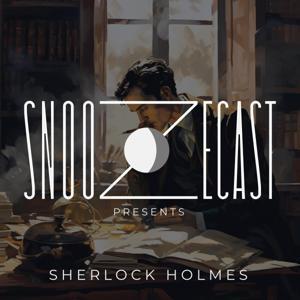
Tonight, we’ll read the second half to “The Adventure of the Solitary Cyclist” written by Sir Arthur Conan Doyle, as part of 1903’s “The Return of Sherlock Holmes”. The first half aired last week.
In the first episode,Holmes is contacted by a beautiful young music teacher named Violet Smith. She's worried about a stranger who follows her when she bicycles to and from the train station each weekend. Violet Smith and her mother were living in poverty until few months ago, when two supposed friends of her uncle from South Africa, came to announce that he asked them to take care of his closest relatives. One the two men, Carruthers, is affable. He offers Violet an excellent wage to live in his house and teach music to his daughter, and he seems to grow fond of the young woman. The other one, Woodley, is rough and overly forward. Watson, asked by Holmes to visit and collect information, figures out that the mystery cyclist disappears by hiding in a hedge along the property of Mr. Williamson, a defrocked clergyman.
— read by 'N' —
Sign up for Snoozecast+ to get expanded, ad-free access by going to snoozecast.com/plus!
Learn more about your ad choices. Visit megaphone.fm/adchoices
See Privacy Policy at https://art19.com/privacy and California Privacy Notice at https://art19.com/privacy#do-not-sell-my-info.
Tonight, we’ll read the next part to “Twenty Thousand Leagues Under the Sea,” a classic science fiction adventure novel by French writer Jules Verne.
In the last episode, while the passengers aboard the Nautilus approach the mysterious Arabian Tunnel that will whisk them to the Mediterranean, Ned insists on taking a detour in a dinghy to pursue a dugong. A dugong is actually a peaceful vegetarian, similar to a manatee, but in Jules Verne’s imagination it is a monstrous beast with large tusks.
— read by 'N' —
Sign up for Snoozecast+ to get expanded, ad-free access by going to snoozecast.com/plus!
Learn more about your ad choices. Visit megaphone.fm/adchoices
See Privacy Policy at https://art19.com/privacy and California Privacy Notice at https://art19.com/privacy#do-not-sell-my-info.
Tonight, for the next in our 5th annual “Spooky Sleep Story Series”, we shall read the narrative poem "The Raven" by Edgar Allan Poe, published in 1845.
The poem is often noted for its musicality, stylized language, and supernatural atmosphere. It tells of a distraught lover who is paid a mysterious visit by a talking raven. The lover, often identified as a student,[1][2] is lamenting the loss of his love, Lenore. Sitting on a bust of Pallas, the raven seems to further antagonize the protagonist with its constant repetition of the word "Nevermore".
By the way, “a bust of Pallas” refers to a sculpture of Pallas Athena, the Greek goddess of wisdom. The fact that the narrator has one in his bedroom represents his interest in learning and scholarship, and also can be taken as representing his own rational, sane mind. The Raven, by landing on the bust when it flies into the room, signifies a threat to the narrator’s ability to understand the reasons (if any) behind the Raven’s coming and its message. That the Raven stays on top of the bust of Pallas at the end of the poem, never flitting, suggests that irrationality has taken up a permanent home in the narrator’s formerly rational mind.
Poe claimed to have written the poem logically and methodically, with the intention to create a poem that would appeal to both critical and popular tastes. The poem makes use of folk, mythological, religious, and classical references. Its publication made Poe popular in his lifetime, although it did not bring him much financial success. It remains one of the most famous poems ever written.
Tune in every Wednesday this month for sleep stories of the darker variety- like classic horror literature and ghost stories, read in a way to evoke a mood of spookiness, without actually causing a fright. Catch up on previous years by finding our free podcast “Snoozecast Presents: Spooky Stories” or if you are a premium subscriber, look for “Snoozecast+” or “Snoozecast+ Deluxe: Spooky Stories” instead to listen ad-free.
— read by 'V' —
Sign up for Snoozecast+ to get expanded, ad-free access by going to snoozecast.com/plus!
Learn more about your ad choices. Visit megaphone.fm/adchoices
See Privacy Policy at https://art19.com/privacy and California Privacy Notice at https://art19.com/privacy#do-not-sell-my-info.
Tonight, we’ll read the first half to “The Adventure of the Solitary Cyclist” written by Sir Arthur Conan Doyle, as part of 1903’s “The Return of Sherlock Holmes”. The second half will air next week.
In this adventure, Holmes and Watson are visited by a young lady named Violet Smith. She explains that her father's recent passing left her financially destitute and that her only other relative, an uncle named Ralph Smith, lives in Africa.
One day, she meets two men visiting from South Africa, who claim to be friends of her now-deceased uncle. They claim that Ralph also passed on in poverty like his brother, but asked them to take care of his relatives.
This was not one of Doyle’s favorites- he criticized himself for mentioning in this story that Violet Smith's visit to Holmes occurred on Saturday, April 23, 1895. In actuality, the 23rd of April that year fell on a Tuesday.
— read by 'N' —
Sign up for Snoozecast+ to get expanded, ad-free access by going to snoozecast.com/plus!
Learn more about your ad choices. Visit megaphone.fm/adchoices
See Privacy Policy at https://art19.com/privacy and California Privacy Notice at https://art19.com/privacy#do-not-sell-my-info.
Tonight, we’ll read the eighth chapter to “Anne of Green Gables” the classic 1908 novel by Lucy Maud Montgomery. This chapter is titled “Anne’s Bringing Up is Begun”.
In the last episode, Marilla begins her program of moral and social education for Anne at bedtime. Anne expresses a distaste for God due to the insult of purposely giving her red hair. Marilla encourages Anne to create her own spontaneous prayer. Anne’s prayer is full of flowery speech, regarding her hopes for Green Gables to become her home, and to become pretty when she grows up. She ends the prayer by saying, “Yours respectfully, Anne Shirley.” Marilla resolves to send Anne to Sunday school as soon as possible.
— read by 'N' —
Sign up for Snoozecast+ to get expanded, ad-free access by going to snoozecast.com/plus!
Learn more about your ad choices. Visit megaphone.fm/adchoices
See Privacy Policy at https://art19.com/privacy and California Privacy Notice at https://art19.com/privacy#do-not-sell-my-info.
Tonight, to start off our 5th annual “Spooky Sleep Story Series”, we shall read the opening to “The Metamorphosis”, written by Franz Kafka and first published in 1915. Tune in every Wednesday this month for sleep stories of the darker variety- like classic horror literature and ghost stories, read in a way to evoke a mood of spookiness without actually causing a fright. Catch up on previous years by finding our free standalone podcast series “Snoozecast Presents: Spooky Stories” or if you are a premium subscriber, look for “Snoozecast+” or “Snoozecast+ Deluxe: Spooky Stories” instead to listen ad-free.
“The Metamorphosis” is referred to as a masterpiece of existential literature because of how it demands the reader to accept the absurdity of our lived modern human reality. Although some of the events may be fantastical, the ideas about existence, and humanity are highly relatable.
— read by 'V' —
Sign up for Snoozecast+ to get expanded, ad-free access by going to snoozecast.com/plus!
Learn more about your ad choices. Visit megaphone.fm/adchoices
See Privacy Policy at https://art19.com/privacy and California Privacy Notice at https://art19.com/privacy#do-not-sell-my-info.
From the publisher's feed
Snoozecast is the podcast designed to help you fall asleep.
Episodes air every Monday, Wednesday and Friday.
Learn about our premium listening options at
Ranked by our users in the last 21 days

1,261 Listeners

509 Listeners

913 Listeners

1,057 Listeners
1,456 Listeners

1,590 Listeners

349 Listeners
756 Listeners

3,357 Listeners

785 Listeners

611 Listeners

325 Listeners

71 Listeners

605 Listeners

20 Listeners

6 Listeners

3 Listeners
15 Listeners

2 Listeners
10 Listeners

18 Listeners
6 Listeners
1 Listeners
4 Listeners

3 Listeners
5 Listeners
8 Listeners
4 Listeners
0 Listeners

8 Listeners
0 Listeners