
Sign up to save your podcasts
Or

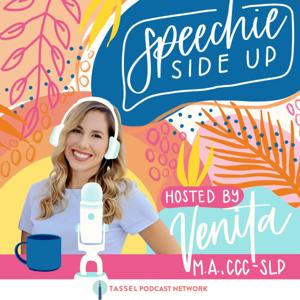


This is a sneak peek episode for the upcoming online event called Behavior Connect, which is all about moving beyond traditional behavior strategies to foster authentic connections with children.
Register here to be part of Behavior Connect.
This episode is part of the upcoming online event called Behavior Connect.
Behavior Connect is all about moving beyond traditional behavior strategies to foster authentic connections with children.
In this episode, I am joined by Julia Kharlamenko, M.S. CCC-SLP TSSLD B.E as we discuss the principles of Nonviolent Communication (NVC) and their application in speech therapy sessions.
Julia shares how observations, listening, and compassionate interactions help move away from compliance-based therapy, fostering meaningful connections and positive outcomes. Detailed insights into Dr. Marshall Rosenberg's NVC framework are provided, emphasizing the importance of empathy, self-regulation, and honest expression.
Julia also explains how these principles can enhance both professional and personal relationships through practical examples and goal-setting.
This episode is part of the upcoming online event called Behavior Connect.
Behavior Connect is all about moving beyond traditional behavior strategies to foster authentic connections with children.
In this episode, I am joined by Katelyn Kelps,
Katelyn shares practical approaches for high and low support needs students, including the use of core boards, single message switches, break cards, and text to speech apps. She also discusses the importance of normalizing non-spoken communication and increasing school team collaboration to support neurodivergent students.
To be part of Behavior Connect, grab your FREE LIVE TICKET now!
This episode is part of the upcoming online event called Behavior Connect.
Behavior Connect is all about moving beyond traditional behavior strategies to foster authentic connections with children.
In this episode, I am joined by Claire Mirvis, a first-year Speech-Language Pathologist (SLP) working in an educational-medical hybrid setting within a hospital.
Claire shares her experiences with medically fragile students ranging from preschool to high school, emphasizing neurodiversity affirming practices and personalized support. She discusses her daily routines, the diverse diagnoses of her students, and the integration of various communication modalities.
Claire highlights the importance of presuming competence and being responsive to students' emotional and physical needs with compassion and respect. Additionally, Claire talks about the significance of teamwork and collaboration among therapists and teachers, the role of creativity in assistive and augmentative communication (AAC), and the importance of understanding access needs before selecting vocabulary.
This episode is part of the upcoming online event called Behavior Connect.
Behavior Connect is all about moving beyond traditional behavior strategies to foster authentic connections with children.
In this episode, I am joined by Brooke Sheaffer, a Speech Language Pathologist, as we discuss the importance of embracing neurodiversity within school settings.
The conversation covers the prevalence of neurodivergence and the necessity for inclusive, affirming educational environments. Practical strategies include universal design, accessible resources, incorporating inclusive books, and strengths-based approaches to Individualized Education Programs (IEPs).
This episode is part of the upcoming online event called Behavior Connect.
Behavior Connect is all about moving beyond traditional behavior strategies to foster authentic connections with children.
In this episode, I am joined by Jacqueline Jebian Garcia, a neurodivergent Speech-Language Pathologist and Socio-Emotional Coach, as we discuss Polyvagal Theory and its importance in understanding safety and danger through the autonomic nervous system's sympathetic and parasympathetic branches.
Jacqueline touches on the roles of different parts of the nervous system and explores how to promote connection and regulation in speech therapy, especially for neurodivergent individuals.
The conversation advocates for using declarative language to enhance communication, focusing on interoception and neuroception for better communication and connection.
To know more about Behavior Connect, grab your FREE LIVE TICKET now!
This episode is part of the upcoming online event called Behavior Connect.
Behavior Connect is all about moving beyond traditional behavior strategies to foster authentic connections with children.
Sophie shares her personal experiences with disabilities and
Sophie shares her personal experiences with disabilities and offers insights into how colleges and universities can be more inclusive to disabled students.
We also discuss the importance of looking at the whole person rather than just their diagnosis and the need for a more human-centered approach in healthcare.
The conversation also covers the importance of culturally responsive education in graduate programs, the benefits of having more speech-language pathology assistants (SLPAs), and ways able-bodied individuals can support those with disabilities.
Sophie emphasizes the need for diversity, inclusion, and the prioritization of quality of life in the field of speech-language pathology.
In this episode, I am joined by Sneha Susan Jacob, an ASHA certified Speech-Language Pathologist with over 20 years of experience and now CEO of Italk Inc.
Susan's journey spans from India to the United States, working in diverse settings from schools to skilled nursing facilities.
She shares her passion for early intervention and her approach to therapy. Susan's path highlights the importance of cultural adaptation, work-life balance, and the role of families in speech therapy.
Visit Speechie Side Up to learn more about this episode.
In this episode, I am joined by Samantha Novick, a Speech-Language Pathologist and owner of Bridge Therapy in South Florida.
Samantha shares insights from her career, the importance of community support among professionals, and the role of mentorship. She highlights her achievements, including developing a virtual camp for individuals with disabilities and her involvement with various nonprofit organizations aimed at fostering inclusion and meaningful connections.
In this episode, I am joined by Christina Cahill Longo, a
Christina shares her journey from working in an acute medical setting to establishing a private practice in a school environment.
She emphasizes the importance of a growth mindset, both for children and their parents, advocating for a focus on emotional as well as academic needs. She also delves into her personal experiences with her children's speech and orthodontic challenges, which inspired her to further specialize in myofunctional therapy.
Through her compassionate approach, Christina aims to help children and parents navigate their unique challenges while emphasizing their diverse strengths.
From the publisher's feed

158 Listeners

2,512 Listeners

111,864 Listeners

56,391 Listeners

115 Listeners

369,396 Listeners

99,663 Listeners
129 Listeners

6,340 Listeners

29,128 Listeners