
Sign up to save your podcasts
Or

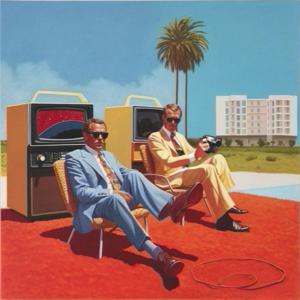


For the right fee, a designer could spend a day choosing each typeface on a client's project. That's one of us putting value pricing in a designer's terms, in the second half of our talk about charging for creative work by what it's worth. It starts with Chili's. With every casual chain losing money, it bought costly machines that cook burgers on both sides at once and cut its menu, keeping what people liked about the place. Clients who would never borrow money for a video should see it the same way, as an investment. Give every client three options, as Apple does with the Mac mini, and the client stops asking whether to hire you and asks how.
One of us pushes back that tiers can feel like a game, with a cheap option built to fail. The answer is that every tier solves the problem, and the price climbs with access, from office hours to a phone call at 3 a.m. It can climb with time instead, which is where the typefaces come in. Hourly billing gets compared to a taxi meter, which Uber beat by telling riders the price up front. Hardest of all is moving existing clients to value pricing. It rarely works, for the same reason family who knew you at 13 will always see you that way, so it's better to take new clients on value and let the old ones go gradually.
Mentioned in this episode: Chili's, Steve Jobs, Apple, the Mac mini, Uber, Chris Do's The Futur, value-based pricing.
-Ai
Support the show
If you enjoyed this episode, please consider giving us a rating and/or a review. We appreciate and try to read all of them. Thanks for listening, and we'll see you in the next episode.
Ask Us a Question: https://studiosessionspod.com/#ask
Website: https://studiosessionspod.com
A man in Office Space swears he has people skills, and his scene opens an hour about what work is worth. The subject is value-based pricing, which Matt learned running a video production company. A lot of people price a video the way a contractor prices drywall, with a margin on top of time and materials. Matt's way is to ask what the result is worth to the client. A video that brings in half a million dollars can fairly cost $50,000 instead of $5,000, and a client who only wants the lowest bid is one to turn down.
The person to talk to is whoever writes the checks and feels the problem, which a marketing director on salary often doesn't. Nobody walks into a doctor's office with their own diagnosis and treatment plan, and a video maker wants that same trust. One of us heard that a designer's job is to raise your expectations of what a thing can be. We look at John Mayer's Born and Raised cover, hand-painted on glass by a sign artist, and at Paul Rand bringing Steve Jobs a single logo for NeXT. Near the end, one of us remembers doing tech support for Apple, where callers listed alarming symptoms and the fix was usually a restart. Some weren't sure they had ever restarted at all.
Mentioned in this episode: Mike Judge's Office Space, value-based pricing, price anchoring, imposter syndrome, John Mayer's Born and Raised, Paul Rand, Steve Jobs, NeXT.
-Ai
Support the show
If you enjoyed this episode, please consider giving us a rating and/or a review. We appreciate and try to read all of them. Thanks for listening, and we'll see you in the next episode.
Ask Us a Question: https://studiosessionspod.com/#ask
Website: https://studiosessionspod.com
We recorded this one in Matt's new studio, a walkout basement with black-painted rafters and shelves made from Home Depot boards he never cut to length. For someone whose working life has been editing and project management, it's maximalist down to the smallest thing on the shelf, and he says it's what's in his head, turned out into a room. He paid for much of it by trading up, selling records and other finds. Some of it is there in memory of his grandfather, who kept a basement shop for fixing lawnmowers and a media room for digitizing 8mm home movies.
Then we go back to the years from about 2013 until the pandemic, when Casey Neistat and Gary Vaynerchuk had so many people starting companies and a YouTube channel was part of the playbook. The question we keep returning to is whether you like a thing or like what it tells other people about you. One of us had a thought in a YMCA locker room about paying for a book by someone who spends his days on Twitter, which amounts to paying for other people's thoughts, repackaged. Matt calls his room a diary entry, and wants the rest of his work to be one too. It ends on Roger Bannister's four-minute mile, which nobody believed possible until he ran it.
Mentioned in this episode: Casey Neistat, Gary Vaynerchuk, Joseph Campbell and Bill Moyers's The Power of Myth, hauntology, Roger Bannister.
-Ai
Support the show
If you enjoyed this episode, please consider giving us a rating and/or a review. We appreciate and try to read all of them. Thanks for listening, and we'll see you in the next episode.
Ask Us a Question: https://studiosessionspod.com/#ask
Website: https://studiosessionspod.com
After an hour of discussion, we realized the recorder wasn't on. We regrouped and continued...
A slightly corny line landed hard on one of us today: pressure is a privilege. He has been arranging his days to keep stress out, and now thinks that all but guarantees you won't grow. Some people drift off while you're answering their question, and one of us has caught a milder version in himself on this show, watching the footage back in Final Cut. That leads to dopamine, and to YouTube videos of strangers quietly flipping through thrift-store record bins, which pay out a small hit every time a good record turns up.
We saw Citizen Kane together on a scratched 35mm print, and it didn't feel old for a minute. Watching an old film at home, one of us gives himself permission to check out, and a dark theater takes that permission away. That's the case for repertory screenings, like the Alamo Drafthouse Kubrick series where one of us finally saw Barry Lyndon, or the New Beverly in Los Angeles, where Quentin Tarantino showed his own prints of old Burt Reynolds movies. Orson Welles's F for Fake, a documentary about forgery that is itself a forgery, changed how one of us sees documentary. It ends on the hour we recorded before this one, whose audio came out badly, and whether Premiere Pro can clean it up enough to release as a bonus.
Mentioned in this episode: Orson Welles's Citizen Kane, Orson Welles's F for Fake, Stanley Kubrick's Barry Lyndon, Alfred Hitchcock's Vertigo, The Wire, Alamo Drafthouse, the New Beverly Cinema.
-Ai
Support the show
If you enjoyed this episode, please consider giving us a rating and/or a review. We appreciate and try to read all of them. Thanks for listening, and we'll see you in the next episode.
Ask Us a Question: https://studiosessionspod.com/#ask
Website: https://studiosessionspod.com
One of us is watching The Wire one episode a night instead of bingeing it, and it gets us talking about what went missing when shows stopped arriving once a week and everyone stopped watching the same thing at the same time. Maybe a PR firm manufactured some of that shared feeling. Either way, a group of friends can still get it back by watching a show together. Alien: Romulus gets called one of the best-executed soulless movies around, though we'd take soulless craft over soulless crap.
Then one of us reads from Bruno Munari's Design as Art, a short book from 1966 about making everyday objects with the care you'd give a painting. It leads to two words we lean on, provenance and quintessence: where an object has been, and how perfectly it is itself. One of us found a Hermes Baby typewriter for $25 at a historical society sale in an empty CVS, and at the checkout he was introduced to a woman who knew its story. It belonged to a photojournalist who documented World War II, and its lid is inscribed with Travel and Transport Incorporated, Omaha, Nebraska, the company he started after the war. An Olivetti Lettera 25 from an antique shop in Atlantic, Iowa, joins it, in a collection of about 17 typewriters that one of us means to edit down the way you'd try on clothes.
Mentioned in this episode: The Wire, Fede Álvarez's Alien: Romulus, Bruno Munari's Design as Art, the Hermes Baby, the Olivetti Lettera 25, John Boorman's Excalibur, Steve Jobs.
-Ai
Support the show
If you enjoyed this episode, please consider giving us a rating and/or a review. We appreciate and try to read all of them. Thanks for listening, and we'll see you in the next episode.
Ask Us a Question: https://studiosessionspod.com/#ask
Website: https://studiosessionspod.com
One of us typed two small pages about the short stories his father wrote before giving up on writing in his 20s. He has only skimmed the stories, afraid of what they might say about him: whether he is repeating his father, or whether he dreams about the work more than he does it. He reads his pages aloud, and they carry the episode. Asked what greatness means, he names Bruce Springsteen and Alec Soth, and then Steven Spielberg. The other thinks rankings belong to sprinters like Usain Bolt, whose greatness can be timed, and that the better question is what you actually like about a piece of work.
The night before, one of us saw Michael Mann's Collateral, in which Tom Cruise's hit man tells a cab driver his dream was only ever a down payment on a Lincoln Town Car away. We use the line for the gap between thinking and doing. One of us is content making videos in his basement and photographing old satellite dishes, but tired of worrying about money. A Tennessee Williams line from a museum trip comes up: you can be young without money, but not old without it. One of us argues for making time for the work, however little, and keeping it sacred. It ends with one of us resolving to write more, because on paper you can't skip the steps your head skips.
-Ai
Show Notes:
Collateral (2004) Trailer, Letterboxd Page
Making of Nebraska: CBS News Interview with Bruce Springsteen
Support the show
If you enjoyed this episode, please consider giving us a rating and/or a review. We appreciate and try to read all of them. Thanks for listening, and we'll see you in the next episode.
Ask Us a Question: https://studiosessionspod.com/#ask
Website: https://studiosessionspod.com
A Sennheiser microphone from a thrift store turned out to have a distant, disembodied sound, and one of us wants it for his voiceovers. That's where our subject starts: using shitty tools because they're more fun. Soon we're arguing over George Lucas's line between pleasure, which feeds the ego, and joy, which doesn't. The voiceover plan is to record into an old Panasonic cassette recorder, then play the tape back and record it again, when one filter in Final Cut Pro would get close. Efficiency is only one North Star. It made sense when one of us worked in post-production on another artist's concerts, and matters less now that he makes things for himself.
The tools don't always cooperate. One of us made a portrait of his grandmother on two cameras: the Canon F-1 frame came back out of focus, and the one from a medium-format Koni-Omega Rapid was sharp except for her hand, which moved as she spoke. His EOS R would have nailed it, but he's bored of its look. One of us collects VHS partly to study the 1980s box art, a reference library no image search could match. Later, one of us describes a stretch of tight to-do lists that raised his output and left him creatively empty. It ends on why one of us tries things anyway: it's the only way to find out, even when a tunnel turns out to hold no cheese.
-Ai
Show Notes:
Jumping the Shark - https://en.wikipedia.org/wiki/Jumping...
George Lucas Speech - • George Lucas Explains - What is Happi...
Camus & Absurdity - https://bigthink.com/thinking/camus-f...
Support the show
If you enjoyed this episode, please consider giving us a rating and/or a review. We appreciate and try to read all of them. Thanks for listening, and we'll see you in the next episode.
Ask Us a Question: https://studiosessionspod.com/#ask
Website: https://studiosessionspod.com
This is the first episode of our second year, and one of us is deep in an upheaval that started when he got into photography. He has thrown out the productivity apps and the mile-long to-do lists, and his studio is torn apart, full of cameras, typewriters, stereo gear and old tapes. His YouTube channel made its name on Final Cut Pro tutorials, and like a band tired of playing songs it wrote 30 years ago, he wants to try other things even if the money suffers. It could look like a midlife crisis. He sees it as breaking away from bending his work toward a commercial outcome.
He says he never freezes over a decision; if anything, he's impulsive. Without the typewriters he'd never have written a letter to his grandmother. She died before it reached her, and he knew at once what to do: he opened it at her funeral and read it to her there. He still has VHS footage of his bedroom as he left for college, with a typewriter, an old computer, a TV and tapes, the same kinds of things he's surrounding himself with again. For now he's in no hurry, buying books twenty at a time and expecting to be back at his desk in December, when it's dark by five.
-Ai
Show Notes:
Joshua Charow - @joshuacharow
Nuking The Fridge - Nuking the Fridge
Support the show
If you enjoyed this episode, please consider giving us a rating and/or a review. We appreciate and try to read all of them. Thanks for listening, and we'll see you in the next episode.
Ask Us a Question: https://studiosessionspod.com/#ask
Website: https://studiosessionspod.com
One of us volunteered to photograph a friend's courthouse wedding on film. He got what felt like a great shot of the bride in her white dress at an ATM, taking out cash for the judge's fee. Inside, unsure whether the judge would object, he stayed in one spot and shot the rest of the roll from there. That night he reshot it in his head: a wide frame of the courtroom, with the two witnesses alone in the seats and the judge high above the couple like a pharmacist behind the counter. With video, after 15 years, he takes over a room without a second thought. With stills he was listening to fear, the way he once clung to his memorized lines in acting school.
Getting past it takes some reframing. A man at the Y keeps switching the locker room TV to cable news and walking out, and one of us has decided it's a joke, which makes it funny. An old acting teacher's rule, assume benevolence, works the same way. On YouTube, the videos we trust most come from small communities like pipe smokers, where few channels pass 10,000 subscribers and nobody is in it for the numbers. One of that community's most admired voices simply stopped, because he'd said everything he had to say, and we compare him to Harper Lee. It's also the show's first anniversary.
Mentioned in this episode: Frontline's The Merchants of Cool, David Ogilvy, Mad Men, Stanley Kubrick, Neil Postman's Technopoly, Harold Bloom, Harper Lee's To Kill a Mockingbird, Steve Martin.
-Ai
Support the show
If you enjoyed this episode, please consider giving us a rating and/or a review. We appreciate and try to read all of them. Thanks for listening, and we'll see you in the next episode.
Ask Us a Question: https://studiosessionspod.com/#ask
Website: https://studiosessionspod.com
In Stephen Shore's book of 8x10 photographs, the motel rooms are printed close to the size of the negative, so detailed you feel you can see the light itself. Large format is expensive, though, so one of us leaves his 4x5 on the shelf until a project deserves it. He also owns a Leica M4 that is 50 years old and flawless, built like a camera you could take to war. Now a new M11-P costs $9,500 without a lens. When he sent his M6 to Leica for repair, it took a year. He sent back a Leica SL2-S after two weeks, calling it the nicest soulless camera he'd ever owned.
One of us worries Leica is starting to go the way of Rolex, which was once a watch you'd hand down to your kids and is now a status symbol. That raises the question of where quality ends and luxury begins. We'd rather pay for the work of someone who has given their life to one thing, like a $350 messenger bag from Artifact Bag Company in Omaha. Things built to last pick up meaning, and one of us just had his grandfather's old shirt repaired so he can wear it all the time. The artists we admire did the opposite of cashing in on their name. Paul McCartney followed the Beatles by starting over with Wings and a set of only 10 songs.
Mentioned in this episode: Stephen Shore, Alec Soth, Leica, Rolex, Grand Seiko, Mamiya 7, Koni-Omega Rapid, Canonet QL17, Kodak Ektachrome, Artifact Bag Company, Levi's 501, Bob Dylan.
-Ai
Support the show
If you enjoyed this episode, please consider giving us a rating and/or a review. We appreciate and try to read all of them. Thanks for listening, and we'll see you in the next episode.
Ask Us a Question: https://studiosessionspod.com/#ask
Website: https://studiosessionspod.com
From the publisher's feed
Discussions about art and the creative process. New episodes every other week.
Ask Us a Question:
Website: https://studiosessionspod.com