
Sign up to save your podcasts
Or

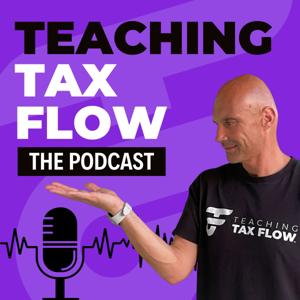


In this episode of the Teaching Tax Flow podcast, hosts John and Chris jump into the intricacies of the Section 179 deduction, a crucial topic for small and medium-sized businesses seeking tax advantages through immediate expense on qualifying property. The episode demystifies this often-confused segment of the tax code, ensuring business owners and tax professionals understand its application, eligibility, and strategic use in financial planning.
With vivid explanations, the conversation revolves around the distinction between Section 179 and bonus depreciation, the importance of electing into Section 179, and its application across various business entities. Chris shares relatable anecdotes from his travels and hands-on teaching experiences, further contextualizing these complex tax concepts. Through practical examples and thoughtful guidance, listeners will gain a robust understanding of how to leverage Section 179 to its fullest potential, whether dealing with tangible property or considering the timing of significant purchases.
Key Takeaways:
Resources
• Teaching Tax Flow Website
• Defeating Taxes Community
Episode Sponsor:
Legacy Lock
Book a 30-minute complimentary discovery session at teachingtaxflow.com/legacy
(Mention Teaching Tax Flow for special pricing)
In Episode 161 of the Teaching Tax Flow Podcast, hosts Chris Picciurro, CPA, and John Tripolsky welcome back special guest Parker Borofsky of Wealth Builders Mortgage Group to discuss one of the most common financial challenges entrepreneurs face — qualifying for a mortgage while self-employed.
Parker brings a lender’s perspective to this crucial topic, sharing real-world insights into how lenders view self-employment income, tax returns, and documentation when approving home loans. Together, the trio breaks down how tax planning decisions, deductions, and entity structures directly impact loan qualification, often in unexpected ways.
This episode offers invaluable advice for self-employed individuals, small business owners, and real estate investors looking to position themselves for mortgage success without sacrificing smart tax strategy.
Key Takeaways
Notable Quotes
Resources
Episode Sponsor:
Strategic Associates, LLC
Roger Roundy
www.linkedin.com/in/roger-roundy-86887b23
In this episode, Chris Picciurro, CPA, and John Tripolsky break down the IRS’s brand-new form: Schedule 1-A (Form 1040), created to handle new deductions introduced by the One Big Beautiful Bill Act (OB3).
Starting in the 2025 filing year, millions of taxpayers will use this form to claim deductions like No Tax on Tips, No Tax on Overtime Pay, Automobile Loan Interest, and Enhanced Deductions for Seniors.
Chris explains how these new “between-the-lines” deductions work, who qualifies, and why knowing your marginal tax rate is more important than ever.
KEY TAKEAWAYS
✅ Schedule 1-A is brand-new and will apply to millions of taxpayers starting in 2025.
✅ Includes four major new deductions under OB3.
✅ Each deduction has unique income phaseouts.
✅ Accurate documentation and understanding of eligibility are essential.
✅ Always verify if your state conforms to the new federal deductions.
RESOURCES
• Teaching Tax Flow Website: www.teachingtaxflow.com
• Defeating Taxes Community: www.defeatingtaxes.com
• Teaching Tax Flow YouTube Channel: www.youtube.com/@teachingtaxflow
EPISODE SPONSOR
Wealth Builders Mortgage Group
Strategic mortgage solutions for real estate investors.
Visit www.wealthbuildersmortgagegroup.com
🎧 Listen on your favorite podcast platform:
👉 Spotify https://bit.ly/3KdmtJL
👉 Apple Podcasts https://apple.co/3ZkyEtX
👉 Amazon https://amzn.to/4qmdqa5
👉 iHeart https://bit.ly/iheart-TTF
In Episode 159 of the Teaching Tax Flow Podcast, hosts John Tripolsky and Chris Picciurro, CPA, tackle one of the most talked-about provisions of the One Big Beautiful Bill Act (OB3).. No Tax on Tips rule.
This episode cuts through the noise to clarify what “no tax” really means, who qualifies, and how tipped workers and self-employed individuals can take advantage of this new deduction starting in 2025.
Chris breaks down eligibility factors, income phase-outs, and which occupations are recognized as “customarily tipped.” From servers and stylists to rideshare drivers and entertainers, this new rule has far-reaching implications, but it’s not as simple as it sounds. The hosts also explore examples illustrating how this temporary deduction applies between 2025 and 2028, why voluntary tips matter, and what both employees and employers need to track to stay compliant.
KEY TAKEAWAYS
• The No Tax on Tips deduction (effective 2025 – 2028) allows qualifying workers to deduct up to $25,000 of voluntary tips from taxable income.
• Applies to both employees and self-employed individuals in occupations that customarily receive tips.
• Only voluntary cash or card tips qualify — automatic “service charges” are not eligible.
• Social Security and Medicare (FICA) taxes still apply — this affects only federal income tax.
• Phase-outs begin at $150 K (single) / $300 K (MFJ); full phase-out at $400 K (single) / $550 K (MFJ).
• Married couples must file jointly to claim the deduction.
• Proper record-keeping of all voluntary tips is essential for compliance and deduction accuracy.
RESOURCES
• Teaching Tax Flow Website: https://www.teachingtaxflow.com
• Defeating Taxes Community: https://www.defeatingtaxes.com
• YouTube Channel: https://www.youtube.com/@teachingtaxflow
EPISODE SPONSOR
Sunsets & Dinks
Save 15% at https://www.teachingtaxflow.com/pickleball with code TTF15
🎧 Listen on your favorite podcast platform:
👉 Spotify https://bit.ly/3KdmtJL
👉 Apple Podcasts https://apple.co/3ZkyEtX
👉 Amazon https://amzn.to/4qmdqa5
👉 iHeart https://bit.ly/iheart-TTF
In this Episode of the Teaching Tax Flow Podcast, hosts Chris and John are joined by Jeremy Wells, PhD, CPA, EA, to unravel one of the most misunderstood areas in tax strategy — Material Participation.
Jeremy, known for blending his academic background with real-world tax expertise, breaks down what truly defines material participation and why it matters so much for real estate investors, high-income earners, and business owners. This episode provides a clear and actionable discussion of IRS Section 469, passive activity rules, and how to correctly apply the “seven tests” to determine whether income is passive or active.
Listeners will gain practical insights on documentation, common misconceptions, and how education remains key to staying compliant while maximizing benefits.
Key Takeaways
• Material participation determines whether you can use passive losses to offset active income.
• The IRS defines seven tests for material participation under Section 469 — understanding which applies to your situation is critical.
• Proper documentation (time logs, spreadsheets, or tracking apps) is essential for substantiating material participation claims.
• Not every real estate investor qualifies as a “real estate professional” for tax purposes — W-2 employees often don’t meet the test.
• Continuous education is vital for both tax professionals and clients to navigate evolving tax law and avoid misinformation.
Notable Quotes
• “We can’t really shut down bad information. All we can do is fight against it with good information.” — Jeremy Wells
• “The goal here, if you’re the taxpayer, is to try to have active income offset with those passive losses.” — Jeremy Wells
• “Just because you have a real estate license doesn’t make you a real estate professional for tax purposes necessarily.” — Jeremy Wells
• “You need to keep that contemporaneous log… just like mileage tracking for your real estate portfolio.” — Jeremy Wells
• “Education is still a key part of the work that I’m trying to do.” — Jeremy Wells
Resources
• Teaching Tax Flow Website: https://www.teachingtaxflow.com
• Defeating Taxes Community: https://www.defeatingtaxes.com
• Teaching Tax Flow YouTube Channel: https://www.youtube.com/@TeachingTaxFlow
Episode Sponsor:
Strategic Associates, LLC
Roger Roundy
www.linkedin.com/in/roger-roundy-86887b23
In this episode of the Teaching Tax Flow Podcast, hosts Chris Picciurro, CPA, and John Tripolsky revisit a familiar favorite — the Limited Liability Company (LLC). Whether you’re forming your first entity or restructuring an existing one, this episode walks through the essential steps of creating and maintaining an LLC — while busting myths about tax benefits, compliance, and liability protection.
Chris explains why an LLC is first and foremost a legal entity (not a magical tax shield), while John adds real-world insights on naming, filing, and keeping your compliance in check. Together, they break down the formation process, discuss the importance of operating agreements, and clarify ongoing responsibilities such as renewals, EIN filings, and state fees.
Key Takeaways
• An LLC stands for Limited Liability Company — a legal structure, not automatically a tax advantage.
• Your attorney may get more excited than your CPA — LLCs protect assets, but don’t inherently cut taxes.
• Steps include: naming your LLC, appointing a registered agent, filing Articles of Organization, creating an Operating Agreement, and obtaining an EIN.
• Treat your Articles of Organization like your LLC’s birth certificate and your EIN as its Social Security number.
• Keep personal and business funds separate — open a dedicated business bank account.
• Stay compliant with annual (or bi-annual) state renewals and any required franchise, excise, or withholding tax filings.
• Avoid over-structuring — multiple LLCs create unnecessary admin and costs if not justified by risk.
Notable Quotes
• “An LLC is a legal entity, not a tax-saving machine.” – Chris Picciurro
• “The name doesn’t matter — the purpose does.” – John Tripolsky
• “Think of your Articles of Organization as your birth certificate.” – Chris Picciurro
• “It’s easy to form one; maintaining compliance is where people fall short.” – John Tripolsky
• “Ideas are cheap. Implementation is valuable.” – Chris Picciurro
Resources
• Wealth Builders Mortgage Group (Sponsor): wealthbuildersmortgagegroup.com
• Teaching Tax Flow Hub: teachingtaxflow.com/hub
• Join the Defeating Taxes Facebook Community: defeatingtaxes.com
In this episode of the Teaching Tax Flow Podcast, hosts Chris Picciurro, CPA, and John Tripolsky welcome Marit Burmood, CPA & EA, to discuss actionable strategies for business owners as the year winds down. From vehicle deductions to timing income and expenses, this episode cuts through online tax myths to deliver real-world guidance on maximizing deductions before year-end.
Marit shares practical insight from years of hands-on experience helping business owners implement proactive tax plans—emphasizing organization, accurate bookkeeping, and collaboration with your tax professional. Together, the trio highlight how cash-basis timing, depreciation, reimbursable plans, and entity structure play critical roles in shaping your 4th-quarter tax outcomes.
Key Takeaways
• Get your books in order — profit & loss, balance sheet, payroll, and distributions must be accurate before planning.
• Understand that a deduction ≠ a tax-free purchase. A $100K vehicle deduction doesn’t eliminate $100K in taxes.
• Avoid depreciation traps — bonus depreciation and vehicle write-offs can cause painful recapture if sold too soon.
• Use the cash-basis “twelve-month rule” to prepay eligible expenses or defer income strategically.
• Set up an accountable plan for home-office, mileage, and reimbursements before year-end.
• Track all subcontractor payments and W-9s now—don’t scramble during 1099 season.
• Above all: buy only what you need—don’t let the tax tail wag the dog.
Notable Quotes
• “Buying a vehicle might be good, but it’s not a tax plan.” – Chris Picciurro
• “A $100K deduction doesn’t mean you’re saving $100K in taxes.” – Marit Burmood
• “Cash flow and tax flow are different.” – Chris Picciurro
• “Don’t buy it if you don’t need it—be logical, not emotional.” – Marit Burmood
Resources
• Teaching Tax Flow Website
• Defeating Taxes Community
Episode Sponsor:
Legacy Lock
Book a 30-minute complimentary discovery session at teachingtaxflow.com/legacy
(Mention Teaching Tax Flow for special pricing)
In this episode of the Teaching Tax Flow podcast, hosts Chris Picciurro and John Tripolsky dig into the newly released 2024 IRS Data Book. With 94 pages of charts, stats, and enforcement trends condensed into an engaging discussion, this episode reveals how the IRS operates and what taxpayers should know.
From audit rates to revenue collection, Chris and John provide context for business owners, individuals, and tax professionals on how these insights can influence financial and tax planning. They also share practical stories, analogies, and analysis that make the data approachable and useful.
Key Takeaways:
Notable Quotes:
Resources:
Episode Sponsor:
REPStracker
www.repstracker.com/affiliate/teachingtaxflow (CODE: IFG)
In Episode 154 of the Teaching Tax Flow podcast, hosts Chris Picciurro, CPA, and John Tripolsky rev up a discussion on one of the most surprising new provisions from the One Big Beautiful Bill Act (OB3): a personal tax deduction for qualified automobile loan interest.
Chris and John break down how this above-the-line deduction works, the criteria for qualifying, and the potential pitfalls for taxpayers. From vehicle requirements to phased-out income thresholds, they explain how this law is designed to incentivize specific behaviors and how taxpayers can maximize the benefit.
The episode also includes case studies and examples showing how taxpayers in different income brackets may be affected, emphasizing the importance of marginal tax rate planning to understand the real financial impact.
What You’ll Learn:
• The specifics of the new automobile loan interest deduction under OB3
• Requirements for eligibility (new vehicle, U.S.-assembled, secured loan)
• How phase-outs at $100K (single) and $200K (married filing jointly) affect deductions
• Practical examples of how different taxpayers qualify—or don’t
• Why your marginal tax rate (MTR) is a critical metric for evaluating tax strategies
Key Insights:
This new provision could provide meaningful savings for qualifying taxpayers, but the rules are nuanced. Proper planning ensures you avoid phase-out surprises and maximize deductions where possible.
Notable Quotes:
• “Tax laws are written to encourage and discourage certain behaviors.” – Chris Picciurro
• “Now there’s a deduction on a personal tax return for qualified automobile loan interest.” – Chris Picciurro
• “For every thousand you’re over, you lose a deduction of $200.” – Chris Picciurro
• “Your number one KPI in tax planning is your marginal tax rate, not your tax bracket.” – Chris Picciurro
• “If you’re over $100,000 in income, you start getting phased out of this deduction.” – Chris Picciurro
Resources:
• Episode Sponsor: Wealth Builders Mortgage Group
• Teaching Tax Flow YouTube Channel
• Defeating Taxes Community
In Episode 153 of the Teaching Tax Flow podcast, hosts Chris Picciurro, CPA, and John Tripolsky welcome Jessica Correnti from Capital Square to unpack the power and potential of Qualified Opportunity Zone (QOZ) Funds.
For entrepreneurs, investors, and tax pros, Opportunity Zone Funds represent one of the most significant planning opportunities available — offering ways to defer capital gains, reduce taxes, and unlock tax-free growth. Jessica shares how these funds work, why they were introduced, and how business owners and investors can leverage them before key deadlines hit in 2026.
From real-world examples to industry insights, this episode highlights how QOZs can support economic development while also delivering powerful tax advantages.
What You’ll Learn:
• How Qualified Opportunity Zone Funds allow investors to defer and reduce capital gains taxes
• Why the program was created and which communities benefit most
• The timeline for Opportunity Zone deferrals (and why 2026 matters)
• Strategies for pairing QOZs with other tax planning tools
• Key industries — like hospitality and real estate — where QOZs have been most impactful
Key Insights:
QOZ Funds are more than just a tax break — they’re a strategic tool for reinvestment and growth. By rolling gains into qualified projects, investors can achieve tax-free appreciation while driving economic development in underserved areas.
Notable Quotes:
• “You are allowed to defer your capital gains into an Opportunity Zone Fund — and if held long enough, the appreciation can be tax-free.” – Jessica Correnti
• “Hospitality has been good because the zones are typically where they’re trying to drive revenue.” – Jessica Correnti
• “Ideas are cheap, but implementation is valuable.” – Chris Picciurro
Resources:
• Capital Square
• Teaching Tax Flow Hub
• DefeatingTaxes.com
• Teaching Tax Flow YouTube
Episode Sponsor:
Strategic Associates, LLC
Roger Roundy
www.linkedin.com/in/roger-roundy-86887b23
From the publisher's feed

3,223 Listeners
829 Listeners

1,951 Listeners

138 Listeners

800 Listeners

111,764 Listeners

56,420 Listeners

693 Listeners
88 Listeners

342 Listeners

10,238 Listeners
258 Listeners

10,107 Listeners

891 Listeners
18 Listeners