
Sign up to save your podcasts
Or

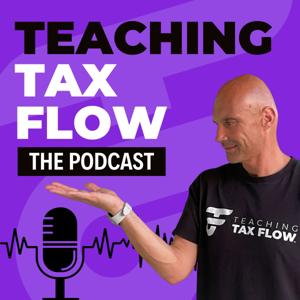


Welcome to Episode 152 of the Teaching Tax Flow podcast! Co-hosts Chris Picciurro, CPA and John Tripolsky break down how the One Big Beautiful Bill Act (OB3) reshapes the landscape for small business owners—covering everything from the QBI deduction and 100% bonus depreciation to Opportunity Zones, SALT planning, and new credits for employers and employees. Sponsored by Sunsets & Dinks, this episode gives entrepreneurs and closely held businesses a clear roadmap for tax-smart decisions.
What You’ll Learn:
• How OB3 permanently extends key provisions like QBI and restores 100% bonus depreciation
• Where Opportunity Zone Funds fit into an overall planning strategy
• SALT cap increases and how PTE workarounds can lower effective federal tax
• New and expanded credits (e.g., FICA tip credit expansion to beauty/service industries) and dependent care limits
• Practical, ethical strategy stacking to maximize deductions while staying compliant
Key Insights:
OB3 creates durable planning opportunities for small businesses—particularly those investing in equipment, real estate, or operating in high-tax states. Pairing QBI, bonus depreciation, and SALT strategy with OZ planning can materially change after-tax outcomes when implemented thoughtfully.
Notable Quotes:
• “What bonus depreciation is, is a provision that allows you to deduct the entire amount of asset purchase instead of writing it off over five, seven, or 15 years.” – Chris Picciurro
• “I think this is something that a lot of people are overlooking and we are going to lean into… in getting a special guest on to specifically talk about Opportunity Zone funds.” – Chris Picciurro
• “The people in our community, the teaching tax flow community, the voice of tax planning, by the way, drive our content, not us.” – Chris Picciurro
• “Now you could deduct if you’re married up to $40,000.” – Chris Picciurro (on SALT increases)
• “Ideas are cheap, implementation is valuable.” – Chris Picciurro
Resources:
• Teaching Tax Flow Website
• Teaching Tax Flow YouTube Channel
• OB3 Playlist
• Defeating Taxes
Episode Sponsor:
Sunsets & Dinks — premium pickleball apparel for the TTF community. Save 15% at teachingtaxflow.com/pickleball with code TTF15.
In this episode of the Teaching Tax Flow podcast, hosts Chris Picciurro, CPA, and John Tripolsky welcome back Scott Maurer, VP at Advanta IRA, to take a deep dive into the world of self-directed IRAs.
Many investors don’t realize that retirement funds can be used for much more than just stocks and mutual funds. Scott breaks down how self-directed IRAs open the door to real estate, private lending, startups, precious metals, and even cryptocurrency — all while maintaining tax advantages.
The conversation explores how these accounts work, what you can and can’t invest in, compliance requirements, and practical strategies for combining traditional IRAs with self-directed ones. Whether you’re an investor seeking greater control or a tax pro advising clients, this episode uncovers strategies that can maximize retirement wealth.
What You’ll Learn:
• What self-directed IRAs are — and what they are not
• How to diversify retirement funds into real estate, private companies, and more
• The rules for disqualified persons and prohibited transactions
• The difference between custodial and checkbook IRAs
• How to plan ahead for RMDs with illiquid assets
• Practical compliance requirements and why custodians matter
Key Insights:
Self-directed IRAs give investors control and flexibility, but with that freedom comes responsibility. From avoiding prohibited transactions to balancing liquidity for RMDs, Scott explains why working with a knowledgeable custodian is essential for both compliance and strategy.
Notable Quotes:
• “Most people don’t know it’s possible to invest in real estate or startups with their IRA — because their brokerage won’t tell them.” – Scott Maurer
• “Your IRA cannot transact with or benefit a disqualified person. That’s critical to know.” – Scott Maurer
• “Control is the number one benefit of a self-directed IRA.” – John Tripolsky
• “Ideas are cheap — implementation and compliance are what make the difference.” – Chris Picciurro
Resources:
• Advanta IRA
• Teaching Tax Flow Hub
• Join the Community: DefeatingTaxes.com
• Sunsets & Dinks Pickleball Apparel – teachingtaxflow.com/pickleball (Use code TTF15)
In Episode 150 of the Teaching Tax Flow podcast, hosts Chris Picciurro, CPA, and John Tripolsky celebrate a major milestone—150 episodes of empowering listeners with actionable insights in tax, finance, and business.
This special edition reflects on the show's evolution and highlights guest episodes that have delivered exceptional value on topics including real estate investing, tax strategies, IRS updates, financial planning, lending, bookkeeping, compliance, and more.
🎙️ EPISODES FEATURED:
#4 | Real Estate Spotlight (Panama City Beach, FL) – Crystal Ball
https://share.transistor.fm/s/b67de8c3
#6 | Lending Partners – Brenna M. Carles
https://share.transistor.fm/s/72fd8df4
#12 | REPS & Material Participation – Kirsten Limmer
https://share.transistor.fm/s/30d45fac
#14 | IRS Notices & Responses – Andrew Poulos
https://share.transistor.fm/s/60e885b3
#18 | Employee Retention Credit – Heidi Henderson / Stacy Deru
https://share.transistor.fm/s/871b18a4
#20 | Real Estate Spotlight (Fort Walton Beach, FL) – Heather Blatz
https://share.transistor.fm/s/87e104dc
#22 | Self-Directed IRAs – Scott Maurer
https://share.transistor.fm/s/de0be61d
#24 | R&D Credits – Heidi Henderson / Stacy Deru
https://share.transistor.fm/s/d647b847
#26 | Private Reinsurance / 831(b) – Roger Roundy
https://share.transistor.fm/s/639c5b84
#27 | Alt. Investments: Wildlife – Chris Gilroy
https://share.transistor.fm/s/78498cfd
#29 | Real Estate Spotlight (Nashville, TN) – Michael Gomez
https://share.transistor.fm/s/e331b511
#30 | Music & Money (Moon Taxi) – Trevor Terndrup / Tommy Putnam
https://share.transistor.fm/s/d1dd14c6
#32 | Legal Insight: STRs – Jeff Hampton
https://share.transistor.fm/s/d9721d5f
#38 | IRS War Stories – Andrew Poulos
https://share.transistor.fm/s/648fe7da
#42 | Mortgage Prep 101 – Brenna M. Carles
https://share.transistor.fm/s/b9f3f8d9
#43 | Money Tips for Teens – Dave Alger
https://share.transistor.fm/s/99e2828d
#47 | W-2 vs. 1099 – Jason Moll, CPA
https://share.transistor.fm/s/c90ffb07
#49 | How Taxes Are Made – LaShawn Thomas
https://share.transistor.fm/s/3f48c40d
#50 | Why Businesses Fail – Jon Neal
https://share.transistor.fm/s/7b2310c3
#62 | Cost Segregation Study – Heidi Henderson
https://share.transistor.fm/s/c55caa88
#66 | Corporate Transparency Act – Jeff Hampton
https://share.transistor.fm/s/e12eb0ea
#68 | 2024 IRS Update – Andrew Poulos
https://share.transistor.fm/s/96636666
#72 | Bookkeeping 101 – Lisa McCarthy
https://share.transistor.fm/s/583e56e0
#75 | 1099s Explained – Kaitlyn Rummel
https://share.transistor.fm/s/6fb268d7
#77 | STR Loophole – Arda Bircan
https://share.transistor.fm/s/a4411511
#80 | Payroll 101 – Will Lopez
https://share.transistor.fm/s/3d22a846
#83 | Long-Term Care Planning – Brooke Crane Acre
https://share.transistor.fm/s/e9d7f005
#85 | 1031 Exchange Update – Scott R. Saunders
https://share.transistor.fm/s/4dcdb380
#87 | Selling a Business – James Cunningham
https://share.transistor.fm/s/cadd8468
#89 | Real Estate Popularity – Bill Allen
https://share.transistor.fm/s/d62b171f
#95 | Deferred Sales Trusts – Todd Jackson
https://share.transistor.fm/s/68b88f2e
#99 | Corp. Transparency Act – Angelina Urquhart
https://share.transistor.fm/s/9baafa50
🎥 Video Episodes (YouTube):
#101 | Charitable Giving – Caden Gunnell
https://youtu.be/e2lvdeu4QZg
#104 | Credit Unions vs. Banks – Chrissy Siders
https://youtu.be/lRhT5uWDf_o
#107 | Business Life Cycles – Kelly Bender
https://youtu.be/uHPngp7E86g
#110 | Influencers & Taxes – Duke Alexander Moore
https://youtu.be/aomQ83WdueE
#112 | Capital Loss Harvesting – Alex Caswell / Colby Davis
https://youtu.be/W2LDZcS6t_M
#118 | Cannabis & Taxes – Kareyna Miller
https://youtu.be/4glCnI3uXWY
#121 | Farm Tax Benefits – Kelly Bender
https://youtu.be/Pcpq8h3S2xA
#125 | Delaware Statutory Trusts – Warren Thomas
https://youtu.be/PtQbZRIdeT4
#127 | Social Security – Robert D. Soerens
https://youtu.be/NvZ3srHbwAI
#129 | Estate Planning 101 – Court Pitcher
https://youtu.be/Ft0RIQrdpRU
#131 | Infinite Banking – Tom Laune
https://youtu.be/SIb-B61QV_4
#134 | Financing Property – Parker Borofsky
https://youtu.be/tW9xVRBw7aY
#137 | Digital Asset Reporting – Tynisa Gaines
https://youtu.be/fF9XbGfQ0N0
#140 | BRRRR Method – Jim Ingersoll
https://youtu.be/81NcN9hm7O8
#143 | Mindset + Money – Curtis McCollum
https://youtu.be/NpjN_ehtBdY
#145 | OB3 Bill: Real Estate – Scott R. Saunders
https://youtu.be/NYInhhFL0Eg
#148 | QSBS Exemption – Brady Weller
https://youtu.be/JwvchBIRVSU
⸻
RESOURCES:
• TTF Hub: https://www.teachingtaxflow.com/hub
• Defeating Taxes Community: https://www.defeatingtaxes.com
⸻
EPISODE SPONSOR:
Wealth Builders Mortgage Group
https://www.wealthbuildersmortgagegroup.com
In this episode of the Teaching Tax Flow podcast, hosts Chris Picciurro, CPA, and John Tripolsky break down the 4-Step Tax Planning Implementation Process — the same proprietary framework used in Chris’s CPA practice and within Teaching Tax Flow.
As the team approaches their milestone 150th episode, they spotlight the value of moving from tax ideas to tax results by following a clear, repeatable process: Diagnose, Prescribe, IQ (Suitability) Test, and Implement. Through real-world examples and engaging analogies, Chris and John show how this approach creates tailored, effective strategies that minimize lifetime tax liability — legally and ethically.
What You’ll Learn:
• The four steps of the proprietary tax planning process and how each works
• Why knowing your marginal tax rate is the #1 KPI for tax planning
• How to determine the right prescription for your unique tax needs
• Common pitfalls when implementing tax strategies without suitability checks
• Why execution matters more than simply collecting ideas
Key Insights:
The same structured process works for every case, but the results are always unique. By diagnosing the current tax position, prescribing the right strategies, testing them for suitability, and then implementing them, taxpayers can avoid wasted effort and ensure their plans fit their circumstances.
Notable Quotes:
• “The process is the same for every case, but the results are always unique.”
• “Just because there’s four steps in this process doesn’t mean it necessarily has to take a long time.”
• “Implementation is key. Make some things you could self-implement like a health savings account…”
• “Your marginal tax rate is your number one KPI for your tax planning.”
• “Ideas are cheap, you can find them on TikTok, Instagram, etc. Implementation is valuable.”
Resources:
• Teaching Tax Flow Hub
Episode Sponsor:
Wealth Builders Mortgage Group
wealthbuildersmortgagegroup.com
In this episode of the Teaching Tax Flow podcast, hosts Chris Picciurro, CPA, and John Tripolsky welcome Brady Weller, co-founder of QSBS Rollover, to explore one of the most powerful — and most overlooked — tax planning tools for entrepreneurs: the Qualified Small Business Stock (QSBS) exemption.
If you’re a startup founder, business owner, or investor looking to optimize your exit strategy, this conversation could save you millions in taxes. Brady breaks down IRC Section 1202, explaining how the QSBS exemption allows eligible C Corporation shareholders to exclude up to $10 million (or 10x their basis) in capital gains from federal income tax.
The discussion also covers the QSBS rollover under IRC Section 1045, a strategy Brady likens to a “1031 exchange for company stock” — enabling sellers to reinvest gains into another qualified small business and defer taxes. The episode is packed with real-world applications, planning tips, and insight into recent legislative enhancements through the Inflation Reduction Act, which increased the QSBS exclusion cap and reaffirmed bipartisan support for innovation incentives.
Whether you’re preparing for a major exit or just learning about QSBS for the first time, this episode is a masterclass in how to use specialized tax planning to unlock significant wealth.
What You’ll Learn:
• How QSBS works and who qualifies
• The tax savings potential: $10M+ federal gain exclusion
• How the QSBS rollover under Section 1045 defers taxes
• Legislative updates that make QSBS even more attractive
• State-by-state considerations for QSBS eligibility
• Why early and specialized planning is critical for maximum benefit
Key Insights:
Brady Weller reveals how QSBS is often an untapped goldmine for founders — and why lack of awareness can mean leaving millions on the table. From structuring your business properly to timing exits and using rollovers, the right QSBS strategy can dramatically reshape your after-tax results.
Notable Quotes:
• “QSBS is one of the most powerful tax exemptions available, allowing federal income tax exemption on up to $10 million of gain.” – Brady Weller
• “We dreamed of creating an always available, downside-protected option for founders to execute these rollovers successfully.” – Brady Weller
• “OBBBA made QSBS even more powerful, expanding exclusion cap to $15 million, showing bipartisan support for this incentive.” – Brady Weller
• “QSBS and its rollovers provide a 1031-type tax deferral for company stock, fundamentally transforming tax planning strategies for many.” – Brady Weller
• “Our firm realizes around $3 billion in exit volume, emphasizing significant missed opportunities in the current system.” – Brady Weller
Resources:
• QSBS Rollover Website
• Connect with Brady Weller on LinkedIn
• Teaching Tax Flow
Episode Sponsor:
Strategic Associates, LLC
Roger Roundy
www.linkedin.com/in/roger-roundy-86887b23
Join hosts Chris Picciurro, CPA, and John Tripolsky as they explore an often-overlooked topic: the tax implications of changing jobs or transitioning into retirement. With career changes on the rise in recent years—whether due to new opportunities, layoffs, or retirement—understanding the tax side of employment transitions is crucial.
Chris and John walk listeners through everything from retirement plan rollovers and benefit changes to withholding adjustments and self-employment considerations. They also tackle what you need to know about flexible spending accounts, health savings accounts, vested stock options, and group insurance benefits when leaving an employer. Wrapping up, the conversation shifts toward self-employment and retirement, covering key planning points like self-employment taxes, Social Security timing, and Medicare enrollment.
What You'll Learn:
• How to manage 401(k) rollovers and avoid penalties
• Why updating W-4 withholdings is crucial after a job change
• What to do about group life insurance and other employer benefits
• Key tax considerations for transitioning into self-employment
• Planning strategies for retirement income, Social Security, and relocation taxes
Key Insights:
Leaving a job involves more than just changes in pay; it requires proactive tax planning. Whether you’re switching employers or entering retirement, knowing these key steps can prevent costly surprises and help you navigate this major transition with confidence.
Notable Quotes:
• “I didn’t realize all of the considerations when you change jobs...that is a podcast episode.” – Chris Picciurro
• “Make sure your withholdings from your W-2 wages are proper.” – Chris Picciurro
• “Even if you have great life insurance through your employer, have coverage outside of your employment.” – Chris Picciurro
• “There are definitely some benefits for rolling it out of that former employer’s plan.” – Chris Picciurro
• “When you leave a job, there’s a lot more things to consider than just pay.” – Chris Picciurro
Resources:
• Teaching Tax Flow Website
• Defeating Taxes Facebook Group
• Teaching Tax Flow Hub
• Teaching Tax Flow YouTube Channel
Episode Sponsor:
Integrated Investment Group (IIG)
Wondering if you qualify as an accredited investor? Visit teachingtaxflow.com/iig to learn more.
In this episode of the Teaching Tax Flow podcast, hosts Chris Picciurro, CPA, and John Tripolsky break down how proactive tax planning can help you take control of your financial future. Fresh off their visit to NATP’s Taxposium in Las Vegas, they explore the critical differences between tax compliance and forward-looking tax planning, providing a clear framework for implementing powerful strategies.
Chris introduces the Three Buckets of Tax Planning Implementations: behavioral strategies, tax-advantaged investments, and tax mitigation approaches. Together, they explore how each bucket impacts cash flow, tax flow, and duration—giving listeners an actionable blueprint for smarter financial decisions.
What You’ll Learn:
• The difference between tax compliance and tax planning
• How to leverage the three buckets of tax planning
• Why implementation partners matter just as much as strategy
• Real-world examples of behavioral strategies, tax-advantaged investments, and mitigation techniques
• How to systemize tax concepts to reduce overwhelm
Key Insights:
Tax planning isn’t just for the wealthy, it’s about creating intentional strategies that help you “own” your relationship with the IRS. By simplifying complex tax principles into digestible buckets, Chris and John make tax planning approachable, whether you’re a seasoned professional or just getting started.
Notable Quotes:
• “Ideas are cheap; implementation is valuable.”
• “Tax strategies don’t like to be single—they like to mingle, bundle, and stack.”
• “Having the wrong implementation partner could make you worse off than if you did nothing at all.”
• “Just because someone’s on TikTok doesn’t mean they can give accurate tax advice.”
Resources:
• Join the Defeating Taxes Community: DefeatingTaxes.com
• Teaching Tax Flow: teachingtaxflow.com
Episode Sponsor:
Reps Tracker
Get your special TTF discount at teachingtaxflow.com/reps and use code IFG.
Join hosts Chris Picciurro, CPA, and John Tripolsky as they welcome back Scott Saunders, Senior Vice President at Asset Preservation Inc., to unpack how the One Big Beautiful Bill Act (OB3) impacts real estate investors.
From 1031 exchanges and opportunity zones to bonus depreciation and estate tax updates, this episode dives deep into tax strategies that savvy investors can leverage immediately. If you’re in real estate—or advising clients who are—you won’t want to miss this breakdown of how OB3 brings long-term certainty and powerful new planning tools.
What You’ll Learn:
• Why OB3 is a major win for real estate investors
• How 1031 exchanges and carried interest survived untouched
• What the new $30M estate tax threshold means for your legacy
• How to stack bonus depreciation with 1031s
• The ongoing benefits of opportunity zones
Key Insights:
Scott explains how OB3 not only protects powerful real estate tools but also expands them. From permanent bonus depreciation to increased SALT deductions and renewed work-related income deductions, this bill sets the stage for years of opportunity in property investing.
Guest Spotlight:
Scott Saunders is a nationally recognized expert on 1031 exchanges and real estate tax strategies. As Senior Vice President of Asset Preservation Inc., he works with real estate professionals, investors, and lawmakers to shape smart policy and education around property taxation.
Practical Takeaways:
• Use 1031s to defer gains—and now pair them with permanent bonus depreciation
• Plan for generational wealth transfer under the new $30M estate tax limit
• Stack Opportunity Zones with other strategies for ultimate tax efficiency
• Real estate investments just got easier to plan—leverage the power of OB3
Resources:
• Teaching Tax Flow
• Asset Preservation Inc.
• Teaching Tax Flow YouTube Channel
• Join the community: DefeatingTaxes.com
Episode Sponsor:
Sunsets & Dinks Pickleball Apparel
Score 15% off at teachingtaxflow.com/pickleball with code TTF15
Join hosts Chris Picciurro, CPA, and John Tripolsky as they unpack the sweeping changes introduced by the newly enacted One Big Beautiful Bill Act (OBBBA or OB3). This 1,100-page piece of legislation is one of the most impactful tax updates in recent years, and this episode breaks it down into digestible, actionable insights for individual taxpayers.
What You’ll Learn:
• How OB3 makes many TCJA provisions permanent
• What’s changing with the Child Tax Credit and how it affects your refund
• New deductions for overtime pay and tip income
• Why the SALT deduction cap increase is a big win for high-tax states
• What “Trump Accounts” are and how they could shape your child’s financial future
Key Insights:
Chris Picciurro highlights the lasting impact of OB3 on everyday tax planning. From expanded standard deductions to new tax benefits for families and workers, this episode is a must-listen for anyone navigating the new tax landscape in 2025 and beyond.
Practical Takeaways:
• Use the increased $2,200 Child Tax Credit to boost your refund potential
• Plan ahead if you’re in a high-tax state—the $40,000 SALT deduction cap can dramatically shift your strategy
• Deduct up to $25,000 in cash tips and leverage new vehicle loan interest rules
• Learn how “Trump Accounts” might offer automatic contributions for your child
Resources:
• Wealth Builders Mortgage Group: wealthbuildersmortgagegroup.com
• Explore more episodes at TeachingTaxFlow.com
• Join the Defeating Taxes Facebook Group: DefeatingTaxes.com
• Watch full episodes on our YouTube Channel
Episode Sponsor:
Wealth Builders Mortgage Group
Visit wealthbuildersmortgagegroup.com and mention Teaching Tax Flow for personalized mortgage guidance from trusted professionals.
Join hosts Chris Picciurro, CPA, and John Tripolsky as they welcome transformational coach Curtis McCullom to explore the powerful connection between mindset and money. Discover how childhood programming shapes your financial decisions and learn to overcome the invisible barriers holding you back.
What You'll Learn:
• Why 95% of your behavior is driven by subconscious programming from ages 0-5
• How limiting beliefs about money sabotage your financial success
• The difference between conscious goals and subconscious resistance
• Why "success is hard" programming keeps you stuck
• How to identify and eliminate financial blind spots
Key Insights:
Curtis shares his breakthrough, discovering that a belief formed at age 2 ("success is hard and difficult") was sabotaging his million-dollar financial services career. Learn how beliefs like "money don't grow on trees" or "tax planning is only for rich people" create invisible barriers to wealth building.
Guest Spotlight:
Curtis McCullom brings 40+ years of financial services experience plus expertise in transformational coaching. He specializes in helping entrepreneurs and high achievers eliminate childhood programming that limits their success.
Practical Takeaways:
• Question limiting beliefs: "Is this true for everyone?"
• Guard your mindset daily - it's not a one-and-done fix
• Recognize that you have all the resources within you to succeed
• Address the baggage before implementing financial strategies
Resources:
Find a tax professional at www.2025.tax
Episode Sponsor:
Legacy Lock
Book a 30-minute complimentary discovery session at teachingtaxflow.com/legacy
(Mention Teaching Tax Flow for special pricing)
From the publisher's feed

3,223 Listeners
829 Listeners

1,951 Listeners

138 Listeners

800 Listeners

111,764 Listeners

56,420 Listeners

693 Listeners
88 Listeners

342 Listeners

10,238 Listeners
258 Listeners

10,107 Listeners

891 Listeners

18 Listeners