The #1 Musical Experience

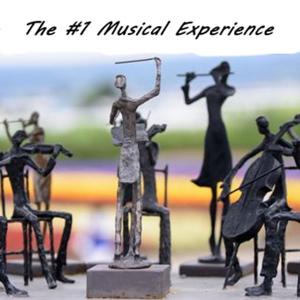
The #1 Musical Experience

By Herb WilliamsArtsPerforming Arts
Download on the App Store

The #1 Musical Experience episodes

  • Chopin - Complete Nocturnes (Brigitte Engerer)
    Why We Should Expose Our Kids To Classical Music https://ourtownlive.net #herbw79

    Frédéric François Chopin, born Fryderyk Franciszek Chopin (1 March 1810 – 17 October 1849), was a Polish composer and virtuoso pianist of the Romantic period who wrote primarily for solo piano. He has maintained worldwide renown as a leading musician of his era, one whose "poetic genius was based on a professional technique that was without equal in his generation."

    Chopin was born in Żelazowa Wola in the Duchy of Warsaw and grew up in Warsaw, which in 1815 became part of Congress Poland. A child prodigy, he completed his musical education and composed his earlier works in Warsaw before leaving Poland at the age of 20, less than a month before the outbreak of the November 1830 Uprising. At 21, he settled in Paris. Thereafter – in the last 18 years of his life – he gave only 30 public performances, preferring the more intimate atmosphere of the salon. He supported himself by selling his compositions and by giving piano lessons, for which he was in high demand. Chopin formed a friendship with Franz Liszt and was admired by many of his other musical contemporaries, including Robert Schumann.


    After a failed engagement to Maria Wodzińska from 1836 to 1837, he maintained an often troubled relationship with the French writer Amantine Dupin (known by her pen name, George Sand). A brief and unhappy visit to Mallorca with Sand in 1838–39 would prove one of his most productive periods of composition. In his final years, he was supported financially by his admirer Jane Stirling, who also arranged for him to visit Scotland in 1848. For most of his life, Chopin was in poor health. He died in Paris in 1849 at the age of 39, probably of pericarditis aggravated by tuberculosis.

    All of Chopin's compositions include the piano. Most are for solo piano, though he also wrote two piano concertos, a few chamber pieces, and some 19 songs set to Polish lyrics. His piano writing was technically demanding and expanded the limits of the instrument, his own performances noted for their nuance and sensitivity. His major piano works also include mazurkas, waltzes, nocturnes, polonaises, the instrumental ballade (which Chopin created as an instrumental genre), études, impromptus, scherzos, preludes and sonatas, some published only posthumously.
    Among the influences on his style of composition were Polish folk music, the classical tradition of J. S. Bach, Mozart, and Schubert, and the atmosphere of the Paris salons of which he was a frequent guest. His innovations in style, harmony, and musical form, and his association of music with nationalism, were influential throughout and after the late Romantic period.

    Chopin's music, his status as one of music's earliest celebrities, his indirect association with political insurrection, his high-profile love-life, and his early death have made him a leading symbol of the Romantic era. His works remain popular, and he has been the subject of numerous films and biographies of varying historical fidelity. Among his many memorials is the Fryderyk Chopin Institute, which was created by the Parliament of Poland to research and promote his life and works. It hosts the International Chopin Piano Competition, a prestigious competition devoted entirely to his works.

    Hosted on Acast. See acast.com/privacy for more information.

    1 hr 57 min
  • George Gershwin
    Why We Should Expose Our Kids To Classical Music https://ourtownlive.net #herbw79

    George Gershwin (/ˈɡɜːrʃ.wɪn/; born Jacob Bruskin Gershowitz, September 26, 1898 – July 11, 1937) was an American composer and pianist whose compositions spanned both popular and classical genres. Among his best-known works are the orchestral compositions Rhapsody in Blue (1924) and An American in Paris (1928), the songs Swanee (1919) and Fascinating Rhythm (1924), the jazz standard I Got Rhythm (1930), and the opera Porgy and Bess (1935) which spawned the hit Summertime.

    Gershwin studied piano under Charles Hambitzer and composition with Rubin Goldmark, Henry Cowell, and Joseph Brody. He began his career as a song plugger but soon started composing Broadway theater works with his brother Ira Gershwin and with Buddy DeSylva. He moved to Paris intending to study with Nadia Boulanger, but she refused him. He subsequently composed An American in Paris, returned to New York City and wrote Porgy and Bess with Ira and DuBose Heyward. Initially a commercial failure, it came to be considered one of the most important American operas of the twentieth century and an American cultural classic.

    Gershwin moved to Hollywood and composed numerous film scores. He died in 1937 of a malignant brain tumor. His compositions have been adapted for use in film and television, with several becoming jazz standards recorded and covered in many variations.

    Hosted on Acast. See acast.com/privacy for more information.

    34 min
  • Passacaglia for Violin and Viola
    Why We Should Expose Our Kids To Classical Music https://ourtownlive.net #herbw79

    Johan Halvorsen composed his Passacaglia for Violin and Viola in 1893. It is based on Passacaille (no. 6) from the Suite in G minor, HWV 432, by George Frideric Hande

    Hosted on Acast. See acast.com/privacy for more information.
    7 min
  • J.S Bach - Concerto No.2 in C for 2 Cembalos - I. Allegro
    Why We Should Expose Our Kids To Classical Music https://ourtownlive.net #herbw79

    The Piano Concerto No. 2 in C minor, Op. 18, is a concerto for piano and orchestra composed by Sergei Rachmaninoff between the autumn of 1900 and April 1901. The second and third movements were first performed with the composer as soloist on 2 December 1900. The complete work was premiered, again with the composer as soloist, on 9 November 1901, with his cousin Alexander Siloti conducting. This piece is one of Rachmaninoff's most enduringly popular pieces, and established his fame as a concerto composer.

    Hosted on Acast. See acast.com/privacy for more information.

    8 min
  • Brahms - Symphony No.3 - Poco Allegretto
    Why We Should Expose Our Kids To Classical Music https://ourtownlive.net #herbw79

    The Symphony No. 3 in F major, Op. 90, is a symphony by Johannes #Brahms. The work was written in the summer of 1883 at Wiesbaden, nearly six years after he completed his Symphony No. 2. In the interim Brahms had written some of his greatest works, including the Violin Concerto, two overtures, and Piano Concerto No. 2. The premiere performance was given on 2 December 1883 by the Vienna Philharmonic Orchestra, under the direction of Hans Richter. It is the shortest of Brahms' four symphonies; a typical performance lasts between 30 and 40 minutes.Wikipedia

    Hosted on Acast. See acast.com/privacy for more information.

    7 min
  • Vilvaldi -Violin Concerto in F major, RV 293 'Autumn'
    Why We Should Expose Our Kids To Classical Music https://ourtownlive.net #herbw79

    Antonio Lucio Vivaldi was an Italian Baroque composer, virtuoso violinist, teacher, impresario, and Roman Catholic priest. Born in Venice, the capital of the Venetian Republic, Vivaldi is regarded as one of the greatest Baroque composers, and his influence during his lifetime was widespread across Europe, being paramount in the development of Johann Sebastian Bach's instrumental music. He composed many instrumental concertos, for the violin and a variety of other musical instruments, as well as sacred choral works and more than forty operas. His best-known work is a series of violin concertos known as the Four Seasons.

    Many of his compositions were written for the all-female music ensemble of the Ospedale della Pietà, a home for abandoned children. Vivaldi had worked there as a Catholic priest for 18 months and was employed there from 1703 to 1715 and from 1723 to 1740. Vivaldi also had some success with expensive stagings of his operas in Venice, Mantua and Vienna. After meeting the Emperor Charles VI, Vivaldi moved to Vienna, hoping for royal support. However, the Emperor died soon after Vivaldi's arrival, and Vivaldi himself died in poverty less than a year later.

    After almost two centuries of decline, Vivaldi's music underwent a revival in the early 20th century, with much scholarly research devoted to his work. Many of Vivaldi's compositions, once thought lost, have been rediscovered - in one case as recently as 2006. His music remains widely popular in the present day and is regularly played all over the world.

    Hosted on Acast. See acast.com/privacy for more information.
    12 min
  • The Well Tempered Clavier, Book I, BWV 846-869 - Prelude in Fugue No.1 in C major
    Why We Should Expose Our Kids To Classical Music https://ourtownlive.net #herbw79

    Bach begins his epic journey through all the keys in C major for the first Prelude and Fugue. He then moves to C minor for the second then chromatically upwards to C sharp major for the fourth and C sharp minor for the fifth and so on. The importance of these works cannot be overstated. They not only offer every aspiring pianist the opportunity to immerse themselves in the world and style of Bach but also to develop their polyphonic technique in playing fugues of three and four voices. One key consideration Tovey makes in his editorial notes to the ABRSM collection is that “Bach writes very accurately what is to be played but, he leaves the performer free as to how it is played.” Taking the time to understand the time in which these works were composed is also crucial regarding any decision in how they are played. Ensuring the clarity of Bach’s part-writing is paramount as is being able to mark the climatic moments in each piece. Bach could not have known how the piano of today would sound and this needs thought when approaching these works.

    There are many subtle differences in how these pieces would sound between these instruments, but what can be agreed is the ingenuity and skill with which Bach composed these works regardless of the instrument on which they are performed. In a way, it is all the more remarkable, as the compositions are perfectly convincing on modern instruments and do not detract from the genius of the work.

    Hosted on Acast. See acast.com/privacy for more information.
    5 min
  • Rossini- WilliamTell Overture
    Why We Should Expose Our Kids To Classical Music https://ourtownlive.net #herbw79

    The William Tell Overture was written to open an opera by Gioachino Rossini. The opera is based on a legend about the Swiss hero William Tell. According to the legend, William Tell was an expert with a bow and arrow who shot an apple off his son's head.

    Gioachino Antonio Rossin (29 February 1792 – 13 November 1868) was an Italian composer who gained fame for his 39 operas, although he also wrote many songs, some chamber music and piano pieces, and some sacred music. He set new standards for both comic and serious opera before retiring from large-scale composition while still in his thirties, at the height of his popularity.

    Born in Pesaro to parents who were both musicians (his father a trumpeter, his mother a singer), Rossini began to compose by the age of 12 and was educated at music school in Bologna. His first opera was performed in Venice in 1810 when he was 18 years old. In 1815 he was engaged to write operas and manage theatres in Naples. In the period 1810–1823 he wrote 34 operas for the Italian stage that were performed in Venice, Milan, Ferrara, Naples and elsewhere; this productivity necessitated an almost formulaic approach for some components (such as overtures) and a certain amount of self-borrowing. During this period he produced his most popular works including the comic operas L'italiana in Algeri, Il barbiere di Siviglia (known in English as The Barber of Seville) and La Cenerentola, which brought to a peak the opera buffa tradition he inherited from masters such as Domenico Cimarosa and Giovanni Paisiello. He also composed opera seria works such as Otello, Tancredi and Semiramide. All of these attracted admiration for their innovation in melody, harmonic and instrumental colour, and dramatic form. In 1824 he was contracted by the Opéra in Paris, for which he produced an opera to celebrate the coronation of Charles X, Il viaggio a Reims (later cannibalised for his first opera in French, Le comte Ory), revisions of two of his Italian operas, Le siège de Corinthe and Moïse, and in 1829 his last opera, Guillaume Tell.

    Hosted on Acast. See acast.com/privacy for more information.

    12 min
  • Strauss - The Blue Danube
    Why We Should Expose Our Kids To Classical Music https://ourtownlive.net #herbw79

    "The Blue Danube" is the common English title of "An der schönen, blauen Donau", Op. 314, a waltz by the Austrian composer Johann Strauss II, composed in 1866.

    Hosted on Acast. See acast.com/privacy for more information.
    9 min
  • Bach Goldberg Variations, BWV 988 - 01 - Aria
    Why We Should Expose Our Kids To Classical Music https://ourtownlive.net #herbw79

    The Goldberg Variations, BWV. 988, are a set of 30 variations for harpsichord by Johann Sebastian Bach. First published in 1741 as the fourth in a series Bach called Clavier-Übung, "keyboard practice", the work is considered to be one of the most important examples of variation form. It is named after Johann Gottlieb Goldberg, who may have been the first performer.

    Hosted on Acast. See acast.com/privacy for more information.
    5 min

About The #1 Musical Experience

From the publisher's feed

Works of classical repertoire often exhibit complexity in their use of orchestration, counterpoint, harmony, musical development, rhythm, phrasing, texture, and form. Whereas most popular styles are…

More shows like The #1 Musical Experience

Classical Performance by Classical Performance

Classical Performance

348 Listeners

Classical Music Free by Shiloh worship music

Classical Music Free

199 Listeners

Sticky Notes: The Classical Music Podcast by Joshua Weilerstein

Sticky Notes: The Classical Music Podcast

2,182 Listeners

Boring Books for Bedtime Readings to Help You Sleep by Sharon Handy

Boring Books for Bedtime Readings to Help You Sleep

1,261 Listeners

Sleep - Meandering Piano by Meandering Piano

Sleep - Meandering Piano

256 Listeners

I Can’t Sleep by Benjamin Boster

I Can’t Sleep

1,057 Listeners

Get Sleepy: stories for sleep by Slumber Studios

Get Sleepy: stories for sleep

9,350 Listeners

Sleep Tight Relax - Bedtime Stories That Take You Somewhere Peaceful by Sleep Tight Media | Calming Bedtime Podcasts for Kids & Starglow Media

Sleep Tight Relax - Bedtime Stories That Take You Somewhere Peaceful

886 Listeners

Just Sleep - Bedtime Stories for Adults by Bedtime Stories with Taesha Glasgow

Just Sleep - Bedtime Stories for Adults

756 Listeners

Sleep Magic: Sleep Hypnosis & Meditation for Sleep Podcast by Sleepiest: Hypnosis for Sleep Podcast

Sleep Magic: Sleep Hypnosis & Meditation for Sleep Podcast

1,613 Listeners

White Noise and Sleep Sounds (12 Hours) by White Noise and Sleep Sounds (12 Hours) to Sleep | Study | Relax | Soothe a Baby

White Noise and Sleep Sounds (12 Hours)

236 Listeners

Sounds for Deep Sleep: White Noise, Ambience, Nature Sounds by Sounds for Deep Sleep

Sounds for Deep Sleep: White Noise, Ambience, Nature Sounds

92 Listeners

Sleep & Relaxation Music to Calm the Nervous System by SOMA Sound

Sleep & Relaxation Music to Calm the Nervous System

129 Listeners

Boring History for Sleep by Velvet

Boring History for Sleep

560 Listeners