
Sign up to save your podcasts
Or



Send us Fan Mail
Are Christians required to keep the Law of Moses? Is the seventh-day Sabbath still binding under the New Covenant, or was it fulfilled in Christ? In this conversation, host Mike Colburn sits down with Dr. R. L. Solberg, author of Torahism and founder of The Biblical Roots Ministries, to work through the questions his audience asks him about most: the law, the Sabbath, the New Covenant, and what changed when Jesus said, "It is finished."
Dr. Solberg has spent years answering the Hebrew Roots, Torah-keeping, and Messianic movements. Those arguments turn out to be the mirror image of what so many of us inherited in Adventism. If you've ever been told that "sin is the transgression of the law," that the Ten Commandments are what's written on our hearts, or that keeping the Sabbath is a test of loyalty to God, this one is for you.
#apologetics
#sda
#theology
#hebrewroots
The Biblical Roots Ministries
Our website
Our YouTube Channel
Prof. Solberg's Blog
Support our Ministry (Thank you!)
What if Christmas felt sacred again? Full of Grace and Truth, the new book from award-winning author R. L. Solberg, invites you to rediscover the biblical story at the heart of the season. Available now in paperback and Kindle, with all proceeds supporting The Biblical Roots Ministries. Get your copy today on Amazon.com.
Send us Fan Mail
A popular claim these days is that God prohibited pork, shellfish, and other animals because they're unhealthy, unclean scavengers, or dangerous for human consumption. But is that actually what the Bible says?
In this video, Dr. Solberg examines a viral claim that the dietary laws of Leviticus 11 were given for health reasons and test that idea against Scripture itself. He looks at the biblical meaning of "clean" and "unclean," explores the Hebrew concepts of ritual purity, and examines the reason God explicitly gives for Israel's food laws.
Were the dietary restrictions primarily about nutrition? Were they intended for all humanity? Why were Abraham, Isaac, Jacob, and Noah allowed to eat foods that would later be restricted under the Mosaic Covenant? And what does the Torah itself say about the purpose of these commandments?
Rather than relying on modern Hebrew Roots and other Torah-observant movement theories, let's go directly to the biblical text and let Scripture speak for itself.
Topics covered:
• Leviticus 11 and the prohibition of pork
• The Hebrew words ṭāhôr (clean) and ṭāmēʾ (unclean)
• Ritual purity versus health regulations
• Why Israel's dietary laws were given
• Leviticus 20:25–26 and being "set apart"
• Genesis 9 and the pre-Sinai diet
• Common misconceptions about biblical food laws
• Hebrew Roots claims examined in light of Scripture
The Biblical Roots Ministries
Our website
Our YouTube Channel
Prof. Solberg's Blog
Support our Ministry (Thank you!)
Send us Fan Mail
In this video, Dr. R. L. Solberg carefully examines Tom Bradford's teaching on the Trinity and compares it to the teaching of Scripture. Bradford argues that the traditional doctrine of the Trinity developed later in church history and does not accurately reflect the biblical picture of God. But is that claim supported by the Bible?
We'll examine key passages from both the Old and New Testaments, explore what Christians have historically meant by the doctrine of the Trinity, and test Bradford's claims against the biblical text itself. Along the way, we'll discuss the deity of Christ, the eternal Sonship of Jesus, the incarnation, adoptionism, modalism, and why precise theological language matters.
This study is not about attacking people. It's about following the Berean principle of testing every teaching against Scripture.
Links
Mr. Bradford's Full Teaching
Is the Trinity taught in the Bible and why does it matter? (From Dr. Solberg)
Is Jesus God? (From Dr. Solberg)
The Biblical Roots Ministries
Our website
Our YouTube Channel
Prof. Solberg's Blog
Support our Ministry (Thank you!)
Topics Covered in this Episode
Is the Trinity taught in the Bible?
Did the early church invent the Trinity?
Is Jesus eternally the Son of God?
What is adoptionism?
Does Tom Bradford's teaching align with Scripture?
Biblical evidence for the deity of Christ
Father, Son, and Holy Spirit in the New Testament
Common misunderstandings about Trinitarian theology
Chapters
00:00 Introduction
05:13 The Early Church & the Trinity
14:09 The Three Person Concept
19:34 The Deity of Christ
45:33 What does the Doctrine of the Trinity teach?
Whether you're exploring Christianity, wrestling with questions about the Trinity, or evaluating Bradford's teaching for yourself, I hope this study helps you think carefully and biblically about one of the most important doctrines of the Christian faith.
Scripture discussed: Genesis 1, Genesis 3:15, Isaiah 9:6, John 1, John 8, Matthew 28:19, Philippians 2, Hebrews 1–2, and more.
#Trinity
#christiandoctrine
#apologetics
#heresies
#theology
SUPPORT OUR MINISTRY
https://TheBiblicalRoots.org/support (Thank you!)
OUR LINKS
https://linktr.ee/thebiblicalroots
Send us Fan Mail
In this final chapter of Hebrews, Dr. R. L. Solberg walks verse-by-verse through Hebrews 13, unpacking the book’s closing exhortations about Christian love, hospitality, persecution, contentment, spiritual leadership, and enduring faith in Jesus Christ. This in-depth Bible study explores the famous “Jesus Christ is the same yesterday, today, and forever” passage, the meaning of going “outside the camp,” the superiority of Christ over the old covenant system, and the powerful closing benediction centered on the blood of the eternal covenant.
This study also examines key themes running throughout the entire Book of Hebrews, including the New Covenant, the finished work of Christ, the priesthood of Jesus, perseverance in faith, and why believers are called to hold fast to the Gospel rather than return to the old covenant shadows fulfilled in Christ. Ideal for Christians studying Hebrews, New Covenant theology, the relationship between the Old and New Testaments, and the sufficiency of Jesus’ sacrifice.
00:00 Introduction
00:20 Hebrews 13:1–6 (Let Love Continue)
17:28 Hebrews 13:7–17 (A Final Warning)
50:58 Hebrews 13:20–25 -(Benediction and Final Greetings)
#biblestudy
#hebrews13
#versebyverse
The Biblical Roots Ministries
Our website
Our YouTube Channel
Prof. Solberg's Blog
Support our Ministry (Thank you!)
Send us Fan Mail
Are Christians still under God’s law… or has something changed?
A Livestream from Douglas Hamp Ministries
In this conversation, Dr. Robert L. Solberg and Dr. Douglas Hamp tackle one of the most debated questions in the Church today: How should Christians relate to the law—without falling into legalism or losing it altogether?
Some believe the law has been fulfilled and is no longer applicable. Others argue that God’s instructions still matter and were never meant to be discarded. But what did Jesus actually teach? And how do we understand passages like Romans 10:4 and Matthew 5 in context?
This isn’t about winning an argument—it’s about seeking clarity.
In this episode, we explore:
God's New Covenant
The Relationship between Israel and the Church
Why sincere Christians come to very different conclusions
Our goal is simple: to pursue truth with humility and keep the conversation honest, respectful, and grounded in Scripture.
The Biblical Roots Ministries
Our website
Our YouTube Channel
Prof. Solberg's Blog
Support our Ministry (Thank you!)
Send us Fan Mail
Enjoy this orderly yet passionate debate on the resolution: "Does Matthew 5:17-20 Teach that Christians Ought to Obey the Law of Moses?"
Pastor Matthew Janzen argues in the affirmative, and Prof. R. L. Solberg argues in the negative. Both are followers of Jesus (Yeshua) who affirm the authority of the entire Bible—the Old Testament (Tanakh) and the New Testament (Brit Chadasha). Yet they take very different views of this critical passage from Jesus’ Sermon on the Mount. What did Jesus really mean when He said He came not to abolish the Law but to fulfill it?
“Do not think that I have come to abolish the Law or the Prophets; I have not come to abolish them but to fulfill them. For truly, I say to you, until heaven and earth pass away, not an iota, not a dot, will pass from the Law until all is accomplished. Therefore whoever relaxes one of the least of these commandments and teaches others to do the same will be called least in the kingdom of heaven, but whoever does them and teaches them will be called great in the kingdom of heaven. For I tell you, unless your righteousness exceeds that of the scribes and Pharisees, you will never enter the kingdom of heaven." (Matt 5:17–20)
The Biblical Roots Ministries
Our website
Our YouTube Channel
Prof. Solberg's Blog
Support our Ministry (Thank you!)
Send us Fan Mail
In this episode, we take a step back from typical prophetic speculations and eschatological positions and ask a deeper question: Does a third temple fit the theology of the New Testament?
Our journey begins by entering the first-century world of Jesus and His disciples, where the temple stood at the very center of Jewish life and covenant faithfulness. From there, we trace how the New Testament interprets the destruction of that temple—and what it means that Jesus called Himself greater than the temple (Matt 12:6), identified His body as the true temple (John 2:19–21), and redirected worship away from Jerusalem to “spirit and truth” (John 4:21–24).
We reason from a Christ-centered hermeneutic: letting the New Testament govern how we read Old Testament temple prophecies. Along the way, we consider why early Christians never attempted to reconstruct a temple-centered faith, and why the apostles consistently anchor our hope in Christ’s finished work and the new creation, not in a restored sacrificial system (Eph 1:21; Rev 11:15).
If you’ve only ever heard the third temple discussed in terms of end-times timelines, this approach may challenge you to rethink the question from a covenantal and theological perspective.
3D Temple Walkthrough Video Clips:
Herod's Temple 3D - Ancient Jerusalem in UNREAL ENGINE 5
© 2025 Scripture Central and Messages of Christ YouTube Channel
The Biblical Roots Ministries
Our website
Our YouTube Channel
Prof. Solberg's Blog
Support our Ministry (Thank you!)
Send us Fan Mail
Are Messianic Judaism and Hebrew Roots the same thing? What about Torah-observant Christians, Torah-keeping believers, or the broader “Hebraic Roots” movement?
In this video, we carefully compare Messianic Judaism and Hebrew Roots, while also addressing the other labels people often hear. Where do these movements overlap? Where do they differ—especially regarding the Torah, the New Covenant, and the person and work of Jesus?
If you’ve been confused by the terminology or unsure how to think biblically about these growing movements, this episode will help you sort it out with clarity and grace.
Links Mentioned in the Episode
Union of Messianic Jewish Congregations
Messianic Jewish Alliance of America
IAMCS (International Alliance of Messianic Congregations & Synagogues)
Jews for Jesus
Chosen People Ministries
One for Israel
First Fruits of Zion: A Biblical Examination (Video)
Interviews on our YouTube Channel
The Biblical Roots Ministries
Our website
Our YouTube Channel
Prof. Solberg's Blog
Support our Ministry (Thank you!)
Chapters
00:00 Intro
06:00 Messianic Judaism
09:35 Hebrew Roots
12:41 On the Essentials
25:13 Wrap it up, Solberg
Send us Fan Mail
First Fruits of Zion (FFOZ) is often described as a ministry that helps Christians reconnect with the Jewish roots of their faith—but are their teachings biblically sound? In this new video, we carefully examine their theology, focusing on the underlying hermeneutical framework and their elevation of Torah over Christ, and test it against Scripture. By engaging directly with their published materials and testing their claims against Scripture, we explain why their approach ultimately distorts the gospel and why Christian churches should exercise serious caution when considering their resources.
LINK MENTIONED
Pastor Randy Powell: HaYesod (A full Rebuttal) — A 10-part series
The Biblical Roots Ministries
Our website
Our YouTube Channel
Prof. Solberg's Blog
Support our Ministry (Thank you!)
Chapters
00:00 Introduction
07:49 Examining First Principles
22:19 Interpreting the Gospels and the Epistles
38:16 Abolishing God?
46:08 Written on Our Hearts
59:44 Torah Made Flesh
01:16:05 Wrap it up, Solberg
Send us Fan Mail
What begins as a sincere desire to understand the Jewish roots of the Christian faith can, in some cases, drift into something far more complicated. In this video, we explore the progression many believers experience as curiosity about the Torah slowly shifts from healthy study to imposed obligation.
By tracing common stages within Torahism (aka Hebrew Roots Movement, Torah-keeping, Torah-observant Christianity) we examine why this trajectory can lead to confusion, division, and a displacement of the gospel.
The video also offers practical guidance for thoughtfully and graciously engaging friends or family members who have embraced Torah observance, with an emphasis on patience, discernment, and keeping Christ at the center.
Read the article: From Curiosity to Captivity: The Journey into Torah-Observant Christianity
The Biblical Roots Ministries
Our website
Our YouTube Channel
Prof. Solberg's Blog
Support our Ministry (Thank you!)
Chapters
00:00 Intro
3:34 The 5 Stage of Torahism
12:07 Addressing Torah Keepers
From the publisher's feed
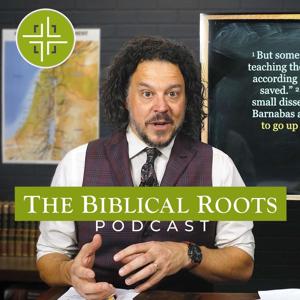
This is a Bible-based, Christ-focused theology and apologetics podcast hosted by Professor R. L. Solberg. We talk theology and apologetics, test the claims of questionable teachers, and offer a…
The Biblical Roots Ministries is all about helping believers stay grounded in the truth of Scripture. Founded by Professor R. L. Solberg, our Christ-centered ministry is dedicated to creating faithful, Bible-based content that deepens your understanding of God’s Word and equips you to discern false teachings. We do this in two ways:
1. Dismantling false teachings – We take a systematic approach to breaking down ideas that challenge the sufficiency of Christ (2 Cor. 10:5), clearing away myths and misconceptions so believers can stand firm in the truth.
2. Building biblical literacy – Through Bible studies and teachings on biblical theology, interpretation (hermeneutics), and Bible history, we help believers dive deeper into Scripture and better understand it in its proper context.
If you would like to support our work, you can send a gift here:
https://TheBiblicalRoots.org/#donate

5,173 Listeners

2,195 Listeners
1,506 Listeners

1,258 Listeners

1,317 Listeners

209 Listeners

2,881 Listeners

5,412 Listeners

5,359 Listeners
3,606 Listeners

1,436 Listeners

582 Listeners

245 Listeners
2,923 Listeners
1,357 Listeners