
Sign up to save your podcasts
Or

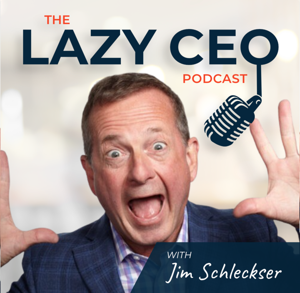


Today we are speaking with a renowned thinker about engagement and management and strategy and how you bring your whole team along on the journey in an engaging way.
What is Reassessment? People are reassessing where they want to be, what they want to do, who they want to do it for, and who they want to do it with. People want to work, but they don't want to work where they feel they have to put up with things that inhibit or constrain what they have to offer.
– 66% of people do not feel valued in what they do
If you're doing something every day and you don't feel valued, you're probably looking for something else. And what is behind the sense of feeling valued? It had not a thing to do with engagement. It doesn't have anything to do with pulse scores. It has to do with do you believe that your people, stepping into co-thinking your business with you, will create a better outcome than you telling them what to think? When your team uncovers a better way forward, then there's a certain sense of value and nobility and dignity that comes. That's a big deal, this whole sense of value and value driven by leaders thinking that we're creating creatives, not just creating implementers.
- Over 50% of the senior people interviewed believe they're contributing less than 50% of their capability to their organization.
That suggests there's a whole lot more we have to offer that we're just not able to get out there. The successful leader in this great reassessment is asking, what other capabilities are you not contributing? What can we do to get those to come forth, get those to be released, unlock them, etc?
The final piece on that whole conversation is, that I don't know anybody under 30 that will work for an organization that doesn't have a strong purpose or a cause and has a new expectation for what the experience at work is going to look like. What that means is that I am no longer going to be willing to compromise my experience at work and just invest in my personal experience. So, my expectations are the same things I have in my personal life for the fulfillment, and for achievement. And if I'm not getting that, I'm going to find a place where I get what I can get because I want to live my life fully across the board.
Listen to this podcast for more about reassessment in today's workplace:
- If we want to create an extraordinary experience for our people, or experience for our guests and clients, then we must encourage variability.
- Believe in people that they want to win, and they don't wake up every day saying, I can't wait to be average again today. But they rarely get a chance to get in the game to that full degree. And so to the extent, we can get them in the game, and their experience is one that is as personal as their best home life experiences, there's tremendous financial, benefit in that.
- Values are the guidelines for which you make the decisions about the stuff that there are no rules.
- The great reassessment leaders going to have to change how they behave in terms of how they handle the truth and some things they probably need to stop doing. How are leaders going to need to change in this reassessment environment?
- Do we have a common mental model that ensures we all see things the same way? Are you drawing out the attitudes, opinions, and beliefs of different people and merging them into a common picture that means the same thing to all of us?
- Determine what to say no to.
Thanks to our Guest
Jim Hauden is an expert on leadership alignment, strategy execution, employee engagement, business transformation, change management, and accelerated learning. He has spoken at TEDx BGSU, Tampa TEDx, and Conference Board events, and has given keynote speeches for many organizations throughout the world. He contributes regularly to business publications, including Inc. and Switch & Shift, where he was ranked on the Top 75 List of Human Business Champions.
He lives in Sylvania, OH, with his wife, Michelle. They have three children, Brad, Brooke, and Blake, and five grandchildren. When he's not traveling the globe visiting clients, he enjoys relaxing with his family at their lake cottage, golfing, fishing, sailing, photography, and attending Jimmy Buffett concerts.
Box out, and make room for the strategic moves needed to stay profitable in an inflationary environment.
Today we're going to talk about dealing with unpredictable markets and specifically inflationary markets. Specifically, we are going to talk about two options, do nothing, or do something, and then what can you do.
If you do nothing about this environment, you are assuming it's transitory, it's going to pass, no big deal. But both material costs as well as labor costs going up. And if you're not doing anything, your prices are remaining the same and you just are going to get caught in the squeeze, the margin is going to shrink, and profit is going to shrink. This is obviously a long-term problem for survivability. If inflation carries on at this rate or increases to the rates, we saw in the early eighties where it was double-digit inflation for extended periods of time. No model, no matter how good your model is, can withstand that without making moves.
So there really is no choice but to make moves on both the cost side and the price side. Wages are going up on an ongoing basis. You must be increasing prices. Your cost increases are coming from both labor and materials, so whether labor-dominated or material dominated as a business costs are going up.
A 10% price increase can double your organizational profit. Now, in this case, you're probably going to end up spending part of that increase on increased labor costs. It, you know, if you just match inflation for your employees, you're at seven. So your labor costs are going up 7% and you're not actually giving them any real money increase with a 7% raise. It's the same as they used to make. Your material costs are likely to go up by similar numbers, seven, eight, maybe more. There's some, there's sort of two effects going there. There's the underlying cost structure and then there's the scarcity problem that's occurring. You're going to see price increases probably between labor and materials of 7-8% because their labor's going up 7%.
And it's a chain. So, if you're not thinking about seven, eight, or 10% price increases you're going to go backward. In other words, your costs are going to go up by more than your prices are going up and you're going to squeeze your margins. In an inflationary environment where everything's going up, a price increase doesn't change your position on the supply-demand curve, it's the same. The whole market shifted 7%, you moved up 7%, and there's no conversation about losing customers.
Listen to the podcast for more on running your business in an inflationary market.
Jim Schleckser, The CEO Project, and Kim Conklin, KC Consulting, debate the merits of compensation and incentive plans. Listen to this Podcast for entertaining bantering between Jim and Kim as they navigate this extremely important and relevant topic – fair compensation.
What does Fair Compensation mean? It means when employees look internally, other people that do more or less the job I do are paid more or less what I'm paid. And when I look outside, people that do more or less what I do make more or less what I make. 90 something percent of the population feel they are paid fairly for their effort, for their skills, experience, background, knowledge, etc. Where that sometimes runs into trouble - people that are fully coin operated, meaning they are all about maximizing their personal income and they will pound you. It doesn't matter where they are relative to anybody else, they will just pound you on compensation always. The other place that I've seen problems in this is when they have what I would call poor referent groups. These mercenaries are going to change jobs every year or two, maximizing their income.
One of the things that people do is go on salary.com and just plug in a job title and assume that their title matches the exact same job and then they wonder why it's 30 grand less. When you are looking at compensation, you need to look at the actual responsibilities of the person and the actual responsibilities of whatever job you're comparing it to. Sometimes a VP isn't a VP and a director isn't a director.
Here are some important tips for any organization. For details, listen to the podcast.
Today Jim Schleckser talks on a topic that we see a lot when we're dealing with CEOs – accountability. What is accountability? The word is literally the definition of what accountability is, which is an obligation or willingness to accept responsibility or account for one's actions. In other words, transparently accept and explain what I've been doing and the outcome I got.
When somebody says, I see a problem, I own a problem, I'm going to solve a problem, that's accountability, particularly when they do it transparently and share it with their team and their boss, that's accountability. On the negative side of non-accountable is, I wait and see. I finger point, it wasn't me, it was somebody else. I deny it. We see that all the time. Not my job.
All of that is a lack of accountability, particularly as you grow the organization as an entrepreneur, we run into leaders that tell you I am trying to get the best out of my team and I struggled to hold them accountable to achieve the results. When you're trying to hold people accountable, the first thing you have to have is an identifiable outcome. In other words, this is your obligation. Whether you're managing one person or managing an organization, you need to be clear about where you're going. So what does it look like? When are we going to get there? How are we going to know we achieved it?
The classic model for accountability is smart goals. So it's specific. We're going to achieve 12 million in revenue. It's measurable, we're going to measure it by the P & L. We'll know if we got there or not – it is achievable. That's the A in smart, right? Achievable - we did $10 million last year. We've been growing a million or 2 million a year. 12 is well within the capability of this organization. Revenue is one of the more relevant things in a business environment, but it might be generating a number of leads and that's relevant because it drives sales.
In this episode, Jim shares the critical elements of accountability and how to achieve accountability in your organization.
We have talked before about the criticality of management, as we talk about business model processes and leadership or talent, everybody's happy to spend on their executive team and get these A players. Everybody's happy to go hire people that are sort of billable, and customer-facing, but once you cross about a hundred people, the distance between those two spreads enough that you must have people in the middle. And as entrepreneurs, it is not an appealing place for us to spend time, effort, and money. And yet, it can put a nail in your tire and really screw you up. So this episode is focused on what it does it do to your company if you don't, and what are the implications? And then we will get into how to make it better.
When organizations grow and that need arises, generally they'll do a few things. One is they'll ignore it and they'll just overburden the executive team. What we most commonly see is a spoke and hub where all decisions run back and forth between the CEO or the leaders directly involved in decision-making in one way or another. Or we see a flat organization, maybe some supervisors, the CEO's direct reports. With either one of those models, you start to see a lot of constraints. You start to see a lot of slow down, burnout and overwhelm. So, what organizations often do is they'll hire externally because they begin noticing that there's a need and you lose institutional knowledge or you promote somebody too soon or they haven't been fully developed, now you're having to backfill the best person in that department who now doesn't know how to lead effectively, and the whole thing becomes problematic.
The best way to avoid this issue is to know your organization. Who is ready to move in the next 12 months, or in the next 3 to 5 years? So the real question is, how do you get someone ready?
There are two ways to develop your talent – providing them with Professional Development. The first is technical expertise through certifications, conferences, and job training. The second is leadership development. There are a number of ways to go about providing leadership development. Nothing beats one on one interactions. CEOs should skip levels and spend time with people two levels below. Experience what someone is good or bad at yourself. Start giving them small bite-size challenges.
This episode of the Lazy CEO Podcast will answer these questions and more.
Neen James helps people think about how they focus their time, and how they maximize the impact, for not only themselves but also their organization. And she does a lot of very interesting coaching around systems thinking and communication techniques to improve executive effectiveness. Neen shares insights about paying attention, and how to focus your attention on the things that are your strengths and allow your team to focus on the rest.
Neen discusses the importance of remembering that No is a complete sentence. As CEOs, we must have shortcuts. We must have language that is understood by our team. So, an elegant way to say no is that sounds like a great project to be involved in. I'm at capacity right now, I'm going to direct you to this person. So you are acknowledging the request or the person or whatever the ask is. Because that's how we make them feel important. That's how we make them feel like we're giving them attention. But we also must be, have the courage to say, that's not a use of our time right Now, what I never want any CEO to say is, I don't have time. And here's why. When you say to someone, I don't have time, what you're actually saying is, I don't have time for you. And that's how we make them feel less valuable. And that's not our job because we're creating a culture where we want to develop the talent.
Neen leaves us with this challenge - have a 15-minute strategic appointment with yourself every day and identify your top three priorities that'll help move the business forward today.
For more advice and insight, I hope you will enjoy this Episode of The Lazy CEO Podcast.
This episode focuses on the secret to being a great and lazy CEO - knowing what to work on, only working on that, and getting rid of everything else. When I spread my effort across the whole organization, or we call it peanut buttering, your time across the business, it's not particularly useful because you haven't applied force in a significant way to one or two problems to really bust through them and get a great answer. You sort of neutralize all your effort by spreading it so thin.
You can think of this simply like a garden hose. So, you go out in your water, in your garden, and everybody knows what happens when you pull on the hose, you get a kink in the hose, and the kink in the hose stops the water from flowing. And if you think about the purpose of a hose, it's to flow water, right? That's the only real job it's got. So, it can't do its job because there's a kink in the hose. So your job as the waterer is to go find the kink and open it up, and then you get your flow rate back. Now, the same thing's true in your business. That's a system. It's a simple one. It's a hose, but your business is a system too.
But it's almost certain they're never going to open the kink and the hose if they just sort of work on the entire hose. A great CEO who's lazy, and doesn't want to spend that much time working, says, I'm going to do this smart, I'm going to follow the hose, find the kink, and then I will get the performance I'm after. In other words, very specific and dedicated types of work to change the performance of the system. And that's what good CEOs do. And if you think about how a business grows, we've all seen these like scalloped curbs where it grows a while and then it gets flat, and then it grows a while, and then it gets flat.
That little flat spot is the kink coming into play. And until you resolve the kink, you don't get to grow again. When you see companies grow, then flatten out, grow, flatten out, that is because they're not being proactive and fixing the point of constraint from the kink before it comes into play. So how do you do this? In my book, Great CEOs Are Lazy, I talk about this idea of five hats, and these are the five hats that you should be thinking about wearing as a CEO when you're focused on the point of constraint. The first two hats are "find the kink" hats and the other three hats are "fix the kink" hats.
The hats are player, learner, architect, coach, and engineer. For details about each of the 5 hats, I hope you will enjoy this Episode of The Lazy CEO Podcast.
Jim Schleckser is the Chief Executive Officer of The CEO Project, a business advisory group for accomplished CEOs to help them solve their most challenging issues, resolve constraints, drive growth, and improve outcomes.
With 30 years of leadership experience in business strategy, organizational development, sales, marketing, and more, Jim leads global organizations across many functional areas in both public and private environments. He specializes in solving issues that fast-growing firms experience in their business models and processes as they reach high-performance levels. Jim has appeared in The New York Times, The Huffington Post, and National Public Radio.
In this episode…Every accomplished leader utilizes power to achieve business goals and maximize success. So, what are the different types of power, and how can you leverage them to maintain effective leadership?
According to business advisor Jim Schleckser, there are two separate categories of power: formal and informal. Formal power includes coercion, reward, and positional power, whereas informal power includes expert, referent, network, influential, information, and moral authority. Formal power is less constructive and most commonly used in hierarchical organizations. Effective leaders employ multiple types of informal power to inspire, motivate, inform, and collaborate with their teams.
In this episode of The Lazy CEO Podcast, Jim Schleckser, Chief Executive Officer at The CEO Project, talks about utilizing forms of power in leadership. He explains the three types of formal power and informal power and discusses how to use each power form in a business environment.
Jim Schleckser is the Chief Executive Officer of The CEO Project, a business advisory group for accomplished CEOs to help them solve their most challenging issues, resolve constraints, drive growth, and improve outcomes.
With 30 years of leadership experience in business strategy, organizational development, sales, marketing, and more, Jim leads global organizations across many functional areas in both public and private environments. He specializes in solving issues that fast-growing firms experience in their business models and processes as they reach high-performance levels. Jim has appeared in The New York Times, The Huffington Post, and National Public Radio.
In this episode…With the rise of Generation Z in the workforce, executives must adapt their leadership styles and culture to accommodate this group's unique demands. So, how can you attract and retain Gen Z employees?
Generation Z grew up during the digital age and in a culture of security and protection. As a result, they are professionally inexperienced, risk-averse, and have a fear of failure. Simultaneously, this group is achievement-oriented and values professional development. For this reason, Jim Schleckser advises clearly communicating position and company expectations and developing a mentorship with them. It's also necessary to integrate feedback into professional development programs to encourage receptivity. By fostering a smooth transition into the workforce, you can promote Gen Z's strengths.
Tune in to this episode of The Lazy CEO Podcast as Jim Schleckser, Chief Executive Officer at The CEO Project, talks about coaching Gen Z employees to excel in the workforce. Jim shares Gen Z's characteristics and workplace demands, how to attract and retain these employees, and this group's strengths and weaknesses.
Robert Bell is a Tech Lead, Software Consultant, and Developer at Atomic Object, a software design and development consultancy. As an innovative software developer, he has the capacity to recognize client issues and generate solutions in a quick-paced, intricate, and dynamic setting. Before Atomic Object, Robert was a control and robotics engineer in the automotive industry, where he received the 2011 Heinz Dürr Innovation Award — a prize given by the Dürr AG with over 50 submissions from people in four different continents.
In this episode…The workforce is facing a dynamic shift. With the decline of boomers and Generation X, millennials will soon take over leadership roles. As a CEO, how can you ensure that you have talented millennials occupying crucial roles in your company?
Millennials are known for their ambition. They want to make a difference, but at the same time, they value autonomy and work-life balance. This group is socially conscious and would easily leave a job that does not align with their values. To attract these employees, Jim Schleckser and Robert Bell suggest establishing yourself as a reputable organization to positively impact employees. By aligning your company's standards with millennials' demands, you can retain millennial employees and bring value to your business.
In this episode of The Lazy CEO Podcast, Jim Schleckser sits down with Robert Bell, the Tech Lead, Software Consultant, and Developer at Atomic Object. Together, they talk about the characteristics that make the millennial workforce unique and how to attract this group of employees. They also share the positive attributes of millennials in the workforce, the importance of people-first culture for millennials, and these employees' biggest motivators.
From the publisher's feed
227,562 Listeners

8,737 Listeners
1,288 Listeners

1,089 Listeners

148 Listeners

1,113 Listeners

87,182 Listeners

111,845 Listeners

4,465 Listeners

8,564 Listeners

369,640 Listeners
175 Listeners

10,182 Listeners
4,239 Listeners
152 Listeners