
Sign up to save your podcasts
Or



The provided sources discuss the rapidly expanding market for generative AI toys, highlighting their transformative impact on play and the broader toy industry by 2025. These sources categorize leading products, such as true generative AI companions like Loona, social-emotional tutors like Moxie, and the evolution from earlier "smart" toys. A significant focus is placed on the strategic alliance between Mattel and OpenAI, which aims to redefine iconic brands through dynamic, unscripted interactions. However, the texts also extensively address critical challenges, including data privacy concerns intensified by new regulations like COPPA 2.0, potential negative impacts on child development (e.g., erosion of imagination, unhealthy attachments), and ongoing issues with content integrity and cybersecurity. Ultimately, the sources suggest that the industry's success hinges on responsible innovation and building parental trust amidst these complex risks.
Research done with the help of artificial intelligence, and presented by two AI-generated hosts.
The provided text offers a comprehensive analysis of the blockchain ecosystem as of August 2025, detailing its current status, historical evolution, and future trajectory. It begins by explaining the foundational principles of blockchain technology, including its architectural core, decentralization, immutability, smart contracts, and cryptographic security. The text then traces blockchain's evolution from its conceptual origins to Bitcoin (Blockchain 1.0), Ethereum (Blockchain 2.0), and the current multi-chain paradigm (Blockchain 3.0), characterized by Layer 1 innovations and the rise of Layer 2 solutions for scalability. Furthermore, it presents a market and ecosystem analysis, quantifying market size, user adoption, enterprise integration, and the competitive developer landscape. Finally, the document examines the dominant applications and vertical use cases across various industries like finance, supply chain, and healthcare, alongside the external landscape of regulation and sustainability concerns, concluding with strategic recommendations for navigating this transformative technology.
Research done with the help of artificial intelligence, and presented by two AI-generated hosts.
The provided text offers a comprehensive overview of blockchain technology, beginning with its foundational concepts like decentralization, immutability, and transparency, along with the cryptographic principles that secure it. It then compares blockchain to traditional databases, highlighting their architectural differences and ideal use cases. The source traces the historical development from early cryptographic ideas to the emergence of Bitcoin and the "Blockchain 2.0" era ushered in by Ethereum's smart contracts. Furthermore, it categorizes various blockchain architectures (permissionless vs. permissioned, public vs. private) and consensus mechanisms (like Proof of Work and Proof of Stake), analyzing their trade-offs. Finally, the text explores transformative applications across finance (DeFi), supply chain, healthcare, and digital identity, while also addressing critical challenges such as the Blockchain Trilemma, environmental concerns, and regulatory hurdles, before looking ahead to future developments in scaling, interoperability, and Web3.
Research done with the help of artificial intelligence, and presented by two AI-generated hosts.
The provided text offers a comprehensive overview of solid-state batteries (SSBs), highlighting their potential to revolutionize energy storage by replacing flammable liquid electrolytes with solid, ion-conducting materials. It details the foundational principles, architectural differences from traditional lithium-ion batteries, and projected performance advantages in energy density, safety, charging speed, and longevity. The sources thoroughly examine the various types of solid electrolytes—sulfides, oxides, and polymers—discussing their respective benefits and drawbacks. Furthermore, the text addresses the critical technical hurdles such as interfacial impedance and dendrite formation, along with the complex manufacturing, scalability, and cost challenges for mass production. Finally, it maps out the global commercial and research landscape, including key industry players, strategic partnerships, and market adoption timelines, ultimately portraying SSBs as a transformative yet challenging technology with a significant, long-term impact on the future of electrification.
Research done with the help of artificial intelligence, and presented by two AI-generated hosts.
The provided sources offer a comprehensive overview of the current state and future trajectory of 3D bioprinting, as of mid-2025. They begin by establishing bioprinting as a rapidly advancing field, driven by the global organ shortage, and detail the three-phase workflow: pre-bioprinting (design and bioink preparation), bioprinting (layer-by-layer fabrication), and post-bioprinting (maturation in bioreactors). The texts compare various bioprinting modalities, like extrusion and inkjet, highlighting their strengths and limitations concerning resolution, speed, and cell viability, and emphasize the crucial role of bioinks—natural, synthetic, and decellularized—in achieving functional constructs. While acknowledging significant successes in printing simpler tissues such as skin and cartilage, and the revolutionary impact of bioprinted organoids on preclinical research, the sources extensively address the persistent challenges to whole-organ bioprinting, primarily vascularization, innervation, and scalability. They also discuss the regulatory and ethical considerations that will shape its adoption, and compare bioprinting to alternative solutions like xenotransplantation and artificial organs, concluding with expert forecasts on the timeline for clinical translation, underscoring the vital role of AI, 4D bioprinting, and interdisciplinary collaboration in advancing the field.
Research done with the help of artificial intelligence, and presented by two AI-generated hosts.
The provided text offers a comprehensive overview of the significant advancements in prostate cancer management as of mid-2025, highlighting a shift towards hyper-personalized treatment. It details innovations in diagnostic tools, such as PSMA PET/CT imaging, micro-ultrasound, and the integration of AI in radiology and pathology, which enable more accurate detection and staging. The document also explores therapeutic breakthroughs for localized and advanced disease, including precision radiation techniques, emerging focal therapies that balance cancer control with quality of life, and targeted systemic treatments like PARP inhibitors, radioligand therapy (Pluvicto), and specialized immunotherapies for genomically defined subsets. Finally, it addresses the clinical integration of these advancements, emphasizing updated guidelines, new toxicity management strategies, and future directions for overcoming treatment resistance and further refining patient care.
Research done with the help of artificial intelligence, and presented by two AI-generated hosts.
This expert report examines the resilience of marine ecosystems to climate change, defining resilience as the capacity of systems to absorb, reorganize, and adapt while maintaining essential functions. It details how the "deadly trio" of ocean warming, acidification, and deoxygenation, combined with sea-level rise, assaults crucial ecosystems like coral reefs, kelp forests, and polar regions. The report emphasizes biodiversity, functional redundancy, genetic diversity, and connectivity as critical pillars of marine resilience. It concludes that while local management strategies like Marine Protected Areas and active restoration are vital, drastic global greenhouse gas mitigation is ultimately necessary to prevent irreversible ecosystem collapse and safeguard the immense socio-economic value of the global "Blue Economy."
Research done with the help of artificial intelligence, and presented by two AI-generated hosts.
The provided text, "Biomechanics and Biointerfaces Explained," provides a comprehensive overview of how mechanical principles apply to biological systems and the critical interactions occurring at the material-biology interface. It begins by tracing the historical development of biomechanics, outlining core concepts like kinematics and kinetics, and exploring specialized sub-disciplines such as sports biomechanics and cellular biomechanics. The text then defines biointerfaces, emphasizing how surface properties and dynamic molecular events, like the Vroman effect, dictate a material's biological fate. It further investigates cellular mechanotransduction, explaining how cells sense and respond to mechanical cues from their environment. Finally, the text transitions into applications in biomedical engineering, discussing the design imperatives and failure mechanisms of medical implants, strategies for tissue engineering scaffolds, and cutting-edge biointerfacial systems like biosensors and smart drug delivery, concluding with the experimental and computational tools used to probe these interactions and the grand challenges for the future of the field.
Research done with the help of artificial intelligence, and presented by two AI-generated hosts.
The provided text explores the science and applications of brain organoids, which are miniature, self-organizing brain tissues grown from human stem cells, offering an unprecedented model for understanding the human brain. These "mini-brains" are revolutionizing disease modeling for neurological disorders like microcephaly and Alzheimer's, and are transforming drug discovery by providing human-relevant platforms for screening and personalized medicine. While they mimic early brain development, current organoids face limitations such as lack of vascularization and mature cell types, leading to ongoing research into advanced systems like assembloids and organoids-on-a-chip. Finally, the text addresses the significant ethical considerations that arise from this technology, including potential consciousness, human-animal chimeras, and the complexities of donor consent, emphasizing the critical need for responsible governance in this rapidly advancing field.
Research done with the help of artificial intelligence, and presented by two AI-generated hosts.
From the publisher's feed
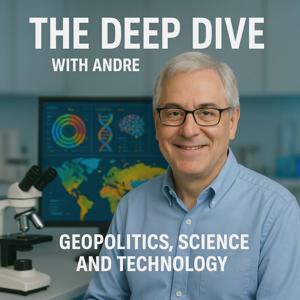
This podcast channel delivers in-depth, educational content across a broad range of topics. A large collection of episodes are available to you, the oldest being as relevant as the newest since this channel is not about daily news. Each episode runs between 30 and 120 minutes and is intentionally designed to go beyond casual listening. The research behind every episode is conducted with the support of advanced artificial intelligence and presented by two AI-generated hosts.
If you’re uncomfortable with the use of cutting-edge AI as both researcher and presenter, this podcast may not be for you. Its mission is to provide access to expert-level knowledge—insights that are typically out of reach through simple web searches or general-purpose AI tools.
“The Deep Dive with Andre” is not about connecting with the personality and voice of a human podcaster — it’s about connecting with expert-level knowledge, for those who value insight over persona. At times, the generated virtual hosts may exhibit an inappropriate voice tone, which can be disconcerting. The technology is still evolving.
Unlike traditional Text-to-Speech (TTS) services, the experimental AI powering the virtual hosts develops an independent understanding of the input information before generating speech. While the resulting voices do not match the quality of those produced by services like ElevenLabs, the AI’s ability to generate dynamic dialogues between two virtual hosts is a distinctive feature. Also, the cost of high-quality voiceovers would be astronomical, given the length of each episode (30 to 120 minutes). Quantity takes precedence over voice quality, given the vast knowledge conveyed by the episodes.
Note: When the hosts mention the “report,” “sources,” or “text,” they are unknowingly referring to the in-depth research and analysis generated by the first-stage AI. That output is then passed on to the second-stage AI, which handles the virtual hosts.
Disclaimer: This content is intended for educational purposes only and should not be construed as professional advice. It is derived exclusively from publicly available sources. No proprietary, confidential, or non-public information has been used in their preparation. However, through deep analytical synthesis, it is possible that some insights or conclusions presented here represent emergent interpretations that have not yet been formally published or broadly disseminated within the scientific and technological communities.
Please share your comments here:
https://the-deep-dive-with-andre.podbean.com
That would help improving this podcast show. Some podcast apps give direct access to the episode website.
Available on Amazon Music, Apple Podcasts, Audible, Castbox, Castro, Deezer, Goodpods, iHeartRadio, MyTuner, Overcast, Player FM, Pocket Casts, Podbean, Podcast Addict, Spotify, TuneIn Radio and others.

14,358 Listeners

5,520 Listeners

12,165 Listeners

4,168 Listeners
1,621 Listeners

19 Listeners

16,062 Listeners