
Sign up to save your podcasts
Or



The provided text offers a comprehensive overview of de-extinction, exploring its transformation from science fiction to a debated scientific pursuit driven by advances in genetics and cloning technologies. It differentiates between true cloning and genome editing to create "proxies," highlighting the challenges of ancient DNA preservation and the limitations of incomplete genetic blueprints. The sources then introduce key players like Colossal Biosciences and Revive & Restore, detailing their projects such as the woolly mammoth and passenger pigeon and contrasting their for-profit and non-profit models. Finally, the text thoroughly examines the ethical, ecological, financial, and legal debates surrounding de-extinction, including concerns about animal welfare, resource allocation, invasive species risk, and the profound implications for humanity's relationship with nature.
Research done with the help of artificial intelligence, and presented by two AI-generated hosts.
The provided text offers a comprehensive overview of synthetic biology, defining it as an engineering discipline for biology that aims to design and construct new biological entities or redesign existing ones for useful purposes. It highlights the field's foundational principles like standardization, modularity, abstraction, and the Design-Build-Test-Learn (DBTL) cycle, differentiating it from traditional genetic engineering. The sources trace the historical evolution of synthetic biology, from early genetic discoveries to modern breakthroughs like CRISPR-Cas9 and the creation of synthetic cells. Furthermore, the text details the tools and technologies that empower synthetic biologists, including DNA synthesis, sequencing, computational design, and automated biofoundries, before exploring diverse applications across medicine, biofuels, biomaterials, and agriculture. Finally, it addresses the economic landscape of the burgeoning bio-economy and the critical governance, safety, security, and ethical considerations surrounding this transformative field.
Research done with the help of artificial intelligence, and presented by two AI-generated hosts.
The provided text explores the complex field of lab-grown organs, detailing the urgent need for alternatives to traditional organ donation due to chronic shortages and the challenge of immune rejection. It outlines the scientific advancements enabling organ bioengineering, specifically highlighting the roles of stem cells and biomaterials in creating new tissues. The document further describes key biofabrication methodologies like organoid self-assembly, 3D bioprinting, and decellularization-recellularization. Finally, it assesses the current status of engineered organs, distinguishing between successes with simpler tissues and the ongoing challenges of creating complex solid organs, while also comparing this approach to xenotransplantation and mechanical devices as alternative solutions.
Research done with the help of artificial intelligence, and presented by two AI-generated hosts.
The provided text, "Ocean's Unknown Deep Frontier," offers a comprehensive overview of deep-ocean exploration, highlighting the vast, undiscovered nature of our planet's underwater realms despite significant advancements in mapping technology. It details the cutting-edge sonar systems and robotic vehicles that enable scientific investigation, revealing extraordinary ecosystems like hydrothermal vents and the hadal zone where life thrives under extreme conditions, as well as unique brine pools. The source also examines the ocean's role as a geological force and an archive of both natural phenomena and human history, from ancient landmasses to shipwrecks. Finally, it contrasts the underfunding of ocean exploration compared to space exploration, emphasizing its critical importance for medicine, climate regulation, and understanding life, while raising concerns about the growing threat of deep-sea mining.
Research done with the help of artificial intelligence, and presented by two AI-generated hosts.
The provided text offers a comprehensive overview of climate engineering, also known as geoengineering or climate intervention, as a response to global warming. It meticulously distinguishes between two primary categories: Carbon Dioxide Removal (CDR), which aims to extract CO2 from the atmosphere, and Solar Radiation Management (SRM), designed to reflect sunlight back into space to cool the planet. The sources analyze the technological underpinnings of various methods within each category, such as Direct Air Capture (DAC) for CDR and Stratospheric Aerosol Injection (SAI) for SRM, while also evaluating their respective benefits, immense risks, and associated challenges. Furthermore, the text explores the profound ethical dimensions—including the "playing God" critique, moral hazard, and climate justice concerns—and examines the complex geopolitical issues and governance vacuum surrounding these potentially world-altering technologies.
Research done with the help of artificial intelligence, and presented by two AI-generated hosts.
The provided text offers a comprehensive analysis of the escalating global water crisis, presenting it as a significant threat to security, prosperity, and survival in the 21st century. It highlights the staggering number of people without access to safely managed drinking water and sanitation, emphasizing the role of climate change, agricultural demand, and population growth as key drivers of scarcity. The document then outlines the far-reaching economic and geopolitical consequences of this crisis, including GDP losses, food insecurity, and increased conflict and migration. Finally, it explores various technological innovations such as desalination, water recycling, smart grids, and precision irrigation, while stressing that their effectiveness hinges on parallel advancements in governance, economic valuation, and strategic financing.
Research done with the help of artificial intelligence, and presented by two AI-generated hosts.
This source provides a comprehensive guide for citizen scientists interested in constructing CRISPR-based biosensors. It explains the fundamental principles of CRISPR technology, including the differences and applications of various Cas enzymes like Cas9, Cas12a, and Cas13a for detecting DNA and RNA. The text then outlines the complete workflow for a biosensor test, covering sample preparation, target amplification via isothermal methods (like RPA and LAMP), and diverse readout methodologies such as fluorescence, colorimetric assays, and lateral flow tests. Finally, it addresses the practical aspects of setting up a home laboratory, from sourcing reagents and equipment to navigating crucial safety protocols (BSL-1), legal considerations, and the ethical implications of DIY diagnostics.
Research done with the help of artificial intelligence, and presented by two AI-generated hosts.
The provided source offers a comprehensive systems engineering analysis of SpaceX's challenges and innovations, highlighting their iterative, "fail fast, learn fast" approach to rocket development. It traces the company's journey from the foundational struggles and repeated failures of the Falcon 1 to the groundbreaking reusability of the Falcon 9, including the complexities of the Merlin engine and aerodynamic control. The text also explores the unprecedented engineering hurdles of the Starship program, detailing its stainless steel construction, the Raptor engine's advanced technology, and the novel "belly-flop" re-entry maneuver alongside its challenging thermal protection system. Finally, it examines the mass-production and orbital logistics of the Starlink satellite constellation, emphasizing inter-satellite laser links and collision avoidance systems as core engineering feats.
Research done with the help of artificial intelligence, and presented by two AI-generated hosts.
The provided sources discuss the 2025 Trump administration's strategies for asserting significant influence and control over U.S. knowledge sources, as implemented by June of its first year. This comprehensive effort, largely informed by Project 2025, aims to reshape the nation's information landscape by consolidating executive authority over federal agencies, reconfiguring media outlets and public narratives, and remaking the American education system. Furthermore, the administration seeks to steer scientific research and government data and control historical records through actions affecting archives and libraries. These actions, often justified by an "anti-woke" ideology and an expansive view of presidential power, have raised concerns among critics about their potential impact on democratic norms, civil liberties, and access to unbiased information.
Research done with the help of artificial intelligence, and presented by two AI-generated hosts.
The provided sources offer a comprehensive overview of global counter-terrorism, examining its multifaceted nature, historical evolution, and the complex architecture of actors involved. They explain how counter-terrorism definitions and strategies vary across international bodies and national governments, highlighting the post-9/11 paradigm shift and the ongoing challenges of lone-actor terrorism and evolving ideologies. The text also addresses the legal and ethical dilemmas inherent in counter-terrorism tactics, such as surveillance and targeted killings, emphasizing the crucial need to balance security with human rights and the rule of law. Finally, the sources survey regional and national approaches, illustrating how diverse geopolitical contexts shape distinct yet increasingly interconnected efforts against terrorism.
Research done with the help of artificial intelligence, and presented by two AI-generated hosts.
From the publisher's feed
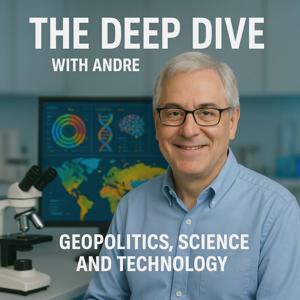
This podcast channel delivers in-depth, educational content across a broad range of topics. A large collection of episodes are available to you, the oldest being as relevant as the newest since this channel is not about daily news. Each episode runs between 30 and 120 minutes and is intentionally designed to go beyond casual listening. The research behind every episode is conducted with the support of advanced artificial intelligence and presented by two AI-generated hosts.
If you’re uncomfortable with the use of cutting-edge AI as both researcher and presenter, this podcast may not be for you. Its mission is to provide access to expert-level knowledge—insights that are typically out of reach through simple web searches or general-purpose AI tools.
“The Deep Dive with Andre” is not about connecting with the personality and voice of a human podcaster — it’s about connecting with expert-level knowledge, for those who value insight over persona. At times, the generated virtual hosts may exhibit an inappropriate voice tone, which can be disconcerting. The technology is still evolving.
Unlike traditional Text-to-Speech (TTS) services, the experimental AI powering the virtual hosts develops an independent understanding of the input information before generating speech. While the resulting voices do not match the quality of those produced by services like ElevenLabs, the AI’s ability to generate dynamic dialogues between two virtual hosts is a distinctive feature. Also, the cost of high-quality voiceovers would be astronomical, given the length of each episode (30 to 120 minutes). Quantity takes precedence over voice quality, given the vast knowledge conveyed by the episodes.
Note: When the hosts mention the “report,” “sources,” or “text,” they are unknowingly referring to the in-depth research and analysis generated by the first-stage AI. That output is then passed on to the second-stage AI, which handles the virtual hosts.
Disclaimer: This content is intended for educational purposes only and should not be construed as professional advice. It is derived exclusively from publicly available sources. No proprietary, confidential, or non-public information has been used in their preparation. However, through deep analytical synthesis, it is possible that some insights or conclusions presented here represent emergent interpretations that have not yet been formally published or broadly disseminated within the scientific and technological communities.
Please share your comments here:
https://the-deep-dive-with-andre.podbean.com
That would help improving this podcast show. Some podcast apps give direct access to the episode website.
Available on Amazon Music, Apple Podcasts, Audible, Castbox, Castro, Deezer, Goodpods, iHeartRadio, MyTuner, Overcast, Player FM, Pocket Casts, Podbean, Podcast Addict, Spotify, TuneIn Radio and others.

14,352 Listeners

5,518 Listeners

12,158 Listeners

4,165 Listeners
1,621 Listeners

19 Listeners

16,072 Listeners