
Sign up to save your podcasts
Or



This episode offers a comprehensive overview of slavery throughout human history, detailing its multifaceted manifestations from ancient civilizations to the modern era. It explores how early societies in Mesopotamia, Egypt, India, and China institutionalized various forms of bondage, often tied to war, debt, or crime. The text then examines the central role of slavery in the classical worlds of Greece and Rome, highlighting their reliance on unfree labor and unique legal frameworks like Roman manumission to citizenship. It further discusses servitude in African kingdoms, the Byzantine Empire, early Islamic caliphates, and the Viking Age, showcasing diverse regional practices and expansive slave trade networks like the Trans-Saharan and East African routes. Finally, this episode extensively covers the Transatlantic Slave Trade, explaining its economic drivers, the horrors of the Middle Passage, life in the Americas, African participation, and the eventual abolitionist movements fueled by philosophical ideas and religious convictions.
Research done with the help of artificial intelligence, and presented by two AI-generated hosts.
This episode discusses the 2025 Trump administration's strategies for asserting significant influence and control over U.S. knowledge sources, as implemented by June of its first year. This comprehensive effort, largely informed by Project 2025, aims to reshape the nation's information landscape by consolidating executive authority over federal agencies, reconfiguring media outlets and public narratives, and remaking the American education system. Furthermore, the administration seeks to steer scientific research and government data and control historical records through actions affecting archives and libraries. These actions, often justified by an "anti-woke" ideology and an expansive view of presidential power, have raised concerns among critics about their potential impact on democratic norms, civil liberties, and access to unbiased information.
Research done with the help of artificial intelligence, and presented by two AI-generated hosts.
This episode offers a comprehensive overview of the CRISPR-Cas9 gene-editing technology, highlighting its revolutionary potential alongside its inherent dangers. It explains how CRISPR's precision and accessibility create significant risks, including unintended genomic alterations in therapeutic applications and the potential for irreversible ecological disruptions through tools like gene drives. The episode also addresses the serious threat of misuse for bioweapon development, amplified by the technology's ease of access, and explore the profound ethical dilemmas surrounding human genome editing, particularly heritable changes and issues of equity and access. Finally, it discusses the critical challenge of establishing robust global governance frameworks that can keep pace with the rapid advancements and widespread diffusion of CRISPR technology.
Research done with the help of artificial intelligence, and presented by two AI-generated hosts.
This episode explores various hypothetical explanations for the Fermi Paradox, specifically addressing why, if extraterrestrial intelligence (ETI) exists and is capable of interstellar travel, humanity has not detected any definitive signs of its presence. It discusses theories such as the Zoo Hypothesis, suggesting ETI intentionally avoids contact to allow human development, and the Dark Forest Hypothesis, where ETI remains hidden due to fear of other civilizations. It also considers the possibility that ETI is fundamentally incomprehensible due to vastly different biology, technology, or cognition, making them undetectable by our current methods. Finally, it examines the potential use of advanced stealth technology or a strategy of gradual acclimation to slowly introduce their presence to humanity. All proposed solutions emphasize the speculative nature of these ideas and the limitations of anthropocentric assumptions in the search for alien life.
Research done with the help of artificial intelligence, and presented by two AI-generated hosts.
This episode explores the long and often slow trajectory of human technological development, tracing it from early hominin tool-making to the precursors of modern innovation. It highlights how biological and cognitive evolution, combined with environmental factors and the constraints of hunter-gatherer societies, initially limited the pace of progress. It then discusses pivotal turning points like the Neolithic Agricultural Revolution and the Urban Revolution, which fostered specialization and led to inventions such as writing and metallurgy. Finally, it examines later accelerations driven by intellectual movements like the Renaissance and Scientific Revolution, as well as the transformative impact of the printing press, while also addressing reasons for the "Great Divergence" in technological advancement among different global regions.
Research done with the help of artificial intelligence, and presented by two AI-generated hosts.
This episode presents The Heritage Foundation's "Project 2025; Mandate For Leadership" outlines a comprehensive conservative agenda for the executive branch, aiming to reverse perceived societal and governmental decline. The document proposes significant reforms across various federal departments and agencies, including the Departments of Justice, Interior, Health and Human Services, and Homeland Security. Key themes include limiting federal power, promoting economic growth, strengthening national security against adversaries like China, and restoring traditional American values. It also details strategies for personnel changes, regulatory rollbacks, and a renewed focus on core governmental functions, drawing parallels to the Reagan administration's successful implementation of conservative policies.
Research done with the help of artificial intelligence, and presented by two AI-generated hosts.
This episode offers a comprehensive analysis of Weapons of Mass Destruction (WMD), beginning with their definition and evolving interpretations across historical periods. It distinguishes between horizontal proliferation (new actors acquiring WMDs) and vertical proliferation (existing WMD states enhancing their arsenals), and then details the four main categories: nuclear, chemical, biological, and radiological weapons, outlining their physics, effects, and delivery systems. It also traces the historical landscape of WMD proliferation from the Cold War to the present, examining the motivations driving states and non-state actors to acquire these weapons, including security, prestige, and asymmetric advantage. Finally, this episode extensively covers international control regimes such as the NPT, CWC, and BWC, along with export control groups and UN resolutions, discussing their effectiveness, limitations, and the current challenges posed by geopolitical tensions and technological advancements in various regional hotspots and undeclared programs.
Research done with the help of artificial intelligence, and presented by two AI-generated hosts.
This episode offers a comprehensive overview of espionage tradecraft, tracing its historical evolution from ancient times through the Cold War and into the contemporary digital era. It details the fundamental principles and objectives of tradecraft, explaining its integral role within the broader intelligence cycle. It examines core human intelligence (HUMINT) techniques, such as agent recruitment, the art of cover, and covert communication, alongside the transformative impact of technological advancements like Signals Intelligence (SIGINT), Imagery Intelligence (IMINT), cyber espionage, and Artificial Intelligence (AI). Finally, it addresses the crucial field of counterintelligence, differentiating between defensive and offensive strategies, and explores the complex ethical and legal challenges inherent in the world of spying.
Research done with the help of artificial intelligence, and presented by two AI-generated hosts.
A comprehensive overview of spycraft and espionage, outlining their historical evolution from ancient times through the World Wars and Cold War, into the modern digital age. Explains core concepts like human intelligence (HUMINT), signals intelligence (SIGINT), and geospatial intelligence (GEOINT), alongside various tradecraft techniques employed by operatives. Provides profiles of major global intelligence agencies, highlighting their mandates and operational focuses. Finally, examines the impact of technology, such as cyber espionage and artificial intelligence, on intelligence gathering, and discusses the complex ethical, legal, and oversight challenges inherent in this clandestine field.
Research done with the help of artificial intelligence, and presented by two AI-generated hosts.
From the publisher's feed
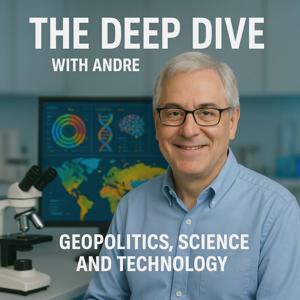
This podcast channel delivers in-depth, educational content across a broad range of topics. A large collection of episodes are available to you, the oldest being as relevant as the newest since this channel is not about daily news. Each episode runs between 30 and 120 minutes and is intentionally designed to go beyond casual listening. The research behind every episode is conducted with the support of advanced artificial intelligence and presented by two AI-generated hosts.
If you’re uncomfortable with the use of cutting-edge AI as both researcher and presenter, this podcast may not be for you. Its mission is to provide access to expert-level knowledge—insights that are typically out of reach through simple web searches or general-purpose AI tools.
“The Deep Dive with Andre” is not about connecting with the personality and voice of a human podcaster — it’s about connecting with expert-level knowledge, for those who value insight over persona. At times, the generated virtual hosts may exhibit an inappropriate voice tone, which can be disconcerting. The technology is still evolving.
Unlike traditional Text-to-Speech (TTS) services, the experimental AI powering the virtual hosts develops an independent understanding of the input information before generating speech. While the resulting voices do not match the quality of those produced by services like ElevenLabs, the AI’s ability to generate dynamic dialogues between two virtual hosts is a distinctive feature. Also, the cost of high-quality voiceovers would be astronomical, given the length of each episode (30 to 120 minutes). Quantity takes precedence over voice quality, given the vast knowledge conveyed by the episodes.
Note: When the hosts mention the “report,” “sources,” or “text,” they are unknowingly referring to the in-depth research and analysis generated by the first-stage AI. That output is then passed on to the second-stage AI, which handles the virtual hosts.
Disclaimer: This content is intended for educational purposes only and should not be construed as professional advice. It is derived exclusively from publicly available sources. No proprietary, confidential, or non-public information has been used in their preparation. However, through deep analytical synthesis, it is possible that some insights or conclusions presented here represent emergent interpretations that have not yet been formally published or broadly disseminated within the scientific and technological communities.
Please share your comments here:
https://the-deep-dive-with-andre.podbean.com
That would help improving this podcast show. Some podcast apps give direct access to the episode website.
Available on Amazon Music, Apple Podcasts, Audible, Castbox, Castro, Deezer, Goodpods, iHeartRadio, MyTuner, Overcast, Player FM, Pocket Casts, Podbean, Podcast Addict, Spotify, TuneIn Radio and others.

14,352 Listeners

5,518 Listeners

12,158 Listeners

4,165 Listeners
1,621 Listeners

19 Listeners

16,072 Listeners