
Sign up to save your podcasts
Or

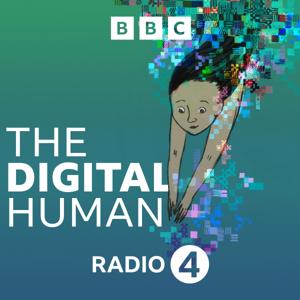


Here be trolls…
What is it about the digital world that encourages normal people to disregard the rules of everyday life? Is it the cloak of anonymity the net offers? The social rules of online communities? Or simply human nature?
This week, Aleks Krotostki delves into the dark side of the digital world to explore whether or not the internet fuels the breakdown of social and moral boundaries.
She speaks to a troll who claims Jesus and Socrates as her forebears, Dave Eshleman who was one of the guards in the infamous Stanford Prison Experiment and Professor Alex Haslam who recreated the experiment for the BBC, with startlingly different results.
Aleks Krotoski returns with a new series exploring our lives in a digital age and on April Fool's day she explores whether mischief is an essential part of the online world. Mischief performs many functions in our society; the individual can use it to find their place in the world, while it can also level the playing field between the powerful and powerless. Follow and join the conversation on Twitter with #digihuman and find even more background on http://thedigitalhuman.tumblr.com/ . There's never been a greater engine of mischief than the internet. Aleks hears first from writers Tim Wright and Rob Bevan. Like all writers, procrastination and distraction are constant companions but if your speciality is digital storytelling, the temptation to play tricks can be irresistible. When Tim decided to construct a hoax for Rob, little did he know just how consuming it would become and how it would affect how they go about storytelling. We also hear from US history professor T Mills Kelly about his course 'Lying about the Past' where he prepares his students for sifting through all the historical mischief making online. Lewis Hyde is a respected author whose titles include Trickster Makes This World or How The Disruptive Imagination Creates Culture. He explains the role of the trickster in myth and legend and what we can learn from these figures about the evolution of the digital world.Throughout the programme Aleks will also hear from psychiatrist turned stand-up Taylor Glenn about what's like to be a professional mischief maker. Producers Victoria McArthur and Peter McManus.
Join Aleks Krotoski as she explores chance in the digital world. Can life - changing encounters really be bottled, sold and exploited and what does the digital world promise for a future of serendipity. Can it really be engineered by digital systems?
At the Digital Death Day Aleks meets with Vered Shavit from Israel who having dealt with her late brother's digital legacy set up a website called Digital Dust to help others going through the same experience.
Hearing Vered's story Alek's asks how are we using the web to adapt the rituals that we have used for centuries to help us transition between the living and the dead?
Aleks discovers that since Vered's brother's death people continue to communicate with him through his Facebook profile. Dr Elaine Kasket a Counselling Psychologist who practices psychotherapy with the bereaved likens Facebook to a modern day medium. She also explains how Facebook is enabling people to continue bonds with the deceased.
The distinction between our physical selves and mental states is a philosophical construction, but it signifies a line in the sand between those who believe our bodies make us human and those who define humanity by our thoughts and social lives. But after our death can our persisting digital selves continue our presence for those left behind?
Produced by Kate Bissell.
Aleks Krotoski explores the digital world. In today's programme have we all become cyborgs without even knowing it?
We've always extended our human bodies ever since we first picked up rocks or sticks as tools, it's part of human nature. So are the digital tools of today any different? Aleks asks just how far we've come and are willing to go to become one with our technology and become cyborg.
Aleks hears from film maker Rob Spence better known as Eyeborg about the reaction he gets to the camera he has where his right eye used to be. It's a different type of eye artist and composer Neil Harbisson uses, born entirely colour blind Neil uses an electronic eye on an antenna attached to his skull to hear colours it's now such a part of how Neil perceives the world that he hears the colours in his dreams!
Brandy Ellis is a very different type of cyborg; having suffered from depression for years she opted to have electronics implanted in her brain to control her symptoms. Her feelings are literally regulated by a machine.
Ultimately Aleks finds out from anthropologist Amber Case how we're all every bit as cyborg as Rob, Neil or Brandy in how we coexist symbiotically with our digital devices.
Aleks Krotoski looks at whether how we tell stories has changed with the digital world. And it looks like it has much more to do with our distant past that we might think.
She begins by looking at the online phenomena of the Slender Man a supernatural figure that's been appearing in pictures, blogs and YouTube movies since 2009 and is described as the first great myth of the web.
Aleks speaks to AS Byatt to understand what story is for before examining how modern online storytelling bears a striking resemblance to oral traditions of medieval times. To see this in action she explores the growth of the Slender Man myth and how its community based evolution mimics how legends grew in the past.
But for many of these stories they still don't make the most of what the digital world has to offer storytellers. For this Aleks turns to Alison Norrington one of the world's leading proponents of trans-media stories.
Aleks Krotoski looks at whether we've all become techno-fundamentalists. Do we know what all our technology is for or more intriguingly what it wants?
Aleks hears from Douglas Rushkoff about how the whole of the world around us has always been programmed by architects, religion, and politics. But it's something we seem to have forgotten about technology itself.
Tom Chatfield discusses how the biases of technology (the things it naturally tends towards or is best at) interplay with human nature to turn much of our interaction with technology into some sort of perverse game.
But some of these biases like the end use of technology only emerge once people start to use it. Kevin Kelly is one of the world's most respected commentators on technology he believes that the biases of all our technology put together start to combine so that it behave very much like an organism. His provocative theories are detailed in his book What does Technology want?
We explore these theories by discussing our biggest technologies; the city and whether the latest innovations aiming to make our city's smarter and more sustainable hint at a better future relationship with the world of technology.
Aleks speaks to Grandmaster of memory, Ed Cooke who thinks memory is going out of fashion because of our reliance on digital devices.
Mastermind champion and London cabbie Fred Housego explains how he relies on 'The Knowledge' to navigate London but relies on his wife's short term memory to remember dates for engagements, shopping lists, phone numbers. Psychologist Betsy Sparrow explains that this is known as transactive memory and it's exactly what we are doing with our digital devices. Cyborg Anthropologist, Amber Chase explains that in the past we had physical extensions of ourselves, for example with tools, but we now have mental extensions of ourselves, with our digital devices acting as externalised brains, changing our sense of self.
Aleks discovers that the way we remember is not only changing our perceptions of self but challenging the very concept of intelligence. Aleks hears that the smart kid of the past memorized lots of data but the smart kid of the future will know how to navigate the system and how to understand concepts. This is exactly what 15 year old US high school pupil, Jack Andraka did when he discovered a new test for pancreatic cancer using the internet. With little background knowledge and armed only with what he knew from biology classes he scoured the web for papers that helped him make connections that will potentially save thousands of lives.
The way we use our memory is changing but as Psychologist Betsy Sparrow explains we are only responding to our surroundings and evolving as we always have.
Producer: Kate Bissell.
Aleks Krotoski explores what the digital world tells us about ourselves. This week: Influence. How has the digital world changed the way opinions are voiced and shaped?
Aleks Krotoski returns with a new series of explorations of our digital world.
In the first in the series Aleks looks at how different cultures are preserving their identity in the face of the homogenising effects of technology.
There's a fear that the digital world will make us all the same. But that doesn't seem that well founded if you look at how widely differing cultures are using technology to express their identity and values. We look at the music sharing culture of Mali in West Africa as explored by musicologist Chris Kirkley and hear from the vibrant and intoxicating atmosphere of the mobile phone music market in Mali's capital Bamako. Back in the UK we look at the interesting way immigrant communities maintain their cultural ties through technology and the unexpected effect this has on the growth of immigrant communities.
Aleks also talks to explorer in residence Robin Hanbury-Tenison about his thoughts on how technology might be undermining cultures. Does he see the spread of digital as a new form of cultural imperialism?
Producer Peter McManus
Other areas of the digital world to be explored in this series include:
How opinion and influence spread in a digital world
What all this new technology means for how we learn?
Do we always know what technology is for and ultimately what it wants?
Has the digital world changed our perceptions and discussions of death?
From the publisher's feed
Aleks Krotoski explores the digital world

7,625 Listeners
370 Listeners

1,048 Listeners

5,481 Listeners

1,797 Listeners

1,811 Listeners
1,033 Listeners

1,907 Listeners

753 Listeners

3,225 Listeners
1,004 Listeners