
Sign up to save your podcasts
Or

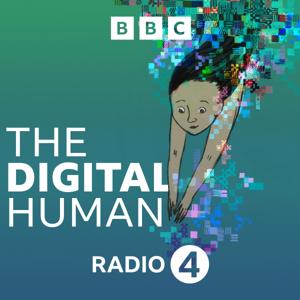


Aleks Krotoski explores if we have all become digital hoarders. When our digital junk drawers are bigger than we can comprehend, do we lose the sense of what is worth keeping?
Aleks talks to Tinder users Harriet Southgate and Kira Cheers who speak not only about the seductive nature of the app, but how they promote the gamification of dating. Biological anthropologist, Helen Fisher argues that dating apps like Tinder and Grindr can cause cognitive overload because humans are just not used to having so much choice when it comes to picking a date. Aleks also speaks with Paul Ross, known as the Father of Seduction, about a rather chilling and systemised approach to seduction and explores whether dating apps are in fact missing out the slow play of the seduction process.
Produced by Kate Bissell
Aleks Krotoski explores the basic human impulse of people watching. We are aware how we perform when we know we are being looked at online but hear little about those watching.
Aleks Krotoski explores the overlap between technology and the natural world and how the two co-exist.
Arthur C. Clarke's 3rd law goes "Any sufficiently advanced technology is indistinguishable from magic." So does that apply to the modern digital world, Aleks Krotoski asks the question with some surprising results. From people living under the 'curse' of electro-sensitivity to the rituals we all go through to ward off evil spirits like updating our anti-virus software.
And she'll speak to the people teaching the language magic to technologists. In a world of install wizards and demon programmes why is the vocabulary of magic so powerful and what does that mean for our understanding of how our technology works.
Producer: Peter McManus.
Secret holders share why and how they have used the internet to disclose their most intimate or well kept secrets - how does a compulsion to confess in a public setting effect those who the secret is about? And can this audition of secrets online naturally lead to revealing them offline?
Aleks talks to her high school friends to unravel the secrecy about SARGON, an open secret society at her high schoo,l which she was never invited to join. She discovers the power of secrets for those on the inside and outside of SARGON. Could such a society exist today in the presence of social media?
We also hear from Frank Warren the secret keeper of the online website and app PostSecret. Yorick Pheonix who used PostSecret to air a secret kept for 30 years tells us why he was happy to use such a public setting to explain that he kept his daughter a secret from his family. Aleks addresses the ownership of secrets and how the internet can impact on this. We hear from Yorick's daughter, Rachael about how she feels that her father's secret, which is also her own, is online for all to hear.
And former MI6 officer Harry Fergusson talks about context collapse and how he managed to keep his work and family life separate.
Producer: Kate Bissell
Digi Human graffiti by NOIR aka Glynn Judd.
If a driverless car has to choose between crashing you into a school bus or a wall who do you want to be programming that decision? Aleks Krotoski explores ethics in technology.
Join Aleks as she finds out if it's even possible for a device to 'behave' in a morally prescribed way through looking at attempts to make a smart phone 'kosher'. But nothing captures the conundrum quite like the ethical questions raised by driverless cars and it's the issues they raise that she explores with engineer turned philosopher Jason Millar and robot ethicist Kate Darling.
Professor of law and medicine Sheila MacLean offers a comparison with how codes of medical ethics were developed before we hear the story of Gus a 13 year old whose world was transformed by SIRI.
Producer Peter McManus.
Aleks Krotoski examines what digital mapping has meant for our understanding of the world. Are we always aware of the decisions that make them look the way they do? Traditionally of course maps are as "authored" as anything else. As Simon Garfield writer of On the Map: Why the world looks the way it does , explains we should think of maps like the biography of a famous person; highly subjective and usually with some sort of angle.
We hear this authorship at work when we join Bob Egan of PopSpotsNYC; he maps out where famous album cover photos were taken in his native New York and puts them online for us all to visit. We join him on the hunt through Google maps and on the streets as tracks down his latest quarry. Bob is adding his own layer of information to the digital mapping of our world for Dr Mark Graham of the Oxford Internet Institute this is happening all around us.
And it's this phenomenon that makes the understanding of the choices that go into making our maps even more important. We hear about the experience of paleo-anthropologist Prof Lee Berger and how hidden choices in GPS data he was using nearly cost him the most important discovery of his career. Aleks then explores if the so called "open mapping" movement hold the answer to eliminating some of issues created by digital maps with the example of Christchurch recovery map -a crowd sourced map that was created within hours of the Christchurch earth quake of 2012.
We live in a world where the nostalgia for the past now permeates our present.
With online trends like 'Throw Back Thursdays', apps like Timehop and platforms which gives you the tools to make your digital image look like it was taken with an analogue camera, the internet has never seemed so backwards-facing.
In this week's episode of The Digital Human, Aleks Krotoski visits imagined worlds and eras long past to explore whether the web is a nostalgia machine.
We speak with Professor of Svetlana Boym to trace the origins of the word back to homesick Swiss mercenaries in the 17th century, visit a water park in New Jersey which was reborn through the collective power of online nostalgia and take tea with a vintage enthusiast, who divides his time between working as an air host in a high-flying company, with living in the 1940s.
Producer: Caitlin Smith.
What happens when we abandon a place? And why is it so difficult for us to leave these places behind?
Aleks contrasts this with a remarkable example of digital abandon. Meridian 59 was the first massively multiplayer online game. When newer competitors arrived on the scene, many players left. The game has been abandoned and restarted several times over since. Aleks hears from the hardcore community of players who refuse to let the game disappear entirely.
From the publisher's feed
Aleks Krotoski explores the digital world

7,625 Listeners
370 Listeners

1,048 Listeners

5,481 Listeners
1,797 Listeners

1,811 Listeners

1,033 Listeners
1,907 Listeners

753 Listeners

3,225 Listeners
1,004 Listeners