
Sign up to save your podcasts
Or

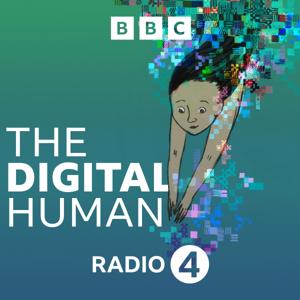


Technology has always allowed us to push the boundaries of what's real and not real. From filters on our holiday snaps to recreating life in a laboratory.
Is it any wonder then that amidst all this 21st century noise we're searching for an authentic voice?
But what authenticity actually is can be difficult to define, particularly in the digital sphere where filters, artifice and simulation are part of the fabric of how we engage on social media.
From Aristotle to Frankenstein, to politicians tweeting from the bathroom, Aleks Krotoski goes in search of the authentic, taking a look at the drivers behind our preoccupation with allowing others to see 'the real self'.
Contributors include: science writer Philip Ball, Stephen Lussier of DeBeers, sociologist Ruth Penfold-Mounce, author Professor Andrew Potter, Dr Suzy Jagger and Instagrammer Stina Sanders.
Producer: Caitlin Smith.
We seem to be living in a world of polarised opinions giving rise to increasingly angry exchanges on television, print and of course social media. Aleks Krotoski asks how online anger works and is it a symptom or the cause of the problem.
An enormous Chinese study demonstrated that angry content is the most shared across the web while US researchers have asserted that while we might not be any angrier than in the past we encounter much more angering content than ever before and that anger lingers priming us for the net encounter.
Aleks makes the comparison with another increasingly congested space that of our roads; an environment where similar mechanisms of anonymity and depersonalisation are at play. She concludes by discussing the social role of anger and why so many groups have begun to rely on it to get their way.
Aleks Krotoski explores life in the digital world. What makes us laugh and why? And when so much of the web is there to tickle our funny bone, does anyone ever laugh out loud?
The world we experience through screen based technology is two dimensional which some argue creates distance between the viewer and the viewed but can modern day virtual reality story telling using a three dimensional perspective go further than any other medium of technology to enable us to really experience the lives of others, to walk in another man's shoes?
Vicky Sutherland is mum to eight year old Arron who suffers from autism. Vicky tries to see the world through Arron's eyes as he suffers from sensory overload but for the first time she watches a virtual reality experience produced by The National Autistic Society which shows the world from the perspective of an autistic child experiencing sensory overload. She discovers whether this gives her a new perspective into Arron's experience of the world around him.
Imogen Blood's father John Hull lost his sight over a number of years, while she tried to understand what it was like for her father she only fully appreciated how sound became such an anchor in his world of darkness when she watched the virtual reality film Notes On Blindness: Into Darkness, which features John's use of echo location in order to navigate the world around him.
And Aleks speaks to Gabo Arora the Director of the UN's Virtual Reality Lab who has produced several virtual reality films including Clouds Over Sidra featuring 12 years old Syrian refugee Sidra. As Sidra introduces the viewer to life in a refugee camp, Aleks questions whether these types of films reduce the distance between the viewer and the viewed, changing our perspective and increasing our empathy because we are able to walk in another person's shoes.
Produced by Kate Bissell.
So much of our experience of technology can feel a bit like being haunted. It starts like any good ghost story with the just mildly unsettling; things aren't were you left them or seem to have moved on their own within our devices. Its a creepy feeling that leaves you unsure about what to believe. Our understanding of how much of technology works is so limited that when it starts to behave out of the ordinary we have no explanation. This is when we start to make very peculiar judgement's; "why did you do that" we plead, as if some hidden force was at work.
For some these feelings of being haunted by our technology can develop into full blown apparitions; keen gamers frequently experience Game transfer Phenomena where they literally see images of their game play in the real world, an involuntary augmented reality. While the hallucinations aren't necessarily distressing in themselves the experiences can leave individuals questioning their sanity.
The coming internet of things will bring problems of its own; smart locks that mysteriously open by themselves for example as if under the influence of some poltergeist. Aleks herself has had the experience of digital 'gas lighting' (a term drawn from an Ingrid Bergman movie of a woman being driven mad by husband) when her partner logged on to their home automation system remotely and started to mess with the lights while Aleks was home alone. As one commentator puts it in a reworking of the old Arthur C. Clarke quote "any sufficiently advanced hacking is indistinguishable from haunting."
And as our devices and appliances increasingly start talking to each other bypassing us altogether who's to say we, like Nicole Kidman's character in The Others, haven't become the ghost in the machine.
Producer: Peter McManus.
Our records define us - birth records, death records, crime records, marriage records - but what if you don't want to be defined by your records? And how do our physical and digital traces say affect us? In this episode of The Digital Human, Aleks explores these questions by hearing three very different tales of recorded lives...
In the spring of 1996, an enterprising American college student named Jennifer Ringley connected a webcam to her computer and began seven years of uninterrupted self-exposure. JenniCAM, as she eventually named it, was the first no-holds-barred lifelogging experiment on the world wide web. Every 15 seconds, the webcam uploaded another still image - from the mundane to the erotic - exposing the uncensored life of a young woman coming of age.
The web at the time of JenniCAM was still in its infancy: this was before Google made it navigable, before the dotcom bubble began to inflate, and before Facebook CEO Mark Zuckerberg was out of short trousers. Compared with the modern world of universal broadband access, instant feedback and streaming video, it was achingly slow: websites with pictures took entire minutes to download, and publishing anything required expert knowledge in at least one computer language.
JenniCAM represented our self-aware future, the place we inhabit in the second decade of the 21st century, now that 82% of American adults use the web, and the average amount of time we spend online doubles every five years. We have evolved into the people that JenniCAM represented: both the voyeur and the viewed.
Twenty years after Jennifer first switched on her webcam, we retrace some of her steps and wonder why, at a time when everyone else has gone online, she's switched off...
Produced by Victoria McArthur.
The way the digital world is presented to us can be alienating and obfuscating, bad metaphors like the cloud or the slow tracking shots between the banks of servers can make us forget that these networks are built and maintained by human beings. They can appear as something vast, unfathomable and otherworldly - a kind of digital sublime. Yet they exist in the same world as we do and have a physicality that's often lost on us.
Aleks leads us on an exploration of this physicality from the digital temples of the data centre to the fragments that populate our city streets. In appreciating this physicality and its beauty we'll be reminded that this is not something we should feel excluded from or can't have an opinion about or indeed imagine differently.
Producer: Peter McManus.
Why does a parent's awe over their child's ability with technology turn so quickly to fear? Aleks Krotoski explores the anxieties at the heart of modern parenting and tech.
From lost cameras, dogs, cats, phones and people, we are turning to the web to find what we have lost. Aleks explores whether you are more likely to find what you've lost using online social networks? Are we as connected as we think we are? Or does it make more sense to step out of the digital world and search with the help of physical social networks?
Produced by Kate Bissell.
From the publisher's feed
Aleks Krotoski explores the digital world

7,625 Listeners
370 Listeners

1,048 Listeners

5,481 Listeners

1,797 Listeners

1,811 Listeners

1,033 Listeners

1,907 Listeners

753 Listeners

3,225 Listeners
1,004 Listeners