
Sign up to save your podcasts
Or

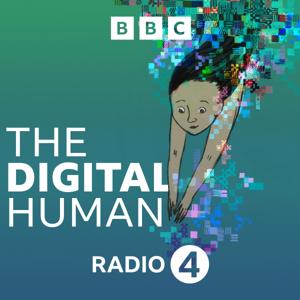


Aleks Krotoski enters the world of the unwatched, the unread and the unnoticed, all the content posted online that no-one ever sees.
It does not interject, it has endless patience and you gain empathy from shared experience. Aleks Krotoski explores how the online space has become our greatest confidante...
Aleks is looking at regret, that sinking, nagging feeling when we realise we have made the wrong choice or when things have not gone the way we hoped or envisaged. Ethan Zuckerman was one of the early architects of user generated content on the internet in the mid nineties. He created the code that lead to the pop up advert which he still regrets today but Aleks finds out not for the reasons you would think.
Denise Locke was on Flight 1549 which miraculously landed in the Hudson River in 2009. She had a choice to get on the flight that day because the weather delay meant she was texted by the airline to give her the option not to fly. She flew anyway and despite suffering post traumatic stress she does not regret the experience. It has changed her life, she now lives much more in the present.
Professor Amy Summerville runs a regret lab at Miami University, Ohio, she talks about the importance of regret and why it helps us to understand the world around us. Amy thinks that in our modern world we experience more regret, because of what she refers to as counterfactual thinking and the abundance of choice we now have because of technology.
Simon Yates one of the protagonists in the film and book Touching the Void, speaks about why he cut the rope his climbing partner was dangling on up a mountain in Peru and why he has no regrets about what he did.
Mel Slater and Doron Friedman both push the boundaries of what' s possible in virtual reality. They're exploring the use of clones in VR which are able to go back in time and re live past experiences. They believe this technology will have great impacts not only on our how we perceive the self and on identity but also how we experience and deal with regret in the future.
Produced by Kate Bissell.
It's the life we're told we want, where we just shout at a device and our needs are met as quickly as the supply chain allows. Aleks Krotoski explores frictionless digital living.
But is there value in friction? Aleks hears from someone who's life depends on it, mountaineer Andy Kirkpatrick. He has a reputation for stacking the odds against himself as much as possible; long routes, often climbed alone in the worst of conditions. Back on the ground Andy also needs friction to not get complacent, accept others views without question, to keep moving forward.
Without friction we risk falling prey to what economist Umair Haque describes as the infantilisation economy. One where we are diminished by being able to have our every need met by Amazon's Alexa. And the cost isn't just to us but also to the army of digital serfs peddling about in all weathers with those trademark boxes on their backs. Its a future that was foreseen as far back as the late 19th century by the likes of Nietzsche in his descriptions of the 'last men' a humanity living the most vanilla of existences without challenge or ambition to change.
Nothing sums this up better than the food replacement industry. No time to shop, cook, chew? Get everything you need nutritionally in a drink like Soylent or Huel - all in the name of efficiency. Its a world that fascinates anthropologist Jan English-Luek who for over 20 years has been observing trends in silicon valley.
Ultimately Aleks will ask what we're saving all this time and effort for and do we ever reap the benefits? Or does it just keep us where the digital world wants us, consuming in ever more efficient ways.
Producer: Peter McManus.
From the dawn of civilisation, human beings have yearned to predict the future. In the past you might have consulted the Oracle at Delphi or sat down for a tarot reading to steer you through life.
Today, the internet offers amazing potential for predictive technology. There isn't a part of the natural world or human existence that isn't recorded and quantified, even the most mundane aspects of our lives are broadcast into the universe thanks to our prolific use of social media.
By analysing the cornucopia of data we can detect patterns and understand behaviour... but can we really predict the future? Developers claim yes we can, from what movie will be a breakout hit, to when there will be a run on cold and flu medicine, even to the outcome of a child's' entire life - all we need is the right data. But do we want that?
In today's Digital Human Aleks Krotoski explores why it is we feel the need to predict the future to find our place in the present world, and discovers that prediction could end up being a cursed crystal ball if handled incorrectly.
Aleks Krotoski asks if blaming social media for recent political upheaval misses the point and we end up giving too much power to the technology and not enough to ourselves in how opinions become formed.
If we look hard enough, we have access to information online about other people, and about issues we may think we need to know. But is this always a good thing? Are there some things that we'd be better off not knowing?
Producer: Kate Bissell.
The human face is quintessential part of our identity - crucial for communication, expressing emotion and understanding our place in the world.
So what happens when that most human of interfaces is placed over what boils down to a cluster of motors and a few lines of code? Aleks Krotoski explores how we will be psychologically affected by machines that can look us in the eye and smile back at us.
Producer: Elizabeth Ann Duffy.
One of the major criticisms of social media is that it's disconnecting us, as individuals, from society and from real physical interactions.
But if a key element of 'tribe' is communication and connectivity then the digital world arguably holds unlimited bounds for tribes.
Mumsnet for instance has changed how we view mums as a social group. While marketers and advertisers may have seen them as a target market, they probably never thought they would be an ever-connected all-powerful tribe who could even make politicians quiver in their boots.
In this weeks' episode of The Digital Human, Aleks Krotoski asks if rather than separating us, the digital world is helping us revive old tribal connections.
If the internet has heralded the death of distance, what do these new kind of tribes look like? And do we relate to each other in different ways now that so much of our lives are lived online?
Contributors: zoologist Desmond Morris; author of The Patter Michael Munro; academic and journalist Meredith Clark; internet activist Ethan Zuckerman and digital anthropologists Daniel Miller and Elisabetta Costa.
Producer: Caitlin Smith.
There's nothing more human that adapting a tool to make your life better, it's the rationale behind every innovation. Aleks Krotoski explores how our digital tools can be reinvented in powerful ways by individuals seeking a better life. Whether it's how smuggled USB sticks filled with content from the outside world inspire North Koreans to defect to the south, or the way a single photo of woman running with her hair flowing inspires a campaign against compulsory Islamic dress in Iran. What ties these stories together is hope. And it's the hope that the world can be made better that makes us look to the tools we have and how they might be re-purposed to make that a reality.
From the publisher's feed
Aleks Krotoski explores the digital world

7,625 Listeners
370 Listeners

1,048 Listeners

5,481 Listeners

1,797 Listeners
1,811 Listeners
1,033 Listeners
1,907 Listeners

753 Listeners

3,225 Listeners
1,004 Listeners