
Sign up to save your podcasts
Or

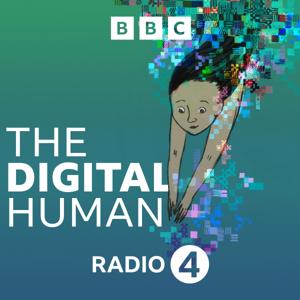


The internet began as a way for academics and researchers to share information and collaborate on projects - it was a boon for scientific discovery.
But despite there being more scientific information online than ever, in the modern day the power of the internet has completely flipped. Verified science and medicine are crowded out by a plethora of misinformation and snake oil salesmen. From the relatively harmless quackery such as infrared light treatments or ‘wellness’ focused diets, to conspiracy theories around vaccinations that are influencing political policy, and have resulted in outbreaks of dangerous, preventable diseases across the world - what is happening online is having a tangible impact across the globe.
Aleks Krotoski explores how the infrastructure of the internet allows medical misinformation to thrive, finds out how people can be drawn into communities centred around medical misinformation and conspiracy theory, and how both scientists and every day internet users can redress the balance online.
Gentrification. It’s a constant cycle in the offline world. Run down areas with cheap rent attract a young arty crowd, business moves in when the area has a new hip image, and suddenly everyone wants to live there and the original residents find themselves priced out of the neighbourhood and so move on to a new place to start the cycle again.
But, we don’t just live in cities in the digital age. The internet was once a haven for freaks, geeks and weirdos, but now that everyone has poured into the same digital space, has it too been gentrified? And if it has… where can people go?
Aleks Krotoski explores how digital communities have shifted and evolved, through both the very human development of communities, and the technological changes of algorithms and automation that have like the highways and infrastructure of the physical world, have split communities and fundamentally changed how we live online. She discovers out how the cycle of progress has both helped and hurt us in the digital age, and finds out if the artists, the freaks, the geeks and the weirdos still have a place to call home.
Aleks explores how technology can increase self -efficacy and therefore our belief that we can rescue others. Aleks discovers that sharing vulnerabilities online can turn a victim into a rescuer as others who need help will often seek you out giving you the opportunity to help them. Helping others can help detract from your own problems and help empower but as professional therapists know all too well there needs to be boundaries to prevent emotional burnout, but Aleks discovers that setting boundaries online is not easy.
Digital Assistant bots are becoming ever more common - Alexa playing music on your countertop, Siri taking notes on your phone, a little voice bubbling out of your watch to rattle off the things you almost forgot you needed to buy during the big weekend shop. They are useful little servants
But, barking orders at something that talks back, something that seems a little bit human but totally subservient… it can be a little uncomfortable. As with any new invention, domestic robots illuminate issues within human society that we may not have noticed before. Are we projecting old social norms of hierarchy and gender onto this new technology, and if we are, does how we choose to design and treat our subservient machines, impact how we treat our fellow humans?
In world where we are constantly told we are all exceptional and unique, Aleks Krotoski explores the unexpected affordances of being average.
Aleks Krotoski explores the social and psychological impact of a life lived online, where maintaining a perfectly curated life is key and real life flaws are hidden...
Producer: Victoria McArthur
Sarah from Ohio went online to escape bullies at her school but they followed her online and the abuse continued. She hoped someone would step in and help her but her attempt at a cry for help was ignored.
We also hear from Vie Clerc Lusandu who was attacked, with her son on a train travelling from London to Leeds. Vie is still trying to comprehend why on a packed train it took ten minutes for someone to come to her aid.
Dr Lasana Harris an experimental psychologist from University Collage London explains that people do not step forward because they are callous but because of the bystander effect. People may just not recognise when they are faced with a helping situation. If there is a large crowd this is exaggerated as people take their cues from other people. If there had been fewer people in Vie's carriage Lasana says it would have been more likely that someone would've stepped forward because the diffusion of responsibility would have been lower. Lasana acknowledges that because the conditions necessary for the bystander effect are magnified people online are even more unlikely to step in.
Jackie Zammuto from Witness an organisation who teach people around the world how to bare witness to injustices using video explains how it is possible to turn from a bystander into a witness whose presence can then be of some use even if they don't step in. This may not have help Vie feel any less scared or vulnerable but it may have helped to deescalate and disrupt the attack.
However documentary photographer, Lauren Pond's story warns us that we need to be careful we don't use our phones as a protective shield in helping situations where we should really put them away and step in or through observing videos online become bystanders ourselves.
Produced by Kate Bissell
Even if you are the most careful person in the world when it comes to your data, little pieces of your personal information are constantly being uploaded into the digital world without you being aware of it. How? Because of your connections to everyone around you.
The idea of personal privacy might not even apply any more. Your family, friends, even a random guy you bought a couch from a decade ago all have information about you that is incredibly valuable to technology companies - from phone numbers and emails in a contact list, to new baby photos and even the code of your DNA - all of it is being harvested, sold and used without you having any way to know about it, let alone have any control.
And Aleks Krotoski discovers that when those little pieces of the digital jigsaw are put together, they can have unexpected and sometimes shocking consequences in our real lives.
Jane Charlton suffers from depersonalisation leaving her sense of self fragmented. In order to construct her sense of self she seeks the physical presence of people. For Jane social media means nothing. Dr Anna Ciaunica has studied Jane's experience of depersonalisation and what it tells us about the self, how we construct it and how important it is to maintain.
Professor Manos Tsakiris says we need to feel embodiment in order to be fully in touch with our selves. But how does the use of tech influence this? Manos says that the feeling of dis embodied brains or 'brains in jars' doesn't help our sense of self because the body is as important as the brain in constructing the self, even through out adulthood. Aleks goes into a float tank in LA to experience sensory deprivation, no phones to see if she can connect to her body and explores the benefits of doing so.
Brynn Duncan suffers from mast cell disease and can have an allergic reaction to almost anything at anytime. Her friends nick named her 'bubble girl' because she needs to constantly protect herself. For Brynn mentally detaching from a body which causes her great pain is critical and social media is one way she is able to do this. It enables her to live outside her body to escape and remove herself from the here and now. But Brynn says she has a hard time re attaching to herself once she has detached.
Produced by Kate Bissell
Aleks Krotoski wonders if it's really possible to convey a sense of joyful abandon online...
Producer: Victoria McArthur.
From the publisher's feed
Aleks Krotoski explores the digital world

7,625 Listeners

370 Listeners
1,048 Listeners

5,481 Listeners

1,797 Listeners

1,811 Listeners
1,033 Listeners

1,907 Listeners

753 Listeners
3,225 Listeners
1,004 Listeners