
Sign up to save your podcasts
Or

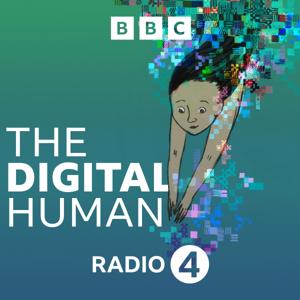


In this episode of The Digital Human Aleks Krotoski asks if social media is creating a new era of shame. Psychotherapist Aaron Balick explains how shame needs a witness in order to be felt, we need to be able to see our selves through the eyes of another. If we break a social norm we are made to feel shame. Shame is a powerful emotion that can control our behaviour and infiltrate every aspect of our lives, influencing the way we live. Seraphina Ferraro's experience of shame went further, she found herself trapped in an abusive relationship by shame. Even after leaving Seraphina felt too ashamed to speak about what had happened. However, she discovered that the antidote to shame is empathy, others sharing their own experiences of shame has helped her in her recovery. Aleks explores the cost of shaming someone offline and online and the price of that shaming by those who have been shamed. Is technology increasing our ability to shame and how does this online shaming impact lives offline?
Produced by Kate Bissell.
For many of us the modern world is thankfully one of abundance, where we can indulge ourselves at every turn. But why is it so difficult to say when we've had enough; of foods we know aren't good for us, of TV programmes that play the next episode automatically, of the fleeting social connections we get through online platforms?
As advanced as our technological world has become our brains haven't evolved much since we lived on the African Savannah. And all the things that we sought out to survive there remain hardwired into us today. And it's the consequences of that Aleks will explore.
Some of the tricks nature plays on us go even further back in evolution. Take the humble if duplicitous Cuckoo, laying eggs in another bird's nest. When hatched the cuckoo chick's mouth is that bit wider, that bit redder than those it's sharing the nest with (should any other chicks have survived). The result is the deceived parents will feed it preferentially as the best bet for survival. That extra redness and wider gape is an example of a phenomena in animal behaviour called super normal stimuli. We encounter something we like but with its attributes boosted and we go mad for it, there numerous examples across the animal kingdom.
The difference with humans is we've learnt to super-normally stimulate ourselves; with foods with more sugar and fat than occur in nature, with images of the opposite sex carefully manipulated to make them even more arousing. We've mastered how to push our buttons and we do it, or have it done to us repeatedly.
Aleks sees how this plays out across a range of experiences from the playing of slot machines to competitive eating, to learn the tricks being played on us and how we might outsmart the tricksters.
Producer: Peter McManus.
Spam and its prevention have been a driving force in the history of the internet. It's changed laws and communities, language and culture.
It comes in all shapes and forms, the most popular of which is advance fee scams. You know the drill: an agent for the widow of charitable billionaire wants to give you a share of a multi million-dollar 'inheritance'... in return for your help in getting access to it by posing as a cousin or a niece.
But this type of spam isn't just a feature of digital living; it's been around a lot longer than that.
The Digital Human traces the roots of the longest running spam scam in human history, before casting ahead to a world of intelligent spambots.
Aleks Krotoski asks if scams are symptomatic of their time, what do they tell us about now and what do they say about us?
Producer: Caitlin Smith.
From funerals to the Burning the Circle festival held every year on the Isle of Aran to surgeon's scrubbing up before an operation, Aleks explores the very human experience of rites of passage and ritual and why this very human experience can help make sense of ourselves online.
A modern day rite of passage could be getting your first mobile or social media account but do we have rituals to accompany these new keys to the adult world? And why should we need them?
Produced by Kate Bissell.
Sin eating was an age old British practice carried out by those on the fringes of their communities. When someone died the sin eater would consume a ritualistic meal over the corpse and in doing so they would take on their sins. Whether they were outcasts because of this, or to start with folklorists can't say. What is known for certain though is that they were among the poorest - who else would do it?
While the practice may have died out over a hundred years ago there is a digital equivalent. Content moderators working in huge numbers across the world are fighting a losing battle both to keep horrible images from slipping into our social media feeds but also against the harm they suffer from witnessing so much gruesomeness.
Aleks Krotoski will hear about what happens when you stare into the abyss for too long.
Producer: Peter McManus.
Aleks goes in search of silence. In our digital world has silence become harder to find, or are we looking for it in all the wrong places?
Leif Haugen is a Fire watcher who spends six months of a year stationed at Toma lookout, on a mountain in Montana. He says only fire watchers who are at peace with themselves are able to stick it out. Living in silence makes you look inwards at who you really are. Silence is the absence of something but the presence of everything.
Isobel Anderson suffers from tinnitus and at its peak felt like she was being tortured or stalked. The culprit wasn't an external sound that she could switch off; it was inside her brain. Her mind tuned into the inner electrical currents and motions that we all experience but hers never fade away. She knows there’s no such thing as silence but what she misses is being able to control her sound environment.
Jessica Vitak is a writer who lives in London and uses technology to control her sound environment. She wears noise cancelling headphones to drown out the distractions of the city but she admits it does make her shut down a little.
Dr Helen Lees is an Associate Research fellow at York St John University and she argues that being distracted by our screens means we miss out on the silent experience between people, the language of silence spoken.
Produced by Kate Bissell.
Aleks Krotoski tells the story of a film that doesn't exist and the online community convinced that it does.
We hear from people who have come together on the online site Reddit to share their memories of the film, including a former video shop worker called Don.
Many of them have very clear memories of watching Shazaam and are convinced it's disappearance is related to a strange phenomenon called The Mandela Effect, so named after the late South African activist Nelson Mandela.
We follow Don on an epic journey as he tries to uncover proof. Along the way we'll encounter conspiracy theories, alternate worlds, computer simulations and a recently deceased Australian inventor called Henry Hoke. It's going to get weird.
But what does this willingness to believe in something despite all evidence to the contrary tell us about the online world and the way communities form in the digital sphere?
Aleks speaks with anthropologist Genevieve Bell about the stories we tell; cognitive scientist Donald Hoffman and Professor of Philosophy at Oxford University Nick Bostrom. Amelia Tait of the New Statesman explains how the story of Shazaam has evolved online.
Producer: Caitlin Smith.
There is an old joke that talking to yourself is first sign of madness but we now know its an essential mental tool . So how much of what we do online is that same inner speech?
Geoff Lean was in a coma for a month, during this time he could hear and feel everything but it wasn't until he woke up from the coma that he realised he had also unconsciously absorbed visual information through his eyes.
Aleks investigates Blindsight, one of the most curious phenomenon's in cognitive neuroscience and helps to explain how Geoff was able to see without seeing. Milena Cunning went into hospital a sighted person but when she awoke from a coma her world was completely black. A stroke had destroyed the part of the brain that allowed her to see, she later discovered that she had Blindsight. A condition which results in a loss of visual experience yet allows information unconsciously to reach the brain. It suggests there is a great deal that we are doing independently of consciousness awareness. We are able to automatically perform without conscious sight or thought. This is highlighted when we become familiar with a piece of technology it becomes automatic, we need little conscious input to use it.
Aleks discovers we are able to steer our way through the world on auto pilot especially if we are performing a habit, an automatic behaviour stored in our unconscious. We all experience a form of Blindsight, like driving and having a conversation , our attention is on the conversation, so we are not conscious of actually driving. Our automatic use of the technology, the car, is stored in our unconscious mind.
Professor Nillie Lavie from UCL says that what Blindsight shows us about our ability to unconsciously see coupled with how we are presented with information online influences not only how much we are subliminally influenced in a digital world but the type of information we unconsciously pick up on and absorb.
Produced by Kate Bissell.
From the publisher's feed
Aleks Krotoski explores the digital world

7,625 Listeners
370 Listeners

1,048 Listeners

5,481 Listeners
1,797 Listeners

1,811 Listeners
1,033 Listeners
1,907 Listeners

753 Listeners

3,225 Listeners
1,004 Listeners