
Sign up to save your podcasts
Or

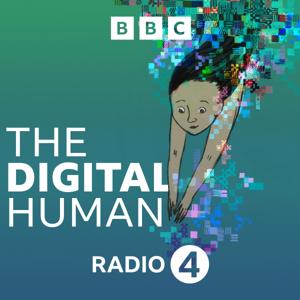


Aleks Krotoski compares our intuitive way-finding skills to those of the digital world and finds out why describing the best way from A to B still poses problems for tech.
Simon Wheatcroft is an adventurer who's run all over the world and at distances that would make marathon runners shudder, he's also blind, he explains how he combined the sensations he gets underfoot with notifications from his fitness app to learn to run solo.
Combining cues from the world around you to find your way is Tristan Gooley's passion. As the Natural Navigator he uses anything natural or man made not only to find out where he is but where he's going. He eschews all navigational tools; maps compasses as well as digital devices in the belief that the head down follow the dot mentality they foster impoverishes our experience of the journey itself.
Thora Tenbrink from Bangor University explains why the directions we receive from our devices often feel so alien that we really have to focus to make sense of them. While tech can use street names and exact distances, humans are vague navigators heading in the general direction and using landmarks. The two approaches aren't always that compatible.
Our natural way-finding abilities can let us down though when we're under stress. Professor David Canter has been studying behaviour in emergency evacuations for much of his career, he explains the sometimes odd and contradictory things we resort to when trying to escape a disaster. So should we look to technology to come to the rescue? We hear from researchers at Georgia tech who explored how far participants would trust a robot to save them from a burning building - apparently quite a lot!
Producer: Peter McManus.
Food is a universal necessity, human brains light up more for food than any other experience, so it's little wonder that food culture has exploded online. Social media is festooned with pictures, recipes, cooking videos and we can't seem to ever get enough.
But, is the digital world doing more than getting our mouths watering? Could technology be changing the very way we taste?
In this episode, Aleks Krotoski explores how food trends develop and shape our culture and spread on social media, as well as exploring new tech that may change the way we eat - from 3D printed delights, to Chef Watson who creates recipes in the cloud, and even how we might manipulate our brains to change how we perceive flavour.
Producer: Elizabeth Ann Duffy.
In The Digital Human: Home Aleks asks what turns a space into a place and whether we really need bricks and mortar anymore, when home can be anywhere you can go online.
Aleks visits Porter Ranch just outside of Los Angeles where residents were told to evacuate because of a gas leak. Linda Matthies decided to stay despite fears over her health. Her sense of home focuses strongly on the comforts of home and her many possessions acquired over her lifetime. Her sense of home is very much tied up with the physical.
In contrast Josh Surtees was able to create a digital space that he could call home. Josh moved to Trinidad to work as a journalist. He fell in love and when his girlfriend moved to London after two months they created a virtual home through skype and successfully continued their relationship.
In Downtown LA Aleks meets Elvina Beck a digital nomad who has started a company allowing millennials to rent a communal pod with wifi access that they can make home. For her home is mobile, as long as there is online access, home can be anywhere.
Architect Sam Jacobs understands the important link between home and identity. He argues that the division between the private realm iof home and the public realm is breaking down because people are exposing their identities online. Home is now one of the places that you can in fact broadcast your identity to a much wider audience.
Travel writer Pico Iyer realised when he saw his home in California burn to the ground that home is not about bricks or mortar or access to wifi but should be found within ourselves.
The idea of the 21st entury house, is not actually that old so will digital technologies change how and were we decide to live in the future.
Produced by Kate Bissell.
In the 1st of a new series Aleks Krotoski gets down to work. From micro-taskers paid pennies to be the janitors of our digital services to car drivers jumping on the Uber bandwagon.
Aleks speaks to technology writer Kashmir Hill who spent a month as an invisible girlfriend writing loving texts to service subscribers for a few cents per message. This is just one example of 'micro-tasking' made famous by Amazon's Mechanical Turk service. For Vili Lehdonvirta of the Oxford internet institute they're examples of the hidden human effort going into services we would assume were automated. Its a new form of piece work undertaken by a causal workforce doing it where and when it suits them.
This type of work treats you like part of a system managed by algorithms an artificial, artificial intelligence. In some senses this isn't anything new as work historian Richard Donkin explains using the examples of the time and motion studies pioneered by Fredrick Winslow Taylor and later taken up by Henry Ford.
What is new is that having an algorithm as a boss runs the risk of having only the appearance of freedom and flexibility. Its what attracts people to the so called gig economy, where tasks are farmed out by the app to a willing freelance workforce. Aleks hears both sides of that experience from two people who make their living off a digital platform; one by day and the other by night.
So what promise do these new forms of digital work offer? Aleks discovers they have the potential to be both a race to the bottom for labour markets and usher in a new era for those currently unable to work.
Producer: Peter McManus.
Imagination is an essential component of what makes us human, it's complexity and artistry separating us from other animals as well as machines. Yet as digital technology progresses it's beginning to model this, once believed mystical, process.
Aleks Krotoski explores the implications of this latest stage of digital evolution. Could the digital world fill the gap for people who are unable to imagine? Does the production of imaginative arts such as poetry indicate a level of humanity in our machines? And if computers can indeed be programmed to imagine, what does this mean for the beauty and artistry of the human mind?
Producer: Elizabeth Ann Duffy.
Since ancient Greece and probably before we've always used metaphors drawn from our current technology to understand our bodies. From the time of Newton we thought of the body as an elaborate clockwork device, the industrial revolution brought us the steam engine and the body became a system of pressures and levers. Aleks Krotoski asks what metaphor prevails in the digital era and what shortcomings in our understanding accompany these analogies.
Producer: Peter McManus.
The online world abounds with doppelgangers, cyber-twins, bots and mind-clones; in this Halloween episode of The Digital Human Aleks Krotoski explores the uncanny world of these digital doubles.
On the most simple level social networks and the now seemingly permanent cult of the selfie means that finding our visual double has never been easier. And its the appeal of this that was the inspiration for Niamh Gearney's website Twin Strangers where people register to hopefully track down their double. Niamh herself has found 3 doubles and she hopes to track down 7 having found that number in researching doppelganger myths.
For artist Daniel Bejar sharing his name with a famous musician has turned the online world into a battlefield for identity an idea he's exploring by changing his appearance to that of his more famous namesake and posting pictures to the web. While for Joanna McNeil she created her own cyber-twin; a bot to share answering her emails and messages. She hoped this would help her understand the ways in which emotion is conveyed online by delegating communication to an algorithm.
Its how the digital world makes doppelgangers of us all that fascinates Sara M Watson; technology critic and affiliate of the Berkman centre for internet and society at Harvard. We catch glimpses of these shadowy digital doppelgangers in ads that don't quite match who we think we are online or in recommendations make us feel uneasy. Its the attempts at personalisation of our digital experiences that she compares to the idea of the uncanny valley of robotics when something is so close to being human that it becomes repellent.
Producers: Peter McManus and Elizabeth Ann Duffy
Aleks Krotoski delves into vigilantism on the web and looks at the moral and philosophical implications of fighting the good fight in a digital space. Can we consider the web to be a superhero?
In the first of the new series, Aleks Krotoski explores how the web has influenced detection, from uncovering Osama Bin Laden to discovering the identity of long-abandoned Jane and John Does.
As human beings, what is it in our nature that drives us to find out the end of the story - even when that story has nothing to do with us?
Producer: Victoria McArthur.
From the publisher's feed
Aleks Krotoski explores the digital world

7,625 Listeners
370 Listeners

1,048 Listeners

5,481 Listeners
1,797 Listeners

1,811 Listeners
1,033 Listeners
1,907 Listeners

753 Listeners

3,225 Listeners
1,004 Listeners