
Sign up to save your podcasts
Or



Based on Podcast App listening data
In part one of this six-part series of The Economics Show, Martin Wolf, the FT’s chief economics commentator, and Nobel Prize-winning economist Paul Krugman discuss how trust in the postwar world economic system is being lost and weigh the costs and consequences of that.
Paul Krugman’s Cultural Coda: Quarterflash, ”Harden My Heart”-
https://www.youtube.com/watch?v=TNFSED77-GM
Martin Wolf’s Cultural Coda:The Beatles, “For No One”
https://www.youtube.com/watch?v=ELlLIwhvknk
Subscribe and listen to this series on The Economics Show on Apple Podcasts, Spotify, Pocket Casts or wherever you listen to podcasts. Episodes are also available on the FT’s YouTube channel.
If you’d like to get in touch and ask Martin and Paul a question, please email [email protected]
Read Martin’s FT column here
Subscribe to Paul’s substack here
The Wolf-Krugman Exchange was produced by Sandra Kanthal and Mischa Frankl-Duval, and the broadcast engineer was Richard Topping. The sound engineer was Breen Turner. Manuela Saragosa is the FT’s acting co-head of audio.
Read a transcript of this episode on FT.com
Hosted on Acast. See acast.com/privacy for more information.
In a special six-part series of The Economics Show, Martin Wolf, the FT’s chief economics commentator, and Nobel Prize-winning economist Paul Krugman discuss the economic events reshaping the world in the wake of US President Donald Trump’s election.
Subscribe and listen to this series on The Economics Show on Apple Podcasts, Spotify, Pocket Casts or wherever you listen to podcasts.
Episodes will also be available on the FT’s YouTube channel.
If you’d like to get in touch and ask Martin and Paul a question, please email [email protected]
Read Martin’s FT column here
Subscribe to Paul’s substack here
Hosted on Acast. See acast.com/privacy for more information.
Churchill never said “we will fight them in the spreadsheets…”. But maybe he should have done. The second world war, like every other war in human history, was decided by how each side allocated its resources. In this episode, Duncan Weldon, author of the new book ‘Blood and Treasure, The Economics of Conflict from the Vikings to Ukraine’, explains how countries have historically thought about the economics of war – and how the Ukraine war is changing that. He and host Soumaya Keynes also discuss how conflict shaped economic institutions and the modern world.
Subscribe to Soumaya's show on Apple, Spotify, Pocket Casts or wherever you listen.
Further reading:
Vladimir Putin’s war economy is cooling, but Russians still feel richer: https://www.ft.com/content/485aba41-1148-4f2c-b0ab-97aac5e50727
Russia’s war economy fuels rustbelt revival: https://www.ft.com/content/559ca59f-7fdc-4c47-8e87-edb562acdc7b
Defence spending is up – but on all the wrong things: https://www.ft.com/content/11a6b844-fe57-4e39-86ba-bb04e839bf2f
Presented by Soumaya Keynes. Produced by Mischa Frankl-Duval. Flo Phillips is the executive producer. Original music and sound design by Breen Turner. The FT’s acting co-head of audio is Manuela Saragosa.
Read a transcript of this episode on FT.com
Hosted on Acast. See acast.com/privacy for more information.
The tit-for-tat tariff escalations between the US and China are on pause, at least temporarily. But if the world’s two biggest economies don’t make progress by July, they could return with a vengeance. How can the two parties make progress? And what does China actually want from the US? Soumaya Keynes speaks to Jay Shambaugh to find out. Shambaugh was the US Treasury’s undersecretary for international affairs under Joe Biden. In other words, he was in charge of the US’s economic relationship with China. He and Soumaya discuss how the Trump administration could negotiate with China, and how interwoven trade policy and national security have become.
Clips: CNBC Television, PBS News
Further reading:
Will Trump’s tariff climbdown save the US from recession?
The markets are declaring tariff victory too soon
US-China trade war is pushing Asian nations to pick sides, ministers warn
Subscribe to The Economics Show on Apple, Spotify, Pocket Casts or wherever you listen.
Presented by Soumaya Keynes. Produced by Mischa Frankl-Duval. Flo Phillips is the executive producer. Original music and sound design by Breen Turner. The FT’s acting co-head of audio is Manuela Saragosa.
Read a transcript of this episode on FT.com
Hosted on Acast. See acast.com/privacy for more information.
US tariffs have sent financial markets into a frenzy in recent weeks, but how much should central bankers be taking trade into account when setting monetary policy? To find out, Soumaya Keynes sits down with Bank of England Monetary Policy Committee member Swati Dhingra – one of the committee’s more dovish members. They discuss why the UK’s open economy makes it more vulnerable to trade shocks, what Dhingra saw in the data that her MPC colleagues didn’t, and why she didn’t vote for an (even) sharper rate cut earlier this month.
Further reading:
Two BoE policymakers warn against rushing to further cut interest rates
Bank of England vote split hits hopes for faster interest rate cuts
Brexit lessons for Trump’s trade war
Subscribe to The Economics Show on Apple, Spotify, Pocket Casts or wherever you listen.
Presented by Soumaya Keynes. Produced by Mischa Frankl-Duval. Flo Phillips is the executive producer. Original music and sound design by Breen Turner. The FT’s acting co-head of audio is Manuela Saragosa.
Read a transcript of this episode on FT.com
Hosted on Acast. See acast.com/privacy for more information.
Donald Trump’s trade policies have put global markets through the mill in recent weeks. But his policies didn’t come from nowhere. Aspects of US protectionism preceded Trump’s second term – and countries across the world have been pushing for greater self-sufficiency for some time. Is this drive for greater self-sufficiency misguided? Is true self-sufficiency even possible? Or might the secret to economic security come from more co-operation, not less? The FT’s senior business writer Andrew Hill sits down with Ben Chu to discuss the findings from his new book: "Exile Economics: What Happens if Globalisation Fails." Chu is the policy and analysis correspondent at BBC Verify and was previously the economics editor of BBC Newsnight.
For further reading:
The old global economic order is dead
Britain’s trade deal with Trump may not be good news for the world
Tariffs are a bet on the free market rather than free trade
The business lessons to draw from Trump’s dealmaking
Subscribe to The Economics Show on Apple, Spotify, Pocket Casts or wherever you listen.
Presented by Andrew Hill. Produced by Mischa Frankl-Duval. Flo Phillips is the executive producer. Original music and sound design by Breen Turner. The FT’s acting co-head of audio is Manuela Saragosa.
Read a transcript of this episode on FT.com
Hosted on Acast. See acast.com/privacy for more information.
Over the past 25 years, the Gates foundation has given away more than $100bn. Much of that money has gone to healthcare and education projects outside the US – and the organisation plans to give $200bn more to various programmes in the next twenty years. But as Elon Musk and Doge feed USAID, a key partner of the foundation, “into the wood chipper,” how can Bill Gates press ahead? The FT’s Africa editor, David Pilling, speaks to Gates about running an apolitical, philanthropic entity in a politically challenging time.
Read more:
Bill Gates is giving away $200bn. Can his plans survive in the Trump era?
Bill Gates accuses Elon Musk of ‘killing’ children with USAID cuts
Elon Musk’s painful departure
Subscribe to The Economics Show on Apple, Spotify, Pocket Casts or wherever you listen.
Presented by David Pilling. Produced by Mischa Frankl-Duval. Flo Phillips is the executive producer. Original music and sound design by Breen Turner. The FT’s acting co-head of audio is Manuela Saragosa.
Read a transcript of this episode on FT.com
Hosted on Acast. See acast.com/privacy for more information.
The US dollar has been in slow decline for around a decade – so says Kenneth Rogoff, Harvard professor, and former chief economist of the IMF. Donald Trump’s trade policies have raised a lot of questions about the future of the dollar – and how its decline could affect the rest of the world’s currencies. Rogoff joins Martin Wolf to discuss how the decline of the dollar could empower China, capital flight from the US, and why cryptocurrency is a bigger threat to dollar hegemony than most people realise.
Martin Wolf is chief economics commentator at the Financial Times. You can find his column here: https://www.ft.com/martin-wolf
Subscribe to The Economics Show on Apple, Spotify, Pocket Casts or wherever you listen.
Presented by Martin Wolf. Produced by Mischa Frankl-Duval. Manuela Saragosa is the executive producer. Original music and sound design by Breen Turner. The FT’s head of audio is Cheryl Brumley.
Read a transcript of this episode on FT.com
Hosted on Acast. See acast.com/privacy for more information.
Almost a month since ‘liberation day’, the potential impacts of President Donald Trump’s tariff regime are starting to sink in. US hard data isn’t yet showing much negative impact from changes to US trade policy – but economists are gloomy on US growth prospects. The IMF last week warned of an increased risk of US recession, and lopped nearly a full percentage point off its forecast for US growth this year. Michael Strain, director of economic policy studies at the conservative American Enterprise Institute, joins FT economics editor Sam Fleming to discuss how Trump’s tariff agenda may play out, which forces could force the president to change tack, and what that might look like.
Read a transcript of this episode on FT.com
Hosted on Acast. See acast.com/privacy for more information.
When China joined the World Trade Organization at the start of this century, its surging exports rattled US manufacturing. Prices fell, jobs became less lucrative, and communities that relied on these jobs were hit hard. President Donald Trump seems determined to bring those jobs back to the US. Is that realistic or even desirable? The FT’s chief economics commentator Martin Wolf speaks to MIT economics professor David Autor about the "China shock" and the (potentially more significant) AI challenge that lies ahead.
Read a transcript of this episode on FT.com
Hosted on Acast. See acast.com/privacy for more information.
From the publisher's feed
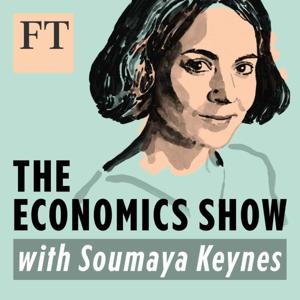
The Economics Show with Soumaya Keynes is a new weekly podcast from the Financial Times packed full of smart, digestible analysis and incisive conversation. Soumaya Keynes digs deep into the…
Soumaya Keynes is an economics columnist for the Financial Times. Prior to joining the FT she worked at The Economist for eight years as a staff writer, where as well as covering trade, the US economy and the UK economy she co-hosted the Money Talks podcast. She also co-founded the Trade Talks podcast.
Hosted on Acast. See acast.com/privacy for more information.
Ranked by our users in the last 21 days

4,104 Listeners
923 Listeners

285 Listeners
54 Listeners

351 Listeners
153 Listeners
99 Listeners

198 Listeners

638 Listeners

222 Listeners

2,545 Listeners
1,066 Listeners
136 Listeners
38 Listeners

85 Listeners
139 Listeners

194 Listeners
7 Listeners
18 Listeners