
Sign up to save your podcasts
Or



Based on Podcast App listening data
In this episode, we explore why connection is a critical leadership capability and how it contributes to thriving teams. Drawing on insights from elite coaches across rugby, tennis, basketball, Australian rules football, American football, and netball, the conversation examines how leaders create cohesion, deepen trust, and help people understand the part they play in something larger than themselves.
Key Ideas
•Cohesion predicts performance: Teams succeed when people understand each other, their roles, and the system they are operating within.
•Connection requires emotional commitment: True connection involves care, honesty, hard conversations, and the willingness to support one another.
•Authenticity builds trust: Leaders strengthen connection by sharing stories, being honest about challenge and care, and creating space for others to do the same.
•Small moments matter: Visibility, daily check-ins, shared meals, and simple acts of acknowledgement can reinforce connection over time.
•Everyone needs to see their impact: Strong leaders help every person understand how their work contributes to the team’s larger purpose.
•Connection can be observed and evaluated: Leaders can look for behaviours that show whether people are trusting, supporting, and influencing each other effectively.
Leadership Takeaways
1.Prepare connection before people come together. Leaders can build stronger teams by encouraging support, contact, and shared investment even when people are apart.
2.Make authenticity practical. Connection grows when people understand each other’s stories, motivations, hardships, and aspirations.
3.Be present and visible. Leadership connection is often created through brief but meaningful interactions that signal care and attention.
4.Show people how the work connects. Every role matters; leaders should make the links between visible and invisible contributions clear.
5.Ask what each person is willing to do for the team. Sacrifice is not only what people give up, but also what they are prepared to do for others.
Reflection Questions for Leaders
· What are you doing when you are apart, to prepare for the times when you will come together?
· What can you do to be more authentic with each other?
· How can you share more information about yourself with each other in a way that deepens your understanding of what drives each of you?
· How can you use daily, small moments to stay connected?
· What more could you do to understand the linkages between the people who support you?
If you would like to send us any feedback or if you know a great coach, who has a unique story to share, then we would love to hear from you, please contact us at [email protected] or contact us through our website thegreatcoachespodcast.com
Hosted on Acast. See acast.com/privacy for more information.
Anders Torstensson on Building Mjällby’s Kaizen Culture Through Calm, Teamwork and Detail
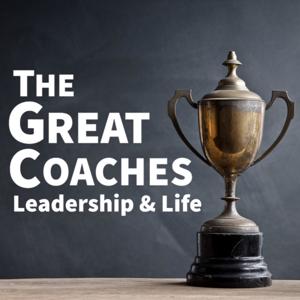
We believe that there is no algorithm for leadership. So we ask the world's great coaches how they do it.
Anders shares how Mjällby’s rise from relegation struggles to cup finalists and champions was built on club-wide structure, kaizen-style continuous improvement, and teamwork rather than one coach’s decisions. He explains creating conditions for intrinsic motivation, training with maximum intensity and game-specific opposition, and obsessing over small efficiencies that compound. He describes using a small staff effectively through delegation, trust and regular feedback surveys, plus monthly meetings with a player council. Adversity—financial constraints, player sales, and his leukemia diagnosis—strengthened resilience and sharpened his process focus on solutions. He emphasizes clarity on core values, selecting good people, staying calm, being fair, and making hard decisions without being harsh.
Q. Do you truly know who you are and what you stand for?
Q. When adversity hits, do I focus on the problem or the solution?
Q. What energy am I bringing to the people around me?
If you would like to send us any feedback or if you know a great coach, who has a unique story to share, then we would love to hear from you, please contact us at [email protected] or contact us through our website thegreatcoachespodcast.com
Hosted on Acast. See acast.com/privacy for more information.
Todays episode is On Leadership and I am joined for the discussion by 2 great coaches.
The first is Mike Dunlap. Mike is a basketball coach who has led teams in US Colleges, the NBA and in Australia. He was also an assistant with the Milwaukee Bucks when then they defeated the Phoenix Suns to win their first NBA Championship in 2021.
The second is Rugby Union coach Franco Smith. As a player Franco represented South Africa as well as playing for clubs in South Africa, Italy, France and Wales. As a coach he has led teams to National Championships in Italy and South Africa and is presently the head coach of the Glasgow Warriors.
Q: How do you mitigate the loneliness you might feel as a leader?
Q: What philosophy guides you as a leader
Q: What did you do today to lead by example?
If you would like to send us any feedback or if you know a great coach, who has a unique story to share, then we would love to hear from you, please contact us at [email protected] or contact us through our website thegreatcoachespodcast.com
Hosted on Acast. See acast.com/privacy for more information.
There is no algorithm for leadership. So we ask the world's great coaches how they do it.
In this episode, we sit down with legendary rugby union coach John Connolly, affectionately known as "Knuckles". From his early days jumping into boxing rings and playing cricket, to leading elite clubs like the Queensland Reds, Stade Francais, Swansea, Bath, and the Australian Wallabies across 500 games, John shares his raw, deeply honest philosophy on what it truly takes to build a winning culture.
We explore the concepts of single-minded toughness, the practicalities of giving players a 12-month advance warning when their time in the jersey is coming to an end, and how he famously moved rule-breaking players into his own home to reinforce team standards. John also opens up about his life-altering accident in 2021 that left him a quadriplegic. He discusses how he found the mental strength to accept his new reality, stay positive through family support, and use his extensive network to raise hundreds of thousands of dollars for spinal injury research and patient comfort.
Key Takeaways:
Q: What role does pride play in your teams identity?
Q: How do you find the balance between single mindedness and being open to new ideas?
His adventures are captured in his book Bare Knuckles it’s a terrific read and all the money raised from it go to the Perry Cross Foundation
If you would like to send us any feedback or if you know a great coach, who has a unique story to share, then we would love to hear from you, please contact us at [email protected] and if you would like to receive our newsletter with 5 ideas to help you improve your leadership, then sign up at: The Great Coaches Newsletter
Hosted on Acast. See acast.com/privacy for more information.
There is no algorithm for leadership. So we ask the world's great coaches how they do it.
In this episode, Georgia State Head Football Coach Dell McGee shares his deeply reflective approach to leadership, culture building, and talent identification, drawing from his extensive experience across high school powerhouses and championship-winning SEC programs.
Key Highlights:
Q: What are the pillars that define your teams’ culture?
Q: What are some of the purpose’s that drive the people in your team?
Q: How well are you able to regulate emotional ups and downs during tough times?
If you would like to send us any feedback or if you know a great coach, who has a unique story to share, then we would love to hear from you, please contact us at [email protected] and if you would like to receive our newsletter with 5 ideas to help you improve your leadership, then sign up at: The Great Coaches Newsletter
Hosted on Acast. See acast.com/privacy for more information.
Todays episode is on Great Team Work, and I am joined for the discussion by 2 great coaches.
The first is Lisa Alexander.
Lisa was the coach of the Australian Netball team, known as the Diamonds, from 2011 to 2020. During that time She oversaw gold medal successes at the 2014 Commonwealth Games and 2015 Netball World Cup, as well as silver medals at the 2018 Commonwealth Games and 2019 Netball World Cup.
And the second is John Kessel
John was the Team Leader for the 2000 USA Olympic Beach Volleyball Teams in Sydney, which brought home one gold medal, and for the 2004 USA Paralympic Women’s Sitting Volleyball Team in Athens, which came home with the bronze medal.
He is the author of over 12 books, including the IMPACT coaching manual, which is now in its 33rd edition. in 2024, he was inducted into the Volleyball Hall of Fame and today travels around the world talking about coaching, particularly in the youth space.
Q: how do you describe great team work?
Q: How often do you catch people doing good; versus calling out areas for improvement?
If you would like to send us any feedback or if you know a great coach, who has a unique story to share, then we would love to hear from you, please contact us at [email protected] or contact us through our website thegreatcoachespodcast.com
Hosted on Acast. See acast.com/privacy for more information.
There is no algorithm for leadership. So we ask the world's great coaches how they do it.
In this episode, we sit down with world-champion player and renowned international field hockey coach Jamilon Mülders. From beginning his coaching journey at the age of twelve to leading national programs across Germany, China, and the Netherlands, Jamilon shares a deeply reflective perspective on what it means to lead with humility, empathy, and authentic connection.
We explore the profound shift from a traditional, hierarchical "joystick coach" model to a truly player-centered approach where the human being is kept firmly at the center of attention. Jamilon opens up about his personal "aha moment" in 2022 when he finally learned to coach authentically, shedding the rigid expectations of what a head coach "should" look like in favor of a calm, casual, and supportive presence.
Key Topics Discussed:
Q: What routines do you have in place to deliver tough messages?
Q: To what extent do you agree with the idea of being a servant to the group as the leader?
Q: Has there been times when you have been ‘blind-spotted’ by a goal
If you would like to send us any feedback or if you know a great coach, who has a unique story to share, then we would love to hear from you, please contact us at [email protected] and if you would like to receive our newsletter with 5 ideas to help you improve your leadership, then sign up at: The Great Coaches Newsletter
Hosted on Acast. See acast.com/privacy for more information.
There is no algorithm for leadership. So we ask the world's great coaches how they do it.
In this episode, we dive deep into the concept of Thriving—a term that has seen its popular interest and media relevance double since 2016. Host Paul Barnett sits down with two exceptional guests to break down what it means to move past mere survival and truly optimize both individual performance and collective growth.
Our Guests:
Key Takeaways from the Discussion:
Q: How does your organization experience thriving? What can you do to facilitate this?
If you would like to send us any feedback or if you know a great coach, who has a unique story to share, then we would love to hear from you, please contact us at [email protected] and if you would like to receive our newsletter with 5 ideas to help you improve your leadership, then sign up at: link
Hosted on Acast. See acast.com/privacy for more information.
There is no algorithm for leadership. So we ask the world's great coaches how they do it.
In this episode, we sit down with legendary NBA assistant coach Ron Adams to explore his deeply impactful philosophy of "people building."Drawing from his unique childhood growing up on a farm in California's Central Valley, Ron compares the continuous, daily cultivation required in agriculture to the dedication needed to unlock human potential in sport and business.
Ron shares invaluable insights from his illustrious career, spanning over five decades across major universities and elite NBA franchises—including his current championship run with the Golden State Warriors.He dives deep into the evolution of coaching from a rigid, dictatorial model to today's collaborative, relational environment where an athlete's voice is highly valued.We also unpack the heavy crown of being an authentic "truth teller" for high-pressure head coaches, the transformative power of leading a team with true joy, and why he views defensive strategy as a form of altruistic giving.
Key Highlights:
Q: What role does Joy play in your organisation?
Q: What support do you have to help you discern well?
Q: To what extent does fealty exist in your team?
If you would like to send us any feedback or if you know a great coach, who has a unique story to share, then we would love to hear from you, please contact us at [email protected] and if you would like to receive our newsletter with 5 ideas to help you improve your leadership, then sign up at: link
Hosted on Acast. See acast.com/privacy for more information.
There is no algorithm for leadership. So we ask the world's great coaches how they do it.
In this episode, we connect with Shane Jurgensen, former first-class cricketer turned elite international coach. From his early playing days across multiple Australian states to his time guiding the national teams of Bangladesh, Fiji, and New Zealand, Shane has developed a deeply reflective and human-centric approach to high performance. Currently serving as the Head Coach of the Wellington Firebirds, Shane reflects on his journey and the core principles that define his leadership strategy.
Key Takeaways From the Episode:
Key Questions:
· What routines do you use to open team meetings? How they can be used to deepen seflessness within the group?
· What is the level of dispersed leadership across your team?
· How are your development plans spread across improving base capabilities versus growing new ones?
If you would like to send us any feedback or if you know a great coach, who has a unique story to share, then we would love to hear from you, please contact us at [email protected] and if you would like to receive our newsletter with 5 ideas to help you improve your leadership, then sign up at: https://thegreatcoaches.beehiiv.com/subscribe
Hosted on Acast. See acast.com/privacy for more information.
From the publisher's feed
Hosted on Acast. See
Ranked by our users in the last 21 days

8,760 Listeners

808 Listeners
298 Listeners

111,764 Listeners
276 Listeners
159 Listeners

59,422 Listeners

629 Listeners

57,791 Listeners

5 Listeners

28,981 Listeners
335 Listeners

384 Listeners

67 Listeners
7 Listeners