
Sign up to save your podcasts
Or

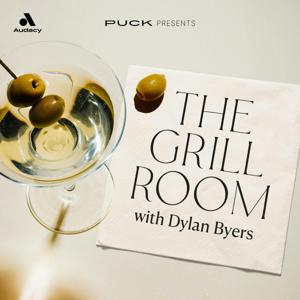


Julia and Dylan reunite to reflect on the biggest media plotlines of the first half of 2026: the impact of A.I. on news organizations, the rise of prediction markets, and the transformation of platforms like YouTube and Instagram into full-blown entertainment hubs. They also dig into the struggles of legacy brands like CBS and CNN to adapt, before looking ahead at how media companies can evolve, differentiate, and stay alive in an increasingly hopeless era of A.I. slopification.
In this special crossover episode of The Powers That Be, Brian Tyler Cohen, progressive content creator and author of The Day After, joins Peter Hamby to diagnose the Democratic Party’s persistent media problem. Cohen digs into why the party's reliance on traditional press has left it flat-footed against Trump’s effective use of various platforms. He also takes aim at the F.C.C. under Brendan Carr, and makes the case that broader outreach—and far less infighting—is the only way forward for his party.
Julia and Dylan reunite to examine the perennial crisis in local news and The New York Times’ new bet on solving it—a local newsletter launching in the Twin Cities. They discuss the strategic thinking behind the “experiment” and why the Times, of all players, might have the resources and reach to actually make this model work.
Stephen Dubner, author of Freakonomics and host of Freakonomics Radio, joins Dylan to discuss the makings of his new YouTube show, Better in Person. Stephen gets into his pivot from traditional to digital media, the value of authenticity in an increasingly crowded media landscape, and what he hopes audiences take away from the show.
There’s a lot of dopey financial advice out there. Jill Schlesinger is here to call it out, answer your questions, break down the financial news that actually matters, and help you manage your money without losing your mind. No jargon. No judgment. Just clear, actionable financial guidance about saving, investing, buying a home, managing your career, and deciding how to spend your hard-earned dollars. When it’s time to panic, Jill will tell you. When everyone else is panicking and you shouldn’t be, Jill will tell you that too. Your money. Your move. Let’s go.
Julia and Dylan reunite to dig into The New York Times’s pivot to a video-first model—confirmed this week by executive editor Joe Kahn, who’s likening the shift to the paper’s move from print to digital. They discuss what it means for the Times’s business and marketing strategy, what happens to newsroom culture when a star system takes hold, and what the move portends for journalism writ large. They also touch on Netflix’s upcoming earnings and what they’re likely to reveal about the state of streaming.
The New York Times’ Maggie Haberman and Jonathan Swan join Dylan for an inside look at their new book, ‘Regime Change: Inside the Imperial Presidency of Donald Trump,’ which moved an extraordinary 300,000 copies in its first week. They shed light on their reporting process, why the book has cut through despite widespread Trump fatigue in media, where their reporting partnership goes from here, and more.
Julia and Dylan reunite to talk through the implications of the Comcast-NBCUniversal split—a move that could actually reposition NBCU as a buyer rather than an acquisition target, with Netflix and Amazon among the potential suitors. Then they turn to a revealing Beehiiv report on the newsletter business, and break down why niche topics like finance and investing are dominating the industry leaderboard.
Campbell Brown, the former CNN veteran and founder of Forum AI, joins Dylan to explain why A.I. companies shouldn’t be trusted to evaluate themselves—and why the industry’s self-grading habit may be its worst blind spot. Then they debate whether media outlets that are hesitant to reckon with A.I. are just accelerating their own obsolescence.
See all the ways bp is driving American energy forward at bp.com/InvestingInAmerica.
Julia and Dylan reconvene to pull on every thread from The New York Times’ sprawling exposé on former Athletic reporter Dianna Russini. They dig into the journalism scandal at the heart of the piece, what it really means to be an insider versus a reporter, and how The Times balances standards and ethics as it grows its business, courts new audiences, and elevates its own stars—all while protecting the legacy institution it’s built.
See all the ways bp is driving American energy forward at bp.com/InvestingInAmerica.
From the publisher's feed
Ranked by our users in the last 21 days

9,646 Listeners

3,138 Listeners
670 Listeners
553 Listeners
5,395 Listeners

4,455 Listeners

300 Listeners

6,603 Listeners

752 Listeners

268 Listeners
85,568 Listeners

107 Listeners

5,364 Listeners

694 Listeners

4,646 Listeners

558 Listeners

378 Listeners

1,171 Listeners

1,885 Listeners

12,713 Listeners

2,240 Listeners
2,039 Listeners
1,114 Listeners
115 Listeners

205 Listeners

86 Listeners

116 Listeners

244 Listeners
196 Listeners
65 Listeners
807 Listeners

170 Listeners