
Sign up to save your podcasts
Or

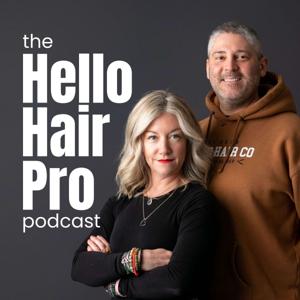


"Send us a message!"
“Young people just don't want to work anymore.”
We hear it constantly from salon owners. They can't find good employees. Nobody wants to work weekends. The younger generation isn't loyal. People don't want to put in the effort.
But what if the generation isn't the problem?
In this episode, we're challenging one of the salon industry's most common complaints and asking a different question: Have we actually built workplaces that today's professionals want to be part of?
We talk about what younger hairstylists and beauty professionals want in their careers, why the expectations we grew up with aren't always worth preserving, and how salon owners can adapt without compromising their businesses.
We share how we approach flexibility, autonomy, education, growth, recognition, and leadership at Hello Hair Co.—including why giving employees freedom also means holding them accountable for their choices.
Jen shares a story about attending an expensive education event early in her career, only to return to a salon that wouldn't let her apply what she'd learned. We also discuss why loyalty has to go both ways, what owners actually owe their employees, what employees owe the business, and why developing people who eventually surpass you might be one of the clearest signs of successful leadership.
Because attracting great people isn't just about finding employees willing to work for you.
It's about creating a business where talented people can build careers worth staying for.
The Big Idea
Stop expecting people to want what you wanted. Find out what they want, build opportunities around it, and give them the leadership and accountability to succeed.
Key Takeaways
Timestamps
00:00 — Opening Takes: Build around people and embrace change
03:00 — Do younger generations really not want to work?
06:00 — Recruiting is an owner's problem to solve
07:00 — Rethinking weekend schedules and employee flexibility
09:00 — Adapting without putting the business at risk
11:00 — Why employees may be voting with their employment
13:00 — What today's beauty professionals actually want
16:00 — Education, growth, and delivering what you promise
18:00 — Jen's story: Education without opportunity
21:00 — Freedom with accountability
23:00 — How time off and scheduling decisions affect earnings
26:00 — What salon owners owe their employees
29:00 — Why loyalty has to go both ways
31:00 — Listening, removing friction, and building relationships
35:00 — What employees owe the business
37:00 — Measuring engagement and growth with TEGI
40:00 — Why employees want attention from their leaders
42:00 — Are you willing to let your employees outgrow you?
44:00 — One Last Thing
Question of the Week
If you were looking for a salon to build your career today, would you choose to work for yourself?
Your business should serve you, so that you can serve others.
Keep building a business where people can grow, contribute, and become more than they imagined possible.
Links and Stuff:
Our Newsletter
Mentoring Inquiries
Find more of our things:
Instagram
Hello Hair Pro Website
"Send us a message!"
Being fully booked sounds like the goal. But should it be?
This week we're keeping things a little lighter and working through three salon-business questions we haven't spent much time preparing for ahead of time.
First, why are recruiting and retention still such massive challenges for salon owners? We talk about what salons compete on, whether the careers we're offering have evolved with what employees actually want, and why promising a great workplace isn't enough if the reality doesn't match.
Then we question one of the industry's favorite measures of success: being fully booked.
If you're booked at 100% for the next six weeks, is that something to celebrate—or does it mean you waited too long to raise prices, have no room for new demand, can't accommodate existing clients who need to reschedule, and have eliminated flexibility from your business?
Finally, we look at salon revenue. Industry data shows revenue increasing even while clients, visits, and services remain slightly down. So if your revenue increased because your prices increased, did your business actually grow?
Revenue matters. But so do demand, profitability, utilization, client count, employee income, capacity, and what you're actually taking home.
Sometimes the number going up isn't the whole story.
Key Takeaways
Time Stamps
00:00 — Opening Takes
04:00 — This or That
09:00 — Why is salon recruiting still so difficult?
10:00 — What are salons competing on for employees?
11:30 — Have salon careers evolved with the workforce?
13:00 — Why copying other salons doesn't solve recruiting
15:00 — Delivering what you promised employees
17:00 — Is being fully booked actually the goal?
18:00 — What does 100% utilization really tell you?
19:00 — Underpricing, demand and availability
20:00 — The hidden problems with being booked six weeks out
22:00 — Last-minute booking behavior has changed
24:00 — Full books can eliminate flexibility and future demand
25:00 — Salon revenue is growing—but is the business?
27:00 — Revenue growth vs. demand growth
28:00 — Why profit changes the conversation
30:00 — What real salon growth looks like
32:00 — The first question to ask when someone says their salon grew
32:30 — One Last Thing
Question of the Week
If your salon's revenue grew 10% this year, what else would need to improve for you to consider that real growth?
Your business should serve you, so that you can serve others.
And as always, keep learning, keep growing, and keep having fun.
Links and Stuff:
Our Newsletter
Mentoring Inquiries
Find more of our things:
Instagram
Hello Hair Pro Website
"Send us a message!"
Anyone can call themselves an expert. The harder part is proving it.
If you're a hairstylist, barber, nail tech, esthetician, or salon owner, you probably already have knowledge your clients are looking for. The question is whether anyone can find it before they sit in your chair.
In this episode, we're breaking down something we're actively building at Hello Hair Co.: turning the knowledge already inside our team into useful resources that help clients solve problems, build trust, and choose the right professional for them.
We talk about why a website shouldn't only tell people your hours, prices, services, and how to book; why beautiful hair photos aren't always enough to differentiate you; and why simply calling yourself a blonding expert doesn't establish authority.
We also dig into the pressure hair pros feel to constantly post, make Reels, chase trends, gain followers, and become content creators—and why we think there's another path.
Instead of constantly starting over with the next post or trend, we're focused on building evergreen assets: useful answers to questions clients are already asking that can continue being discovered long after they're published.
And we're already seeing it work.
Clients have chosen individual hair pros at Hello after reading their articles. Our team is asking to contribute more. And one recent client drove about 30 minutes to Hello after discovering us online and connecting with our commitment to education.
You don't need to become an influencer.
You need to give people a reason to trust what you know.
The Big Idea
Authority isn't something you call yourself. It's something you demonstrate.
Key Takeaways
Time Stamps
00:00 — Opening Takes
02:30 — Train or Fire
06:30 — Why we started building Client Resources
09:30 — How clients actually choose a salon or hairstylist
11:00 — Why calling yourself an expert isn't enough
13:00 — What creates trust before the appointment?
14:30 — What clients are really looking for in a consultation
16:00 — Experience, confidence, and demonstrating authority
18:00 — Give away knowledge before someone pays you
20:00 — Your website shouldn't just tell people how to book
21:00 — Building the authority of your staff—not just the salon
22:00 — Why this creates opportunities for your team
25:30 — We're already seeing clients choose people because of the content
28:00 — A client trusted us before we'd even met
30:00 — You don't have to become an influencer
32:00 — Attention is useful. What happens after you get it?
34:00 — Don't know what to create? Answer your clients' questions
35:30 — Why we're building evergreen assets
38:00 — Stop restarting from zero every week
39:00 — Search, AI, and becoming a trusted source
41:00 — Why generic content won't work
44:00 — How to start building authority today
45:30 — What we're betting on for the future
47:30 — One Last Thing 264 264
Question of the week.
What question have your clients asked you 100 times that you still haven't answered publicly?
Your business should serve you, so that you can serve others.
Stop telling people you're an expert. Give them something that proves it.
Links and Stuff:
Our Newsletter
Mentoring Inquiries
Find more of our things:
Instagram
Hello Hair Pro Website
"Send us a message!"
“Know your numbers.”
Salon owners hear it constantly.
Rebooking.
Retail percentage.
Average ticket.
Productivity.
Retention.
New clients.
But knowing your numbers isn't the same thing as understanding your business.
In this episode, we're digging into KPIs (key performance indicators) and why blindly tracking the same handful of industry-standard metrics may be giving you an incomplete picture of what's actually happening inside your salon.
We talk about why a KPI should start with a question, not a benchmark; how a “good” number can still tell the wrong story; and why sometimes you need to go another layer deeper before deciding what to do.
We use real examples from Hello, including declining rebooking while revenue, profit, visit frequency, and retention remained strong; why being 100% booked can actually create problems; how we think about customer acquisition cost and lifetime value of a client; and why we've started creating our own measurements for things like team engagement, growth, culture, and client stability.
Because the goal isn't to collect more numbers.
It's about understanding what the numbers are telling you—and using them to make better decisions.
The Big Idea
Don't start with the KPI. Start with the question you're trying to answer.
Key Takeaways
Time Stamps
00:00 — Opening Takes
03:00 — Do salon owners actually “know their numbers”?
05:00 — What a KPI is supposed to do
07:00 — Don't start with the KPI—start with the question
09:00 — Are salons measuring the wrong things?
11:00 — Knowing a number vs. knowing what to do with it
13:00 — What can you learn from your most-booked stylist?
17:00 — Why Hello's declining rebooking didn't scare us
20:00 — When rebooking becomes a misleading number
22:00 — How a good KPI can tell the wrong story
25:00 — Inherited assumptions and why we stop asking “why”
26:00 — Are men's haircuts actually less profitable?
31:00 — Measuring culture: Hello's custom KPIs
37:00 — Customer acquisition cost: go another layer deeper
39:00 — Lifetime value and rethinking cancellations
43:00 — Why universal KPI claims can mislead you
44:00 — Revenue isn't profit
45:00 — So which KPIs should you actually track?
48:00 — Check the work + One Last Thing
Question of the Week
What are you measuring in your business simply because someone told you that you should?
That's better than “What's your most important KPI?” because it reinforces the actual challenge you're making in the episode.
Your business should serve you, so that you can serve others.
Learn from other businesses. Use the benchmarks. Check the work. Then build the business that actually works for you.
Links and Stuff:
Our Newsletter
Mentoring Inquiries
Find more of our things:
Instagram
Hello Hair Pro Website
"Send us a message!"
Five years. 262 episodes. And we haven't missed a Monday.
September 13 marks five years since we published the first episode of Hello Hair Pro. And somewhere along the way, talking about business every week started to change the way we thought about it.
So for this episode, we're looking back.
We talk about how the podcast has changed, how we've changed as leaders, and what five years of consistently sitting down to question our own ideas, share our opinions, and talk through business has taught us about people, growth, resilience, leadership, and ourselves.
We get into becoming more open-minded, learning our individual roles as business partners, getting more comfortable giving honest feedback, letting go of the need to save everyone, building a company around people, and realizing that a successful relationship doesn't have to last forever to have been successful.
We also look back at the flood that displaced Hello earlier this year, and what watching our team rally together taught us about trust, resilience, and the culture we'd spent years trying to build.
Five years later, we definitely don't have everything figured out.
But maybe that's one of the biggest things we've learned.
Big Idea
Growth isn't reaching a point where you've figured everything out. It's becoming better at questioning what you think you already know.
Key Takeaways
Time Stamps
00:00 — Five years of Hello Hair Pro
03:00 — Starting is fun. Staying consistent is harder.
06:00 — Learning to form—and question—our own opinions
09:00 — Overrated or Underrated
12:00 — From “this is the way” to “this is a way”
14:00 — Becoming more comfortable having an opinion
16:00 — How we've changed as leaders and business partners
18:00 — You can't want more for someone than they want for themselves
21:00 — A relationship doesn't have to last forever to be successful
25:00 — What actually builds your reputation
27:00 — Candor, feedback, and helping people grow
31:00 — Actually using your mission, vision, and values
34:00 — The flood, our team, and what resilience really looked like
39:00 — Why success can lead to complacency
42:00 — Overthinking, distillation, and continuing to learn
44:00 — One Last Thing
Question of the Week
What do you believe about your business today that you didn't believe five years ago?
Your business should serve you, so that you can serve others.
Keep questioning. Keep learning. And don't confuse experience with having everything figured out.
Links and Stuff:
Our Newsletter
Mentoring Inquiries
Find more of our things:
Instagram
Hello Hair Pro Website
"Send us a message!"
You don't have to like AI. You don't have to use ChatGPT. And you definitely don't have to like AI-generated content.
But if we're going to criticize a technology, we should probably understand what we're actually criticizing.
In this episode, we dig into some of the arguments surrounding AI, data centers, water consumption, and the environmental impact of modern technology. We talk about how deeply AI is already embedded in everyday life, from social media and Google searches to fraud detection, GPS, streaming, shopping, and delivery apps, and why the statement “I won't support companies that use AI” quickly becomes complicated.
We also look at data centers: what they actually do, why they existed long before the current generative-AI boom, why they use water, the difference between water withdrawal and consumption, and why enormous numbers need context before they're useful.
Then we bring the conversation back to business. Todd explains how he actually uses AI at Hello and on this podcast, why AI should amplify your thinking rather than replace it, and why the amount of verification you do should increase with the consequences of getting something wrong.
Big Idea
You don't need to support every new technology. But skepticism is more useful when it's built on understanding instead of assumptions.
Key Takeaways
Reflection
What opinion have you formed because you've actually looked into something, and what opinion have you formed because you've heard the same argument repeated enough times?
You don't have to change your mind.
But it's worth knowing why you believe what you believe.
Your business should serve you, so that you can serve others.
Stay curious enough to question your own assumptions, too.
Links and Stuff:
Our Newsletter
Mentoring Inquiries
Find more of our things:
Instagram
Hello Hair Pro Website
"Send us a message!"
Every salon says it's a great place to work. But what does that actually mean?
Supportive. Growth-focused. Great culture. Flexible scheduling. Education. Opportunity.
Those words show up in almost every salon hiring post, but they don't tell a stylist very much about what working there will actually be like.
In this episode, we break down what we think actually makes a salon a great workplace. We talk about understanding what employees really want, building individual growth paths, defining flexibility, having honest conversations about money, creating security and stability, recognizing people, and giving employees opportunities they may not have seen for themselves.
We also get into the responsibilities on both sides. A salon owner must provide leadership, systems, opportunities, marketing, stability, and an environment where people can succeed. But employees have responsibilities too, including trust, effort, buy-in, and actually giving a shit about where they want their career to go.
And even if you build a great workplace, people will still leave sometimes.
That doesn't automatically mean you failed.
The Big Idea
A great workplace isn't defined by a list of benefits. It's a place where the right people can see a future for themselves, and where both the business and the employee are willing to invest in getting there.
Key Takeaways
Reflection
Would the kind of stylist you want to hire actually want to work at the business you've built?
Don't answer with a list of benefits.
Think about what that person wants from their career, what kind of leader they need, what kind of environment they thrive in, and whether your business can genuinely help them get where they want to go.
Your business should serve you, so that you can serve others.
And a great workplace isn't about being great for everyone. It's about building the right place for the right people.
Links and Stuff:
Our Newsletter
Mentoring Inquiries
Find more of our things:
Instagram
Hello Hair Pro Website
"Send us a message!"
Salon owners ask us two questions constantly:
How do I find more clients?
How do I find good staff?
They're legitimate problems. But before you start looking for another marketing strategy, hiring system, coach, or quick fix, there's a more important question:
Is that actually your problem?
In this episode, we talk about diagnosing what's happening inside your business before throwing solutions at symptoms. Maybe you don't need more clients. Maybe your retention isn't strong enough to keep the ones you're already getting. Maybe you don't need better recruiting. Maybe people are finding your salon but don't see a reason to work there, or they're joining and leaving.
We get into foundations, client acquisition, retention, marketing, recruiting, employee development, and what it actually looks like to put sustained effort behind a strategy, rather than trying something once and declaring it doesn't work.
And eventually, we get to one of the harder realities of owning a business:
"Nobody cares. You still have to figure it out."
That doesn't mean everything is your fault. It doesn't mean every problem is fair. And it definitely doesn't mean you'll always know what to do.
It means that when you choose to own a business, solving the problem becomes your responsibility.
The Big Idea
Before looking for another answer, make sure you're solving the right problem. Then put yourself in the best possible position to succeed.
Key Takeaways
What Would You Do?
Your highest-producing stylist is becoming your biggest cultural problem.
They're regularly late, ignore policies, and other staff members are beginning to notice that they get away with things nobody else does, but they're also responsible for a significant amount of revenue.
What would you do?
Reflection
What problem are you blaming on clients, employees, the economy, or the industry that might actually require a change inside your business?
You don't need to pretend the problem doesn't suck. You don't need to pretend everything is fair.
But eventually, you have to decide what you're going to do next.
Your business should serve you, so that you can serve others.
Whatever happened, put yourself in the best possible position to succeed.
Links and Stuff:
Our Newsletter
Mentoring Inquiries
Find more of our things:
Instagram
Hello Hair Pro Website
"Send us a message!"
Salon owners have a habit of making business more complicated than it needs to be.
We chase industry standards. We add policies because one client did something annoying. We build enormous service menus, obsess over retail percentages, force rebooking, complicate hiring, and try to manufacture culture with perks, outings, and branding days.
But does any of that actually make the business better?
In this episode, we bounce through four conversations that all come back to a similar idea: build the business you actually need instead of blindly following what the industry tells you a salon is supposed to look like.
We talk about what actually makes a salon a great place to work, how to know when something needs more time versus when it's time to make a change, the parts of business owners tend to overcomplicate, and some of the salon-industry "rules" that deserve a simple question:
Who told you that?
The Big Idea
A better business doesn't have to be a more complicated business. Know what you're trying to accomplish, build systems that support it, and stop assuming someone else's rules have to become yours.
Key Takeaways
Timestamps
00:00 — Opening takes: the bus test & the industry's obsession with retail
04:00 — What actually makes a salon a great place to work?
06:00 — Leadership, opportunity & meaningful growth
07:00 — Standards, accountability & stability
09:00 — Autonomy, challenge & being part of something bigger
11:00 — Would you want to work at your own salon?
12:00 — When should you actually change something?
13:00 — What requires patience: marketing, staff development & culture
15:00 — Making decisions instead of looking for a cosign
16:00 — What needs to be fixed quickly
18:00 — Data, intuition & knowing when you've waited long enough
19:00 — When patience becomes complacency
20:00 — The power of pausing before you react
21:00 — When immediate action really is necessary
24:00 — What salon owners make way too complicated
24:00 — Pricing
25:00 — Policies & cancellations
27:00 — Marketing & attracting the right clients
29:00 — Retail
31:00 — Service menus
33:00 — Culture & forced team building
36:00 — Hiring
37:00 — "Who told you that?"
38:00 — Retail percentages & 50% commission
39:00 — "Everyone wants to rent" & "clients won't pay that here"
40:00 — Questioning traditional salon KPIs
42:00 — Why rebooking doesn't tell the whole story
Reflection: What part of your business have you made more complicated simply because someone told you that's how it's supposed to be done?
Before adding another policy, system, benchmark, perk, or strategy, ask whether it actually solves a problem in your business.
Your business should serve you, so that you can serve others.
And sometimes making your business better doesn't require adding another thing. It requires the courage to question what you're already doing.
Links and Stuff:
Our Newsletter
Mentoring Inquiries
Find more of our things:
Instagram
Hello Hair Pro Website
"Send us a message!"
Salon owners are constantly looking for answers.
What product line sells best? Should I add a head spa? Are Google Ads worth it? What software should I use? Should I expand?
Those sound like reasonable business questions. But what if the answer has nothing to do with the actual problem you're trying to solve?
In this episode, we talk about learning to diagnose a business problem before jumping to a solution. We use examples from retail, marketing, new services, hiring, profitability, and some of our own mistakes at Hello Hair Co. to show why copying someone else's answer rarely fixes what's happening inside your business.
We also get into something we believe strongly: business is its own skill. Being great at hair doesn't automatically teach you finance, leadership, marketing, hiring, systems, operations, or strategy. Those skills have to be learned just like anything else.
If you constantly find yourself looking for the next product, service, strategy, coach, system, or quick fix, this episode is about slowing down long enough to figure out what question you should actually be asking.
The Big Idea: Better business decisions don't start with better answers. They start with understanding the problem you're actually trying to solve.
Key Takeaways
Timestamps
00:00 — Opening takes: lifelong education & positioning
04:00 — Are salon owners asking the wrong questions?
05:00 — The three layers behind every business problem
08:00 — Why changing product lines may solve nothing
10:00 — Amazon isn't your salon's competition
11:00 — The danger of shiny new solutions
14:00 — Head spas, permanent jewelry & adding new services
15:00 — Marketing can't fix every business problem
17:00 — Business is its own skill
21:00 — Coaches, systems & outsourcing your thinking
24:00 — What our biggest mistakes taught us
25:00 — You can't want success more than your employees do
27:00 — Protecting your team and culture
29:00 — The team that gets you from 1 to 10
31:00 — Sometimes the answer is removing something
32:00 — A simple filter for making business decisions
34:00 — Pause before looking for the answer
Reflection: What problem are you actually trying to solve?
Before you add something, buy something, hire someone, change systems, or ask another owner what worked for them, spend some time figuring out whether you're solving the actual problem—or just treating the symptom.
Your business should serve you, so that you can serve others.
And better business decisions don't always come from finding better answers. Sometimes they come from asking better questions.
Links and Stuff:
Our Newsletter
Mentoring Inquiries
Find more of our things:
Instagram
Hello Hair Pro Website
From the publisher's feed
This is a place for education, inspiration, and entertainment. Our mission is to help as many hair pros, salon, and barbershop owners as possible by sharing our stories, experiences, and thoughts…
13,478 Listeners
2,087 Listeners
7,225 Listeners
12,076 Listeners

41 Listeners
2,119 Listeners
106 Listeners
48 Listeners
18 Listeners