
Sign up to save your podcasts
Or



Based on Podcast App listening data
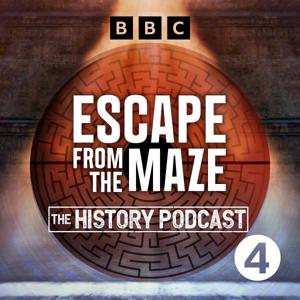
For a century, Harry Houdini has been safely filed away in the public imagination as a nostalgic variety act: a man in monochrome film escaping handcuffs, water tanks, and straightjackets.
Andrew Hunter Murray tracks down Hitler’s faked diaries to the Bundesarchiv – the Federal Archive – in Koblenz. How did these slim A4 notebooks cause such enormous trouble? But the archivists have one more surprise in store.
Andrew interviews the people who were there as the diaries were announced to the world, and as the story fell apart - the archivist tasked with authenticating the diaries in Germany, the TV producer led around the homes of retired Nazis to film a promotional documentary for the scoop, and the Fleet Street editor given 24 hours to create a world-beating story based on fraudulent material.
In our own time of AI, fake news and disinformation, are there any lessons we can take from the greatest hoax of the last 50 years?
Gerd Heidemann tapes part of the Gerd Heidemann collection, Hoover Institute, copyright Stanford University.
Presenter: Andrew Hunter Murray
A Whistledown production for BBC Sounds and Radio 4
It’s May 1983, and everything is falling apart for Gerd Heidemann. Now the heat is on forger Konrad Kujau too. How long can he stay incognito?
Andrew interviews the people who were there as the diaries were announced to the world, and as the story fell apart - the archivist tasked with authenticating the diaries in Germany, the TV producer led around the homes of retired Nazis to film a promotional documentary for the scoop, and the Fleet Street editor given 24 hours to create a world-beating story based on fraudulent material.
In our own time of AI, fake news and disinformation, are there any lessons we can take from the greatest hoax of the last 50 years?
Gerd Heidemann tapes part of the Gerd Heidemann collection, Hoover Institute, copyright Stanford University.
Presenter: Andrew Hunter Murray
A Whistledown production for BBC Sounds and Radio 4
Stern’s editorial and management team dig in, sticking by their story and their journalist Gerd Heidemann. Hugh Trevor-Roper returns to Cambridge shaken, hiding away in the master’s lodge at Peterhouse.
Andrew interviews the people who were there as the diaries were announced to the world, and as the story fell apart - the archivist tasked with authenticating the diaries in Germany, the TV producer led around the homes of retired Nazis to film a promotional documentary for the scoop, and the Fleet Street editor given 24 hours to create a world-beating story based on fraudulent material.
In our own time of AI, fake news and disinformation, are there any lessons we can take from the greatest hoax of the last 50 years?
Gerd Heidemann tapes part of the Gerd Heidemann collection, Hoover Institute, copyright Stanford University.
Presenter: Andrew Hunter Murray
A Whistledown production for BBC Sounds and Radio 4
It’s Monday, 25 April 1983, the day of the big press conference at Stern’s offices in Hamburg. The world’s media is assembled, awaiting the ‘scoop of the century’. The room is packed and Stern’s team, along with British historian Hugh Trevor-Roper, are ready to reveal the diaries.
Andrew interviews the people who were there as the diaries were announced to the world, and as the story fell apart - the archivist tasked with authenticating the diaries in Germany, the TV producer led around the homes of retired Nazis to film a promotional documentary for the scoop, and the Fleet Street editor given 24 hours to create a world-beating story based on fraudulent material.
In our own time of AI, fake news and disinformation, are there any lessons we can take from the greatest hoax of the last 50 years?
Gerd Heidemann tapes part of the Gerd Heidemann collection, Hoover Institute, copyright Stanford University.
Presenter: Andrew Hunter Murray
A Whistledown production for BBC Sounds and Radio 4
It’s April 1983 and in Hamburg, Stern is just putting the final touches to its coverage and its promotional film. But for TV producer Barbara Dickmann, something seems very off with her final interviewee – the journalist behind the scoop, Gerd Heidemann.
Andrew interviews the people who were there as the diaries were announced to the world, and as the story fell apart - the archivist tasked with authenticating the diaries in Germany, the TV producer led around the homes of retired Nazis to film a promotional documentary for the scoop, and the Fleet Street editor given 24 hours to create a world-beating story based on fraudulent material.
In our own time of AI, fake news and disinformation, are there any lessons we can take from the greatest hoax of the last 50 years?
Gerd Heidemann tapes part of the Gerd Heidemann collection, Hoover Institute, copyright Stanford University.
Presenter: Andrew Hunter Murray
A Whistledown production for BBC Sounds and Radio 4
It’s spring 1983 and Stern magazine’s inner circle is making frenzied preparations to launch its scoop of the century. Deals are being cut in media empires from London to Paris to New York.
The Times and Sunday Times, newly acquired by Rupert Murdoch, are keen. Murdoch wants a quick authentication and calls in Britain’s foremost historian, Hugh Trevor-Roper.
He accepts the mission and flies out to Zurich where the diaries are now locked away in a bank vault. Trevor-Roper has just a few hours to make his judgement.
Meanwhile, TV journalist, Barbara Dickmann, has been commissioned by Stern to make a promotional film starring Gerd Heidemann about his big find.
Dickmann is taken around the homes of old Nazis where Heidemann receives a warm welcome. Even more alarmingly, he starts telling Dickmann that he’s on speaking terms with a senior Nazi who died in 1945.
Writer and broadcaster Andrew Hunter Murray uncovers last century’s biggest ever publishing scandal, a forgery which rocked the world and destroyed reputations.
Andrew interviews the people who were there as the diaries were announced to the world, and as the story fell apart - the archivist tasked with authenticating the diaries in Germany, the TV producer led around the homes of retired Nazis to film a promotional documentary for the scoop, and the Fleet Street editor given 24 hours to create a world-beating story based on fraudulent material.
In our own time of AI, fake news and disinformation, are there any lessons we can take from the greatest hoax of the last 50 years?
Gerd Heidemann tapes part of the Gerd Heidemann collection, Hoover Institute, copyright Stanford University.
Presenter: Andrew Hunter Murray
A Whistledown production for BBC Sounds and Radio 4
It’s early 1981 and the forger Konrad Kujau and the journalist Gerd Heidemann are about to come face to face. Everything’s in motion - Stern management and a small team of editorial staff are on board, sworn to secrecy from colleagues and the outside world.
In the next few months, millions of Deutschmarks will travel in suitcases in exchange for diaries, which are – so Kujau says – being smuggled across the iron curtain, from East to West Germany.
Despite Stern’s best efforts, by late 1982, rumours are circulating among memorabilia collectors that significant previously unseen Nazi documents have come to light. The Sunday Times gets a call.
Writer and broadcaster Andrew Hunter Murray uncovers last century’s biggest ever publishing scandal, a forgery which rocked the world and destroyed reputations.
Andrew interviews the people who were there as the diaries were announced to the world, and as the story fell apart - the archivist tasked with authenticating the diaries in Germany, the TV producer led around the homes of retired Nazis to film a promotional documentary for the scoop, and the Fleet Street editor given 24 hours to create a world-beating story based on fraudulent material.
In our own time of AI, fake news and disinformation, are there any lessons we can take from the greatest hoax of the last 50 years?
Gerd Heidemann tapes part of the Gerd Heidemann collection, Hoover Institute, copyright Stanford University.
Presenter: Andrew Hunter Murray
A Whistledown production for BBC Sounds and Radio 4
Andrew Hunter Murray travels to the scene of the crime, just outside Stuttgart, from where the forger Konrad Kujau ran his cottage industry.
Who was this man, prone to splash the cash in local bars and have a good time while knocking out forgeries? Curator of the Konrad Kujau museum, Marc Oliver Boger, reveals more.
Our story takes us to 1980 in Hamburg, where the Stern journalist Gerd Heidemann is down on his luck. He has serious money problems, sinking thousands into maintaining Göring’s old yacht and still nothing to show for it. Lucky for him that a huge story is about to become tantalisingly close. All he needs is to persuade his magazine, Stern.
Writer and broadcaster Andrew Hunter Murray uncovers last century’s biggest ever publishing scandal, a forgery which rocked the world and destroyed reputations.
Andrew interviews the people who were there as the diaries were announced to the world, and as the story fell apart - the archivist tasked with authenticating the diaries in Germany, the TV producer led around the homes of retired Nazis to film a promotional documentary for the scoop, and the Fleet Street editor given 24 hours to create a world-beating story based on fraudulent material.
In our own time of AI, fake news and disinformation, are there any lessons we can take from the greatest hoax of the last 50 years?
Gerd Heidemann tapes part of the Gerd Heidemann collection, Hoover Institute, copyright Stanford University.
Presenter: Andrew Hunter Murray
A Whistledown production for BBC Sounds and Radio 4
It’s 1976, Hamburg, and star reporter for Stern magazine, Gerd Heidemann, is entertaining old Nazis on board his boat – formerly Herman Göring’s yacht, the Carin II.
Known for his dogged pursuit of a scoop, Heidemann’s patch is slowly but surely shifting from war reporting to gathering old Nazi tales. He’s getting obsessed.
One of his contacts links him up with a memorabilia collector in the south of Germany who has something interesting to show the journalist - the never-before-seen diary of Adolf Hitler.
Andrew interviews the people who were there as the diaries were announced to the world, and as the story fell apart - the archivist tasked with authenticating the diaries in Germany, the TV producer led around the homes of retired Nazis to film a promotional documentary for the scoop, and the Fleet Street editor given 24 hours to create a world-beating story based on fraudulent material.
In our own time of AI, fake news and disinformation, are there any lessons we can take from the greatest hoax of the last 50 years?
Gerd Heidemann tapes part of the Gerd Heidemann collection, Hoover Institute, copyright Stanford University.
Presenter: Andrew Hunter Murray
A Whistledown production for BBC Sounds and Radio 4
From the publisher's feed
For a century, Harry Houdini has been safely filed away in the public imagination as a nostalgic variety act: a man in monochrome film escaping handcuffs, water tanks, and straightjackets.…
This series smashes that myth.
Hosted by “psychological illusionist” Derren Brown, How Houdini Made Magic reframes a penniless immigrant refugee named Erik Weisz as a prophetic, hyper-modern visionary. Long before the birth of Silicon Valley, modern political spin rooms, or algorithmic social media, Houdini cracked the code of modern fame. He didn't just escape physical boxes; he manipulated suspense, pioneered viral guerrilla marketing, employed the legal system to protect his brand, and mastered the dark arts of post-truth media. He created magic in far more ways than you think.
Against a backdrop of vaudeville and societal revolution, Derren explores the lesser-known identities of a magician who continues to inspire him and countless other magicians: Houdini as an advertising guru, a new media innovator, a sceptic… a spy?
We’ll come to realise that today’s world actually closely mirrors the ‘sepia-tinted’ world Houdini operated in: a time of rapid industrialisation, intense social change, massive wealth inequality, widespread social activism, global conflict, cultural revolutions, and immense technological advancement. We are living in an attention economy running on the exact behavioural hacks, artificial friction, and narrative illusions engineered by Harry Houdini over a century ago.
Ranked by our users in the last 21 days

7,599 Listeners

372 Listeners

518 Listeners

1,046 Listeners

283 Listeners

5,480 Listeners

487 Listeners

38 Listeners

230 Listeners

836 Listeners

63 Listeners

690 Listeners

343 Listeners

234 Listeners

319 Listeners

3,216 Listeners

159 Listeners

709 Listeners

240 Listeners

74 Listeners

763 Listeners

998 Listeners

2,993 Listeners

528 Listeners

1,116 Listeners
628 Listeners

379 Listeners
239 Listeners

181 Listeners

74 Listeners

1,121 Listeners

181 Listeners

34 Listeners