
Sign up to save your podcasts
Or

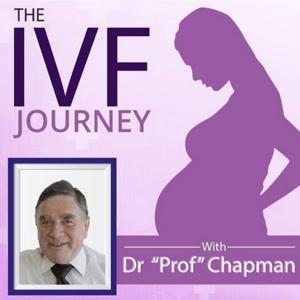


In this episode, Prof Chapman explains what patients should bring when they move to a new clinic after an unsuccessful IVF cycle. He says a simple summary of eggs, embryos and blastocysts isn’t enough. A new specialist needs the full treatment and laboratory sheets, including drug doses, when the trigger was given, follicle sizes, and how many eggs matured and fertilised. He also covers why testing embryos for genetic problems is often the next step. He then turns to fibroids, which affect more than 30% of women over 35. He explains why most of them have no effect on fertility, and why submucous fibroids, the ones that push into the uterine cavity, are the type worth removing before trying to conceive.
Explore the ‘Prof. Michael Chapman – The IVF Journey’ Facebook Page, your reliable destination for cutting-edge insights and guidance within
Don’t miss out on the IVF Journey podcast; stay informed with the latest episode updates. Tune in for expert discussions and valuable information on navigating the intricate path of IVF.
In this episode, Prof Chapman explains what “silent” endometriosis really is and why it may matter less than many people think. Around 15% of women having difficulty conceiving show signs of endometriosis without any symptoms, but in most cases these are very minor deposits with only a marginal effect on pregnancy. He shares why he believes routine laparoscopy for infertile women without symptoms is often over-treatment, why pain levels don’t always match the severity of the disease, and how ultrasound can pick up significant endometriosis but not the minor forms. He also covers what treatment looks like when endometriosis is found during laparoscopy.
Explore the ‘Prof. Michael Chapman – The IVF Journey’ Facebook Page, your reliable destination for cutting-edge insights and guidance within
Don’t miss out on the IVF Journey podcast; stay informed with the latest episode updates. Tune in for expert discussions and valuable information on navigating the intricate path of IVF.
In this episode, Prof Chapman answers a listener question about whether IVF is safe for people living with a stable autoimmune condition such as rheumatoid arthritis, lupus or antiphospholipid syndrome. He explains why disease control matters most, why some medications like methotrexate and cyclophosphamide need to be changed before trying to conceive, and why many of these conditions actually improve during pregnancy. He also flags the real watch point, the risk of relapse after delivery, and shares why, for well-managed patients, he is comfortable moving forward with treatment.
Explore the ‘Prof. Michael Chapman – The IVF Journey’ Facebook Page, your reliable destination for cutting-edge insights and guidance within
Don’t miss out on the IVF Journey podcast; stay informed with the latest episode updates. Tune in for expert discussions and valuable information on navigating the intricate path of IVF.
In this episode, Prof Chapman answers a listener’s question about azoospermia, the condition where no sperm are found in the semen, and whether men with this diagnosis can still father a biological child. He explains the difference between obstructive causes, such as vasectomy, infection or being born without the vas deferens, and non-obstructive causes, where the sperm production line in the testicle isn’t working. He shares how sperm can often be retrieved directly from the testicle for use in IVF, why outcomes have improved for men with Klinefelter syndrome, and why seeing a urologist with a special interest in infertility matters. The encouraging news is that around half of men with azoospermia can go on to have a baby using their own sperm.
Explore the ‘Prof. Michael Chapman – The IVF Journey’ Facebook Page, your reliable destination for cutting-edge insights and guidance within
Don’t miss out on the IVF Journey podcast; stay informed with the latest episode updates. Tune in for expert discussions and valuable information on navigating the intricate path of IVF.
In this episode, Prof Chapman walks you through the first round of fertility investigations and the three key questions they aim to answer: is the sperm count healthy, is ovulation happening, and can the sperm and egg actually meet? He explains how the timing of your progesterone blood test depends on your cycle length, what to expect from a HyCoSy ultrasound to check your fallopian tubes, and why this simple test can even boost pregnancy rates in the months that follow. He also covers the hormone, immunity and genetic screening tests for both partners, and what happens when you return to review the results.
Explore the ‘Prof. Michael Chapman – The IVF Journey’ Facebook Page, your reliable destination for cutting-edge insights and guidance within the realm of In Vitro Fertilization (IVF).
Don’t miss out on the IVF Journey podcast; stay informed with the latest episode updates. Tune in for expert discussions and valuable information on navigating the intricate path of IVF.
In this episode, Prof Chapman takes you back to basics and walks you through what to expect at your first appointment with a fertility specialist. He explains why most couples who struggle to conceive won’t need IVF, and why your age, past pregnancies, periods and general health all help paint the picture. He also shares surprising insights on why supplements may not be worth the money, how many couples time intercourse incorrectly, and why some gym supplements can quietly suppress sperm counts. Warm, practical and reassuring, this is essential listening for anyone preparing for their first fertility consultation.
Explore the ‘Prof. Michael Chapman – The IVF Journey’ Facebook Page, your reliable destination for cutting-edge insights and guidance within
Don’t miss out on the IVF Journey podcast; stay informed with the latest episode updates. Tune in for expert discussions and valuable information on navigating the intricate path of IVF.
In this episode, Prof Chapman answers a listener question about embryo donation, a lesser-known path to parenthood for women who can’t produce their own eggs and have no partner or a partner with sperm problems. He explains why so few couples with leftover frozen embryos choose to donate them, comparing the decision to adoption, and walks through the rigorous counselling process for both known and anonymous donation. From whether donors will be part of the child’s life to how and when a child is told where they came from, Prof Chapman shares the questions families most need to consider, along with the joy of seeing wonderful babies born to very grateful patients.
Explore the ‘Prof. Michael Chapman – The IVF Journey’ Facebook Page, your reliable destination for cutting-edge insights and guidance within
Don’t miss out on the IVF Journey podcast; stay informed with the latest episode updates. Tune in for expert discussions and valuable information on navigating the intricate path of IVF.
In this episode, Prof Chapman explains what happens when a semen test shows no sperm at all. He describes how blood tests and an ultrasound show whether the cause is a blockage, such as a vasectomy, or a problem with sperm production in the testicle. He also explains how modern microsurgery can often find small pockets of sperm, even in a testicle thought to be inactive. Prof Chapman then turns to single women using donor sperm, who now account for around 12 to 14% of IVF cycles in Australia. He covers the counselling process, why telling the child is now the norm, and why a small, dedicated donor support team makes all the difference.
In this episode, Prof Chapman tackles two IVF questions that often catch patients off guard. He explains why a uterine septum may affect implantation, why small septums are best left alone, and why removing larger ones remains a contested “may help” option reserved for repeated failed transfers. He then turns to ectopic pregnancy, explaining why single embryo transfer has pushed the risk below 1%, lower than in the general community, and how a previous ectopic or damaged fallopian tubes can shape the approach to future transfers.
Explore the ‘Prof. Michael Chapman – The IVF Journey’ Facebook Page, your reliable destination for cutting-edge insights and guidance within
Don’t miss out on the IVF Journey podcast; stay informed with the latest episode updates. Tune in for expert discussions and valuable information on navigating the intricate path of IVF.
In this episode, Prof Chapman answers listener questions on what couples can do to improve their chances of a healthy pregnancy, and why the basics of not smoking, moderate drinking and a healthy weight matter far more than trendy diets or supplements. He explains Asherman’s syndrome, how scarring of the uterine cavity can prevent implantation, how often it occurs after a D&C, and why a hysteroscopy is worth considering after two unsuccessful embryo transfers. He also discusses the rare problem of failed fertilisation after ICSI, and how both egg and sperm should be investigated before trying oocyte activation in another cycle.
Explore the ‘Prof. Michael Chapman – The IVF Journey’ Facebook Page, your reliable destination for cutting-edge insights and guidance within
Don’t miss out on the IVF Journey podcast; stay informed with the latest episode updates. Tune in for expert discussions and valuable information on navigating the intricate path of IVF.
From the publisher's feed

37,547 Listeners

112,298 Listeners

10,262 Listeners
242 Listeners

1,318 Listeners

48 Listeners

387 Listeners
125 Listeners
286 Listeners
28 Listeners

2,050 Listeners
21 Listeners
59 Listeners

0 Listeners
16 Listeners