
Sign up to save your podcasts
Or

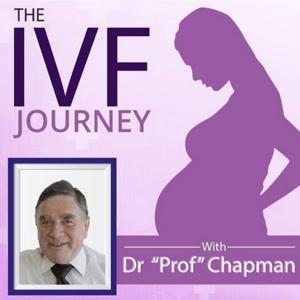


In this episode, Prof Chapman unpacks the science behind IVF stimulation protocols and why they sit at the heart of a fertility specialist’s skill. He explains how the short antagonist cycle became the standard for around 95% of Australian cycles, why it has largely replaced the older long protocol, and how it lowers the risk of ovarian hyperstimulation. He also breaks down how your doctor decides the right dose of FSH, weighing age, ovarian reserve and weight, and makes a clear, evidence-based case for why more eggs usually mean more embryos and more chances of success. Along the way he tackles the popular claim that minimal stimulation produces higher quality eggs, and explains why he believes the logic simply doesn’t hold up.
Explore the ‘Prof. Michael Chapman – The IVF Journey’ Facebook Page, your reliable destination for cutting-edge insights and guidance within
Don’t miss out on the IVF Journey podcast; stay informed with the latest episode updates. Tune in for expert discussions and valuable information on navigating the intricate path of IVF
In this episode, Prof Chapman unpacks one of the more contested questions in male fertility, whether to surgically repair a varicocele or move directly to IVF. He explains why these varicose veins around the testicle may quietly warm it beyond its optimal temperature and dampen sperm production, and why the evidence for fixing them is far more borderline than many assume. Drawing on decades of research, including a striking study tracking one man’s sperm counts across 120 weeks, he shows just how much counts naturally rise and fall with illness, stress and time. His honest verdict, small varicoceles rarely need surgery, and repair is only worth considering for large ones where the count is suboptimal but not zero. A clear, myth-busting look at when intervention helps and when it simply doesn’t.
Explore the ‘Prof. Michael Chapman – The IVF Journey’ Facebook Page, your reliable destination for cutting-edge insights and guidance within
Don’t miss out on the IVF Journey podcast; stay informed with the latest episode updates. Tune in for expert discussions and valuable information on navigating the intricate path of IVF.
In this episode, Prof Chapman answers two listener questions that cut to the heart of some common fertility confusion. First, does the pill cause PCOS? The short answer is no, but the fuller story is more interesting, including why scientists may soon be renaming the condition PMOS, and how coming off the pill can unmask irregular periods that were there all along. Prof Chapman then turns to a listener with stage two endometriosis and a frozen embryo who has faced implantation failures before, weighing whether to pursue further surgery or suppress the endometriosis ahead of transfer. It’s a warm, practical conversation for anyone trying to separate fertility fact from fear.
Explore the ‘Prof. Michael Chapman – The IVF Journey’ Facebook Page, your reliable destination for cutting-edge insights and guidance within
Don’t miss out on the IVF Journey podcast; stay informed with the latest episode updates. Tune in for expert discussions and valuable information on navigating the intricate path of IVF.
In this episode, Prof Chapman unpacks extended carrier screening, the test that helps prevent some of the rarest and most serious childhood diseases before a baby is even conceived. He explains how we all carry genetic mutations without knowing it, in fact 98% of us do, and why they only become a problem when both partners happen to share the same one. Prof Chapman walks through the three most common conditions worth testing for, cystic fibrosis, spinal muscular atrophy and fragile X, and shares the good news that Australia now funds this screening through Medicare, along with the IVF needed to avoid passing these conditions on. It’s a warm, clear guide to a topic that sounds daunting but offers real peace of mind for anyone planning a pregnancy.
Explore the ‘Prof. Michael Chapman – The IVF Journey’ Facebook Page, your reliable destination for cutting-edge insights and guidance within
Don’t miss out on the IVF Journey podcast; stay informed with the latest episode updates. Tune in for expert discussions and valuable information on navigating the intricate path of IVF.
In this episode, Prof Chapman tackles a question many patients wonder about but rarely ask: should depression and anxiety screening be standard before starting IVF? His answer is a firm no, and he explains why, drawing on the history of mandatory counselling in Victoria that was eventually abandoned because 95% of patients simply didn’t need it. But that doesn’t mean the emotional side gets brushed aside. Prof Chapman walks through the psychological build up of a cycle, from the hope of a strong egg collection to the gut punch of a negative test, and why supporting patients through that drop is such a vital part of the job. It’s an honest look at the real mental toll of IVF, and a reminder that for most people, resilience, not a screening form, is what carries them through.
Explore the ‘Prof. Michael Chapman – The IVF Journey’ Facebook Page, your reliable destination for cutting-edge insights and guidance within
Don’t miss out on the IVF Journey podcast; stay informed with the latest episode updates. Tune in for expert discussions and valuable information on navigating the intricate path of IVF.
In this episode, Prof Chapman unpacks the reality behind delayed parenthood, a trend driven by both partners as often as by women alone. He explains how the odds of conceiving within a year fall from around 90% at 35 to roughly 60% by 40, and why declining egg quality and numbers sit at the heart of that shift. He walks through egg freezing as a hedge against the ticking clock, noting that 30 to 35 is the ideal window, and shares the sobering statistics on how many eggs are needed at different ages to give a good chance of a baby later. He also steps back to the bigger picture, looking at falling birth rates across the Western world and what governments might do, from baby bonuses to genuinely affordable childcare, to help turn the trend around.
Explore the ‘Prof. Michael Chapman – The IVF Journey’ Facebook Page, your reliable destination for cutting-edge insights and guidance within
Don’t miss out on the IVF Journey podcast; stay informed with the latest episode updates. Tune in for expert discussions and valuable information on navigating the intricate path of IVF.
In this episode, Prof Chapman cuts through the tests and treatments marketed to women after recurrent miscarriage and asks a simple question: where’s the evidence? He unpacks the $1,500 endometrial receptivity test shown to have no benefit, the pivot to microbiome testing, and immune treatments sold without solid proof — while separating what’s genuinely useful from what he calls “bad medicine.” The reframe that matters most: even after four losses, the odds of carrying a baby next time, doing nothing, are still well over 60 to 70%.
Explore the ‘Prof. Michael Chapman – The IVF Journey’ Facebook Page, your reliable destination for cutting-edge insights and guidance within
Don’t miss out on the IVF Journey podcast; stay informed with the latest episode updates. Tune in for expert discussions and valuable information on navigating the intricate path of IVF.
In this episode, Prof Chapman takes a hard look at the growing menu of tests and treatments marketed to women after recurrent miscarriage — and asks a simple question: where’s the evidence? He unpacks the $1,500 endometrial receptivity test that took eight years and a gold-standard trial to show no benefit, the same company’s pivot to uterine microbiome testing, and the murky world of immunological treatments like steroids, intralipid and immunoglobulins. Along the way he separates the genuinely useful (spotting and treating chronic endometritis, working on smoking and weight) from what he calls “bad medicine.” The number that reframes everything? Even after four miscarriages, a woman’s chance of carrying a baby next time — doing nothing at all — is still well over 60 to 70%. A clear-eyed, honest conversation about knowing which interventions are worth it, and which are just being sold.
Explore the ‘Prof. Michael Chapman – The IVF Journey’ Facebook Page, your reliable destination for cutting-edge insights and guidance within
Don’t miss out on the IVF Journey podcast; stay informed with the latest episode updates. Tune in for expert discussions and valuable information on navigating the intricate path of IVF.
In this episode, Prof Chapman tackles one of the most heartbreaking questions in fertility, why miscarriages keep happening. Responding to a listener who has faced four losses across natural and IVF conceptions, he walks through the biggest culprit, genetic abnormalities in the embryo, and explains why age and egg quality sit at the centre of it all. He unpacks the other hidden causes worth investigating, from chromosome translocations carried by healthy parents to fibroids, scar tissue, and abnormalities in the shape of the womb. Along the way he covers the surprising fertility effects of COVID, the global decline in birth rates, and why more women in their early 30s are choosing to freeze their eggs while quality is still on their side. Practical, honest, and deeply reassuring for anyone navigating the road to a baby.
Explore the ‘Prof. Michael Chapman – The IVF Journey’ Facebook Page, your reliable destination for cutting-edge insights and guidance within
Don’t miss out on the IVF Journey podcast; stay informed with the latest episode updates. Tune in for expert discussions and valuable information on navigating the intricate path of IVF.
In this episode, Prof Chapman unpacks what specialists actually mean when they talk about egg quality. He explains that quality comes down to an egg’s competency to fertilise and produce an embryo with the right number of chromosomes, and why that process becomes less reliable as women age. He describes the tiny energy-producing structures called mitochondria, the batteries inside every egg, and how their decline disrupts the delicate work of lining up chromosomes at the right moment. He also walks through the spindle, the internal structure his own team studies using polarised light at Life Fertility, and how checking it before fertilisation helps predict whether a pregnancy is likely. It is an honest, reassuring look at the uphill odds women over 40 face, why most early miscarriages trace back to the egg rather than the parents, and what the science can and cannot tell us.
Explore the ‘Prof. Michael Chapman – The IVF Journey’ Facebook Page, your reliable destination for cutting-edge insights and guidance within
Don’t miss out on the IVF Journey podcast; stay informed with the latest episode updates. Tune in for expert discussions and valuable information on navigating the intricate path of IVF.
From the publisher's feed

37,563 Listeners

111,841 Listeners

10,260 Listeners
242 Listeners

1,311 Listeners

48 Listeners

386 Listeners
124 Listeners
285 Listeners
28 Listeners

2,051 Listeners
20 Listeners
59 Listeners

0 Listeners
17 Listeners