
Sign up to save your podcasts
Or

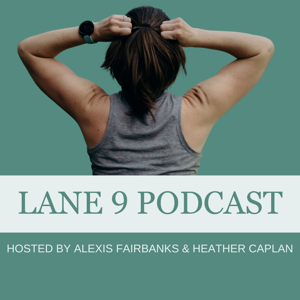


What does it actually take to build a girls' running program from three athletes to a full roster, and what does it cost the coach who gets it there?
That's at the heart of this conversation with Miran McCash: high school cross country and track head coach at Highline High School, and owner of ANA Run Coaching, an all-women adult running coaching business based in Seattle. Host Heather Caplan, RDN, and Miran talk about what it's really like to be a woman in a head coaching role, how she's creating space for girls to talk about their bodies and their periods, and why representation on the coaching staff is the reason girls stay in sport.
08:54- Teaching girls' weight training and building confidence in the weight room
11:11- Growing up with all-male coaches and how it shaped her
15:31- Growing the girls' cross-country team from 3 athletes to a full roster
16:29- Incentives, belonging, and why cross-country culture matters
23:28- How Miran talks to her athletes about periods, REDs, and changing the language around bodies
29:18- Balancing the financial and emotional load of coaching at a Title I school
36:59- Why women aren't signing up for coaching positions
40:16- Over-scheduling, under-recovering: the injury surge Miran is watching in real time
46:09- Going part-time teaching to grow ANA Coaching, and South End Running Exchange
Resources mentioned:
Bras for Girls: the organization Miran brought to her school to provide sports bras to female athletes across all spring sports
Better, Faster, Farther by Maggie Mertens- includes the story of Bobbi Gibbs running the Boston Marathon before Katherine Switzer, in a bathing suit (no sports bras yet)
Lane 9 Episode with Mary Cain mentioned
Follow Miran on Instagram
Follow Miran's business, ANA Coaching, on Instagram
Follow the South End Running Exchange on Instagram
Connect + get support:
Are you an athlete? Find a sports dietitian, DPT, therapist, or coach who understands athletes at lane9project.org/directory.
Are you a clinician or coach? If this conversation resonated with you professionally, Lane 9 Membership was built for you. Join a community of dietitians, DPTs, psychologists, sports medicine providers, and coaches who are doing this work, and get listed in the Lane 9 Directory so athletes can find you. Future clinicians and coaches are welcome too.
Follow us on Instagram and get in touch anytime!
What if we stopped treating sport like entertainment and started treating it like healthcare?
That's the question at the center of this conversation with Mary Cain: professional middle-distance runner, Stanford medical student, and New York Times Bestselling author of the new memoir This Is Not About Running. Host Heather Caplan, RDN, and Mary Cain talk about what it would actually take to change sports culture, including how we coach youth athletes, how providers diagnose and treat REDs, and what it means to find yourself outside of sport.
Chapters
09:10- What hope actually looks like in women's sports right now
11:32- Reframing athletics through a healthcare lens
14:01- What is an athlete? Rethinking youth sport, PE, and why kids drop out
18:49- Detaching from outcomes- what coaches, parents, and teammates can actually do to support athletes
23:28- Periods, pressure, and getting her first period in 10th grade
29:59- Flexibility and fueling across seasons
31:37- REDs vs. the Female Athlete Triad
32:34- Talking to athletes with body dysmorphia: a more trauma-informed approach
38:36- How Mary got diagnosed with REDs and navigated the healthcare system
44:47- When a non-sport therapist was exactly the right call
47:44- Writing This Is Not About Running while in med school
Resources mentioned:
This Is Not About Running by Mary Cain is available now
The Rich Roll Podcast
Another Mother Runner Podcast
Follow Mary on Instagram: @runmarycain
Connect + get support:
Are you an athlete? Find a sports dietitian, DPT, therapist, or coach who understands athletes at lane9project.org/directory.
Are you a clinician or coach? If this conversation resonated with you professionally, Lane 9 Membership was built for you. Join a community of dietitians, DPTs, psychologists, sports medicine providers, and coaches who are doing this work, and get listed in the Lane 9 Directory so athletes can find you. Future clinicians and coaches are welcome too.
Follow us on Instagram and get in touch anytime!
"Once I started doing more core work...prescribed to me by a pelvic floor DPT, and what everyone says you should be doing after pregnancy...I was feeling pain," shares Lane 9 Coach Becky Anthony, head coach and owner of Taylored Training Run.
Becky shares her story with a rare injury, osteitis pubis, which she was diagnosed with around three months postpartum. She was working with a physical therapist (DPT) on a return to run program, and had tried to check the boxes before getting back to the sport. But something felt wrong, and painful. And it took a little while to get an accurate diagnosis, and even longer before she was able to run again.
No two postpartum experiences are the same, even for one person. Becky shares this in hopes of helping the next parent build their care team—starting with nutrition, working with a DPT and a coach, etc.—and reminding parents to advocate for themselves, and their care.
Connect with Becky through the Lane 9 Directory, at Lane9project.org/directory. Follow her coaching online at @tayloredtrainingrun, on Instagram.
Find a sports dietitian, DPT, and other healthcare providers who know how to support you, the athlete and (maybe also) the parent, by going to Lane9project.org/directory.
Follow us on Instagram, @Lane9Project, and get in touch anytime!
"The [symtpoms] of under-fueling, and REDs, make it a lot harder to meet your [calorie] needs," shares dietitian KC Stockmon. "It's kind of this vicious cycle."
We're here to talk about how many calories an athlete actually needs to be eating, WHY it's important to eat enough, and the symptoms of under-fueling. The problem is, under-fueling is so common in athletics that athletes are quick to dismiss their symptoms as just "part of training". When actually, if the body has the energy—aka calories—that it needs to function well *and* recover from your training sessions, you might feel great. You just don't know what you don't know.
That's why we're here, in Lane 9, with reminders to eat enough, fuel before during and after training sessions, and connect with sport-specialized healthcare providers when you need to!
Build your sport healthcare team—support with fueling, injuries, mental health, and medical support— by going to Lane9Project.org/directory
Follow Lane 9 on Instagram @Lane9Project, and subscribe to our newsletter at Lane9project.substack.com
If you're a clinician looking to join our Directory and clinical membership, head to Lane9project.org/join
" I also learned the hard way. I did pay the price for several years. I had a lot of injuries, and I was in the stress fracture cycle for seven years. And that was a wake-up call. It really showed me you're not invincible and, and you're gonna have to really learn how to do this differently," shares longtime Lane 9 supporter and community member, Amy Sams.
Amy reached out to Lane 9 last Fall seeking support from a dietitian in our Directory, finally ready to fueling adequately as she approached the California Internation Marathon in December (2025), with the goal to break 2:50 for the first time. And, a little spoiler: She did it!
Amy has spent decades navigating her history with an eating disorder, struggling with fueling and rest, and multiple bone stress injuries. She has run 25 marathons, but now feels like she's really tapping into her potential. Meanwhile, she reminds herself, she's "allowed to be a work in progress."
Build your sport healthcare team—support with fueling, injuries, mental health, and medical support— by going to Lane9Project.org/directory
Follow Lane 9 on Instagram @Lane9Project, and subscribe to our newsletter at Lane9project.substack.com
"It took me several injuries to really figure out...this is going to keep happening unless I do something big about it," shares coach and DPT Bethany Brausen, a member of the Lane 9 Membership and clinical directory.
And we want to help young athletes figure those things out a lot sooner, so they have more fun training and competing, tap into their athletic potential, and/or find longevity in the sports they love.
This conversation covers periods, bone stress injuries, team culture and conversations about fueling and menstrual health, when to pause training or take seasons off if an athlete isn't menstruating, and how to connect with a clinical care team when needed.
Bethany Brausen is a a Minnesota-based board-certified orthopedic clinical specialist and doctor of physical therapy. She's also a running coach for a high school cross country team. We talk about her experience as an athlete, and how she's taking what she learned, combined with her clinical expertise, to create healthier training and performance environments for her team.
Connect with Bethany Brausen DPT, and build your sport healthcare team, by going to Lane9Project.org/directory
Follow Lane 9 on Instagram @Lane9Project, and subscribe to our newsletter at Lane9project.substack.com
"Being the best is not the end all be all. And can you have self-confidence [in sport] without being the best?" Dr. Savannah Landis, Lane 9 Clinician, asks us to consider how perfectionism shows up in our sport experiences, and how to nurture a sense of self in and outside of sport, for athletes at all ages.
Dr. Savannah Landis is a licensed clinical and sports psychologist specializing in treating athletes with eating disorders as well as mental health issues regarding perfectionism, self-esteem, and identitiy. She was a competitive swimmer in college, and works with athletes at all levels of sport as they navigate the highs and lows.
Connect with Dr. Landis, and build your sport healthcare team, by going to Lane9Project.org/directory
Follow Lane 9 on Instagram @Lane9Project, and subscribe to our newsletter at Lane9project.substack.com.
"I was honestly terrified of [pregnancy]. I feel like whenever I looked around in the sport, I didn't see it. And if someone did get pregnant, it seemed like they disappeared. And if they came back, it seemed like it was against all odds," Molly Huddle shares with the Lane 9 Podcast.
She is a 2x Olympian, has competed in six Olympic Trials throughout her career, and has run professionally with Saucony for 20 years. She has set multiple American Records, including the 5K, 10K, 10-miler and half-marathon, a few of which she still holds. And she was one of the first athletes to benefit from the Dream Maternity Campaign—activism organized around protecting pregnant and postpartum athletes with clauses in their professional contracts, instead of pausing their pay and their support.
Molly is candid with us about the fears she held around pregnancy and returning to high level racing, the injuries she has navigated in her postpartum training, how hard it is to breastfeed and eat enough and train for races, the support systems she has in place, and how she's embracing the things she cannot do right now (like, keep a really clean house—not a priority!).
She's working on a new book, and shares more about that, too!
If you're looking for support as a pregnant or postpartum athlete, head to Lane9Project.org/directory to connect with a Lane 9 clinician.
You're about the toe the line for your spring goal race, or you're mid-season for your sport and it's getting intense. Let's have a pep talk!
We're sharing this one because we are fully in the swing of the Spring sport season, and that might mean that you're bumping up against some internal resistance to do the things that you know would be helpful, but would also require changing some old habits.
You could be fueling more carb loading, or just eating enough in general. You could be focusing on getting your period back. You could be tapering or taking more consistent rest days. But if you're not doing those things right now and you know there's some change required to get from point A to point B with your health, you might be resisting some of those changes.
There is often some grief involved, grieving and old self. A body change, a sport change an identity shift. Whatever it may be, this resistance to change may present as some bargaining you may think. I know those things are healthy for some people, but I don't need to do them, or I don't need to change that much.
This episode is a reminder: You are unique, but you are NOT the exception to the known best practices for sports fueling, rest, and overall health. The work works.
If you are looking for support from a dietitian, therapist, sports medicine provider or PT, go to Lane9project.org/directory and connect with one of our clinicians!
Send us your questions, feedback, or a little love note anytime. We're here for it! Lane9project @ gmail dot com, or go to Lane9Project.org and click on "Contact".
" I've had a lot of colleagues who have navigated infertility and have been really open about it, which has helped me."
Professional runner Gabi Rooker joins the Lane 9 Podcast to talk about discovering she had a grapefruit-sized fibroid outside of her uterus, getting it removed, and navigating fertility treatments while still training for marathons like Chicago in 2025, and Boston 2026. She's been open about this process and how it's going for her, to help the next person navigate through own experiences and feel less alone along the way!
Follow and cheer for Gabi via her Instagram account, @gabirooker!
Connect with a clinician who is uniquely trained to support women in sport by going to Lane9Project.org/directory. Our providers have experience in treating all aspects of REDs, including period health and fertility support.
Follow Lane 9 on Instagram @lane9project. Contact us anytime via Lane9project.org
From the publisher's feed

3,064 Listeners

2,043 Listeners

1,342 Listeners

4,130 Listeners

1,838 Listeners
778 Listeners

1,875 Listeners

384 Listeners
15 Listeners
956 Listeners

365 Listeners

1,772 Listeners
364 Listeners

120 Listeners

12,506 Listeners