
Sign up to save your podcasts
Or



Based on Podcast App listening data
Kermit Roosevelt was on a mission that night.
To overthrow Iran’s prime minister and take back control of its oil.
Listen to new chapters from January 28th 2026.
In book three of The Lion and the Sun, we look at how Iran’s bid to nationalize its oil pulled the CIA into Iranian politics and set the stage for a covert operation that removed its democratically elected leader.
A coup that became a model for American interventions for decades and reshaped Iran’s relationship with the United States forever.
This season, we’re talking about Iran’s oil, the life of Mohammad Mosaddegh and his ultimate clash with the US and Britain
Catch up with Iran’s story from the beginning:
Book One: Qajar
Iran’s constitutional revolution and the birth of its first parliament. This season traces the final years of the Qajar monarchy, as unrest, foreign interference, and political betrayal pave the way for Reza Khan’s rise.
Book Two: Reza Shah
The making of modern Iran … and the cost of building it. Follow Reza Khan’s ascent from soldier to shah, his sweeping reforms, and the downfall that ended his rule
You can listen to us on all podcast platforms and read the transcripts on our site.
The post Book Three Trailer appeared first on The Lion and The Sun Podcast.
Our podcast is a Finalist in the 2025 Signal Awards in the History category!
Vote for the listener’s choice award here.
This is a special episode of The Lion and the Sun to celebrate our nomination:
As Iran crowns a new king, Reza Shah is forced into exile.
Stripped of power and family, the fallen monarch begins his final chapter in isolation.
Thank you so much for your support and for listening to our show.
We’ll be back in November 2025 with season 3!
Follow us on Instagram, TikTok or X (Twitter).
For early access to episodes, become a supporter on Patreon.
Reza Shah’s abdication represented his entire reign in a nutshell:
Straightforward, without any fluff and to the point
On September 16, 1941, with Allied forces closing in and no path left, he signed the letter of resignation drafted by his prime minister, ending his sixteen-year reign. What followed was humiliation. The ex-king’s family was split: his wife and heir stayed behind while others were forced to join him. His vast properties, amassed through intimidation and seizures, were stripped away. His belongings were searched as if he were a common thief, and he was escorted out of Iran, never to return.
Believing he might find peace in South America, he instead became a pawn of British plans, first confined to Mauritius in suffocating isolation, then moved to South Africa. There he found brief fascination with Johannesburg’s modern life but soon withdrew into solitude. Friends and family drifted away, his health collapsed, and he became a shadow of the man who once commanded armies. By July 1944, he died alone in Johannesburg, little more than a mystery to his neighbors.
Even in death, his journey continued. His body was carried to Cairo for temporary burial, then six years later returned to Iran to rest in a mausoleum built in his honor at Shahr-e Ray. For decades it stood as a monument to the dynasty he founded, visited by dignitaries and hailed as the tomb of a nation-builder. But the revolution of 1979 erased it in rubble, branding him an enemy of faith and people.
The post Book Two – Special Episode: Exiled King appeared first on The Lion and The Sun Podcast.
In the season two finale, Britain and the Soviet Union invade Iran in hopes of a regime change …
Follow us on Instagram, TikTok or X (Twitter).
Support this show on Patreon.
Sources for this episode.
On August 25, 1941, Iran faced a coordinated invasion by British and Soviet forces. The military, unprepared for such an assault, collapsed swiftly. Naval, air, and ground forces were overrun. Reza Shah, who had built Iran’s military for internal control rather than full-scale war, found his efforts insufficient.
Public anger, instead of uniting against the foreign invaders, turned inward and against Reza Shah. Years of autocratic rule, suppression of dissent, and secular reforms had alienated the population. As Allied forces advanced and internal order crumbled, Reza Shah reached out to Mohammad Ali Foroughi, a former prime minister he had once imprisoned, asking him to return and negotiate a solution.
Foroughi engaged the British and Soviets in talks and realized that the Allies demanded not just Reza Shah abdication, but potentially the end of the Pahlavi dynasty. Foroughi resisted proposals to restore the Qajar dynasty or establish a republic, instead proposing a transfer of power to the crown prince, Mohammad Reza.
With the Allies imposing a deadline of September 17, Reza Shah agreed to abdicate on September 16. He declared war on Germany, aligning Iran with the Allied powers.
The day after Reza Shah abdication, Foroughi swore in Mohammad Reza Pahlavi as Shah.
Reza Shah’s reign had seen dramatic modernization, railways, schools, legal reforms, and national identity building, but it came at the cost of political freedom, religious alienation, and deep corruption. In the end, his legacy was handed over in hopes that his son might preserve the state he built.
The post Book Two – Ep.10: Abdication appeared first on The Lion and The Sun Podcast.
As the Second World War breaks out, Iran declares neutrality. But Britain and the Soviet Union fear that Reza Shah’s ties with Germany could tip the balance of power in the Middle East.
Follow us on Instagram, TikTok or X (Twitter).
Support this show on Patreon.
Sources for this episode.
In the late 1930s, Europe braced for conflict as Adolf Hitler expanded German territory and power. His ambition for domination led to the Nazi-Soviet Pact of 1939, which paved the way for the invasion of Poland and ignited World War II. Germany’s blitzkrieg tactics overwhelmed Poland’s defences, and soon all major powers were at war.
Meanwhile, in Iran, Reza Shah Pahlavi’s reign was marked by complex foreign relations. Initially perceived as a British puppet, Reza Shah’s quest for Iranian sovereignty led him to challenge British and Russian influences. He ended foreign extraterritorial rights, reduced the power of tribal leaders backed by Britain, and nationalized financial institutions. Despite these moves, his close ties to the Anglo-Iranian Oil Company earned him criticism.
Iran also maintained relations with the Soviet Union after signing the 1921 Treaty of Friendship, but tensions rose as Reza Shah repressed left-wing movements and communists. He viewed these groups as threats to national stability, enacting harsh laws to silence dissent.
During the 1930s, Nazi Germany courted Iran by promoting a shared Aryan heritage and offering industrial support. Reza Shah embraced this relationship to advance his modernization agenda, welcoming German investments and military expertise. However, when Hitler invaded the Soviet Union in 1941, the Allies (fearing Nazi influence in Iran) demanded the expulsion of German agents and transit rights for Allied troops.
Reza Shah’s refusal triggered a joint British-Soviet invasion of Iran in August 1941 with the aim of removing him from power.
The post Book Two – Ep.9: World War II appeared first on The Lion and The Sun Podcast.
Groomed for power from childhood, Mohammad Reza Pahlavi was more than a prince. He was Reza Shah’s guarantee for a successful political project.
Follow us on Instagram, TikTok or X (Twitter).
Support this show on Patreon.
Mohammad Reza Pahlavi was born into a family driven by ambition and structured by discipline. His father, Reza Khan, was a military officer on the rise, determined to transform both his own life and the future of Iran. As Reza Khan climbed the ranks, ultimately becoming Reza Shah, he envisioned a dynasty rooted in strength, modernity, and national identity. Central to this vision was preparing his son not just to inherit a crown but to embody a new political order.
From a young age, the monarchy separated Mohammad Reza from his domestic environment and placed him in a carefully curated space designed to shape a future monarch. Education was rigorous and symbolic, emphasizing languages, military discipline, and formal conduct. His life became a political project. Everything, from how he walked to how he wrote letters to his father, was meant to reflect the authority and continuity of the Pahlavi dynasty.
Despite his father’s authoritarian and emotionally distant demeanour, the young heir internalized the values instilled in him—loyalty, order, and nationalism. Yet, his nature diverged. While Reza Shah embodied secularism and control, Mohammad Reza showed a more spiritual, reserved disposition, shaped by reflection rather than command. His affinity for ceremony and symbolism contrasted with his father’s practical militarism.
He marked the father-son relationship by structure rather than intimacy. Reza Shah rarely showed affection, focusing instead on moulding his son through routine, exposure to power, and calculated mentorship. Their interactions served as preparation for leadership, not emotional connection.
His marriage to Princess Fawzia of Egypt was another element of dynastic strategy. Orchestrated by Reza Shah to forge regional alliances, it reflected political calculation more than personal choice. The marriage, however, was strained—culturally mismatched and lacking mutual interest.
As he grew older, Mohammad Reza became more confident, gradually asserting his role within the state. Reza Shah, in turn, began to consult him more directly, not out of warmth, but as part of succession planning. The dynasty’s future hinged on his readiness.
In the end, Reza Shah passed down the tools of power—discipline, order, and control—but not the comfort of paternal warmth. They built their relationship as a mirror of the regime: building it on strength, maintaining it through structure, and binding it by duty over affection. Mohammad Reza inherited not only a throne but the heavy architecture of a vision that prioritized legacy over love.
The post Book Two – Ep.8: The Heir appeared first on The Lion and The Sun Podcast.
After his first foreign trip, Reza Shah declares war on Islam and orders women to remove their hijab.
Follow us on Instagram, TikTok or X (Twitter).
Support this show on Patreon.
The drive for Iran’s modernization, particularly the push for secular reforms, began in the 1920s, when Reza Shah came to power. He marked his rule by efforts to modernize Iran’s infrastructure, improve education, and build a stronger national identity.
Behind these actions was a man who played a crucial role in Reza Shah’s political and reform agenda: Mohammad Ali Foroughi. Foroughi, a distinguished intellectual and politician, had been a close ally of Reza Shah. His influence within the government was significant, and he had been involved in numerous important positions, including as prime minister.
Reza Shah drew inspiration for his vision of the future, in part, from the reforms seen in neighbouring Turkey under Mustafa Kemal Atatürk.
After a trip to Turkey in 1934, Reza Shah became even more determined to accelerate Iran’s transformation, seeking to emulate Atatürk’s efforts in secularizing Turkish society.
In 1936, the government forced strict dress codes for men and women, requiring them to adopt Western-style attire. While many younger people in urban centers embraced the change, there was strong resistance from older generations and more conservative factions of society, especially in rural areas.
Religious groups saw this as a direct assault on hijab and their traditions, opposed the policy fiercely.
This resistance came to a head in Mashhad, where protests broke out against the forced unveiling. The protests turned violent when the military intervened, resulting in a massacre of hundreds, possibly thousands, of people. This brutal crackdown further soured Reza Shah’s relationship with the clergy and the Shia religious establishment, who had already been alienated by the king’s secular policies.
The post Book Two – Ep.7: Unveiling appeared first on The Lion and The Sun Podcast.
Murder, Banishment and Suicide.
As Reza Shah’s rule becomes more authoritarian, the alliance that put him in power comes to a bitter end.
Listen to part one here.
Follow us on Instagram, TikTok or X (Twitter).
Support this show on Patreon.
Firuz, a Qajar prince and veteran statesman, had once held top roles across Iranian governments, including Minister of Foreign Affairs, Finance, and Justice. After falling out of favor, he was banished to Semnan, where he lived under surveillance. In April 1937, agents stormed his home. After forcing him to draft a will at gunpoint, they killed him. The death was quietly ruled a heart attack.
This wasn’t an isolated event—it was the end of a political alliance that had begun two decades earlier. In the 1920s, Firuz joined forces with Teymourtash and Davar to form the Revival Party, a secular, progressive movement aimed at modernizing Iran. Ali Akbar Davar, a lawyer educated in Geneva, was the intellectual engine. He backed Reza Khan in abolishing the Qajar dynasty and forming the Pahlavi monarchy.
As a reward, Davar took over the Ministry of Justice. Davar used the opportunity to dismantle Iran’s fragmented legal system. He shut down the courts, purged corrupt staff, and created a centralized judiciary based on modern secular codes.
But the stability they built soon turned on them. Reza Shah’s rule entered a second, more repressive phase in the mid-1930s. Surveillance intensified under police chief Mohammad Hossein Ayrom, who created a vast network of spies and informants. Fabricated charges, secret files, and political prosecutions became tools of control. Teymourtash was arrested and died under suspicious circumstances in Qasr Prison. Firuz was detained and then killed in exile.
By 1937, Davar was serving as Minister of Finance and had led successful trade negotiations with Germany and the Soviet Union. Yet he too, sensed the shift. Reza Shah, increasingly paranoid and authoritarian, publicly humiliated him during a meeting. Davar, knowing the machine he built could now be used against him, chose to act first. He resigned from his post, returned home, wrote two final letters—to his wife and the Shah—and took his own life.
The post Book Two – Ep.6: Triumvirate (2) appeared first on The Lion and The Sun Podcast.
Behind the Pahlavi dynasty were three politicians: the kingmakers who orchestrated Reza Khan’s rise and shaped his rule. But as Reza Shah tightened his grip on power, this alliance of three faced exile, prison, and death
Follow us on Instagram, TikTok or X (Twitter).
Support this show on Patreon.
Additional listening: AIOC
Read about Nowruz Celebration on our blog.
Three men—Firouz Nosrat al-Dowleh, Abdolhossein Teymourtash, and Ali Akbar Davar—once formed a powerful alliance that reshaped modern Iran. Each brought unique strengths: Firouz, a reform-minded aristocrat; Teymourtash, a cunning political operator; and Davar, a man who came from nothing and had fought his way into power. They all supported Reza Khan’s rise to power and helped implement major reforms once the Pahlavi Dynasty was established.
But as Reza Shah consolidated his power, he became suspicious of his close allies, removing them from his circle of trust one by one.
Firouz Nosrat al-Dowleh was from a prominent Qajar family and served in various ministerial roles. Though he initially signed the unpopular Anglo-Persian Agreement and lost his position, his allies supported his return to government. He played a central role in financing national projects like the Trans-Iranian Railway but was later arrested on corruption charges. His connections to foreign diplomats and past political baggage made Reza Shah suspicious. He was imprisoned, tried, and eventually exiled.
Teymourtash, once Reza Shah’s closest advisor and Minister of Court, helped manage the administration and drive modernization efforts. Over time, his influence declined, especially after a failed oil negotiation with the British and increasing foreign criticism of the Shah. Reza Shah dismissed him, accused him of corruption, and sent him to Qasr Prison. There, after surviving an attempted poisoning, he was ultimately killed by suffocation.
The same system they helped build first put both men at the center of the state’s reforms, then removed and eliminated them. Their downfall reflected Reza Shah’s growing authoritarianism and mistrust of his own inner circle.
The post Book Two – Ep.5: Triumvirate (1) appeared first on The Lion and The Sun Podcast.
A torn-out contract, a paranoid shah, and Iran’s most lucrative resource. With Iran’s oil deal up for renewal, Reza Shah clashes with the British and grows suspicious of his closest allies.
Follow us on Instagram, TikTok or X (Twitter).
Support this show on Patreon.
Additional listening: APOC (Book one – Ep.3):
In the early 20th century, Iran’s oil reserves became the center of a power struggle between the Iranian government and the British-controlled Anglo-Persian Oil Company (APOC). The original agreement granting Britain access to Iran’s oil, signed in 1901 under Mozaffar al-Din Shah, had long been a source of resentment. Over time, British companies manipulated accounting practices to minimize Iran’s profits. This left the Iranian government with a fraction of what it was owed.
By the 1920s, a new power had emerged in Iran: Reza Khan. He was a military leader who, after consolidating his rule, became Reza Shah. With ambitious plans to modernize and strengthen Iran, he sought to renegotiate the oil agreement. He wanted to secure more revenue for the country. His most trusted minister, Abdolhossein Teymourtash, led the negotiations with the British. He demanded a greater share of profits and a more equitable deal.
However, the British, now a global superpower with diversified oil sources, were unwilling to make meaningful concessions. Thus, negotiations stalled, and tensions between Reza Shah and Teymourtash grew. In 1932, frustrated by the lack of progress, Reza Shah abruptly ended the discussions by burning the oil agreement and expelling Teymourtash from his government.
This led to a fresh round of negotiations, with the British bypassing Iran’s ministers and appealing directly to Reza Shah. In a surprising turn, the Shah, who had built his image on resisting foreign exploitation, accepted nearly all of Britain’s demands. Although Iran’s share of profits was slightly increased, the British continued to manipulate their financial reporting through the AIOC company, ensuring that the fundamental imbalance remained unchanged.
Despite the disappointing outcome, state propaganda portrayed the agreement as a victory, claiming that Iran had regained its dignity. But in reality, little had changed—the country remained bound to a colonial oil contract. This time under the name of Anglo-Iranian Oil Company. (AIOC)
The post Book Two – Ep.4: AIOC appeared first on The Lion and The Sun Podcast.
A new king, a unified nation, and a country on the brink of transformation. As Reza Shah Pahlavi seizes power, he reshapes Iran with relentless ambition, even at the cost of its democracy.
Follow us on Instagram, TikTok or X (Twitter).
For early access to episodes, become a supporter on Patreon.
The Qajar dynasty had left Iran fragmented, with weak central authority and little control over its vast resources. Reza Shah sought to address these challenges by consolidating power through military, economic, and infrastructural reforms.
A major reform was the introduction of compulsory military service in 1925. This helped create a unified national army and reduce the influence of regional tribes. While the law faced opposition from landowners and the clergy—who feared it would weaken their power—it was essential for centralizing control. Another major initiative was the Trans-Iranian Railway, completed in 1938, which connected Iran’s northern and southern regions. This project significantly improved transportation and boosted the economy. It helped integrate the country by linking distant regions, which had long been isolated due to difficult terrain.
Reza Shah also focused on modernizing Iran’s economy. He established state monopolies on critical goods like tea, sugar, opium, and tobacco, and created the Bank Melli to take control of the nation’s finances. These steps were aimed at reducing foreign influence and asserting Iran’s economic independence. He also expanded the financial sector. He made sure that the state had full control over the country’s financial system, which was crucial for sustaining his vision of a self-sufficient Iran.
By the end of his reign, Iran had undergone significant transformations, with improved infrastructure, a more powerful and unified military, and a stronger, more centralized economy. However, Reza Shah’s increasing authoritarianism, as he focused more on personal power and control, began to overshadow the other pillars of his rule. This shift contributed to growing political tensions, laying the groundwork for future challenges in Iran’s political landscape.
The post Book Two – Ep.3: God, Shah, Nation appeared first on The Lion and The Sun Podcast.
From the publisher's feed
2025 Signal Award Winner: Best History Podcast
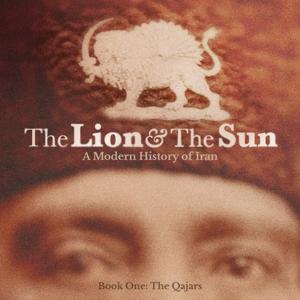
Iran’s history has been a never-ending struggle for liberty and independence. In this podcast, we tell the story of how Iran ended up where it…
Book One: The Qajars
How the constitutional revolution created Iran’s very first parliament. This season follows the story of the fading Qajar monarchy, as unrest, foreign meddling, and political betrayal set the stage for Reza Khan’s rise to power.
Book Two: Reza Shah
The rise and fall of Reza Shah, the architect of modern Iran. The meteoric rise of Reza Khan from a simple soldier to the founding Shah of the Pahlavi dynasty, his radical transformation of Iran into a modern state, and his ultimate downfall.
Book Three: Oil (January 2026)
Listen to new episodes every other Wednesday.
Ranked by our users in the last 21 days

6,759 Listeners
8,449 Listeners

3,357 Listeners
3,467 Listeners

1,042 Listeners

111,829 Listeners

2,398 Listeners
7,127 Listeners
2,394 Listeners
16,318 Listeners
4,226 Listeners

15,896 Listeners
426 Listeners

88 Listeners