
Sign up to save your podcasts
Or



Based on Podcast App listening data
An old king tries to reclaim his throne, the United States sends help for the country’s finances, and Russia invades Iran. The complicated history of Iran and Russia and how the Russian influence impacted Iran’s democracy and crippled its government throughout the years.
Follow us on Instagram, TikTok or X (Twitter).
For early access to episodes, become a supporter on Patreon.
On July 13, 1909, Mohammad Ali Shah abdicated the throne and fled to Russia after the Battle of Tehran. He was granted asylum and a monthly salary. In July 1911, he returned to Iran with an army of Turkmen tribesmen, joined by his brother Salar-ed-Dowleh and Kurdish fighters, aiming to retake Tehran. The government’s response, aided by Bakhtiari riders, forced Mohammad Ali Shah to flee back to Russia.
In the late 19th century, Persia increasingly relied on foreign loans and struggled to modernize its military. Nasir al-Din Shah established the Persian Cossack Brigade, reflecting growing Russian influence. During Mohammad Ali Shah’s reign, Russia’s influence over Persia grew significantly, with the Russian Cossack Brigade serving as his private army and many advisors having Russian ties.
After constitutionalists regained control in Tehran, they reopened parliament and sought to resolve financial issues by hiring William Morgan Shuster, an American lawyer, as Treasurer-General. Shuster’s transparency efforts angered Britain and Russia. When Shuster planned to seize the property of Salar-ed-Dowleh, Russia intervened, demanding Shuster’s dismissal and other conditions.
Nationwide protests ensued, led by Shia cleric Mohammad Kazem Khorasani, who died under mysterious circumstances in December 1911. Russia then occupied northern Persia, including Tabriz, through brutal tactics. Under pressure, the Persian government yielded, dissolved parliament on December 24, 1911, and Shuster and his team resigned and left Persia in January 1912.
The post Book One – Ep.6: Russian Roulette appeared first on The Lion and The Sun Podcast.
Two constitutionalist armies arrive at the gates of Tehran and Mohammad Ali Shah prepares the capital of Iran for an all-out war. How the battle of Tehran reshaped the future of democracy in Iran and how the country was forced to change in its aftermath.
Follow us on Instagram, TikTok or X (Twitter).
For early access to episodes, become a supporter on Patreon.
After the bombardment of Majlis, the flames of revolution burned across Persia as uprisings erupted against the monarchy of Mohammad Ali Shah. Though he attempted to calm the angry constitutionalists by forming a powerless Grand National Council, his efforts failed to quell the growing discontent.
Two formidable armies took shape – one from the north led by Sepahdar, and another from the west under Sardar Asad Bakhtiary. Their goal was to capture Tehran and reestablish democracy by force.
Fearing the unrest, the British and Russian empires warned the Shah about his tenuous grip on power. Left with no choice, Mohammad Ali Shah reluctantly agreed to reopen parliament. But it was too late. The northern and western constitutionalist forces combined, marching on the capital Tehran with determination.
As constitutionalist armies breached the gates, the battle of Tehran commenced and pitched combat erupted through the streets of Tehran.
After some days, the two armies took control of the city. The defeated Shah took shelter in the Russian embassy and abdicated his throne. In this historic moment, his young son Ahmad Shah was crowned the new monarch under the regency of his uncle Ażod-al-molk.
The second Iranian parliament was reopened in November 1909. After the reopening, Sepahdar became prime minister while Sardar Asad was named interior minister. Heroes like Sattar Khan and Bagher Khan, famed for the Tabriz struggles, arrived to congratulatory crowds.
The post Book One – Ep.5: Battle of Tehran appeared first on The Lion and The Sun Podcast.
How Mohammad Ali Shah laid siege to the parliament building, ending Iran’s brief experiment with democracy. Discover the story of the Majlis bombardment and the Iranian guerrilla warfare to reclaim their hard-fought freedom.
Follow us on Instagram, TikTok or X (Twitter)
For early access to episodes, become a supporter on Patreon.
On June 2nd, 1908, the Iranian parliament was carrying out its daily activities when the sound of marching soldiers filled the building. Sensing danger, the parliament workers evacuated to the nearby Sepahsalar Mosque to assemble a defence line. A regiment from the Russian-controlled Cossack Brigade, loyal to the monarchy, arrived and launched an assault on the parliament’s forces stationed near the mosque.
Despite the Cossacks’ formidable strength, the initial attack was repelled. Colonel Vladimir Liakhov, the Cossack commander, then deployed a larger force including cavalry, infantry, and artillery cannons. With Mohammad Ali Shah urging him to ensure victory at all costs, the cannons bombarded the parliament building from four surrounding streets.
As smoke filled the air, the parliament speaker attempted to contact the Shah but a cannon strike severed communications. The Cossacks killed and injured the parliament’s defenders, occupied the building, and sent the members fleeing or into hiding. By day’s end, the parliament lay in ruins, marking a swift end to Iran’s era of constitutional democracy under the Qajar dynasty.
In the aftermath, Mohammad Ali Shah’s forces began arresting constitutionalists and critics across the country. However, pockets of resistance emerged, determined to fight back against the monarchy. In the city of Tabriz, the people had been preparing for such a confrontation. Two key figures, Sattar Khan, a former bandit turned revolutionary, and Baqir Khan, a luti (enforcer) leader, rallied the constitutionalist fighters.
Despite being outnumbered, Tabriz’s rebels repelled the monarchy’s initial attempts to crush their uprising. By October 1908, Sattar Khan and Baqir Khan had retaken control of the city, becoming local heroes. Their victory was short-lived as the Cossack Brigade regrouped and laid siege to Tabriz in January 1909, cutting off vital supplies and gradually starving the city’s inhabitants.
In Gilan province, constitutionalists sought help from Caucasus-based Social Democrat groups opposing Russian rule. With their training, Gilan’s merchants and activists, led by Mirza Kuchak Khan, staged an elaborate ruse in February 1909 to oust the monarchy’s ruler, Sardar Afkham. They formed the “Secret Society of Sattar,” aiming to capture the capital, Tehran.
As Tabriz endured the prolonged Cossack siege, the Russian Empire, seeking to restore trade routes, intervened in April 1909 and temporarily lifted the blockade without addressing the rebels’ demands. This stalemate inspired other resistance groups like the nomadic Bakhtiari tribe in southwestern Iran.
In late 1908, Bakhtiari forces, a strong clan from the west of Iran, marched to liberate the city of Isfahan from the monarchy’s rule. After fierce street battles, the Bakhtiari riders took control of key areas in early January 1909, forcing the Shah’s appointed ruler to flee. With news of Gilan’s army marching towards Tehran, the emboldened Bakhtiari rebels prepared to join the ultimate showdown against the Qajar dynasty.
For more information, read our blog or follow us on Instagram.
The post Book One – Ep.4: The Bombardment appeared first on The Lion and The Sun Podcast.
What comes after establishing democracy in a nation? Protecting it at all costs.
In this episode, the ideals of democracy clash with the limitations of Islam and the new Shah maneuvers to undermine the parliament’s authority, even as the people take to the streets to defend their hard-won freedoms.
In the fall of 1906, after months of strikes and protests, Iranians were able to convince the shah to order the establishment of the country’s very first parliament, the Majlis. This marked a significant moment in Persia’s modern political history. As the Majlis was seen as a major step towards the creation of a more democratic government.
The members of the Majlis set out to create a new constitution for the country. Drawing inspiration from European countries like Belgium and France. However, they had to be careful not to overstep their power and anger the monarchy, leading to deliberate ambiguity in the constitution.
Just as the Majlis was finalizing the draft of the constitution, the ailing Mozaffar-al-din Shah, who had ordered the establishment of the Majlis, passed away. His son, Mohammad Ali Mirza, ascended to the throne. Unlike his father, Mohammad Ali was determined to cancel the newly found Majlis and shut down Persia’s short-lived democracy.
The clash between the Majlis and the new shah came to a head over the amendment to the constitution, which sought to add more provisions and clarity to the original text. Mohammad Ali, recognizing the rift between the religious and secular constitutionalists, exploited it to sow further discord among the members.
As the Majlis was embroiled in internal strife, an assassination attempt on Mohammad Ali Shah further escalated the tensions between the monarchy and the parliament. The shah, fearing for his life, isolated himself, and the infighting among the members of the Majlis increased.
Ultimately, Mohammad Ali Shah made a bold move, ordering martial law and forbidding large gatherings in public places. With the streets emptied, the parliament building left undefended. The Shah was poised to finally put an end to the “Persian Awakening” and the struggle for democracy in Persia.
For more information, read our blog or follow us on Instagram.
The post Book One – Ep.3: Tale of Two Shahs appeared first on The Lion and The Sun Podcast.
What can you do when the king is assassinated, prices are high and the country is in crisis? You demand a parliament. The story of how Persia’s first national assembly (Majlis) was established and how democracy found its way into Iran.
In this episode, we look at the events of 1906 that catalyzed the Persian Constitutional Revolution. It begins with an assassination. After the death of Nasir Al-Din Shah, his son, Mozaffar takes the throne.
During Mozaffar Al-Din Shah, economic woes plagued Persia. Debt mounted, prices soared due to inflation and trade disruptions from the Russo-Japanese War, and a cholera outbreak devastated the population. Discontent grew among the people.
The spark that ignited widespread protests came in December 1905, when the ruler of Tehran publicly whipped two prominent sugar merchants, accusing them of price gouging. Outraged by this humiliation of respected merchants, bazaar traders launched a strike. Their demands were simple – dismiss the brutal Tehran ruler, fire the Belgian customs administrator Joseph Naus, and establish a “house of justice.”
Initially, the shah refused to buckle. But his son Mohammad Ali Mirza secretly backed the protestors, seeing a chance to bolster his claim as heir. Under this pressure, Mozaffar al-Din Shah dismissed the Tehran ruler and agreed to consider the “house of justice” idea, though Naus remained.
Tensions reached a boiling point during the holy month of Muharram in July 1906. Security forces killed a religious student amid protests over the arrest of an anti-monarchy preacher. This enraged the public, sparking larger demonstrations and deadly clashes with troops in the streets.
Influential clergy like Seyyed Abdullah Behbahani left Tehran in an act of defiance. At first, rebuffed, Behbahani ultimately persuaded British diplomats to grant protesters refuge within the embassy compound. An extraordinary scene unfolded as over 14,000 people streamed into the embassy grounds. They erected a tent city and debated ideas of constitutional government.
What began as a limited strike for modest reforms transformed into something much greater during this “Grand Protest” at the British Embassy. Demands escalated to calls for overthrowing the monarchy and instituting an elected majlis or parliament to draft Iran’s laws.
Faced with the largest popular uprising of his reign, Mozaffar al-Din Shah could no longer resist. On August 5, 1906, he decreed the formation of Iran’s first national consultative assembly (majlis) – a pivotal first step toward democracy.
But this was only the beginning. The new majlis immediately set its sights on rewriting Persia’s constitution to strip power from the monarchy. A fierce power struggle loomed with the heir apparent, who staunchly opposed sharing authority with elected representatives.
For more information, read our blog or follow us on Instagram.
The post Book One – Ep.2: Persian Awakening appeared first on The Lion and The Sun Podcast.
The modern history of Iran begins with a myth, a lion and a sun …
For more information about the history of the lion and the sun symbol, visit our blog post.
The post Prologue – The Lion and the Sun appeared first on The Lion and The Sun Podcast.
Welcome to the Lion and the Sun: A Modern History of Iran
New episodes every two weeks on Wednesdays.
The post Trailer appeared first on The Lion and The Sun Podcast.
From the publisher's feed
2025 Signal Award Winner: Best History Podcast
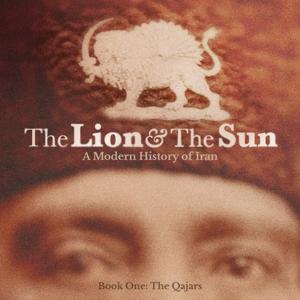
Iran’s history has been a never-ending struggle for liberty and independence. In this podcast, we tell the story of how Iran ended up where it…
Book One: The Qajars
How the constitutional revolution created Iran’s very first parliament. This season follows the story of the fading Qajar monarchy, as unrest, foreign meddling, and political betrayal set the stage for Reza Khan’s rise to power.
Book Two: Reza Shah
The rise and fall of Reza Shah, the architect of modern Iran. The meteoric rise of Reza Khan from a simple soldier to the founding Shah of the Pahlavi dynasty, his radical transformation of Iran into a modern state, and his ultimate downfall.
Book Three: Oil (January 2026)
Listen to new episodes every other Wednesday.
Ranked by our users in the last 21 days

6,745 Listeners

8,447 Listeners

3,371 Listeners

3,476 Listeners

1,046 Listeners

111,875 Listeners

2,393 Listeners

7,124 Listeners

2,398 Listeners

16,337 Listeners

4,220 Listeners

15,919 Listeners
426 Listeners

89 Listeners