
Sign up to save your podcasts
Or

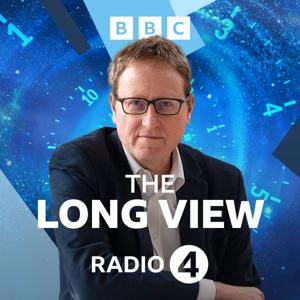


Jonathan Freedland explores the parallels between recent alleged Russian state interference in the American and other foreign elections, and covert British activities of the British Security Coordination (BSC), a secret arm of MI6 founded in May 1940. The motivations in each case are very different of course but some of the methods used then and now are very similar and offer an interesting parallel.
Based in New York, BSC was initially simply the MI6 regional station in North America, it's mission - to gather intelligence and to help get American aid in the form of munitions. But the greatest obstacle to getting American aid is American isolationism. America at this point is almost in a civil war of ideas between those who want to go to war; and those who do not - the isolationists. The maverick head of BSC, a Canadian named William Stephenson, soon realises they have to win the civil war of ideas before anything can happen. and takes matters into his own hands.
By the spring of 1941- after the effects of Dunkirk and the Battle of Britain - Prime Minister Winston Churchill and the Foreign Office, wary of using propaganda as they know the Americans are watching out for it, come to accept that without America, Britain would undoubtedly lose the war.
On the panel with Jonathan are historian Henry Hemming, the novelist William Boyd, Russian foreign policy expert Dr Alex Pravda at Oxford University; Dr Leslie Vinjamuri, associate fellow with the US Programme at Chatham House, and Sir Mark Lyall Grant, the former national security adviser to the Prime Minister.
Producer: Mohini Patel.
Jonathan Freedland compares the plight of black cab drivers with the fate of London's watermen.
Producer: Sarah Shebbeare.
Jonathan Freedland compares Theresa May's weakened premiership with that of Liberal prime minister Lord Rosebery in 1894-5. MPs Iain Duncan Smith and Grant Shapps join Jonathan to examine what lessons can be learned.
Rosebery was appointed to the premiership as a unity candidate, chosen to heal rifts in the Liberal Party caused by the issue of Home Rule. But Rosebery had powerful rivals in his cabinet - most notably the chancellor Sir William Harcourt. As the months passed, Rosebery's leadership was increasingly called into question with the government accused of being in office but not in power.
Also on the panel, former spokesperson for Theresa May, Joey Jones, Katy Balls of The Spectator and historian Dr Luke Blaxill. Actor Anton Lesser performs the historical readings.
Producer: Laurence Grissell.
In the space of a few short years the male beard has made a striking return to British life. Footballers, actors, fashionable hipsters and hirsute labourers are far more likely to wear some form of facial hair than they were in the recent past. The beard used to be the marker of a particular mindset, usually involving real ale, wholesome living and a disregard for the strictures of conventional living. Now the wearing of a tidy, well-barbered beard is far less likely to raise an eyebrow.
Producer: The recently bearded Tom Alban.
In 1883 a grass-roots political organisation was founded that re-shaped Victorian politics. The Primrose League signed up a million members and an army of Conservative activists who helped win elections by reaching out to new Tory voters in industrial cities and rural shires.
Today another innovative grass-roots organisation is proving influential. Emerging from Jeremy Corbyn's 2015 leadership campaign, Momentum has proved highly effective at winning over new Labour voters, swapping the magic lantern shows and Stately Home fetes of the Primrose League for a cutting edge social media campaign.
Jonathan Freedland and his guests compare electioneering in the nineteenth century and today and explore the often troubled relationship between grass-roots organisations and the parliamentary parties they support . They also ask whether the Conservatives need a latter-day Primrose League to boost their electoral appeal, particularly with younger, urban voters.
Joining Jonathan are Dr Jon Lawrence of the University of Cambridge, James Kanagasooriam of Populus and the journalists Sebastian Payne and Ellie-Mae O'Hagan. Laura Morgan is the reader.
Producer: Julia Johnson.
Jonathan Freedland compares cyber-attacks today with the Great Siege of Dover Castle in 1216 during which the French used new offensive techniques to try to seize the English throne.
In 1216, Prince Louis of France's near-successful bid for the English throne climaxed in Dover, where his forces used a multitude of techniques in a major assault on the castle - including digging beneath the castle gate and use of the trebuchet to attempt to breach the walls. Jonathan draws on this medieval example to discuss cyber security in the 21st century context.
Joining Jonathan at Dover Castle are medieval historian Marc Morris; General Sir Richard Barrons, former Commander Joint Forces Command, one of the six Chiefs of Staff leading the UK Armed Forces until April 2016; Kenneth Cukier of The Economist; and Sara Perez, ethical hacker at SensePost. Readings are by Hugh Simon who played MI5 Data Analyst Malcolm Wyn-Jones in the popular BBC TV series Spooks.
Producer: Laurence Grissell.
Jonathan Freedland takes the Long View of landmark fires exploring the parallels between the tragedies of the Watson Street fire in Glasgow in 1905 and Grenfell Tower.
In the East End of Glasgow in 1905 a 'Model Lodging House' at 39 Watson Street caught fire. It housed 300 poor working men, many of them migrants from Ireland and the Highlands. The lodging house itself was densely populated with men sleeping in wood lined cubicles and with only one exit to the street through a turnstile. The fire spread very rapidly, trapping those who couldn't escape on the upper floors and 39 people were killed.
The tragedy immediately drew public attention to fire and building regulations and the urgent need to improve them and an Inquiry soon followed.
Jonathan is joined by historian of fires and fire services Shane Ewen, BBC London reporter Anna O'Neil, retired fireman Jim Smith, Secretary of the Royal Incorporation of Scottish Architects Neil Baxter and actor Robin Laing to explore the parallels between the Watson Street and the Grenfell Tower tragedies.
Producer Neil McCarthy.
As we prepare to leave the EU, Jonathan Freedland compares overseas trade in today's Elizabethan age with that of the sixteenth century. In 1570 Elizabeth I was the subject of a Papal Bull of Excommunication, Theresa May must write a letter to Europe to trigger Article 50. Both documents will have a profound impact on trade.
Elizabeth's response to her European troubles was to forge new trade links with the East, sending merchants to Turkey, Persia and North Africa. Today's trade ministers hope to emulate the achievements of their Tudor counterparts, but how important is trade with Europe to our prosperity and how easy will it be to do new trade deals on more distant shores ?
Taking the Long View of trade, Jonathan is joined by Professor Jerry Brotton of Queen Mary University of London, author of 'This Orient Isle:Elizabethan England and the Islamic World'. Discussing today's export markets are the economists George Magnus, Liam Halligan and Dr Monique Ebell and our actor is Anita Dobson.
Jonathan Freedland compares the current wave of fake news stories, particularly those targeted at Muslims and immigrants in the UK, with the anti-Semitic story of an eight-year-old Christian boy, William of Norwich, who was murdered in woodland outside his native city in 1144. His death was later reported as a Jewish conspiracy and ritual, becoming the founding myth of the so-called 'blood libel'.
Jonathan Freedland compares Donald Trump's proposed border wall with the impenetrable 2500 mile Great Hedge of India constructed in the 1840s to control trade between British India and the Princely States.
From the publisher's feed
Jonathan Freedland presents the series in which stories from the past are compared with current events.

7,585 Listeners

1,042 Listeners

5,486 Listeners

1,789 Listeners

3,197 Listeners

1,835 Listeners

1,042 Listeners

2,097 Listeners

1,937 Listeners
152 Listeners

63 Listeners

3,206 Listeners

701 Listeners
99 Listeners

1,005 Listeners

15,577 Listeners

3,043 Listeners
193 Listeners

1,135 Listeners

836 Listeners

177 Listeners

2,229 Listeners
60 Listeners