
Sign up to save your podcasts
Or

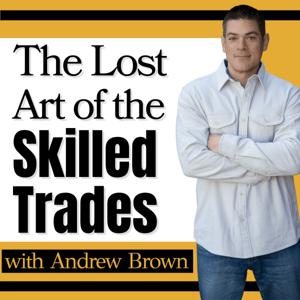


The trades don’t have a shortage of interest — they have a bottleneck at the point of entry.
Christine Boehm of SupplyHouse.com breaks down how skilled trades scholarships and trade school scholarships are removing the barriers most people never see — and opening doors that were never accessible to begin with.
For years, workforce development in the trades has focused on awareness: getting more young people to consider careers in HVAC, electrical, plumbing, and construction. But interest isn’t the problem. The real gap shows up after someone decides they’re in — when cost, access, and lack of support stop them before they ever get started.
Christine leads communications and content at SupplyHouse.com and works closely with the Supply House Foundation to expand access into the trades through scholarships, partnerships, and industry advocacy. Her work focuses on building a system that doesn’t just attract attention — but clears the path for people to actually enter, stay, and build long-term careers.
This conversation is for contractors trying to hire in a tight labor market, for career changers looking for a real path into the trades, and for companies trying to understand what it takes to turn interest into a workforce.
In This Episode(00:00) – Beyond Awareness
Andrew introduces Christine Boehm and reframes the trades conversation: the issue isn’t attention — it’s access.
(05:18) – How the Scholarship Model Started
The origin of SupplyHouse.com’s skilled trades scholarships and why financial barriers stop more people than lack of interest.
(11:22) – The Access Gap
Why career changers struggle to enter the trades — and how workforce development efforts often miss the people who need them most.
(18:40) – Women in the Trades
What’s driving growth, what’s still missing, and how representation directly connects to opportunity.
(26:55) – Building an Ecosystem
How the Supply House Foundation is expanding beyond trade school scholarships into partnerships, nonprofits, and long-term support.
(36:10) – Mentorship and Momentum
Why mentorship, contractor involvement, and real-world guidance determine whether someone stays in the trades or leaves early.
Key TakeawaysInterest in trades careers is growing, but without financial support and structured entry points like skilled trades scholarships and trade school scholarships, most potential workers never make it past step one.
Bringing people into the trades is only the beginning — long-term success depends on support systems, mentorship, and clear pathways that help individuals build sustainable careers.
Increasing representation, especially among women in the trades, is not just about inclusion — it directly impacts the size, resilience, and future of the workforce.
Programs like the Supply House Foundation show that real impact comes from combining financial support with partnerships, education, and ongoing industry engagement.
About the GuestChristine Boehm is the Communications and Content Team Lead at SupplyHouse.com, where she leads initiatives focused on strengthening the skilled trades through scholarships, storytelling, and workforce development programs. She works closely with the Supply House Foundation to expand access into the trades, support women entering the industry, and build partnerships that help the next generation of tradespeople succeed.
Keywordsskilled trades scholarships, trade school scholarships, workforce development in the trades, Supply House Foundation, women in the trades, skilled trades, trades careers, contractors, workforce pipeline, advocacy, education, HVAC, electricians, plumbers, construction, craftsmanship, problem-solving, Andrew Brown, Christine Boehm, SupplyHouse.com, Lost Art of the Skilled Trades
Resource LinksLinkedIn: https://www.linkedin.com/in/christine-boehm-marketing/
SupplyHouse.com: https://www.supplyhouse.com
Foundation Contact: [email protected]
Support the ShowIf you found value in this episode, please leave a review on Apple Podcasts and share it with someone who needs to hear it. Your support helps us keep telling the stories of the skilled trades.
What the Trades Don't See (But We Do) | Aaron Witt, BuildWitt
Aaron Witt of BuildWitt has visited job sites on 5 continents. His take: the trades' biggest problem isn't negative perception — it's invisibility.
Most people in the trades blame the younger generation. They say Gen Z is lazy, college-obsessed, or soft. But Aaron Witt — who showed up to his first construction job at 18 with zero background — says the real problem is structural. The industry built its entire training model around workers who grew up in the trades. Now a whole generation is showing up without that baseline knowledge, and the industry is yelling at them for it instead of teaching them.
Aaron Witt is the founder of BuildWitt, a media and workforce development company that travels the skilled trades world — from Arctic diamond mines to Saudi Arabia — to tell the stories of the people keeping the world running. He's spent 13 years inside the industry as an outsider, and that vantage point gives him a clear view of what the people inside the fishbowl can't see.
This conversation is for employers who keep losing workers within 90 days, for 17-year-olds trying to figure out their path in an AI-disrupted world, and for anyone who wants to understand why the trades pipeline is broken — and what actually fixes it.
IN THIS EPISODE
(00:00) – The Fishbowl: Why being outside the trades gives Aaron and Andrew a clearer view of what the industry is missing.
(06:00) – Not Even in the Race: The trades don't have a perception problem — they have an invisibility problem, and the industry doesn't realize the difference.
(15:00) – 5 Continents, One Truth: How BuildWitt went from Instagram posts on a road construction site to visiting a diamond mine near the Arctic Circle — and what Aaron sees that's the same everywhere.
(26:00) – The Old Model Is Dead: Why the "trial by fire" approach to training worked for 40 years — and why applying it to today's workforce is a guaranteed way to lose people.
(36:00) – Who Raised Gen Z?: The real retention crisis, the 50% turnover rate for workers under 25, and why the generation complaining about Gen Z raised them.
(47:00) – Trades vs. AI: Why data centers can't be built without skilled trades, why white-collar work gets disrupted first, and what Aaron would tell a 17-year-old today.
Key Takeaways
The trades don't have a perception problem — they have an invisibility problem. The next generation isn't choosing against the trades; they never knew the trades were an option.
The old training model was built for workers who grew up around the trades and arrived with 15 years of background knowledge. That worker no longer exists — and the industry has to build a new model for the worker that does.
Over 50% of workers under 25 who enter the trades leave within months. Before blaming Gen Z, employers need to ask: Do these workers know what day one looks like? Do they have a mentor? Do they have a reason to stay?
Skilled trades may be the safest career bet in an AI-disrupted economy. Law gets disrupted before welding. White-collar offices get disrupted before equipment operation. Every data center being built right now requires skilled trades workers.
About the Guest
Aaron Witt is the founder of BuildWitt, a media and workforce development company dedicated to the skilled trades and civil construction industries. He started BuildWitt in 2018 by sharing photos on Instagram from a road construction job site — and has since traveled to over 30 states annually and across five continents, visiting construction and mining operations from the Saudi desert to a diamond mine near the Arctic Circle.
Aaron's work focuses on changing how the next generation sees the trades — not through marketing spin, but by showing the raw, real, unfiltered reality of the work. BuildWitt produces workforce training content, storytelling media, and leadership resources for the companies building the world.
Keywords
skilled trades, workforce development, civil construction, Gen Z in trades, trades career path, trades workforce shortage, equipment operator, welding, HVAC, apprenticeship, trades retention, Aaron Witt, BuildWitt, SkillsUSA, Andrew Brown, Lost Art of the Skilled Trades
RESOURCE LINKS
Aaron Witt on LinkedIn: https://www.linkedin.com/in/aaronwitt/
BuildWitt Website: https://buildwitt.com/
SUPPORT THE SHOW
If you found value in this episode, please leave a review on Apple Podcasts and share it with someone who needs to hear it. Your support helps us keep telling the stories of the skilled trades.
What if the real workforce problem isn't recruiting — it's that we're handing young people tools before we've taught them how to live? Herb Sargent, recently retired CEO and Board Chair of Sargent Corporation, has spent decades proving there's a better way.
Herb watched a man named Freedom — a 70-year-old truck driver shuffling between offices and a trailer he lived in — and made a decision: nobody who works for Sargent Corporation would retire without dignity. That commitment turned into a full workforce development system that teaches budgeting, retirement planning, soft skills, and career pathways — before a single shovel hits the ground.
Herb Sargent is the recently retired CEO and Board Chair of Sargent Corporation, a 100% employee-owned civil construction company founded in Maine in 1926. Under his leadership, Sargent grew to 550+ employee-owners, built a construction academy that helped grow their under-25 workforce from 10% to 25%, and achieved 1 million injury-free man-hours through a single five-second mindset shift.
If you lead a trades company, run a workforce development program, or are trying to recruit and retain Gen Z workers, this conversation is exactly what you need to hear.
IN THIS EPISODE
(00:00) – Legacy Before We Begin: Herb opens with the question he asks every veteran worker — what do you want your legacy to be — and it reframes the entire episode.
(06:00) – Life Skills Before Job Skills: Herb explains how COVID exposed a generation that never worked at McDonald's, and why Sargent Corporation decided to meet new hires where they are — budgeting, financial literacy, and retirement planning first.
(13:00) – The Freedom Story: The truck driver named Freedom — shuffling to his trailer at 70 years old — became the moment that defined Herb's mission to ensure every employee retires with dignity.
(20:00) – Take Five: How one question ("what else could I do that takes the guesswork out of it?") transformed Sargent's safety culture and drove a full million man-hours without a lost time injury.
(30:00) – Welcome vs. Belonging: There's a difference between showing someone where the fridge is and making them feel like they belong. Herb explains the onboarding and mentorship system that keeps Gen Z workers engaged and growing.
(42:00) – Sources, Not Resources: Herb shares how reframing veteran operators as sources — not just resources — and asking them about their legacy turned the most resistant employees into the best mentors on the jobsite.
Key Takeaways
Teaching life skills — budgeting, financial planning, how to show up — before job skills is not soft, it's strategic: workers who understand how to build a life stay longer, perform better, and retire with dignity.
The "Take Five" approach — asking workers to pause five seconds and ask "what else could I do that removes the guesswork?" — is simple enough to use every day and powerful enough to drive one million injury-free man-hours.
Welcome and belonging are not the same thing: welcome is showing someone where the fridge is, belonging is sharing expectations, giving them a voice, and checking in at 30, 60, and 90 days so they always know where they stand.
Legacy framing transforms resistant veterans into invested mentors — when you ask an experienced operator what they want their legacy to be, most have never thought about it, and the answer changes how they show up for the next generation.
About the Guest
Herb Sargent is the recently retired CEO and Board Chair of Sargent Corporation, a civil construction company founded by his grandfather in Orono, Maine in 1926. Over his career, Herb worked every role in the company before eventually buying it back and transitioning it to 100% employee ownership. Under his leadership, Sargent grew to 550+ employee-owners and became recognized across the Northeast for its workforce development and safety culture.
Herb is the creator of Sargent's Construction Academy and the "Take Five" safety program, and has dedicated the later part of his career to ensuring every tradesperson — from laborer to superintendent — has the life skills, financial literacy, and mentorship they need to build a meaningful career and retire with dignity.
Keywords
skilled trades workforce, construction workforce development, life skills for trades workers, Gen Z in construction, trades mentorship, employee ownership, construction safety, workforce pipeline, career pathways in construction, trades career development, labor shortage, jobsite culture, apprenticeship, employee retention, Herb Sargent, Sargent Corporation, The Lost Art of the Skilled Trades
RESOURCE LINKS
Herb Sargent on LinkedIn: https://www.linkedin.com/in/herb-sargent-29a791152/
Sargent Corporation Website: https://www.sargent.us
SUPPORT THE SHOW
If you found value in this episode, please leave a review on Apple Podcasts and share it with someone who needs to hear it. Your support helps us keep telling the stories of the skilled trades.
The welder shortage has never improved in 30 years. Kris Scherm of ESAB explains why — and what it will take to fix the pipeline.
When Kris Scherm entered the welding industry in the nineties, the American Welding Society reported a 150,000 welder shortage. Three decades later, that number is projected at 320,500 by 2029 — and it has never once gotten smaller. With the average shipbuilder now in their late 50s, the pipeline problem is about to get a whole lot worse before it gets better.
Kris Scherm is a 30-year veteran of the welding industry and Global Product and Business Director for Light Industrial Plasma at ESAB — one of the world's leading welding and cutting companies. He's worked at the Bay Bridge, SpaceX facilities, Ford manufacturing plants, Newport News Shipbuilding, and dozens of facilities across North America. This conversation was recorded live at ESAB in Denton, Texas.
This episode is for anyone who works in the skilled trades, leads a manufacturing or welding operation, or is trying to figure out how to attract the next generation to a career with their hands. Kris breaks down the workforce crisis, the Blue Collar Tour bringing welding to high schools, and why — once you realize how much welding holds the world together — you'll never walk anywhere the same way again.
IN THIS EPISODE
(00:00) – Introduction: Andrew and Kris open live from ESAB in Denton, Texas, where Kris shares how a Norwegian grandfather who built PT boats in WWII set him on a lifelong path in the trades.
(00:04) – Why Welding Captures You: Kris explains what makes welding unlike any other trade — and why "if you can weld, you're a demigod" who can join metal in ways no hammer and nail ever could.
(00:09) – The 300,000 Welder Shortage: The AWS shortage number has never improved in 30 years. Kris breaks down what's driving it, why AI won't save us, and what happens when an entire generation of welders ages out at once.
(00:14) – The Blue Collar Tour: Western Welding Academy is taking welding on the road to high schools across the country — and ESAB is alongside them. Kris describes what happens when a kid sees a live weld for the first time.
(00:19) – Mentorship and Giving Back: Kris gets personal about why mentorship matters — and why the operator who's run that machine for 10 years knows more than any outside expert walking in the door.
(00:25) – The Wildest Problem-Solving Story: A mystery that warrantied two power supplies, stumped a team for days, and was finally cracked by a cigarette break and a string of passing cars.
Key Takeaways
The welder shortage has existed for over 30 years and has never improved — the AWS projects a shortage of 320,500 welders by 2029 in the U.S. alone; globally, the gap is in the millions.
Welding is a technology that touches everything from the Bay Bridge to smartphones to aircraft carriers — and once you start seeing welds everywhere, you can't stop.
AI is not going to replace the welder: someone still has to perform the weld, spec the process, and solve the problem on the floor — and that requires a human with hard-won skills.
The most valuable expert on any production line isn't the outside consultant — it's the operator who's been running that machine every day and knows every sound it makes.
About the Guest
Kris Scherm is the Global Product and Business Director for Light Industrial Plasma and Engine Driven Welders at ESAB, one of the world's leading manufacturers of welding and cutting equipment. With 30 years in the welding industry, Kris has worked on-site at some of the most impressive manufacturing facilities in the world — from the Bay Bridge project and SpaceX to Newport News Shipbuilding, where the U.S. Navy's aircraft carriers are built.
Kris's work takes him across the globe to help manufacturers improve productivity, reduce costs, and introduce the next generation to the craft of welding. He is an active supporter of the Blue Collar Tour and Western Welding Academy's mission to bring hands-on welding experiences to students across the country.
Keywords
welder shortage, welding career, skilled trades workforce, plasma cutting, welding jobs, workforce development, blue collar careers, trade careers, Gen Z in trades, apprenticeship, manufacturing jobs, shipbuilding, CNC plasma cutting, ESAB, Kris Scherm, American Welding Society, AWS, Western Welding Academy, Blue Collar Tour, Andrew Brown, Lost Art of the Skilled Trades, welding industry, industrial trades
RESOURCE LINKS
SUPPORT THE SHOW
If you found value in this episode, please leave a review on Apple Podcasts and share it with someone who needs to hear it. Your support helps us keep telling the stories of the skilled trades.
Welder and metal artist Sarah Stork went from farm chores to SkillsUSA national champion — and built a thriving sculpture business on her own terms.
When the guys on her SkillsUSA team laughed her off on the spot, Sarah didn't sulk — she found a new event, taught herself welded sculpture from scratch, and placed second in the country on her first attempt. The year after that, she won gold. That's not beginner's luck. That's what happens when someone with the right instincts finally finds the right trade.
Sarah Stork is a Georgetown, Texas-based welder, metal artist, and owner of her own sculpture studio. She holds an associate degree in welding technology from Austin Community College and certificates in plate, pipe, and structural fabrication. She's competed at the highest levels of SkillsUSA, built a wait-listed commission business, and has become one of the most recognized welded sculpture artists in the skilled trades community.
This episode is for anyone who's ever been told they don't belong in the trades — and for anyone trying to turn a welding skill into a business. Sarah breaks down how she got started, what it really takes to build a welding career from scratch, and why the metal industry will always have a place for people willing to put in the work.
IN THIS EPISODE
(00:00) – Welcome & Sarah's Origin Story: Why a Texas farm wife enrolled in welding school in 2012 — and how a plan to build a simple fence launched a career in metal sculpture.
(05:30) – Getting Laughed Off — Then Winning Gold: How being rejected from a team fabrication event led Sarah to discover welded sculpture, compete at SkillsUSA nationals, and win first place in 2016.
(15:00) – From College Shop to Home Studio: The path from lab technician at Austin Community College to walking off a pipeline job and launching a full-time welding sculpture business in 2018.
(23:00) – Women in Welding & The Metal Sandwich: Sarah's response to being told to "go make a sandwich" — and what she built instead. Why skilled trades work isn't about gender, it's about skill.
(31:00) – Using LinkedIn and Social Media to Build a Client Base: How Sarah found her first commission clients online, why LinkedIn outperforms Instagram for serious buyers, and what posting consistently during COVID did for her welding business.
(40:00) – The Craft, the Process, and the Blue Heron: What it takes to hand-form a six-foot steel bird with hundreds of individual feathers, why the best sculptures are "the ones that are done," and the one tool that changed everything.
Key Takeaways
SkillsUSA competitions aren't just for high schoolers — college students compete too, and placing nationally can redefine your entire welding career trajectory.
You don't need a website to build a thriving welding business — Sarah runs her entire client pipeline through LinkedIn, Instagram, and TikTok under her own name.
TIG welding is one of the cleanest, highest-paid paths in the skilled trades — and states like Texas are actively investing in clean room welding training facilities right now.
Mentorship is the fastest shortcut in the trades — Sarah credits her ACC instructor Thomas Hinkle for recognizing her talent and steering her toward welded sculpture before she even knew it was an option.
About the Guest
Sarah Stork is a welder, metal sculptor, and business owner based in Georgetown, Texas. She holds an associate degree in welding technology and certificates in plate, pipe, and structural fabrication from Austin Community College. A two-time SkillsUSA competitor, she placed second at nationals in 2015 and won first place (gold) in welded sculpture in 2016. In 2018 she launched her full-time sculpture studio from her 14-acre Texas property, where she creates commissioned wildlife and abstract steel pieces for clients across the country.
Her work is known for seamlessly blending welding technique and artistic finish — some clients mistake her welded steel pieces for cast sculpture. She is active on LinkedIn, Instagram, and TikTok under her name, Sarah Stork.
Keywords
welding careers, metal sculpture, skilled trades, women in welding, welded sculpture, SkillsUSA, welding school, TIG welding, Austin Community College, welding business, six-figure trades, fabrication, welding certificate, Sarah Stork, Andrew Brown, Lost Art of the Skilled Trades, Fabtech, metal art, trades entrepreneurship, Gen Z trades careers, welding salary
RESOURCE LINKS
Sarah Stork on LinkedIn: https://www.linkedin.com/in/sarah-stork-a8435a127/
Sarah Stork on Instagram: https://www.instagram.com/sarah_stork_/
SUPPORT THE SHOW
If you found value in this episode, please leave a review on Apple Podcasts and share it with someone who needs to hear it. Your support helps us keep telling the stories of the skilled trades.
HVAC systems are changing. The margin for error is shrinking.
Host Andrew Brown sits down with Jay Henderek, Sales Director at ESAB, to examine why process discipline in the Skilled Trades matters more today than it did even a decade ago. As HVAC industry trends push systems to become smaller, more complex, and increasingly influenced by A2L refrigerant legislation, shortcuts that once caused minor issues can now create serious safety risks.
Jay explains why nitrogen purging for brazing is no longer a “best practice” but a baseline requirement. What some technicians still treat as optional directly impacts contamination control, joint integrity, and long-term system performance. Under modern refrigerant standards, HVAC technician safety is tied to every step of preparation and execution.
The conversation also explores contractor tool buying research and why disciplined professionals evaluate tools with the same care they apply to installation. In today’s environment, preparation separates respected contractors from reactive ones.
From HVAC to Plumbing, Electrical, and the broader Construction trades, this episode reinforces a clear reality: as systems evolve, standards must rise with them.
IN THIS EPISODE(00:00) – Why Skipping Steps Carries Greater Risk Today: How modern HVAC industry trends increase system complexity and raise the stakes for HVAC technician safety.
(02:45) – Nitrogen Purging for Brazing: Protecting Joint Integrity - Why nitrogen purging for brazing prevents contamination and failure in sealed systems.
(04:40) – A2L Refrigerant Legislation and Flammability Considerations: How A2L refrigerant legislation shifts risk profiles and demands tighter execution standards.
(08:25) – Contractor Tool Buying Research: Discipline Before the Purchase: Why professional contractors evaluate tools deliberately instead of chasing features or price alone.
(12:05) – Long-Term Strength vs. Quick Fixes: Why proper brazing preparation outperforms temporary patches in durability and safety.
(16:45) – Reinforcing Standards Across the Skilled Trades: How manufacturers, educators, and contractors share responsibility in raising industry standards.
Key TakeawaysJay Henderek is Sales Director at ESAB, a global manufacturer of welding, brazing, and cutting technologies. Through brands such as TurboTorch, ESAB supports HVAC technicians, plumbers, electricians, millwrights, and contractors working in demanding field conditions.
Jay focuses on advancing HVAC technician safety, reinforcing nitrogen purging for brazing standards, and helping contractors navigate HVAC industry trends and A2L refrigerant legislation through disciplined processes and education.
KeywordsHVAC Industry Trends, Nitrogen Purging for Brazing, A2L Refrigerant Legislation, HVAC Technician Safety, Contractor Tool Buying Research, Skilled Trades, Trades Industry, HVAC, Plumbing, Electrical, Construction, Contractors, Craftsmanship, Andrew Brown, Jay Henderek, ESAB, Skilled Trades Advisory Council
RESOURCE LINKSLinkedIn: https://www.linkedin.com/in/jay-henderek/
ESAB Website: https://esab.com/us/nam_en/
SUPPORT THE SHOWIf you’re getting value from these conversations and want to help keep the mics on, consider supporting the show here → https://andrewbrowntrades.kit.com/products/toolbox
Every contribution helps us continue bringing experience-backed insights from the trades—focused on safety, standards, and long-term performance.
Brazing best practices, nitrogen purge brazing, and air fuel vs oxy fuel system decisions all reveal the same principle: the best tradesmen never cut corners.
Host Andrew Brown sits down with John Henderson, Sales Director of Gas Equipment at ESAB, live from AHR Expo to examine why disciplined fundamentals—not speed—separate respected contractors from those constantly fixing preventable mistakes.
John explains why nitrogen purge brazing is often skipped on job sites and why experienced tradesmen refuse to treat it as optional. What may look like a small time-saver can introduce internal oxidation, long-term system damage, and costly callbacks. The conversation also explores how choosing between an air fuel vs oxy fuel system requires understanding heat demands, portability, and application—not default habits.
Beyond equipment and technique, Andrew and John discuss how skilled trades training and mentorship instill the discipline that defines craftsmanship. From HVAC technicians to plumbers, electricians, and construction professionals, this episode reinforces a simple truth: reputation is built on standards upheld when no one is watching.
IN THIS EPISODE(00:00) – Why the Best Tradesmen Refuse to Cut Corners
(02:18) – Job Site Shortcuts: Where Contractors Sacrifice Time or Standards
(07:47) – Air Fuel vs Oxy Fuel System: Choosing Tools That Match the Work
(09:05) – Nitrogen Purge Brazing: Why Fundamentals Protect System Integrity
(11:08) – Skilled Trades Training and Mentorship: How Standards Are Passed Down
(15:13) – Tool Durability and Maintenance: Real-World Demands vs Demo Conditions
Key TakeawaysThe best tradesmen protect their reputation by upholding fundamentals, even when shortcuts seem faster.
Nitrogen purge brazing prevents internal oxidation and protects long-term system performance.
Tool selection—including air fuel vs oxy fuel systems—should be based on job requirements, not convenience.
Short-term speed often creates long-term rework, callbacks, and lost trust.
Skilled trades training and mentorship reinforce the standards that define true craftsmanship.
About the GuestJohn Henderson is Sales Director of Gas Equipment at ESAB and a 40-year veteran of the Trades Industry. He works closely with contractors across HVAC, plumbing, and construction sectors, focusing on safety, performance, and tool durability under real-world job site conditions.
John is committed to strengthening skilled trades training and mentorship rooted in fundamentals. His work centers on helping contractors build durable reputations through disciplined technique and sound equipment decisions.
KeywordsBrazing Best Practices, Nitrogen Purge Brazing, Air Fuel vs Oxy Fuel System, Skilled Trades Training and Mentorship, Contractor Tool Durability and Maintenance, Skilled Trades, Trades Industry, Construction, HVAC, Electricians, Plumbers, Millwrights, Carpentry, Tradespeople, Trades Careers, Andrew Brown, John Henderson, ESAB, Skilled Trades Advisory Council, Craftsmanship, Contractor Efficiency, Standards, Mentorship, Problem-Solving, Industry Experts
RESOURCE LINKSLinkedIn Profile: https://www.linkedin.com/in/john-henderson-12943611/
ESAB Website: https://esab.com/us/nam_en/
SUPPORT THE SHOWIf you’re getting value from these conversations and want to help keep the mics on, consider supporting the show here → https://andrewbrowntrades.kit.com/products/toolbox
Every contribution helps us continue bringing experience-backed insights from the trades—focused on standards, discipline, and real-world performance.
Skilled trades careers offer another path. Tony Bertolino explains plumbing apprenticeships, on-the-job training, and why apprenticeships aren’t “less than” college.
Host Andrew Brown sits down with fourth-generation plumber, contractor, apprenticeship instructor, and business owner Tony Bertolino to break down how trades careers actually develop, from plumbing apprenticeship programs and on-the-job training to the shift from technician to owner.
Recorded during live apprenticeship competitions, Tony shares what sets top apprentices apart: mindset, self-discipline, and pride in doing the work well. The conversation explores why classroom learning has limits, how hands-on repetition builds real mastery, and why trades education works best when theory and field experience reinforce each other.
Tony also addresses common misconceptions about plumbing, explaining its role in public health and why the work is often undervalued precisely because it’s done so well. For those considering entrepreneurship, he offers a reality check on ownership—covering responsibility, risk, mentorship, and the importance of community.
Whether you’re exploring an apprenticeship, alternative education, or ownership in the trades, this episode offers grounded perspective from someone who’s lived every stage.
IN THIS EPISODE(00:01) – Skilled Trades Careers Today: Pride in the work and why demand keeps rising
(05:12) – Plumbing Apprenticeship Programs: What textbooks teach—and what they can’t
(11:40) – On-the-Job Training in the Trades: Why hands-on repetition builds mastery
(18:55) – Trades Entrepreneurship: Why ownership isn’t “overnight success”
(26:30) – Mentorship, PHCC, and community: Why business owners shouldn’t operate alone
(34:10) – Alternative Education Pathways: Why apprenticeships aren’t better or worse than college—just different
Key TakeawaysTony Bertolino is a fourth-generation plumber, contractor, apprenticeship instructor, and co-owner of Bertolino Plumbing and Heating. He also serves as a national VP within the Plumbing-Heating-Cooling Contractors Association (PHCC), where he supports workforce development, mentorship, and modern apprenticeship education.
Tony focuses on strengthening the trades through real-world training, honest conversations about ownership, and long-term investment in people.
KeywordsSkilled Trades Careers, Plumbing Apprenticeship Programs, On-the-Job Training Trades, Trades Entrepreneurship, Alternative Education Pathways, PHCC, Plumbing-Heating-Cooling Contractors Association, Plumbing Contractor, Apprenticeship Instructor, Workforce Development, Mentorship, Trades Industry, Trades Careers, Tradespeople, Contractors, Plumbing, HVAC, Electricians, Construction, Craftsmanship, Problem-Solving, Andrew Brown, Tony Bertolino, Toolfetch
RESOURCE LINKSLinkedIn Profile: https://www.linkedin.com/in/tony-bertolino-795456367/
Website: https://bertolinoinc.com/
Plumbing-Heating-Cooling Contractors Association: https://www.phccweb.org/
SUPPORT THE SHOWIf you’re getting value from these conversations and want to help keep the mics on, consider tipping the show here →
https://andrewbrowntrades.kit.com/products/toolbox
Every dollar helps us keep bringing unfiltered, experience-backed insights from the trades—straight to your ears.
Before skill, before technology, trades careers are built on responsibility and showing up.
Andrew Brown and Dan Callies, President of Oak Creek Plumbing, break down what actually sustains blue-collar careers: character, mentorship, and earned respect.
Andrew and Dan explore how plumbing apprenticeships develop more than technical skill, why hire for character, train for skill remains a durable leadership principle, and what it really takes to grow from apprentice to journeyman to business owner. Drawing from decades in the field and in leadership, Dan explains how accountability, attitude, and consistency shape long-term success in the trades.
The conversation also examines the AI impact on skilled trades, not as a threat to craftsmanship, but as a tool to support efficiency, diagnostics, training, and operations. Dan shares how Oak Creek Plumbing uses technology to digitize routine processes while preserving the human judgment required for hands-on problem-solving.
Whether you’re considering skilled trades careers, currently in a plumbing apprenticeship, leading blue collar teams, or trying to understand how AI fits into construction and contracting, this episode delivers experience-backed insight from someone who has built both people and businesses in the trades.
IN THIS EPISODE(00:00) – Skilled Trades Careers Today: Why the trades remain the backbone of the economy
(06:10) – Hire for Character, Train for Skill: What leaders actually look for on job sites
(14:45) – Plumbing Apprenticeships Explained: Earning while learning and building mastery
(24:30) – The AI Impact on Skilled Trades: Digitize what you can, humanize what you must
(35:50) – Blue Collar Careers vs College Debt: Time, patience, and long-term payoff
(49:20) – Advice for Young People Entering Skilled Trades Careers Today
Key TakeawaysDan Callies is the President of Oak Creek Plumbing and a second-generation plumber with decades of experience in the field and in leadership. He has worked through every stage of the trade, from apprenticeship to ownership, and remains deeply involved in mentorship, workforce development, and industry advocacy.
Dan is a strong proponent of apprenticeship training, union education, and responsible technology adoption. He believes the future of blue collar work depends on character, accountability, and leaders willing to invest in people over time.
KeywordsSkilled Trades Careers, Plumbing Apprenticeship, Hire for Character Train for Skill, Blue Collar Leadership, AI Impact on Skilled Trades, Skilled Trades, Trades Industry, Trades Careers, Tradespeople, Contractors, Construction, Craftsmanship, Problem-solving, Plumbers, Electricians, HVAC, Carpentry, Millwrights, Andrew Brown, Dan Callies, Oak Creek Plumbing, Toolfetch, Skilled Trades Advisory Council
RESOURCE LINKSLinkedin: https://www.linkedin.com/in/daniel-callies-6a641613/
Website: https://www.oakcreekplumbing.com/
SUPPORT THE SHOW:If you’re getting value from these episodes and want to help keep the mics on, consider tipping the show here → https://andrewbrowntrades.kit.com/products/toolbox
Every dollar helps us keep bringing unfiltered insights from the trades, straight to your ears.
Welding careers, welding apprenticeship programs, and the welding skills gap—Arc Junkies host Jason Becker breaks down what today’s welders need to know.
Host Andrew Brown sits down with Jason Becker, Marine veteran, longtime welder, educator, and host of the Arc Junkies podcast, to explore the real-world journey from hands-on welding work to industry-wide storytelling and advocacy.
This episode unpacks how years of hands-on welding experience shaped Jason’s voice as an industry advocate and podcast host—learning welding through repetition, hard work, and decades in the trade and how he went on to hosting his own podcast where he’s spent 450+ episodes amplifying honest conversations about welding careers, workforce development, and the growing welding skills gap.
Together, Andrew and Jason break down what today’s welders need to know about welding apprenticeship programs, trade school for welding, mentorship, pay progression, and why the trades struggle to attract and retain the next generation. The conversation also highlights how platforms like the Arc Junkies podcast help reshape how young people view welding and the broader Skilled Trades.
Whether you’re considering a career in welding, already working under the hood, or interested in how storytelling can influence the Trades Industry, this episode delivers grounded, experience-backed insight.
IN THIS EPISODEJason Becker is a Marine veteran, professional welder, educator, and host of the Arc Junkies podcast. With decades of experience in welding, construction, and workforce training, Jason has become a trusted voice in conversations around welding careers, skills development, and the future of the Skilled Trades. His work bridges hands-on craftsmanship with industry-wide storytelling and advocacy.
KeywordsWelding Careers, Welding Apprenticeship Programs, Welding Skills Gap, Trade School for Welding, Arc Junkies Podcast, Skilled Trades, Trades Industry, Trades Careers, Tradespeople, Contractors, Industry Experts, Skilled Trades Advisory Council, Construction, Carpentry, HVAC, Electricians, Plumbers, Millwrights, Jason Becker, Andrew Brown, Arc Junkies, Toolfetch, Craftsmanship, Problem-solving, Creativity, Education, Advocacy
RESOURCE LINKSLinkedIn Profile: linkedin.com/in/jason-becker-45407b72
Arc Junkies Podcast: https://arcjunkies.com/
SUPPORT THE SHOW:If you’re getting value from these episodes and want to help keep the mics on, consider tipping the show here → https://andrewbrowntrades.kit.com/products/toolbox
Every dollar helps us keep bringing unfiltered insights from the trades, straight to your ears.
From the publisher's feed
Ranked by our users in the last 21 days

227,532 Listeners
8,583 Listeners
27,937 Listeners
46,045 Listeners
15,948 Listeners