
Sign up to save your podcasts
Or

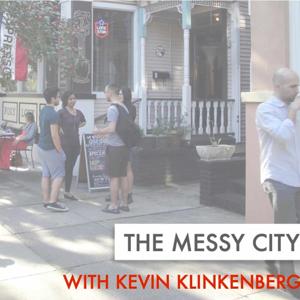


It’s not often you run across people in the development world that have deep knowledge in both the smallest scales of projects and the biggest. The industry, like many, is very bifurcated. People who do small projects tend to keep doing small projects. People who work on really large projects tend to keep doing that for their careers.
Joe Perry, who works as his day job as the Vice President of Development for PortKC, has had one solid foot in both worlds for his entire career. We talk about what it’s like to exist in both realms, to prosper in both, and some key lessons learned. For anyone interested in house hacking or house flipping as a side gig, I’d highly recommend listening to Joe discuss what he’s done over a few decades.
Joe and I worked together on the New Longview project in Lee’s Summit, Missouri, and you can hear more about that in my interview with developer David Gale.
I really enjoy some of Joe’s advice to others, especially to young people. Stay tuned for the whole thing, it’s worth it.
Find more content on The Messy City on Kevin’s Substack page.
Music notes: all songs by low standards, ca. 2010. Videos here. If you’d like a CD for low standards, message me and you can have one for only $5.
Intro: “Why Be Friends”
Outro: “Fairweather Friend”
“Just do it. Do it as quickly as you can.” That’s the advice of architect Doug Moss, who came to doing small-scale development projects after working for three decades as an architect. Doug left small-town Texas to pursue a career in New York, and boomeranged back several years ago to pursue his dreams as a developer. Now living in Austin, Doug has a healthy side gig doing small projects in Taylor, Texas, where he grew up.
Doug and I met during the Small-Scale Developer Forum, which is a group Jim Heid gathers together twice per year. If you’re someone interested in improving your own community with development, these are your people. Doug still works as an architect with Steinberg Hart, but also does development with his company Public Sketch. Doug is such a modest guy, but this story is great inspiration for anyone who wants to use the professional skills they’ve learned to help a community they know and love.
Find more content on The Messy City on Kevin’s Substack page.
Music notes: all songs by low standards, ca. 2010. Videos here. If you’d like a CD for low standards, message me and you can have one for only $5.
Intro: “Why Be Friends”
Outro: “Fairweather Friend”
Allen County, Kansas is not a place most people will be familiar with, but the story is one you’ve probably heard before. Located in southeast Kansas, an hour and a half from the nearest major city, it features much that’s typical of rural America. Iola, the county seat, is a city of 5,300 people. It has a classic town square and lies at the junction of a couple of state highways. The beautiful Flint Hills and its majestic cattle ranches are not far away.
But after the community lost its hospital in the early 2000s, the usual questions emerge - is Iola, and the whole county on the verge of permanent decline?
Out of this tragic circumstance was born Thrive Allen County Jared Wheeler, their Economic Development Director, joins me to talk about the path that Iola, Humboldt and the whole county have taken since that time. And, the remarkable successes they’ve achieved. Humboldt, for example, was featured in 2024’s “15 Best Small Towns to Visit” in Smithsonian Magazine.
You might not know much, or even care much, about rural Kansas. But I think you’ll still find this to be an inspiring conversation and story. Jared and I cover a lot of ground, talking about rural community development, place-making, a culture of experimentation, and even bike paths.
Find more content on The Messy City on Kevin’s Substack page.
Music notes: all songs by low standards, ca. 2010. Videos here. If you’d like a CD for low standards, message me and you can have one for only $5.
Intro: “Why Be Friends”
Outro: “Fairweather Friend”
Text Transcript:
Kevin Klinkenberg (00:01.158)
Welcome back to the Messy City Podcast. This is Kevin Klinkenberg joined in studio today by a special guest from Central, what did you call it? Central Kansas? Southeast Kansas. Southeast Kansas, yeah. Southeast Kansas, all right. Well, shout out to my buddy Jason Carter-Solomon who hooked us up. He said, you know, just was out in Iowa, Kansas and I met this guy doing really cool stuff and it's like, you've got to talk to him.
And it sounded intriguing and here we are. So welcome to the show for Jared Wheeler. You got it. Jared Wheeler. I am economic development director for a nonprofit in Southeast Kansas called Thrive Allen County. So I'm thrilled to be to be here today. Well, it should be a lot of fun. I have I've been through the area a little bit, have not stopped in Humboldt, which I know is like the big.
tourist draw now. Right, right. Who would have thought that a community of 2,500 people would be in the Smithsonian magazine, New York Times, all these national publications saying you got, you have to come check this place out. Yeah. So why don't we start a little bit by just talking about, first of all, what thrive Allen County is, and how you came to be a part of it. So thrive Allen County.
was initiated when the hospital in Iola, Kansas was closing. And as part of the agreement, anytime a hospital closed at that point, the idea that assets would be sold and then the money put it into the, with the intention of creating a 501c3 nonprofit, specifically dedicated towards public health initiatives. So Thrive Allen County was born out of really a crisis. So it's kind of birth from a crucible.
the hospital in a small town closes. If you speak rural life fluently at all, that is a recurring theme that the hospital in town closes and you are left with some amalgamation of clinics or some specialty shops or just a general practice with limited beds, no overnight stays, that sort of thing. So the hospital closes, thrive, Allen County is born.
Kevin Klinkenberg (02:20.988)
And its initial mandate is to improve the community health. Just to interrupt for just a sec. So give people perspective. How big is Iowa? Yeah. Iowa, Kansas is about 5,200 people. Relatively small. It's the county seat of Allen County, Kansas. The next largest community is humble of 2,500 people. So the entire county's population is 12,000. Right. So for those of you who are in urban context, you are.
probably struggling to imagine that sort of lack of population density, population scarcity. It's funny. It reminds me. So I went to high school in a small town in central Missouri. That was about 12,000 people. Okay. But when I hear you say, you know, Iowa is 5,200, it just reminds me that like when you're in a smaller town, like the hundreds matter. my. Saying 5,200 versus like 5,600, that's like a big deal. Right. It's the same way, you know,
parents of young children still measure their kids age in months. It's like, is it about 27 months? It's the same situation for those of us who are doing our best work in rural communities, like 5,200. Because if I say, it's about 5,000 people, somebody out there is listening going, my graduating class was 5,000 people. That makes no sense. So Thrive, that's our context in which we work. And for the last,
17 years Thrive has existed to enrich the health of citizens in Allen County. And that was initially in specifically related to physical health. So we have healthcare navigators that try and make sure that as many people as possible are insured. We operate vaccination clinics throughout the county, especially in even more rural and remote context. And then
about halfway through the lifespan of Thrive, economic development was added. And economic development is really pursued from the perspective of community health. What is going to be a source of good, benevolent disruption? That's my approach constantly is what is going to disrupt the systems that are in place that contribute to the lack of health?
Kevin Klinkenberg (04:45.788)
for our community members through economic development. So that's my role and I am part of, technically I'm a one man department, but we all work together at Thrive and with our partners, both public and private partners in the communities. So how big is the organization overall? We have just under 30 employees right now. Yeah, and so we're fortunate in that some of those employees are in a transition period because we operate Allen Regional Transit.
which is a public transportation organization in a rural context, which I know some of y'all out there are picturing like covered wagons. That's not exactly what's going on. But so we operate a public transit organization. And then we also have within our organization, the seed of another nonprofit that will probably spin off called Thrive Kansas, which is working for the same sort of rural community health goals.
that we do in Allen County, but is trying to create statewide networks to do that. And how did you, are you from the area? Man, my rural bona fides are legit. I am, I am from a town of 500 people originally called Thayer, Kansas and in the same region, Southeast Kansas again, born and raised there. And really, so you have to remember I grew up in the nineties, early two thousands. So my experience of the wider world.
was purely through pop culture. We didn't go anywhere. I was as hasty as they come. I knew what sushi was. did not eat. I had not had a bite of sushi until probably when I was on my honeymoon. And my cousin and I had a wonderful time. I'm just kidding. And so that's my baseline understanding of the world. But then I...
I lived and worked in churches and schools after that. Did my grad school in Portland, Oregon. And so I did intensive weeks out there. So I was spending time in Portland in the Pacific Northwest for a couple of weeks at a time for four or five semesters. And so I've experienced a lot of different contexts. And then we moved back to Southeast Kansas, my wife and family and I from Kansas City actually. And so we lived up here.
Kevin Klinkenberg (07:12.294)
and then moved back about nine years ago with the choice to locate our family in a rural context. that's my route towards economic or community development is incredibly circuitous. And I really, I've found that that was a point of embarrassment for me initially when I took the job, because I just thought, everybody knows this stuff better than I do. And now I'm…
Jesse Russell and Ryan Andrews fit the profile of successful small developers. That is, they had no experience at all before trying it, almost no money, but have a ton of passion and creativity. Jesse and Ryan discuss how they came from the worlds of tv show production and finance to create a small development business in beautiful Bend, Oregon. They now focus primarily on cottage-style housing and unique, communal projects.
Beyond their projects, what is incredibly fascinating is their story of creating a locally-based investment fund so they can do more projects and truly work hand-in-hand with people invested in their community’s success. If you’re someone that is truly based in your community, and want to see more small-scale projects get done, the details of their model are worth a listen. It’s an astonishing example of starting with one modest project, and quickly moving up to having $100 million of projects in progress.
Find more content on The Messy City on Kevin’s Substack page.
Music notes: all songs by low standards, ca. 2010. Videos here. If you’d like a CD for low standards, message me and you can have one for only $5.
Intro: “Why Be Friends”
Outro: “Fairweather Friend”
Mayor David Holt, far younger than me, has an impressive resume for any big-city Mayor. He’s been elected overwhelmingly twice, and his city is clearly on the rise. If you’re not familiar with what’s going on in Oklahoma, this is a chance at some insight.
Moving out of a dark period in the city’s history in the early 1990s, Oklahoma City took it upon itself to pursue a dramatic makeover. Every city is a work in progress, but what’s been accomplished in the thirty years is remarkable. Mayor Holt and I discuss the MAPS program, initiated by his predecessors, and now working through its fourth installment.
Most cities and city leaders talk about the importance of “quality of life” issues and improvements, but Mayor Holt and OKC have actually done something about it. Their MAPS program, which has a unique pay-as-you-go feature, is a terrific example of local government initiative. Does OKC show a model of successful big city governance? Listen, and decide for yourself.
Find more content on The Messy City on Kevin’s Substack page.
Music notes: all songs by low standards, ca. 2010. Videos here. If you’d like a CD for low standards, message me and you can have one for only $5.
Intro: “Why Be Friends”
Outro: “Fairweather Friend”
It’s an intriguing irony that we live in the managerial age, with more managers than ever, and yet so much in our society is so poorly managed. But what can be done? Is it just an inevitable fact of modern life?
In this episode, I break down my experience using the design charrette process in planning and architecture. And, I discuss the lessons learned from years of creating these very successful processes. Can this unique approach to problem-solving help us better manage our cities, towns and institutions? How does the charrette process get to such successful solutions, in so short a period of time?
Find more content on The Messy City on Kevin’s Substack page.
Music notes: all songs by low standards, ca. 2010. Videos here. If you’d like a CD for low standards, message me and you can have one for only $5.
Intro: “Why Be Friends”
Outro: “Fairweather Friend”
If you’ve traveled much to countries outside of the US, you frequently see a type of building that sits right up on the street, but has a landscaped courtyard space behind it. Instead of the ubiquitous American form of street-front yard-building-back yard, this type of building lacks a front yard in exchange for park-like spaces in the interior. As architects, we call these a variety of names, from courtyard buildings to perimeter blocks and on and on.
Alicia Pederson has come to Twitter/X and quickly gained a large following by highlighting the virtues of this kind of building. In particular, we talk about why it works so well for families with small children. This historic type is actually quite rare in the United States, but common virtually everywhere else in the world.
Alicia follows in the footsteps of people who have a passion for urban living, but aren’t necessarily design or development professionals. She focuses on this one approach, and we talk about how it might happen in her city of Chicago and elsewhere.
For a little more depth, check out this site for her exposition on this building type.
Find more content on The Messy City on Kevin’s Substack page.
Music notes: all songs by low standards, ca. 2010. Videos here. If you’d like a CD for low standards, message me and you can have one for only $5.
Intro: “Why Be Friends”
Outro: “Fairweather Friend”
In the urbanism and planning world, we talk a lot about Missing Middle Housing. Rightfully so, since it’s a critical element that helps a community succeed and provide the total range of housing options. And, it’s historically what we used to build a LOT of, before the advent of zoning and modern development codes.
Hal Shapiro of Real Property Group in Overland Park, KS, talks with us about his unique niche and take on working in this field. Hal started on the lending side of the equation, and eventually worked his way into property ownership and development. But his projects are something different than what we talk about with Missing Middle Housing. Hal has worked on projects somewhat larger than the historic four and six and twelve-plexes we talk about so much. But he’s also much smaller than the big boys.
Hal and I had a chance to reconnect at the most recent Small Scale Developer Forum, hosted by Jim Heid. I interviewed Jim recently on the podcast as well. Hal has been very involved in the Forums for several years, and is an enthusiastic supporter of entrpreneurship generally. Hal offers some great tips in this for working at a unique scale, that hardly anyone else pursues. For anyone that’s got a bit of experience in the development world, and loves walkable places, this is definitely worth a listen.
Find more content on The Messy City on Kevin’s Substack page.
Music notes: all songs by low standards, ca. 2010. Videos here. If you’d like a CD for low standards, message me and you can have one for only $5.
Intro: “Why Be Friends”
Outro: “Fairweather Friend”
Stop what you’re doing, and listen to this episode. Trust me, it’s worth it.
I came across Joe Jimenez by way of Coach Carson, who has interviewed him twice. Joe lives in Kalispell, Montana, and now owns a business called Switchback Suites. Joe and I discuss his interest in the FIRE movement, (FIRE = Financial Independence, Retire Early) and how he eventually translated that into his own world. A key piece has been using house hacking to get into real estate investing, and to as he says, “play life on easy mode.”
I absolutely loved this discussion, and hope it’s helpful to listeners. I hope it can especially reach younger listeners, as Joe really lays out well what can be accomplished to set your life up for success. All it takes is some intention and a willingness to make a few sacrifices.
Joe and I also get into some depth on travel hacking, which is essentially making a game or system of using credit card bonuses for travel. I’ve used this for years, as has Joe, and we talk about how to do it, the benefits of being systematic, and he shares some very fun anecdotes.
Here’s Joe’s photo of Singapore Suites Class:
A few links we discuss:
* Mr. Money Mustache
* Chris Guillebeau and The Art of Non-Conformity
* Go Curry Cracker
* Paula Pant
* Jillian Johnsrud
* One mile at a time
* Frequent miler
* Choose FI travel
Find more content on The Messy City on Kevin’s Substack page.
Music notes: all songs by low standards, ca. 2010. Videos here. If you’d like a CD for low standards, message me and you can have one for only $5.
Intro: “Why Be Friends”
Outro: “Fairweather Friend”
Before this episode, I knew nothing about Mineral Wells, TX. Now, i’m interested to visit. Mineral Wells is a small, historic resort town west of Fort Worth. It’s the sister city of Hot Springs, Arkansas. And our guest’s family has been on the forefront to save it from recent decline.
For me, this, what Macy Nix Alexander relates to me is how people who truly love their place can be the change that helps turn its fortunes around. This is a remarkable tale that can be relatable to all manner of places, regardless of their historic assets. Mineral Wells has some advantages, to be sure. But what they really seem to have are people willing to put their time and money on the line to make a difference. And as much as anything, Macy’s story speaks to the power of her father’s motto to “live below your means.”
I won’t give it all away, but the story of how they’ve gone from owning inexpensive rental properties to starting local businesses and renovating majestic old hotels is nothing short of inspiring.
From the publisher's feed

6,806 Listeners

10,715 Listeners
14,441 Listeners
59,039 Listeners

415 Listeners

87,321 Listeners

111,764 Listeners

15 Listeners
9,326 Listeners
158 Listeners
89 Listeners

924 Listeners

16,055 Listeners
265 Listeners
176 Listeners