
Sign up to save your podcasts
Or

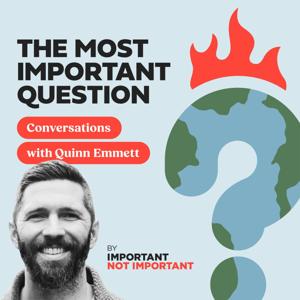


In Episode #97, Quinn digs into how we can rebuild capitalism for the world, for your company, and for yourself.
Our guest is: Rebecca Henderson, Harvard professor behind the wildly popular class Reimagining Capitalism. Rebecca's research explores the degree to which the private sector can play a major role in building a more sustainable economy, focusing on the relationships between organizational purpose, innovation, and productivity in high performance organizations.
Rebecca published Reimagining Capitalism in a World on Fire in April 2020 — but she probably didn’t expect the book to become so literal so soon.
The crux of what she discovered over the last decade of research is that focusing on shareholder profit is a terrible way to run a company in the long term, and it’s going to burn this whole thing down. This has never been more apparent than the current state of the world, where we can watch in real time as every major American institution chooses profit over the health and safety of… anyone. The silver lining is that the five or so catastrophes that this country faces at any given moment may also present an unprecedented opportunity: the market cycle has already been broken and there has never been a better time to rebuild these systems.
Have feedback or questions? Tweet us, or send a message to [email protected]
Book Club:
"Doughnut Economics: Seven Ways to Think Like a 21st-Century Economist" by Kate Raworth
Links:
reimaginingcapitalism.org
“Reimagining Capitalism in a World on Fire”
Twitter: @RebeccaReCap
LinkedIn: linkedin.com/in/rebecca-henderson-recap
Read Ed Yong’s “How the Pandemic Defeated America”
Connect with us:
Subscribe to our newsletter at ImportantNotImportant.com!
Follow us on Twitter: twitter.com/ImportantNotImp
Follow Quinn: twitter.com/quinnemmett
Follow Brian: twitter.com/briancolbertken
Like and share us on Facebook: facebook.com/ImportantNotImportant
Intro/outro by Tim Blane: timblane.com
Important, Not Important is produced by Crate Media
In Episode 96, Quinn & Brian ask: How do we orchestrate a just energy transition for frontline low- and middle-income communities — from the inside out?
Our guest is: Daphany Rose Sanchez, Executive Director of Kinetic Communities Consulting and fourth generation Brooklynite. Daphany advocates for energy equity and efficiency access in housing for New York City's low-income and immigrant communities. By working with energy and affordable housing industry partners, she helps New Yorkers save money, feel safe, and live in a cleaner environment.
Time and time again, Black and Brown communities in the U.S. have been forced to bear the brunt of inequity. Now that politicians are putting some lip service to solving some of the environmental problems that disproportionately affect these communities, Daphany and other advocates are making sure that their voices are heard and included as part of the solution. If the goal is reaching net zero carbon emissions by 2050, but the solution is going to once again let these communities down — then Daphany is on team Let The Planet Go To Shit. The environment is great and all, but “it’s not worth living on a planet where people aren't cared for.” And we 100% agree.
Have feedback or questions? Tweet us, or send a message to [email protected]
New here? Get started with our fan favorite episodes at podcast.importantnotimportant.com.
INI Book Club:
"Bargaining for Brooklyn: Community Organizations in the Entrepreneurial City" by Marwell Nicole
Links:
Twitter: @Daph_NYC_
Instagram: @daph_nyc_
Kinetic Communities Consulting
UHAB (Urban Homesteading Assistance Board)
Climate Works for All Coalition
WOCCS (Women of Color Collective of Sustainability)
Connect with us:
Subscribe to our newsletter at newsletter.importantnotimportant.com
Follow us on Twitter: twitter.com/ImportantNotImp
Follow Quinn: twitter.com/quinnemmett
Follow Brian: twitter.com/beansaight
Like and share us on Facebook: facebook.com/ImportantNotImportant
Intro/outro by Tim Blane: timblane.com
Important, Not Important is produced by Crate Media
In Episode 95, Quinn & Brian ask: how can we upgrade our microbiome (also, what’s a microbiome (also, why does it need upgrading))?
Our guest is: Raja Dhir, Co-Founder of Seed Health a microbiome company pioneering the application of bacteria for both human and planetary health. He leverages years of expertise translating scientific research for product development to lead Seed’s R&D, academic collaborations, technology development, clinical trial design, supply chain, and intellectual property strategy.
So, what is a microbiome? Overly simply put, it’s the 38,000,000,000,000 little guys in and on your body that help you do stuff; the bacteria, fungi, protozoa, and viruses that work symbiotically and allow us to function. Interest in the field grew rapidly around 2015, but Raja thought the rate of innovation and commercial response was lacking, not to mention the science behind many of the products that were being created. So Seed leveraged the “foundry model” to support many startups in the field, driving innovations in everything from immunology to hygiene to cancer treatments while performing trials that were scientifically sound and blind as hell. They’re trying to learn all they can about the superorganism that is a human being and then make it better so that we can both live better lives and stop creating so many things that harm the planet.
Have feedback or questions? Tweet us, or send a message to [email protected]
New here? Get started with our fan favorite episodes at podcast.importantnotimportant.com.
INI Book Club:
"The Lessons of History" by Ariel Durant and Will Durant
"Deep Work" by Cal Newport
Links:
Seed.com
Seed on IG: @seed
Raja on IG: @wildraja
LinkedIn: linkedin.com/in/rajadhir
LUCA Biologics: luca.bio
Connect with us:
Subscribe to our newsletter at newsletter.importantnotimportant.com
Follow us on Twitter: twitter.com/ImportantNotImp
Follow Quinn: twitter.com/quinnemmett
Follow Brian: twitter.com/beansaight
Like and share us on Facebook: facebook.com/ImportantNotImportant
Intro/outro by Tim Blane: timblane.com
In Episode 94, Quinn & Brian discuss: the most comfortable and sustainable shoes on the planet.
Our guest is: Hana Kajimura, who leads the development and execution of the Allbirds sustainability program and strategy and is on a personal mission to make climate science fashionable. Allbrids was founded as a B-corp back in 2016, launching the world’s first wool shoes, which have been on Quinn’s feet pretty much the entire time since then. So are we shilling? A little bit. But we’re shilling *sustainably* — for the environment, if not our wallets — and that’s important.
Hana has some fascinating insight into why the best sustainability happens when you build it into a product from the very beginning, how sustainability can be used as a competitive advantage, and how we can use storytelling to reduce fashion’s carbon footprint. And if the clothes you wear aren’t telling a story, then you’re probably just Quinn.
Have feedback or questions? Tweet us, or send a message to [email protected]
New here? Get started with our fan favorite episodes at podcast.importantnotimportant.com.
INI Book Club:
"Dirt to Soil: One Family’s Journey Into Regenerative Agriculture" by Gabe Brown
Links:
Allbirds
Project Drawdown
Dance Church
Connect with us:
Subscribe to our newsletter at newsletter.importantnotimportant.com
Follow us on Twitter: twitter.com/ImportantNotImp
Follow Quinn: twitter.com/quinnemmett
Follow Brian: twitter.com/beansaight
Like and share us on Facebook: facebook.com/ImportantNotImportant
Intro/outro by Tim Blane: timblane.com
Artwork by Amrit Pal
Important, Not Important is produced by Crate Media
In Episode 93, Quinn & Brian ask: What can we do about all of this not-water in our water?
Our guest is: Imari Walker, who is quite possibly the world’s preeminent Microplastics Bae. Imari is an Environmental Engineer, a Microplastics Researcher, a SciComm YouTuber, a Duke PhD candidate, and a true revelation to talk to.
Here’s some fun facts: in 2018, there were ~359 million metric tons of plastic produced worldwide, and if current trends continue, roughly 12 BILLION metric tons of plastic waste will be in landfills or the natural environment by 2050. Also, to stay relevant, there are now almost as many disposable masks in the ocean as there are jellyfish. So where does all this waste come from (spoiler: check yo’ stretchy pants), why is it all just being thrown around willy nilly, and how can we get people to stop doing that?
Have feedback or questions? Tweet us, or send a message to [email protected]
New here? Get started with our fan favorite episodes at podcast.importantnotimportant.com.
INI Book Club:
"Emotional Intelligence 2.0" by Jean Greaves and Travis Bradberry
INI Book Club: https://bookshop.org/lists/important-not-important-book-club
Links:
www.imariwalker.com
YouTube: www.youtube.com/user/imariwalker100
Instagram: instagram.com/calimari93/
Twitter: twitter.com/calimari93
Take the Pesky Plastics Quiz
Plastic Free July
Connect with us:
Subscribe to our newsletter at newsletter.importantnotimportant.com
Follow us on Twitter: twitter.com/ImportantNotImp
Follow Quinn: twitter.com/quinnemmett
Follow Brian: twitter.com/beansaight
Like and share us on Facebook: facebook.com/ImportantNotImportant
Intro/outro by Tim Blane: timblane.com
Artwork by Amrit Pal
Important, Not Important is produced by Crate Media
In Episode 92, we're headed off to climate school!
Our guest is Anshuman Bapna, the creator (and headmaster) of Terra.do, which is like Hogwarts but for fixing the broken Earth. Of course, unlike Dumbledore, you can trust this headmaster won’t abandon you in your time of need.
It seems so obvious that there should be a central (online) location where people can learn about climate change and how they can actually make a difference… but, until we learned about Terra.do, we didn’t even think about the fact that it didn’t exist. Luckily, now it does, and it has a strong bias towards taking participants from being interested in the topic to taking action to solve the problem — and it’s that critical DOING step that we need more people to take before we can hope to heal our planet and address some of the global inequities caused by industrialization and colonization.
Have feedback or questions? Tweet us, or send a message to [email protected]
INI Book Club:
"The Great Derangement: Climate Change and the Unthinkable" by Amitav Ghosh
INI Book Club: https://bookshop.org/lists/important-not-important-book-club
Links:
Apply now: www.terra.do
Twitter: @bapnaa
Connect with us:
Subscribe to our newsletter at newsletter.importantnotimportant.com
Follow us on Twitter: twitter.com/ImportantNotImp
Follow Quinn: twitter.com/quinnemmett
Follow Brian: twitter.com/beansaight
Like and share us on Facebook: facebook.com/ImportantNotImportant
Intro/outro by Tim Blane: timblane.com
Artwork by Amrit Pal
Important, Not Important is produced by Crate Media
We’re back!
In Episode 91, Quinn & Brian ask: Why is drinking water so unaffordable, or unavailable, or just filthy for so many people?
Our guests are: Nina Lakhani & Mary Grant. Nina is environmental justice reporter for The Guardian US and Mary Grant is the Public Water for All Campaign Director at Food & Water Watch. They’ve bottled up their empathy and their anger for good, and we think they fit right in on the show.
If it wasn’t already obvious: water is important. It’s one of the few things we actually need to survive, believe it or not. We’ve all heard of problems in Flint, but that’s not some crazy anomaly. It’s just the one town that got the most media attention, and even then, there are still huge problems with their water supply.
The inequitable access to basic resources has been normalized in our country, but let's be clear about one thing — it’s NOT normal, and it doesn’t happen at anywhere near this scale in other developed countries. So, want to Make America Great Again? Well, let’s start by just getting us to a C average in basic human rights.
Have feedback or questions? Tweet us, or send a message to [email protected]
New here? Get started with our fan favorite episodes at podcast.importantnotimportant.com.
INI Book Club:
The Dictionary
https://bookshop.org/shop/importantnotimportant
Links:
Call your Senator and tell them to fight for a second Coronavirus Relief Package that includes a national moratorium on water, power, and broadband shutoffs: 202-609-9041
Tell your representative to support for the Water Affordability, Transparency, Equity, and Reliability Act (HR 1417, S611)
www.foodandwaterwatch.org
Read Nina’s articles: theguardian.com/profile/nina-lakhani
Nina on Twitter: @ninalakhani
Mary on Twitter: @MaryGrant_Water
The Human Utility
Navajo Relief Fund
Connect with us:
Subscribe to our newsletter at newsletter.importantnotimportant.com
Follow us on Twitter: twitter.com/ImportantNotImp
Follow Quinn: twitter.com/quinnemmett
Follow Brian: twitter.com/beansaight
Like and share us on Facebook: facebook.com/ImportantNotImportant
Intro/outro by Tim Blane: timblane.com
Artwork by Amrit Pal
Important, Not Important is produced by Crate Media
From the publisher's feed

6,762 Listeners

9,187 Listeners

10,731 Listeners

8,440 Listeners
465 Listeners
9,616 Listeners

2,052 Listeners

87,116 Listeners

111,799 Listeners

25,145 Listeners

10,267 Listeners

6,373 Listeners

15,882 Listeners

3,446 Listeners
609 Listeners
51 Listeners