
Sign up to save your podcasts
Or



Recorded April 10, 2026
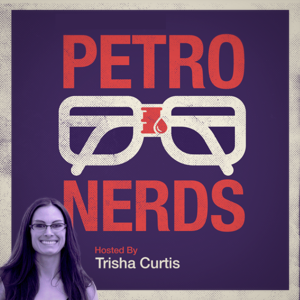
Trisha Curtis, CEO of PetroNerds and host of the PetroNerds podcast, welcomes Tatiana Mitrova back to discuss the geopolitical shocks reshaping global energy markets. Just days into the Iran ceasefire, they unpack why the latest crisis is better understood as a logistical shock than a traditional oil shock, how drone warfare is changing energy infrastructure risk, why Russia’s economy has proven more resilient than many expected, and how China is building an energy strategy centered on security, redundancy, and leverage.
Tatiana brings a systems-level view to the conversation, explaining how large energy systems behave under pressure, how markets adapt under stress, and why the world is underestimating the long-term consequences of today’s conflicts. From the Strait of Hormuz to Russian oil production, from the war in Ukraine to China’s stockpiling and trading strategy, this episode connects the dots between geopolitics, logistics, military technology, and energy market structure.
This episode is a masterclass in thinking beyond simple supply-and-demand narratives. It shows how energy markets are shaped not just by barrels and molecules, but by logistics, chokepoints, insurance, military technology, infrastructure resilience, and state capacity. For anyone trying to understand oil, gas, Russia, China, or the next phase of energy security, this conversation offers a deeper framework for what comes next.
Tatiana Mitrova is a Global Fellow at Columbia University’s Center on Global Energy Policy and one of the leading experts on Russian energy, energy security, and geopolitical risk. Her work focuses on energy economics, infrastructure, chokepoints, and how complex systems behave under stress.
Recorded March 16, 2026
In this episode of the PetroNerds Podcast, Trisha Curtis, CEO of PetroNerds, speaks with Tyler Lindholm, former Wyoming state representative and current Wyoming State Director for Americans for Prosperity. They break down why Wyoming holds a major advantage in affordable, reliable energy and why the state needs to shift from defense to offense. They discuss why Wyoming sits in a uniquely strong position in U.S. energy, especially as oil markets tighten, electricity demand rises, and policymakers push permitting reform back to the center of the national conversation. The conversation covers Wyoming oil production, natural gas, coal, utility control, rare earth minerals, education funding, and the policy contrast between Wyoming and Colorado. Tyler explains why Wyoming has played defense for too long and why the state now needs to lead with confidence on energy, infrastructure, and investment. A major focus of the episode is coal-fired power generation, including the potential for a new Dry Fork coal plant near Gillette. Trisha and Tyler also explore why reliable low-cost electricity matters for industry, manufacturing, data centers, AI, and national security.
In This Episode
Key Takeaways
Wyoming has the resources, location, and power cost advantage to become a bigger energy and industrial leader.
Permitting reform is not a niche policy issue. It affects oil, gas, coal, transmission, broadband, mining, and every major infrastructure built in the West.
Coal remains a strategic asset for grid reliability, industrial growth, and national security.
Wyoming’s ability to shape its own energy future remains limited when out-of-state utilities control major generation decisions.
Rare earth development and domestic processing deserve much more urgency.
Guest
Tyler Lindholm is a former Wyoming state representative, fifth-generation rancher, military veteran, and current Wyoming State Director for Americans for Prosperity.
Recorded March 25, 2026, and February 26, 2026
Episode 153 of the PetroNerds podcast is a heavy-hitting, energy-dense podcast packed with intel and data in every second. Trisha Curtis, CEO and host of the PetroNerds podcast, walks listeners and viewers through a timely and thorough presentation on the State of Energy, covering topics from Iran and Russia to China and US shale.
Trisha covers the gauntlet in a deep dive presentation given on February 26th, 2026, just two days before the war in Iran. Trisha discusses Iran’s oil production and how little geopolitical risk is priced into oil at $65 a barrel. She gets into Chinese oil demand and the Chinese economy, the importance of oil, getting energy right, and the role of coal and natural gas in power generation and electricity prices.
She talks about the rise in electricity prices, the corresponding rise in wind and solar power, and the decline in cheap baseload power from coal. She discusses Chinese coal demand and the importance of energy in war and conflict. And Trisha introduces this podcast with a fresh update on oil prices, oil flows, and the war in Iran.
This talk and presentation were sponsored by First Turn Capital and Liberty Energy. The presentation was hosted by the Denver Energy Network and the Women in Oil and Gas Association at Liberty Energy’s office in Denver, Colorado.
Please reach out to PetroNerds directly at www.petronerds.com.
Recorded March 12, 2026
Episode 152 of the PetroNerds podcast is a one hour deep dive on the war in Iran, $100 oil prices, and the events that have taken place in the Middle East since February 28, 2026. Trisha Curtis, CEO of PetroNeds and host of the PetroNerds podcast, is joined by Jason Isaac, President of the American Energy Institute.
Jason asks Trisha why the market did not appropriately price in geopolitical risk before the war, especially with the atrocities and executions in Iran. Trisha walks listeners through the war in Iran and Iran’s attacks on its Middle East neighbors, the effective closure of the Strait of Hormuz, shut-in barrels in the Middle East, and the impact on near-term oil prices. Trisha and Jason discuss the importance of US oil production, energy security and maintaining US energy dominance in oil, natural gas, and coal.
They also discuss Europe’s exposure to the Middle East and rising oil and natural gas prices. Trisha discusses the chaos within Iranian leadership and whether or not the new leader is actually leading. Click to read the article and opinion piece referenced by Trisha Curtis, “The United States Must Maintain Oil Investment Amid Global Instability.” Trisha Curtis is also the Chief Economist of the American Energy Institute.
Recorded February 26, 2026 and November 7, 2025
Episode 151 of the PetroNerds podcast is an Oxford special. Trisha Curtis, CEO of PetroNerds and host of the PetroNerds podcast, gives a 20 minute introduction on the state of the oil market, Trump’s State of the Union, tariffs, geopolitics and Iran. This body of this podcast is Trisha’s talk and presentation to the Oxford Institute for Energy Studies’ Oxford Oil Day. Trisha walks listeners through the resiliency in US shale production and why it has continued to grind higher despite lower oil prices, a lower rig count, and fewer wells being drilled. This is a heavy hitting podcast you are going to want to listen to, relisten to, and share with your colleagues and friends. Please reach out to PetroNerds directly at petronerds.com.
Recorded February 11, 2026, and November 5, 2025
Episode 150 of the PetroNerds podcast is a true PetroNerds special. This 150th PetroNerds podcast is celebrated with a fresh market introduction covering oil prices hitting $65 a barrel on February 11th, 2026. Trisha Curtis, CEO of PetroNerds, gets into the oil price moves, US and Iran negotiations, China’s increased purchases of Russian crude oil, and rising US natural gas production in November 2025. The body of the podcast is the panel discussion Trisha Curtis organized and moderated at the Denver Earth Resources Library on November 5th, 2025 when oil prices were $60 a barrel. The panel discussion included Nathan Anderson with the North Dakota Department of Mineral Resources, Tad True with True Companies and Bridger Pipeline, and Joe DeDominic with Anschutz Exploration. All three executives bring a wealth of knowledge from their respective companies and oil plays. Trisha covers $60 oil and “peak shale” with all panelists. Trisha gets into the weeds on North Dakota and the Bakken with Nathan and asks Nathan to talk about the sustainability of production, the interest by private equity, and how much there is left to drill in the prolific Williston Basin. She asks Joe to talk about Anschutz’s position in the Powder River Basin in Wyoming as well as the Uinta in Utah. Joe talks about their lower well costs and how they are positioning themselves at $60 oil. Trisha and Tad discuss the midstream side of the business, and Tad’s experience in North Dakota, the Uinta, and the Powder.
Recorded January 20, 2026, and November 13, 2025
Episode 149 of the PetroNerds podcast is a heavy-hitting, energy-dense, PetroNerdy geopolitical special. Trisha Curtis, CEO of PetroNerds and host of the PetroNerds podcast, packs hours of intel into her 30-minute talk and presentation to the PetroLeum Alliance of Oklahoma on November 13, 2025.
Fresh from London, Trisha does not miss a beat in Oklahoma City, covering the state of the oil market, the pessimism seen in oil prices throughout 2025, the resiliency of US shale, and the incredible geopolitical risk factors not being priced into oil, including China and Russia. Trisha introduces this PetroNerds special with a complete market update focusing on the tragic events in Iran and the oil prices in the first three weeks of 2026. This is a timely, not-to-be-missed podcast you’ll want to re-listen to and share with your colleagues and friends.
Please reach out to PetroNerds directly at https://petronerds.com/contact/ and check out PetroNerds and Trisha on Steve Gruber’s Real America’s Voice this week.
From the publisher's feed

227,497 Listeners

152,949 Listeners
41,445 Listeners
536 Listeners

4,190 Listeners

46,104 Listeners

43,725 Listeners
16,050 Listeners
30 Listeners

37 Listeners
39,377 Listeners
6,207 Listeners
26,554 Listeners
14 Listeners

15,960 Listeners