
Sign up to save your podcasts
Or

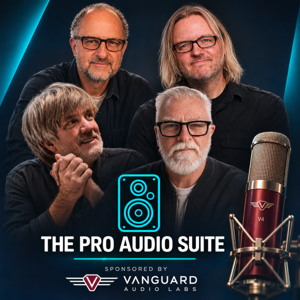


In this episode of The Pro Audio Suite, the team digs into a large-scale remote recording with Robert Marshall, capturing a full orchestra and 100-plus voice choir performing Handel's Messiah inside a church.
Robert breaks down his microphone choices, including Neumann KM184s, Austrian Audio CC8s, Schoeps mains, and why ORTF still delivers a convincing stereo image in complex acoustic spaces. We also talk about spot mic placement for piano and soloists, blending ambience naturally without artificial reverb, and the realities of recording live with zero second chances.
The conversation drifts into mobile recording rigs, spinning-disk backups, FireWire laptops, remote recording trucks, and the kind of gear paranoia that only comes from doing this work solo for decades.
It's a proper deep dive into classical capture, stereo technique, redundancy, and why "old-school" workflows still hold up in 2026.
Sponsors: Thanks to Austrian Audio – Making Passion Heard And Tri-Booth Use code TRIPAP200 to save $200 on your Tri-Booth.
A fascinating piece of gear quietly surfaced ahead of NAMM, and it sent us down a deep rabbit hole.
In this episode of The Pro Audio Suite, the crew digs into the Carno Sepia system, a digitally controlled, fully analog modular hardware platform that feels like a modern reimagining of the 500 series concept, minus the knobs.
We unpack how it works, who it's really for, and whether this kind of hybrid approach is genuine innovation or just another expensive way to chase "analog purity." Along the way, we talk NAMM expectations, Sweetwater leaks, digitally controlled analog routing, redundancy, reliability fears, scratchy pots, touring rigs, and whether DSP has already caught up anyway.
This one is equal parts curiosity, scepticism, and hard-earned industry perspective.
In this episode:A NAMM-bound product that surfaced early on Sweetwater
Digitally controlled analog hardware with no physical controls
How Carno Sepia compares to traditional 500 series systems
Routing, redundancy, and remote control advantages
Real-world concerns around longevity and software dependency
Analog obsession vs modern DSP reality
Who this gear actually makes sense for
Why some innovation feels brilliant and ridiculous at the same time Thanks to Tri-Booth and Austrian Audio for supporting The Pro Audio Suite.
2025 has been a big year for The Pro Audio Suite, so this episode is a full end-of-year wrap up with Robbo, Andrew Peters, George "The Tech" Whitham, and Robert Marshall.
We look back at the biggest moments, the most downloaded episodes, the conversations that sparked the most reaction, and the industry shifts that actually mattered.
From the launch of the PASport VO and real-world use cases, to persistent Source-Connect confusion, to the realities of AI in voiceover and audio production, this episode ties together the themes that defined 2025 for working audio pros.
We also talk gear myths, room realities, video versus audio podcasting, career curveballs, and why experience still beats prompts every single time.
If you've followed the show this year, this is the episode that puts it all in context.
Key Topics Covered
The biggest Pro Audio Suite episodes of 2025
PASport VO real-world workflows and lessons learned
Source-Connect 3 vs 4, and why the bridge episode mattered
Why AI still struggles with direction, nuance, and repeatability
Gear matters less than people think, but understanding it matters more
Room setup and monitoring mistakes that keep catching people out
Audio-only vs video podcasting, what's worth the effort
Career curveball gigs from the hosts this year
Why experience still wins over automation
Thanks to our sponsors:
Tri‑Booth
Austrian Audio
Recorded using Source-Connect Edited by Andrew Peters
Mixed by Voodoo Sound
This week the team dives into one of the strangest mics we've ever had on the show. A client of George's sent through a full placement test of the Aston Element, the active moving-coil oddball with its own made-up technology name, the Rydion capsule. Aston claims it blends the bottom end of a dynamic, the clarity of a condenser, and the smoothness of a ribbon. Big call.
We compare it directly against a 416 and a TLM103, and the reactions in the room say everything. Does it punch above its weight? Is it just a quirky USB-era gimmick? Does it actually compete with entry-level VO mics? And most importantly, would any of us actually buy one?
We also wander into proximity effect, capsule placement inside shotgun mics, and George literally dismantles an NTG4 on air. Good fun.
If you're a mic nerd or you love oddball gear, you'll enjoy this one.
Brought to you by Tri-Booth and Austrian Audio. Tri-Booth discount code: TRIPAP200 for 200 bucks off. Austrian Audio, making passion heard.
Episode recorded and produced by The Pro Audio Suite.
Listen, explore, connect at proaudiosuite.com
This week we're digging into the skills that used to define the studio, back when audio wasn't just about tools and tech but the craft behind the session itself. Punch-ins, drop-ins, reading along with yourself, directing talent, matching pitch on the fly, using feel instead of formulas… so much of this has disappeared from the modern workflow.
Robbo, AP, George and Robert swap stories from the tape era, pick apart why many of these skills are fading, and talk about what VO talent and engineers can learn from the old way of doing things. From casting realities to coaching blind spots, and even how quickly a demo gets skipped in a session, it's equal parts fun and brutally honest.
We also touch on Toby Ricketts' blog on breath control and unseen punctuation https://www.tobyrickettsvoiceover.com/blog/unseen-punctuation-how-breath-control-engages-eardrums
Thanks to our sponsors TriBooth and Austrian Audio. Use code TRY200 for 200 dollars off your TriBooth.
Recorded using Source Connect, edited by Andrew Peters, mixed by Robbo. Join the chat in our Facebook group.
Breaths — they're natural, emotional, and sometimes downright necessary. But should they always stay in your voice tracks?
This week, the crew dives into the great de-breathing debate, inspired by a post from voice actor Toby Ricketts on how breaths act as "unseen punctuation."
Robbo, AP, George the Tech, and Robert Marshall discuss when removing them improves clarity and when it strips away the performance.
Along the way, they touch on AI voices, happy accidents, and the fine art of keeping things human — from Sting's laugh on Roxanne to Chad Smith breaking a drumstick mid-take.
They also chat about Austrian Audio's new CC8 Supercardioid — a small-diaphragm beauty George currently has in front of him.
Is it time to stop editing the life out of your sound? Tune in and take a breath.
🧠 Episode Keywords / Hashtags#ProAudioSuite #VoiceOver #AudioEditing #DeBreathing #VoiceActing #AIvoices #SoundDesign #Mixing #PodcastProduction #GeorgeTheTech #AustrianAudio #Tribooth
🏷 SponsorsThis episode is brought to you by TriBooth and Austrian Audio. Use the code TRIPAP200 to get $200 off your TriBooth. Austrian Audio — Making Passion Heard.
🌐 LinksToby Ricketts' Blog: "Unseen Punctuation – How Breath Control Engages Eardrums"
Austrian Audio CC8 Supercardioid
The Pro Audio Suite Website
YouTube Channel
Spotify
Apple Podcasts
Amazon Music
Finally! Apple's latest iOS 26 update gives users control over which mic their iPhone or iPad apps use. Whether you're recording with AirPods, a PASport VO, or your favourite external mic, you can now select your input per app — a massive leap for voice actors, podcasters, and mobile content creators.
The team also unpacks the new AirPods Pro 3 and their surprisingly usable mic quality, adaptive noise reduction, and hearing-aid features. As always, the conversation goes off the rails (in the best way) with plenty of laughs and gear talk.
🎙️ In this episode:
Choosing your mic per app in iOS 26
AirPods Pro 3 mic tests & live translation
Adaptive noise reduction that actually works
Using iPhones for auditions (and why it's fine in a pinch)
iFixit teardown & the repairability debate
Chaotica Eyeball + iPhone = quick VO setup
🎛️ Hosts: Andrew Peters, George 'The Tech' Whittam, Robert Marshall, and Darren 'Robbo' Robertson
🎧 Sponsors:
TriBooth — use code TRIPAP200 for $200 off
Austrian Audio — Making passion heard
🔗 Join the conversation: Facebook Group: The Pro Audio Suite Podcast Group Website: www.proaudiosuite.com
This week, the crew takes a hard look at reflection filters — those curved bits of foam and metal you often see sitting behind microphones.
Do they really make your recordings sound better, or are they just clever marketing?
George "The Tech" Whittam, Robbo, Robert Marshall, and Andrew Peters break down what reflection filters actually do (and don't do), why they often make voiceovers sound worse, and what to invest in instead if you want to improve your room sound.
From the SE Electronics RF-X to the Aston Halo, the team compares designs, materials, and real-world results — and offers smarter, more effective alternatives for both travelling and home setups.
🎧 Recorded using Source Connect 🎚️ Edited by Andrew Peters. Mixed by Robbo.
🔊 Thanks to Our SponsorsThis episode is brought to you by: 🎙️ Tri-Booth — the portable vocal booth used by the pros. 💰 Use code TRIPAP200 for $200 off your Tri-Booth at tribooth.com.
🎧 Austrian Audio — Making Passion Heard. Check out their full range of professional mics and headphones at austrian.audio.
🔗 Links & Extras🌐 theproaudiosuite.com 💬 Join the conversation: Pro Audio Suite Facebook Group 🎧 Listen on Spotify, Apple Podcasts, and Amazon Music
Ever wondered what those strange wooden grids on studio walls actually do? In this week's episode, the guys dive into diffusers — how they work, when to use them, and why your small booth might not be the best place for one.
We also chat about the brand-new Austrian Audio CC8 Supercardioid — the latest addition to their small-diaphragm condenser range — and how it performs in real-world sessions.
From quadratic and skyline diffusers to the mysterious Fresnel-style designs, we break down what each type does to your sound, and why diffusion is often misunderstood.
George shares insights from a beautifully treated garden-shed studio (yes, really), Robbo recalls diffusers hanging as ceiling "clouds" at Foxtel, and the crew even take a detour into restaurant acoustics — because if you can't hear your dining partner, maybe they need better room treatment too!
Whether you're building a home studio or just want your booth to sound a little bigger, this one's packed with real-world advice (and a few laughs along the way).
🎧 MENTIONED IN THIS EPISODEAustrian Audio CC8 Supercardioid (and upcoming release)
Quadratic, skyline, and Fresnel diffusers
Tube traps and hybrid panels
Auralex and GIK Acoustics products
RPG diffusers
Blackbird Studios Nashville
Soundprint App (for measuring restaurant noise levels)
Tri-Booth — Get $200 off your Tri-Booth with the code TRIPAP200 at tribooth.com Austrian Audio — Makers of the OC818, OC18, and the brand-new CC8 Supercardioid. Making passion heard.
🌐 LINKS🎧 www.proaudiosuite.com 🎥 YouTube: @proaudiosuitepodcast 💬 Join the discussion: Pro Audio Suite Facebook Group
Levels mysteriously rising and falling with no changes in your setup? In this episode of The Pro Audio Suite, we go hunting for those dreaded signal-chain gremlins.
From flaky TRS connections that drop a balanced leg and cause sudden 6 dB losses, to patchbay switches that "moved themselves," to the quirks of send/return jacks on interfaces like the Audient iD series—we unpack the common culprits behind random level swings.
We also share a practical, step-by-step troubleshooting method called binary reduction: change one thing at a time, ideally from the middle of the chain, and halve your suspect list with every move.
What you'll learn:
Why XLR usually outperforms TRS for reliable, balanced connections
How to "exercise" or clean jacks to stop intermittent dropouts
How the Return jack on the Audient iD bypasses the preamp (and why the Send is half-normalled)
Why patchbays and inserts can be both lifesavers and headaches
The simple logic of binary reduction for solving audio mysteries fast
Mentioned: Grace m101, Audient iD22/iD44, Mackie inserts, Apogee Duet, phantom power quirks, Behringer patchbay switches.
Sponsors:
TriBooth — use code TRIPAP200 for USD $200 off your TriBooth
Austrian Audio — Making passion heard.
Credits: Recorded via Source-Connect. Edited by Andrew Peters. Mixed by Robbo. Tech support by George "The Tech" Whittam. theproaudiosuite.com
From the publisher's feed

227,660 Listeners
5,861 Listeners
13,024 Listeners
78 Listeners

10,317 Listeners

14 Listeners

176 Listeners
28 Listeners

21 Listeners

23 Listeners
262 Listeners

962 Listeners
14 Listeners
57 Listeners

150 Listeners