
Sign up to save your podcasts
Or

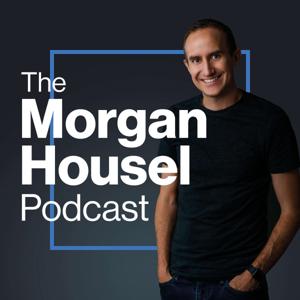


Based on Podcast App listening data
The highest form of wealth is the ability to wake up every morning and say, “I can do whatever I want today.”
People want to become wealthier to make them happier. Happiness is a complicated subject because everyone’s different. But if there’s a common denominator in happiness -- a universal fuel of joy -- it’s that people want to control their lives.
The ability to do what you want, when you want, with who you want, for as long as you want, is priceless. It is the highest dividend money pays.
There is no world where two equally smart and informed people should agree on the best way to save, spend, and invest money.
Everyone is different.
What you want might not be what I want.
What’s fun to you might be miserable to me.
Your family’s different from mine. Your job’s different from mine. You have different life experiences than I do, different role models, different risk tolerances and goals and social ambitions, work-life balance targets, career incentives, on and on.
One of the most important financial skills is figuring out what game you're playing, and playing it -- and only it.
This episode covers a hard topic about money: What you want more than anything is everything you can't have.
Your brain doesn’t want stuff. It doesn’t even want new stuff. It wants to engage in the process and anticipation of getting new stuff.
The change, not the amount, is what matters.
When it comes to happiness and money, it's not about how much you have. It's about the change in how much you have.
Special cameo from Richard Nixon.
Getting rich and staying rich are two different skills. They are often conflicting skills, so many people focus on one or the other.
But you need both to do well over time.
This episode tells a 100-year-old story of two investors, neither of whom knew each other, but whose fates converged during the same week in the 1920s.
It shows why a barbell personality of optimistic on one hand, and paranoid on the other, is vital to success.
There are only a handful of financial rules, ideas, and observations that really move the needle -- and explain the majority of what you need to know to do better with your money.
I could have narrowed this down to 10, but I had fun with this thought experiment, so here are my top 30 rules of the money game.
Episode 2: A look at the lifestyles we all choose to live, with an old story I came across that might be my favorite example of living for the approval and applause of other people vs. doing things just because they make you happy.
The first episode -- who knows where this will go?
There is a science to spending money – how to find a bargain, how to make a budget, things like that.
But there’s also an art to spending. A part that can’t be quantified and varies person to person.
In my book I called money “the greatest show on earth” because of its ability to reveal things about people’s character and values. How people invest their money tends to be hidden from view. But how they spend is far more visible, so what it shows about who you are can be even more insightful.
Everyone’s different, which is part of what makes this topic fascinating. There are no black-and-white rules.
But here are a few things I’ve noticed about the art of spending money.
From the publisher's feed
Timeless lessons on wealth, greed, and happiness.
Ranked by our users in the last 21 days

16,038 Listeners

3,326 Listeners

2,175 Listeners

2,697 Listeners

948 Listeners

2,203 Listeners

2,031 Listeners
473 Listeners

622 Listeners

2,144 Listeners
203 Listeners

933 Listeners

439 Listeners
340 Listeners

412 Listeners