
Sign up to save your podcasts
Or

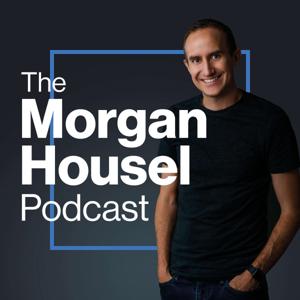


Based on Podcast App listening data
My new book, Same as Ever: A Guide to What Never Changes, is out today.
Books are hard, a multi-year slog from start to finish. But I’m excited for you to read this. I think it’s the best writing I’ve ever done. And it was fun to write! My hope is that you enjoy reading it half as much as I enjoyed writing it.
My first book, The Psychology of Money, was really about how you, the individual behave. Same As Ever is about how we, the collective, behave, and what we keep doing over and over.
It’s 23 short stories about what never changes in a changing world.
I’ve been thinking about this book for my entire career. I’ve always been skeptical of forecasts, because the world’s track record on predicting the next recession, the next election, or the next technology is so bad. That should draw you to the question: What’s never going to change?
What do we know for certain is going to be part of our future?
All optimistic beliefs can be dangerous because they’re so comforting, so easy to accept without asking further questions. Hope often masquerades as optimism when you think things will improve only because the alternative is too scary to contemplate.
Every optimist needs to justify exactly why they're optimistic. In this episode, I offer my own three reasons.
Daniel Kahneman says, "The long-term success of a relationship depends far more on avoiding the negative than on seeking the positive."
It's like that in so many areas of life.
Most people know what they're good at, or at least they think they do. Flaws, though, tend to be nuanced, and we're often blind to them.
This episode shares dozens of little flaws I often think about -- ones that are easy to ignore, but can compound into disasters over time.
Measuring wealth is easy. You just count it up. Measuring some of the downsides of wealth is so much harder and more nuanced. They can be so nuanced and hard to measure that many people won’t even believe they exist. A downside to wealth? How could that possibly be?
Let me propose that the absurdity of talking about the downside of wealth is part of why wealth doesn’t tend to make people as happy as they thought it would.
When the benefits of money are so obvious but the downsides are so subtle, the downsides you didn’t anticipate can be more jarring than the benefits you expected.
I want more money, of course. Almost everyone does, albeit for different reasons.
This is not an anti-wealth list -- just a collection of subtle downsides that are easy to ignore, and so common you may as well call them the only true laws of getting rich.
My new book, Same As Ever, comes out in a month.
It's about things that never change -- what's always happened in the world, and will keep repeating again and again?
This episode shares five examples.
Just after my son was born I wrote a few things I thought he’d find helpful as an adult. One of them was:
"You might think you want an expensive car, a fancy watch, and a huge house. But I’m telling you, you don’t. What you want is respect and admiration from other people, and you think having expensive stuff will bring it. It almost never does – especially from the people you want to respect and admire you."
Eight years later I still believe this to be true, and I might even double down.
A truth that applies to almost every field is that it’s possible to try too hard, and when doing so you can get worse results than those who knew less, cared less, and put in less effort than you did.
There are mistakes that only an expert can make. Errors – often catastrophic – that novices aren’t smart enough to make because they lack the information and experience needed to try to exploit an opportunity that doesn’t exist.
All greed starts with an innocent idea: that you are right, deserve to be right, and are owed something for the efforts you put into establishing your beliefs and opinions.
It’s a reasonable feeling. But it sets off a chain reaction that leads to an inevitable boom-and-bust cycle.
This episode explores one of the most important topics in investing: the lifecycle of greed and fear, and why it cannot, and will not, ever go away.
This episode is about the difference between intelligence and smarts, and why one is valued more than the other despite being less useful in the world.
The core here is realizing that people are not spreadsheets. They are emotional, hormonal, misinformed, status-seeking, insecure creatures trying their best to make it through the day. So if you have to choose between understanding how the world should work in theory vs. how it actually works in practice, lean towards the latter. It’s like historian Will Durant once said: “Logic is an invention of man and may be ignored by the universe.” That is so smart.
This is a short personal story about a fluke event 16 years ago that changed everything in my life. You probably have a similar story, and there is so much to learn about how everything can change from an event you never saw coming.
From the publisher's feed
Timeless lessons on wealth, greed, and happiness.
Ranked by our users in the last 21 days

16,039 Listeners

3,327 Listeners

2,177 Listeners

2,694 Listeners

948 Listeners

2,202 Listeners

2,029 Listeners
473 Listeners
621 Listeners

2,144 Listeners
204 Listeners

933 Listeners

439 Listeners
341 Listeners
412 Listeners