
Sign up to save your podcasts
Or

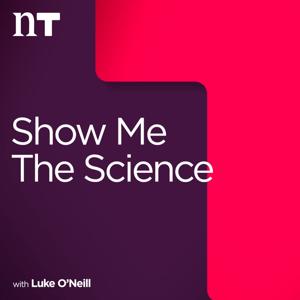

This week, Professor Luke digs into one of the biggest questions in cancer research: how to train the immune system to hunt tumours. Immunotherapy already works in cancers like melanoma and lung cancer — but only 20–30% of patients respond.
A major new study in Nature Medicine may shift that. It tracked more than a thousand patients and found that people who’d had the Covid-19 vaccine responded twice as well to immunotherapy. Lung cancer patients lived an average 18 months longer; melanoma patients 14 months.
Why would a Covid vaccine help? The RNA technology gives the immune system a jolt, boosting interferons — the proteins Luke’s lab studies — which “wake up” tumours that normally hide. Immunotherapy works best on “hot” tumours; the vaccine helps turn “cold” ones hot.
Luke explains how checkpoint inhibitors remove the brakes from immune cells, dramatically extending life for some patients, though 70% still don’t benefit. Push the immune system too far and it risks attacking healthy tissue, so reaching even 50% response rates would be a huge win.
Luke also recalls how science turned HIV from a death sentence into something people can live with for decades — a reminder of what long-term research can achieve. Which is why he’s dismayed that the US has cut almost half a billion dollars from RNA-vaccine research. Especially when RNA vaccines for malaria and TB are now in development.
Immunotherapy isn’t a cure yet — but the science is heating up fast.
 View all episodes
 By Newstalk
5
55 ratings
This week, Professor Luke digs into one of the biggest questions in cancer research: how to train the immune system to hunt tumours. Immunotherapy already works in cancers like melanoma and lung cancer — but only 20–30% of patients respond.
A major new study in Nature Medicine may shift that. It tracked more than a thousand patients and found that people who’d had the Covid-19 vaccine responded twice as well to immunotherapy. Lung cancer patients lived an average 18 months longer; melanoma patients 14 months.
Why would a Covid vaccine help? The RNA technology gives the immune system a jolt, boosting interferons — the proteins Luke’s lab studies — which “wake up” tumours that normally hide. Immunotherapy works best on “hot” tumours; the vaccine helps turn “cold” ones hot.
Luke explains how checkpoint inhibitors remove the brakes from immune cells, dramatically extending life for some patients, though 70% still don’t benefit. Push the immune system too far and it risks attacking healthy tissue, so reaching even 50% response rates would be a huge win.
Luke also recalls how science turned HIV from a death sentence into something people can live with for decades — a reminder of what long-term research can achieve. Which is why he’s dismayed that the US has cut almost half a billion dollars from RNA-vaccine research. Especially when RNA vaccines for malaria and TB are now in development.
Immunotherapy isn’t a cure yet — but the science is heating up fast.
183 Listeners

7 Listeners

8 Listeners

2 Listeners
52 Listeners

58 Listeners
64 Listeners

54 Listeners

2 Listeners

5 Listeners

16 Listeners
37 Listeners

2 Listeners

2 Listeners

0 Listeners

5 Listeners

1 Listeners

1 Listeners
0 Listeners

369 Listeners

90 Listeners

39 Listeners

26 Listeners

51 Listeners

108 Listeners
38 Listeners

53 Listeners
30 Listeners

1 Listeners

2 Listeners

9 Listeners
9 Listeners

0 Listeners

3 Listeners