
Sign up to save your podcasts
Or

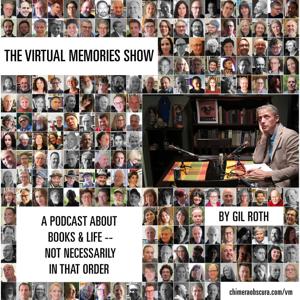


He turned 90 a few weeks ago, but design legend Milton Glaser isn't slowing down. We got together to talk about moving to a new studio after nearly 55 years and what he plans on doing with the 250,000 posters in the cellar. We get into art vs. design, why he painted "Art Is Work" on the transom of his building, how he's working more actively and faster than he ever has, the first time he saw his work in public, how drawing makes us conscious of reality, the influence of Giorgio Morandi on his life, the joy of ~60 years of teaching, the decay of design into commodity and corporate metrics, and the overlooked role of Push Pin Studios in design history. Along the way, we also get into the worldwide phenomenon of his "I ♥ NY" design, what it's like to live in an age of collage, where we find things instead of making things, how the computer can compel users into doing what it's good at instead of what they're good at, his marriage advice after 60+ years with Shirley Glaser, and his story about designing Trump Vodka. • More info at our site • Support The Virtual Memories Show via Patreon or Paypal
Writer, teacher, and activist Kate Maruyama joins the show from Readercon 2019! We talk about her first novel, Harrowgate (47North), which managed to make new motherhood and domesticity even creepier than the ghost story that overlays it. We get into how her husband and kids reacted to that book (it's about a woman who dies in childbirth), and when she got around to reading the work of her late mother, Kit Reed. We also talk about how she spent 20 years in Los Angeles before stumbling across its literary scene, and how she's making up for lost time by promoting that diverse writing community. Along the way, we discuss the differences between screenwriting vs prose writing, how she teaches students to avoid using archetypes that demean an entire population (and why Baby Driver turns out to be a woke crime movie), the authors her parents hosted at Wesleyan University during her childhood and the embarrassing question she asked Ralph Ellison, the social justice mission of Antioch College, how she taught creative writing in South Central LA and what her students taught her, and why the fast-fail model of screenplay sales has a lot to recommend it. • More info at our site • Support The Virtual Memories Show via Patreon or Paypal
Look! Up in the sky! Is it really more like a novel? Is it more like a 10-hour movie? No, it's TV! In her first book, I Like to Watch: Arguing My Way Through the TV Revolution (Penguin Random House), critic Emily Nussbaum celebrates TV as TV, exploring the unique aspects of the form and helping TV viewers get over status anxiety. We talk about the satisfying/horrifying experience of culling her past reviews and profiles for the book, the audience-oriented nature of TV storytelling, whether it's important for a well-loved show to nail the finale, and the dual influences of The Sopranos and Buffy the Vampire Slayer on her work as a critic. We also get into her Peak TV moment, how technology has changed TV over the decades, the only time she predicted the upcoming season's TV hits (Lost and Desperate Housewives), her theory that most workplace shows are actually about TV writing rooms, the difference between weekly and binge-released shows, the perils of writing profiles of the people she's reviewed, and the challenge of being a funny writer who wants to make serious points. We also get into the question of how (whether?) to separate the artist from the art in the #metoo era, and how she deals with the fact that much of her sense of humor came from watching and reading Woody Allen throughout her youth. On the lighter side, she tells us her favorite songs from Crazy Ex-Girlfriend, and I reveal the '90s show that I binged on 200+ episodes of last year! • More info at our site • Support The Virtual Memories Show via Patreon or Paypal
It may be a fine line between comics and art, but Karl Stevens' fine line crosses effortlessly between them. Karl & I talk about how his realistic drawing style and watercolors treat comics as fine art, and how that visual style complements his naturalist stories, especially in his recent collection, The Winner (Retrofit Comics). We get into his gateway from superheroes to art-comics, his recent commission to make comics that accompanied a Botticcelli exhibition at the Gardener Museum in Boston, his work as a guard in that same museum, the challenge of drawing his wife, the challenge of getting paid as a freelancer, and whether he regrets his his teenaged decision to devote his life to comics. We also talk about his upcoming book of cat comics, drawing gags for the New Yorker, visiting the Words & Pictures Museum in '90s Northampton (a.k.a. Comics-Mecca), his road not taken with Dave Sim, how short strips and gag panels have made it tougher for him to write longer stories, and plenty more! BONUS: You get the origin story of my friendship with Tom Spurgeon AND my recent crisis of faith! • More info at our site • Support The Virtual Memories Show via Patreon or Paypal
With a career in illustration and art stretching back to 1960, Barbara Nessim has been a trailblazer in multiple ways (albeit unintentionally). We talk about the 2013 retrospective of her work at the Victoria & Albert Museum and the process of seeing her oeuvre distilled by a curator, as well as her own 7-year project of archiving her work, and the role and rules of her decades-long sketchbook practice. We get into her pioneering work in computer art and her involvement in SIGGRAPH, her career drive and her "1 for them, 6 for myself" philosophy, her decision to take up pottery at 80, her Random Access Memories exhibition and its one-of-a-kind art-generator, what it was like working with Harvey Kurtzman for Esquire and on fumetto, her 65-year love affair with salsa and how she taught a bunch of illustration and design legends to dance, and how she may be the most well-adjusted, thankful and gracious artist I've ever met. Bonus: you get my oddball story of meeting Gary Panter in the '90s. • More info at our site • Support The Virtual Memories Show via Patreon or Paypal
With his new memoir, Savage Feast: Three Generations, Two Continents, and a Dinner Table (a Memoir with Recipes), author Boris Fishman explores his family's Soviet Jewish legacy, his arc as a writer, and the glorious and varied meals that kept his family together from Minsk to Brighton Beach. We get into why creative nonfiction is his first passion (after publishing two novels), how he guaranteed his family's disapproval by writing about them throughout his career, how he couldn't leave Sovietness behind until he moved out of his parents' home at 24 (despite emigrating from the USSR at 9), what he'd do if he quit the writing game, and why the recipes were the toughest part of Savage Feast. We also talk smack about certain books and authors, compare Malamud to Roth and Bellow, discuss the first (very not Jewish/not Russian) writer Boris became friends with, and explore the use of fiction to imagine alternate lives for oneself. Along the way, we make a life-changing pact, decide whether an MFA is worth pursuing, share book tour best practices, and conclude that Soviet Jewish guilt is exponentially more severe than Jewish guilt. It's a whole lot of talk about books, food, and deracinated Jews! • More info at our site • Support The Virtual Memories Show via Patreon or Paypal
Who can top the memoir of his mother's infidelity with the biography of a sideshow pinhead? Legendary cartoonist Bill Griffith, that's who! Bill rejoins the show to talk about his new graphic biography, Nobody's Fool: The Life and Times of Schlitzie the Pinhead (Abrams ComicArts), the empty nest syndrome that led him to dive into it right after finishing his first longform book, the challenges of separating fact from fiction in Schlitzie's life, and how a 1963 viewing of Tod Browning's movie Freaks changed Bill's life forever and led him to create Zippy The Pinhead. We also get into Bill avoidance of cheap sentiment in the process of humanizing Schlitzie, the familial support network of sideshow folk, the decision by circus-owners to present to Schlitzie on stage as female, and how to answer the crucial question of whether sideshow work was exploitative. Along the way, we also get into Bill's comics-making lessons, why Zippy is more about word-play (or word-jazz) than absurdity and non sequiturs, how that strip's long stories fed into Bill's book-length work, the biography of Nancy cartoonist Ernie Bushmiller he's working on next (and why he'd like to do fiction for his 4th book), the riddle of his middle-of-the-night Post-Its, his dad's very odd idea about keeping his son off skid row, and more! • More info at our site • Support The Virtual Memories Show via Patreon or Paypal
Let's celebrate Pride Month with a conversation with Hugh Ryan, author of When Brooklyn Was Queer: A History! We talk about Brooklyn's untold queer history and how it reflects the story of Brooklyn itself, the challenge of relating 19th century views of sexuality's spectrum to a modern audience, and why his history began with Walt Whitman and ended a few years before Stonewall. We also get into the toughest part of his research, the best story that didn't make it into the book, the commercial challenge of pitching a popular queer history, the accidental scoops he made by being the first person to explore this history, and how he wrote such long hours he broke his wrist. Oh, yeah, and he cringes over Naomi Wolf's demolition and we share a laugh over his great story of the Coney Island impresario who threw a male beauty pageant in 1929 but had no idea what was in store. • More info at our site • Support The Virtual Memories Show via Patreon or Paypal
On the eve of its New York City debut, illustrator/designer/author Steven Guarnaccia joins the show to talk about his Fatherland exhibition! We get into how he made the leap from 2D to 3D, the moment he realized he was an illustrator and not an Artist, what it was like to come up in a golden age of magazine illustration, the balancing act of professional and personal projects, the strong influence of the Pop Art on his work, the anxiety of the first time he got a color illustration assignment (he's been around a long time), getting his first NYT assignment from Steven Heller, and why Seymour Chwast & Milton Glaser may be the Lennon & McCartney of their field. We also get into his love of letterforms, his ingenious idea for my next podcast/documentary series, the process of learning illustration on the job, how he taps his unconscious drawing to break out of creative ruts, the benefits of a two-artist household (he's married to Nora Krug), his lament for the American culture of specialization, becoming the accidental archivist for Rooster Ties, and our ongoing competition for best-dressed guy at Society of Illustrators events. • More info at our site • Support The Virtual Memories Show via Patreon or Paypal
Back from her Fool's Journey in France, Nina Bunjevac returns to the show to celebrate her new book, Bezimena (Fantagraphics)! We talk about the graphic novel's unique and weird structure, Nina's abrupt decision to leave France and come back to Toronto after a year-long study of France's BD publishing industry, and her upcoming tarot project and her explorations into the history of occult mysticism and esoteric philosophy. Along the way, we also get into fixing the financial model for comics-makers, the value of big publishers, her growth as a writer, how Bezimena helped her address past episodes of sexual assault, her joy that Canada legalized weed while she was away, the story of her collaboration with Antonio Moresco, how to make an Alchemical Kitchen, and plenty more! BONUS: I explain how to tip the housekeeping staff at hotels! • More info at our site • Support The Virtual Memories Show via Patreon or Paypal
From the publisher's feed

37,857 Listeners

314 Listeners

5,523 Listeners

2 Listeners

583 Listeners

133 Listeners

112,026 Listeners
553 Listeners

16,063 Listeners

575 Listeners
1,112 Listeners
10,568 Listeners

367 Listeners

610 Listeners
184 Listeners