
Sign up to save your podcasts
Or

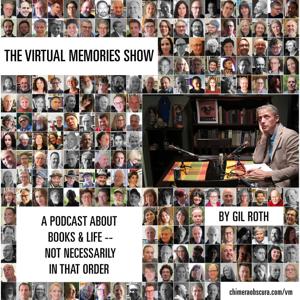


Singer-songwriter-producer Gary Clark is my super-special guest for episode #300! We talk about his career, from his '80s band Danny Wilson (and their all-time great single Mary's Prayer) to his songwriting for the wonderful movie Sing Street (and the great single Drive It Like You Stole It). We get into the twists-and-turns of his life in music, his transition from performer to producer, how he learned to write in another singer's voice, the furious social media messages from strangers about the fact that he doesn't sing anymore, the coincidence & blessing of getting tapped by John Carney to write music for Sing Street, how writing for musicals differs from pop songs, the ways the Infinite Jukebox changes how (young) people discover music and how he stays current, the time he avoided meeting one of his musical heroes, how a Danny Wilson reunion got derailed by Nanny McPhee, and much more! • More info at our site • Support The Virtual Memories Show via Patreon or Paypal
Comics scholar Bill Kartalopoulos joins the show to talk about editing the annual Best American Comics series. But first, nearly three dozen of the year's Virtual Memories Show guests tell us about the favorite books they read in 2018 and the books they hope to get to in 2019! Guests include Jerry Beck, Christopher Brown, Dave Calver, Roz Chast, Mark Dery, Michael Gerber, Cathy B Graham, Dean Haspiel, Steven Heller, Richard Kadrey, Paul Karasik, Ken Krimstein, Nora Krug, John Leland, Alberto Manguel, Hal Mayforth, Dave McKean, Mark Newgarden, Audrey Niffenegger, Jim Ottaviani, Robert Andrew Parker, Shachar Pinsker, Nathaniel Popkin, Chris Reynolds, Lance Richardson, JJ Sedelmaier, David Small, Willard Spiegelman, Levi Stahl, Lavie Tidhar, Mark Ulriksen, Irvin Ungar, and Henry Wessells! Check out their selections at our site! Support The Virtual Memories Show via Patreon or Paypal
In her new graphic memoir, All The Sad Songs (Retrofit Comics), Summer Pierre uses the mix-tapes of her 20s and 30s to tell us the story of her life, one wrong boyfriend, one cross-country drive, one Boston folk stage set at a time. We talk about the soundtracks to our lives, the memoir & comics influences that gave her permission to tackle her PTSD issues on the page, the discovery that she was making a 104-page comic instead of the 25-page one she set out to draw (or "getting used by the muse"), and how surprised she was that college students know what a mix-tape is. We also get into her artistic maturation out of the kamikaze-style of making comics, the Boston folk music scene she was in/around in her 20s, the somatic therapy that helped her deal with PTSD, the notion that mixes are self-portraits, and wanting to be her mother's biographer, but realizing she knew almost nothing about her mom's insane life. • More info at our site • Support The Virtual Memories Show via Patreon or Paypal
Jews have a long tradition with coffee (I can attest!). In A Rich Brew: How Cafés Created Modern Jewish Culture (NYU Press), Professor Shachar Pinsker explores the intersection of modernistic Hebrew literature and coffee. We get into the story of Jewish migration through Europe and into America and Israel, why coffeehouses were the silk road of secular Jewish creativity, the golden age of feuilletons, the semitic roots of coffee culture, the way A Rich Brew is about big cities as much as it is about coffeehouses, the importance of thirdspace to bridge the social and the private, and how Shachar narrowed the book down to 6 representative cities. We also get into how his Yeshiva education helped his secular literary studies, his night-and-day visits to Warsaw, and just how we define "modern Jewish culture"! • More info at our site • Support The Virtual Memories Show via Patreon or Paypal
Who starts a career at an age when most people are looking at retirement? Coming off a divorce and a three-decade hiatus from professional life, award-winning illustrator Cathy B. Graham is having a second bloom. We sat down to talk about painting, fashion illustration, and floral design, as captured in Second Bloom: Cathy Graham's Art of the Table (Vendome Press). We get into her artistic upbringing, her RISD education alongside Roz Chast & Dave Calver, the art of entertaining, her love of the Thorne Miniature Rooms and their influence on her life, her trepidation about returning to oil painting, the joy of Instagram, her New York and how she shifted from SoHo artist to Upper East Side culture maven. Most importantly, we talk about the regeneration and finding your new life. • More info at our site • Support The Virtual Memories Show via Patreon or Paypal
How did Angela Himsel make the transformation from rural Indiana and apocalyptic, fundamentalist Christianity to the Upper West Side of Manhattan and observant Judaism? Her new memoir, A River Could Be A Tree (Fig Tree Books) chronicles that process, bringing to life a story of family and discovery. I talk with the award-winning columnist about how she came to Judaism from the Worldwide Church of God, when she met Jews for the first time, what Israel means to her, and what she considers the weirdest aspect of Judaism. We get into the difference between seeing the world as the emanation of God and seeing it as the Devil's playground, her conversion to Philip Roth-ism, the beautiful family secret she uncovered in the process of writing her book, the decision to include her terrible teenage poetry in the memoir, why God may need therapy, and the Rapture-based prank she and her siblings still pull on each other. • More info at our site • Support The Virtual Memories Show via Patreon or Paypal
For his first biography, Mark Dery picked a doozy of a subject: the great, creepy, droll, mysterious artist and writer Edward Gorey. We talk about Mark's brand-new book, Born to Be Posthumous: The Eccentric Life and Mysterious Genius of Edward Gorey (Little, Brown), his one in-person encounter with Gorey, how Gorey's sexuality did and didn't inform his work, and the challenge of writing the biography of an artist whose work always invited the reader to fill in the gaps. We get into how Gotham Book Mart made a cottage industry out of Gorey, the long-range impact of Gorey on America's pop culture, the queerness of children's literature beginning in the '50s, the influence of Asian art and philosophy on Gorey's work, his devotion to ballet and Balanchine, why the epic catalog makes for a great biographical tool, and a lot more, like Mark's lifelong one-sided relationship with Patti Smith! • More info at our site • Support The Virtual Memories Show via Patreon or Paypal
The American Bystander magazine is a print-only humor magazine, and while that may seem like an anachronism in the internet era, editor Michael Gerber joins the show to talk about why it's the perfect vehicle for humor. I've been a fan of the Bystander since its (re-)inception in 2016, and it was a delight to talk with Michael about the magazine's history, his background as "the world's only expert on print humor magazines", the decision to crowdfund the magazine and how it beats the days when "paper bag money" was necessary to get a magazine on the newsstand. We get into how he keeps the rhythm of the magazine flowing between prose pieces, gag panels, strips and other pieces, as well as the contributors who passed away before he could get them into The American Bystander, the ones he's vowed to get, and the challenges of getting diverse voices in the magazine. We also discuss his vision for America, the politicization of history, the experience of reading National Lampoon when he was 4 years old, and finding his life's purpose in trying to start a cult. (Oh, and SUBSCRIBE TO THE BYSTANDER!) • More info at our site • Support The Virtual Memories Show via Patreon or Paypal
Legendary cartoonist Eddie Campbell joins the show to talk about his first (sorta) prose book, The Goat Getters: Jack Johnson, the Fight of the Century, and How a Bunch of Raucous Cartoonists Reinvented Comics! We get into this forgotten piece of comics history, the challenge of offensive ethnic stereotypes in old cartoons, cartoonists' blind spot toward sports, the other pieces of cartooning history he wants to chronicle, and the amazing, unsung career of Kate Carew. We also talk about the bookshelf of Eddie's comics work, what took him away from autobiography, the challenge of coloring From Hell (and succumbing to the temptation to redraw some of it), his new collaboration with his wife, Audrey Niffenegger, the lessons of age, the joy of telling shaggy-dog stories, and what it's like to be known as "Hayley Campbell's dad". • More info at our site • Support The Virtual Memories Show via Patreon or Paypal
With a Caldecott Award-winning career in writing and illustrating kids books already under his belt, David Small made a huge splash in the comics field with his 2009 memoir Stitches. Now he's back with the graphic novel Home After Dark (Liveright) and we got together at SPX to talk about how those careers mesh, how he got his start in illustration, how he approached his new book as fiction, and more. We get into his artistic, literary and cinematic influences, the struggles of studying representational art in the '60s and '70s, and the incredibly wrong geographic decision about a teaching gig that led him to the love of his life. We also discuss the elements of a good kids book and why so much of today's market turns him off, the moment in Paris when he got over his fear of making comics, the memory palace he reverse-engineered to start his memoir, and the evolution Home After Dark took over 12 drafts (!) to tell the story David knew he had to tell. • More info at our site • Support The Virtual Memories Show via Patreon or Paypal
From the publisher's feed

37,857 Listeners

314 Listeners

5,523 Listeners

2 Listeners
583 Listeners

133 Listeners

112,026 Listeners
553 Listeners

16,063 Listeners

575 Listeners
1,112 Listeners
10,568 Listeners

367 Listeners

610 Listeners
184 Listeners