
Sign up to save your podcasts
Or

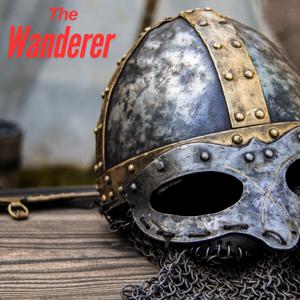


The most famous Old English battle poem, The Battle of Maldon, commemorates a very different sort of conflict: a battle that took place in 991 during which the ealdorman of Essex, Byrhtnoth, allowed his ofermod (‘pride’ or ‘overconfidence’) to get the better of him. Byrhtnoth, the leader of his loyal veterans and local Anglo-Saxon troops, permitted a raiding Viking army to take up a position on land in preparation for battle. This resulted in both the heroic death of Byrhtnoth, and ultimately a valiant defeat for the English. Save for a few deserters, almost all of Byrthnoth’s men face death by his side, delivering a series of rousing speeches. The elderly warrior Byrhtwold faces his death by saying:
The mind must be the harder, the heart the keener
Muspelheim is a realm in Norse and Germanic mythology and is one of the Nine Worlds that make up the universe. It is located in the south and is often described as the world of fire. The name Muspelheim comes from the Old Norse words "mus" meaning "fire" and "pel" meaning "world".
In Norse and germanic mythology, Muspelheim is the land of the fire giants and was created by the primordial being, Surtr, who was said to have a flaming sword that he used to ignite the world. The realm is inhabited by fire giants, who were known for their ferocity and violence. They were often depicted as enemies of the gods, particularly during the final battle of Ragnarok, where they were said to play a major role in the destruction of the world.
Anglo-Saxon literature refers to the written works produced in England between the 5th and 11th centuries in the Old English language. It is a rich and diverse body of work that provides valuable insight into the culture, beliefs, and values of the Anglo-Saxons.
There are just a few of the many books that are available for those interested in Anglo-Saxon literature and culture. Whether you are a student, researcher, or simply a reader, there is a wealth of information available to help you explore and understand the rich heritage of the Anglo-Saxons.
In Anglo-Saxon mythology, Valhalla is a majestic, enormous hall located in Asgard, one of the Nine Realms. It is ruled over by the god Woden, and is the destination of the souls of warriors who die in battle, known as einherjar.
The einherjar is chosen by Woden and his valkyries, who are female figures who decide who shall live and who shall die in battle. The einherjar train in Valhalla during the day, fighting one another in preparation for Ragnarok, the end of the world when they will fight alongside the gods in the final battle against the giants and monsters.
Each evening, the einherjar dine in Valhalla on a great feast provided by the boar Sæhrímnir, which is cooked and served by the cook Andhrímnir, and then the einherjar return to their fighting, as the feast is consumed again each evening. They drink from the horn filled with mead which will never empty.
Valhalla is also depicted as being a very beautiful and grand hall, with a roof made of shields, a floor of polished spear points, and walls adorned with the banners of fallen warriors. Woden himself sits upon a throne called Hildskjalf, from which he can look out over the nine realms, and the warriors in Valhalla are attended to by a number of other deities and beings.
Valhalla is considered the most heroic and honourable death, where brave warriors can fight and feast every day, enjoying immortality and glory. It is a powerful symbol of the warrior culture of the ancient Anglo Saxon people and a representation of the importance of warfare in their society.
Founded by nut the great, the Danish ruler of England in the early 11th century, the Huscarls were modelled upon the Joms Vikings although new research has found that the Joms Vikings weren't as disciplined as was thought, and the Saga was probably embellished.
Cnut established them as a permanent body of professional warriors, They were 3000 strong. They attended the king and were maintained in 3 corps: two stationed around London, the third in the north near York. They were further divided into crews to man the 40 longships maintained from Canute onward, as a royal Navy. Thus the Huscarls formed a nucleus for any English national force, both on land and sea.
This was maintained by a special tax, on each “hide” of land. In later days, individual Huscarls were granted land of their own, which they lived upon and oversaw. Feudalism was spreading to England from the continent; and had the Norman Conquest not interrupted their evolution, in time the Huscarls would likely have assumed most aspects of the feudal chivalry found elsewhere; becoming England’s version of the Feudal knight.
Apart from high policy and legislation, the business of government lay with the local authority, and the local authority was the local assembly of freemen. The local unit was the tun or township, the village, the group of households whose members occupied the surrounding land and settled such of their affairs - as a required settlement in the town's meeting.
The townships were grouped in hundreds, a term which probably originated in days when the normal village contained ten households or thereabouts, and ten villages or thereabouts, making up approximately a hundred households, were grouped together for military purposes and for the common settlement of their affairs. Apart from high policy and legislation, the business of government lay with the local authority, and the local authority was the local assembly of freemen. The local unit was the tun or township, the village, the group of households whose members occupied the surrounding land and settled such of their affairs - as a required settlement in the town's meeting.
The townships were grouped in hundreds, a term which probably originated in days when the normal village contained ten households or thereabouts, and ten villages or thereabouts, making up approximately a hundred households, were grouped together for military purposes and for the common settlement of their affairs.
Administering justice
At a later stage, when the number of households in the hundred had very much increased, a kind of representation took the place of the general assembly of all freemen. The principal landholders were expected to attend and from each township the parish priest, the reeve, and the four "best men," as well as those who were personally concerned in any questions arising.
Judges and reeves
On the other hand, it is also likely, though not certain, that the prestige attaching to the person of the reeve of the court gave him a practical authority, which gradually made him in effect a superior magistrate; and that out of the jurisdiction thus acquired by him grew the jurisdiction of the lord of the manor.
Saxnot also appears in the Old Saxon Baptismal Vow of the 9th century alongside Woden and Thunear.
Of all the strange Norse tales that survived, the theft of Mjolnir Thor's hammer must be the funniest and somehow awkward. Many questions might come to mind, like who dared to steal Mjolnir or how Thor retrieved Mjolnir back. This blog post on BaviPower would retell the story in the most concise way.
One day, Thor woke up from his bed and found out that there was something wrong in the cosmos, something that would definitely affect the destiny of all beings. His Mjolnir hammer was missing. He must have dug up the entirety of Asgard to search for Mjolnir but he could not see any trace of it. Thor quickly assumed that only Loki dared to think of this prank and off he went to find Loki. However, when Thor angrily asked Loki about Mjolnir, Loki insisted he didn't know where Thor put Mjolnir before, let alone steal it. Actually, Loki knew who the hammer thief was but he didn't constantly tell Thor because he got some plans.
The Fortification of Asgard
A certain smith arrived at Asgard one day and offered to build the gods a high wall around their home to protect them from any who might wish them ill. The smith (certainly a giant himself) said he could complete his work in a mere three seasons, but demanded a steep compensation: the hand of the goddess Freya in marriage, as well as the sun and moon.
The gods took counsel together. Freya was adamantly against the giant’s terms from the start. But Loki suggested that the builder should obtain that which he desired, although only if he could complete his work in a single winter, with no aid from anyone but his horse. After much deliberation, the gods consented to Loki’s plan. Of course, the gods had no intention of actually giving Freya away, nor the sun or the moon; they thought that the task they demanded was impossible.
Ragnar Lodbrok(Old Norse Ragnarr Loðbrók, also anglicized as Ragnar Lodbrok), whose epithet means 'Hairy-breeches' or 'Shaggy-breeches', was a legendary Viking king, with Old Norse sagas, poetry, and medieval Latin sources telling of his accomplishments in Scandinavia, Francia, and Anglo-Saxon England during the 9th century CE. Commonly occurring elements in these stories are his marriages to Thora and Aslaug, as well as his fathering of many famous sons including Ivar the boneless, Bjorn Ironside Sigurd Snake-in-the-Eye, Hvitserk, and Ubba. A possible third wife, Lagether, only appears in the 13th-century CE Gesta Danorum, a work on Danish history, as does a fourth, Swanloga.
Perhaps the most iconic titbits of his legend are Ragnar's successful fight with a dragon – for which he fashioned his defining shaggy breeches as protection – and his slightly overconfident invasion of England with just two ships, which ended with him being captured by King Ælla of Northumbria (r. c. 866 CE), who had him killed by throwing him into a snake-pit. Whereas Ragnar's own historicity is highly disputed, some of his alleged sons are often thought to have some basis in actual historical figures.
The pub name “The Green Man,” then, seems to have originated in the 17th century and to have referred in its earliest forms to the leaf-covered Green Man common in 16th-century pageantry. As we've seen, Lady Raglan was drawing on this tradition when she named the foliate head “Green Man.” Glance upwards as you approach or enter many of Britain’s great Cathedrals and churches, and it is more than likely you will catch sight of the Green Man gazing looking down at you.
But who is this strange green figure, surrounded by foliage, often with leaves spilling forth from his mouth?
The name ‘Green Man’ was first used by Lady Raglan in March 1939 in an article she wrote for the ‘Folklore’ journal; before this, they had been known just as ‘foliate heads’ and no one had paid them any particular attention. Pre-Christian pagan traditions and superstitions, particularly those related to nature and tree Worship, were still influential in the early Middle Ages. It is therefore perhaps not surprising that the Green Man seems to appear most often in places where there are stretches of ancient woodland, for example in Devon and Somerset and on the edges of the forest areas of Yorkshire and the Midlands.
Lady Raglan suggested that in antiquity, the Green Man was ‘the central figure in the May Day celebrations throughout Northern and Central Europe’. As the Green Man is also portrayed with acorns and hawthorn leaves, symbols of fertility in medieval times, this would seem to reinforce the association with spring.
Related figures such as Jack in the Green and Green George appear much later in our folklore. The earliest record of a Jack in the Green appears in The Morning Chronicle and London Advertiser in 1775.
Woden, the one-eyed god, sits upon his throne in Valhalla, feeding his wolves Geri and Freki by hand. Shields and mail coats fill the warrior-haunted room. Other wolves roam the hall, as well. Only the most valorous warriors have been invited to the feast. Odin welcomes them all. For this is how he will build his great army for Ragnorok – the end of days.
Loki’s son Fenrir, the great wolf, is bound to the World Tree Yggdrasil. To stop him from consuming the world and the heavens, the Aesir tricked the wolf into being chained to the tree. Fenrir was cunning, though, and he suspected trickery. So the god Tyr placed his sword hand inside of the wolf’s mouth as a gesture of goodwill. It is said the gods laughed when the wolf was bound – all except Tyr: he lost his hand. This is why your wrist is called the “wolf’s joint.”
Two more wolves race across the sky, pursuing the chariots of the Sun and the Moon. Their names are Skoll and Hati Hróðvitnisson. One day, the Sun will be captured and will be swallowed whole. The Moon will be consumed as well. The world will be thrust into darkness and ice will cover everything. Fenrir will break free from his bindings, the World Serpent will rise from the depths of the sea, and the Aesir and humans will be destroyed… all but a very few. This is Ragnorok. Wolves will cause the destruction of all there is.
From the publisher's feed

78,360 Listeners

393 Listeners