
Sign up to save your podcasts
Or



Based on Podcast App listening data
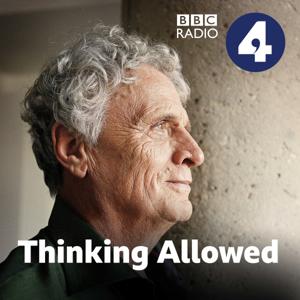
Law and Order: the legacy - 40 years ago, GF Newman's quartet of plays, Law & Order, provoked calls from MPs for the author to be arrested for sedition and the summoning of the director-general of the BBC to the Home Office to explain himself. The dramas explored the role of the Metropolitan Police, the criminal, the solicitor and the prison system around one central story. They provided a savage and uncompromising assessment of the criminal justice system, one in which corruption and stitch ups were common. Laurie Taylor considers the impact of those plays and the extent to which they created a public and political debate which produced positive reform. Four decades later, have we any cause for complacency? He's joined by the writer, GF Newman, Tim Newburn, Professor of Criminology at the LSE and Charlotte Brunsden, Professor of Film & Television Studies at the University of Warwick.
Sociological discussion programme. May 2018 sees the 200th anniversary of Karl Marx's birth. Laurie Taylor explores the philosopher's ideas and legacy.
The Internet and Democracy: Laurie Taylor analyses the social and political consequences of our digitised world. In light of recent data breach scandals around companies like Facebook and Cambridge Analytica, what does that mean for democracy? Why has the Internet failed to set us free? He's joined by Jamie Bartlett, Director of the Centre for the Analysis of Social Media for Demos, in conjunction with The University of Sussex; Monica Horten, Visiting Fellow at the London School of Economics & Political Science and Will Davies, Reader in Political Economy at Goldsmiths College.
Universal Basic Income: Laurie Taylor asks if it's the answer to an increasingly precarious job landscape. Could it bring greater financial freedom for women, tackle the issue of unpaid but essential work, cut poverty and promote greater choice? Or is it a dead-end utopian ideal that distracts from more practical and cost-effective solutions? He's joined by Stewart Lansley, Visiting Fellow at the School of Policy Studies, University of Bristol and editor of a new book which shares research and insights from a variety of nations including India and Finland; John Rentoul, Visiting Professor at King's College, London and Ursula Huws, Professor of Labour and Globalisation at the University of Hertfordshire Business School
Producer: Jayne Egerton.
The menswear revolution: Laurie Taylor explores the transformation in men's clothing with Jay McCauley Bowstead, lecturer in Cultural and Historical Studies at London College of Fashion. Also taking part is John Harvey, Life Fellow at the University of Cambridge, and author of a book charting the history of men's dress from the toga to the suit. They're joined by Julia Twigg, Professor of Social Policy and Sociology at the University of Kent, who talks about her research on older men and fashion.
Producer: Jayne Egerton.
The winner of the 2018 BSA/Thinking Allowed Ethnography award. Laurie Taylor talks to Anna Lora-Wainwright, Associate Professor in the Human Geography of China at the University of Oxford, and author of 'Resigned Activism: Living with Pollution in Rural China' . Her study revealed the health consequences of drinking tainted water and breathing visibly dirty air in villages effected by phosphorous mining & fertiliser production, lead and zinc mining and electronic waste production. Residents suffered a range of ailments, from arthritis to nosebleeds, in areas with a high incidence of cancer. Her extensive fieldwork found that villagers often felt powerless to challenge the 'slow violence' and human costs of rapid industrialisation - their activism was tempered by resignation.
Producer: Jayne Egerton.
This year's winning entries explored complex lives and worlds. How did Dalits, member of India's lowest caste, shake the political establishment in the South Indian state of Tamil Nadu? What's the impact on the health of people living in a heavily polluted area in rural China? How do Liberian refugees earn a living in a refugee camp in Ghana? Laurie discusses this year's shortlist with two of his fellow judges - Hilary Pilkington, winner of the 2017 award and Professor of Sociology at the University of Manchester and Nayanika Mookherjee, shortlisted for the 2015 award and Associate Professor (Reader) in Socio-Cultural Anthropology at Durham University.
Producer: Jayne Egerton.
'Mixed-race' is the fastest growing ethnic group in the UK. But how do multiracial parents identify their own children? When is a mixed-race heritage passed down to the next generation and when is it not? Miri Song, Professor of Sociology at the University of Kent tackles these questions in her new book, Multiracial Parents: Mixed Families, Generational Change, and the Future of Race (2017).
Joining the discussion is socio-linguist Marta Wilczek-Watson whose work on trans-national relationships finds there has traditionally been too great a focus on the apparent difficulties faced by couples who come from different countries.
And we hear from one of those tasked with recording the UK's shifting demographics in the British Census, Pete Benton, Director of Population and Public Policy Operations at the Office of National Statistics.
'Hook up' culture - Laurie explores a new sexual culture on American campuses and asks if it has a British counterpart. Casual sex in higher education has a long history but Lisa Wade, Professor of Sociology at Occidental College Los Angeles, suggests a significant shift in the culture - one which benefits some students at the expense of others. They're joined by Zoe Strimpel, a researcher and historian from Sussex University, who has analysed the changing nature of dating.
Sacrifice - Laurie Taylor explores the many meanings of the term. Terry Eagleton, Distinguished Professor of Literature at the University of Lancaster, argues that sacrifice has a bad press in the modern age. The notion of giving anything up fails to appeal in a world devoted to self-fulfilment. But is there more to sacrifice than burnt offerings and self-denial? Can it ever be radical? Also, Chetan Bhatt, Director for the Centre on Human Rights at the LSE, examines the idea of sacrifice as invoked by Salafi-Jihadist suicide bombers. Does the inherently de secular nature of sacrifice inevitably pose the risk of promoting political violence?
From the publisher's feed
New research on how society works

7,606 Listeners

371 Listeners

877 Listeners

1,044 Listeners

5,478 Listeners

1,793 Listeners

1,881 Listeners
863 Listeners
725 Listeners

297 Listeners

1,821 Listeners

1,034 Listeners

2,100 Listeners

1,902 Listeners

489 Listeners

398 Listeners

69 Listeners

835 Listeners

162 Listeners

85 Listeners

62 Listeners

3,217 Listeners

710 Listeners

1,004 Listeners