
Sign up to save your podcasts
Or

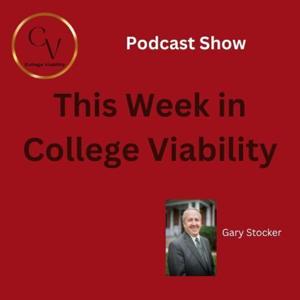


In this week's This Week in College Viability News and Commentary, I examine the growing disconnect between what colleges announce publicly and what their financial data actually reveal. I look at the closures and financial fallout at Wells, Limestone, and Hampshire colleges, accreditation concerns at American International College, and faculty and staff reductions at Stockton, Bowie State, and the University of Utah.
I also challenge the enrollment headlines coming from Delaware State, Cleveland State, and Alverno College, where impressive percentages can obscure declining student populations, increasing tuition discounts, and questions about actual student revenue. My message is that enrollment growth does not necessarily mean financial improvement, and families deserve to understand the numbers behind the headlines.
I close with a broader argument that the financial challenges facing higher education are no longer simply institutional management problems. They are increasingly consumer protection problems.
Colleges face declining demand, rising costs, federal policy uncertainty, and growing pressure to consolidate, yet students and families often receive little meaningful warning about institutional financial distress.
I highlight Massachusetts' new financial disclosure requirements as a model other states should consider, particularly its requirement for public warnings before families make enrollment commitments. I argue that colleges should be required to demonstrate their ability to meet financial obligations well before students commit their time and money.
The bottom line is simple: families wouldn't buy a house without an inspection, and they shouldn't make a major college investment without independently evaluating the institution's financial health and long-term viability.
In this episode of This Week in College Viability News and Commentary, Gary Stocker examines several signs of growing financial pressure across higher education. He discusses additional faculty cuts at Bowie State despite substantial unrestricted gifts, the University of Utah’s proposed “modernization” effort that could eliminate hundreds of staff positions, and Alverno College’s attempt to rebound after years of enrollment declines, operating losses, and shrinking student revenue.
He also questions the rapid expansion of direct admissions programs, arguing that they may be another sign of colleges becoming increasingly desperate to attract students in a declining and highly competitive market. Stocker also warns that financially stressed colleges increasingly treating endowments like “piggy banks” could become another important warning sign for students, families, and the public.
Stocker concludes with an extended discussion of the troubled Antioch-Otterbein affiliation and argues that one unsuccessful merger should not be used as evidence that college consolidation cannot work. Instead, he believes the problems demonstrate the importance of clearly defined governance, financial responsibility, realistic assumptions, transparency, and sufficient scale.
Rather than relying on traditional two-college “mom-and-pop” mergers, Stocker argues that the future may require much larger combinations—potentially 10 or more institutions operating under a holding-company model. With too many colleges competing for too few students, he predicts that closures, mergers, and consolidation are inevitable and that institutions willing to move early may have the best opportunity to help design the next higher education business model.
Show notes:
Bowie State University to Lay Off 20 Faculty Members
University of Utah announces “modernization effort,” may lay off hundreds of staff after input from national consulting agencies
Alverno shores up rebound after major recruitment restructuring
State program offers higher education slot to every NC senior
Endowments Are Financial Pillars, Not Piggy Banks
Inside the rift: Why the Antioch-Otterbein coalition is unraveling
In this week’s podcast, I challenge the value of college rankings and the way institutions use small movements in those rankings as marketing victories. I argue that families should pay far more attention to measurable indicators such as financial health, graduation rates, enrollment trends, student revenue, and endowment strength.
I also look at financial pressures across higher education, including planned layoffs at Commonwealth University in Pennsylvania, possible campus consolidation in Minnesota, enrollment challenges at Baylor, and enrollment claims at Bradley, Missouri State, and UMKC. My recurring question is simple: enrollment growth sounds good, but how much tuition revenue is actually being generated to produce that growth?
I also examine direct admissions in North Carolina, question whether college accreditors can truly be considered independent when their revenue comes from the institutions they accredit and remind families that campus tours are ultimately sales events.
My message throughout the show is that families need to look beyond rankings, marketing, beautiful campuses, and enrollment announcements and conduct their own due diligence. I’m not trying to predict which colleges will close; I want families to have independent data that helps them decide how much financial and institutional risk they are willing to accept before committing to a college.
Show notes:
College Viability Inspection Reports
My College Decision Lens Free sign up
Commonwealth University plans to lay off up to 175 staff and faculty at Lock Haven, Mansfield and Bloomsburg campuses
Minnesota State may close campuses, merge schools in effort to 'right-size'
Baylor’s undergraduate enrollment level falls to lowest level since 2014
In this week’s podcast, I focus on what I see as the larger problem facing higher education: we spend too much time trying to fix individual colleges—the trees—without paying enough attention to what the forest is telling us.
There may simply be too many colleges chasing too few students and too little net tuition revenue. Not every college can grow enrollment, launch the same new programs, or discount its way to financial stability. I argue that we need to start asking harder questions about how much higher education capacity the market actually needs and which institutions have sustainable models, which need different operating structures, which should consolidate, and which may no longer be viable as independent organizations.
I also look at new student survey data showing how strongly financial aid and career outcomes influence college decisions, and I challenge enrollment announcements that celebrate growth without providing the broader context of graduation rates, financial health, and actual student outcomes.
I also examine what I see as several examples of the gap between higher education marketing and financial reality, including Southeastern Louisiana University’s enrollment growth alongside low four-year graduation rates, increased financial aid and discounting at the University of New Hampshire, and the financial implications of the growing movement toward three-year bachelor’s degrees.
I question whether accreditors are doing enough to warn students and families about financially troubled or poor-performing institutions and discuss concerns about enrollment growth at colleges with weak outcomes.
My conclusion is that higher education cannot indefinitely fight market forces. Until the number and capacity of colleges become better aligned with the number of students willing and able to pay for college, financial pressure will continue. That makes independent due diligence increasingly important, particularly for students and families who need to understand a college’s financial health, graduation outcomes, academic strength, and long-term viability before making their decision.
Show notes and links:
MyCollegeViabilty.com
MyCollegeDecisionLens
2026 College Majors Completion app
New Ellucian Survey Finds 56% of College Students Are Employed Full-Time, 89% Would Change Schools for More Scholarship Aid
Southeastern Louisiana University increases enrollment in fall semester
NH’s Changing College Landscape
UNH increases financial aid, awarding record $40 million to incoming class
The Accreditation Fight Over Who Controls Higher Education
Are Low-Quality Colleges Making A Comeback?
In this episode, I focus on a growing disconnect in higher education: colleges are working harder to increase enrollment, but enrollment alone does not equal student success or financial strength.
I examine how colleges remove admissions barriers, promote short-term enrollment increases, and heavily discount tuition to fill seats—often without discussing graduation rates, long-term enrollment trends, or the actual revenue those students generate. Using examples including the University of Arkansas Little Rock and Quincy University,
Families need to look beyond the positive headlines and examine the financial and student-outcome data colleges are less likely to promote.
I also explain why families should investigate how many students actually complete the majors colleges advertise and why a scholarship should often be viewed as a price discount, not a prize.
My central message is that access without success is not success and enrollment is a statistic; revenue is the reality. Families should look at FTE enrollment, traditional undergraduate trends, net tuition revenue, tuition discounting, graduation rates, and major completions to determine whether a college can realistically deliver the experience it is promising for the next four years
Colleges are very good at telling families what they want them to know. This week, I look at what they may not be telling you.
Record enrollment doesn't necessarily mean financial strength if a college had to heavily discount tuition to fill its classrooms. A new affordability program isn't automatically good news if the institution is already losing money.
And when a college doesn't announce its fall enrollment numbers while competitors are celebrating theirs, families should start asking questions. My message throughout the show is simple: don't confuse college marketing with college financial health.
I also examine the growing flight toward larger, selective, and recognizable college brands, the continued prevalence of test-optional admissions, and the expansion of direct admissions.
I compare unsolicited college admission offers to the old credit-card solicitation model: colleges increasingly approach students who never applied and invite them to spend money at their institution.
My larger point is that a college education can have tremendous value, but families need to look beyond scholarships, rankings, enrollment announcements, and marketing claims. They should investigate financial health, graduation rates, enrollment trends, and institutional stability before committing—which is exactly the purpose behind the College Viability Inspection Report, My College Decision Lens, and the Reverse FAFSA concept.
Show notes and links:
College Viability Inspection Report
My College Decision Lens
ISU experiences nearly 2% decline in enrollment for fall 2026
SIU enrollment sees ‘historic’ increase, university says
What demographic cliff? Colleges post enrollment highs as affordability pays off
Best Colleges for Rural America
Everyone talks about the plight of small, regional colleges on the brink of closure - but who's actually growing in this challenging market?
The Ivies Brought Back Test Scores, but 90% of Colleges Still Don’t Require Them
This episode of This Week in College Viability examines a corner of higher education that may serve as a warning sign for broader problems across the industry: naturopathic medicine, acupuncture, and other alternative and allied-health professional programs. Gary Stocker is joined by Ryan Hofer and Bex Groebner to discuss how new federal graduate loan limits, credential inflation, weak graduate earnings, accreditation practices, and declining enrollment could fundamentally reshape these programs.
Hofer and Groebner also challenge the credential inflation that has pushed some professions toward expensive graduate and doctoral degrees without comparable increases in earnings. Declining enrollment, borrowing restrictions, demographic pressures, and greater scrutiny of return on investment could force specialized colleges to lower tuition, redesign programs, consolidate, or close.
The broader issue is student and consumer transparency. Hofer and Groebner argue that accreditors, licensing boards, and colleges need to provide families with clearer information about graduate earnings, student debt, employment outcomes, and institutional financial health. Prospective students should not accept vague claims such as “our graduates do very well”; they should demand the data behind those statements and investigate a college before committing their time and money.
The episode ultimately raises a question that extends far beyond alternative medicine: When high tuition, heavy borrowing, weak earnings, credential inflation, and declining enrollment collide, does the degree still make financial sense for the student buying it?
Ryan's Substack: https://debtbynaturalcauses.substack.com/
Bex's Substack: https://needlingtogettothepoint.substack.com/
"Some Graduate Schools Never Pay Off"
https://www.theheagroup.com/blog/grad-schools-debt
In this episode of This Week in College Viability, I take on what I call college “spin season”—the annual flood of upbeat enrollment announcements, welcome-back videos, and optimistic press releases that arrive as a new academic year begins.
I don't object to colleges celebrating their students or their successes. What concerns me is what those announcements sometimes leave out.
While some institutions are celebrating new students, other college leaders may be privately confronting serious questions about whether they have enough financial resources to remain viable. I also challenge the college admissions conversation for largely ignoring financial health. Families hear plenty about campus fit, admissions, scholarships, and student experiences, but rarely are they encouraged to investigate whether a college has the financial capacity to deliver what it is promising.
I put several recent enrollment announcements through that financial-health lens. At Avila University, for example, I point out that enrollment and student revenues have increased, but expenses have grown considerably faster than revenues and the institution has accumulated substantial operating losses.
I also look behind positive announcements from Westminster College in Pennsylvania and York College of Pennsylvania, showing why a single year's incoming-class announcement needs to be compared with longer-term enrollment and financial trends. I then review College Viability Inspection Report results for institutions including UA Little Rock, Wabash College, Simpson University, Beloit College, Spring Hill College, Dalton State, and Rider University. My point isn't that every positive college announcement is misleading. It's that families need an independent source of information that provides the other side of the story.
Show notes:
Take a look at the College Viability Inspection Reports for theses colleges;
Show notes College Viability Inspection Report links to many of these stories
UA Little Rock Red Flags: 5 of 9 2017-2024 FTE down 28%
https://inspection.mycollegeviability.com/colleges/university-of-arkansas-at-little-rock-ar/
Wabash College IN – needs to get expenses under control 9 of 9 GREEN
https://inspection.mycollegeviability.com/colleges/wabash-college-in/
Simpson University (CA) Not reporting Pell equity gap data 5 of 8 Red flags
https://inspection.mycollegeviability.com/colleges/simpson-university-ca/
Beloit College WI 6 of 9 GREEN
https://inspection.mycollegeviability.com/colleges/beloit-college-wi/
Spring Hill College (AL) 7 / 9 RED flags PDS College Financial Compass: 13/15 key measures flagged
https://inspection.mycollegeviability.com/colleges/spring-hill-college-al/
Dalton State (GA) 4YGR averages < 10%
https://inspection.mycollegeviability.com/colleges/dalton-state-college-ga/
Rider U NJ 5 of 9 red flags
https://inspection.mycollegeviability.com/colleges/rider-university-nj/
In this week's episode of This Week in College Viability News and Commentary, I start with a personal observation—watching parents take their children to the first day of elementary school. It reminded me how much time families spend preparing children for college, but how little time we spend asking whether the college is ready for our children.
That question frames this week's stories, including degree cuts at the University of Nebraska, reduced Washington State financial aid for students attending private colleges, budget reallocations at Clemson University, and William Jewell College's declaration that it has exited financial exigency. At William Jewell, I compare that optimistic announcement with independent financial data that continues to raise concerns. My message to families is straightforward: inspect before you invest, trust verified data, compare colleges, judge outcomes, ask informed questions, demand transparency, and evaluate today's college—not yesterday's reputation.
I also examine the University of Tulsa's decision to cut its published tuition by more than half, Saint Michael's College receiving court approval to access restricted endowment funds, concerns about students arriving at college academically unprepared, and the federal government's growing emphasis on whether college programs actually produce adequate earnings for graduates.
Together, these stories point to the same fundamental pressure: colleges need revenue while families, governments, and employers are increasingly demanding evidence of value. I believe families should evaluate not only whether a degree will deliver an acceptable return, but whether the institution delivering that degree is financially viable enough to fulfill its promises. Higher education still offers tremendous value to millions of students, but the economics are changing. There are too many colleges competing for too few academically prepared and financially capable students, and that imbalance will continue to drive program cuts, restructuring, closures, mergers, and consolidation.
In the August 10th episode, I continue to examine the financial health of higher education and argue that the warning signs facing many colleges are becoming impossible to ignore. I discuss layoffs and budget cuts at institutions including Minnesota State Mankato, St. John's University, Illinois Institute of Technology, St. Louis University, Temple University, Harvard University, and others, pointing out that these announcements all share a common theme: financial pressure.
I challenge the way colleges and the media celebrate enrollment gains without discussing the far more important metric of net tuition revenue, arguing that enrollment alone does not pay the bills.
I also note the continued use of generic institutional messaging and strategic plans that sound nearly identical from one campus to the next, reinforcing my belief that too many colleges have become commodities competing for a shrinking pool of students.
I also explore several broader trends reshaping higher education. I compare direct admissions programs—where colleges admit students who never applied—to unsolicited credit card offers, arguing that they are primarily marketing tools designed to fill enrollment gaps.
I revisit Howard University, defending its long-term financial strength despite recent enrollment management mistakes, and explain why its employee buyout program appears to be a proactive financial decision rather than a sign of institutional distress.
Finally, I encourage students and families to use my upcoming My College Decision Lens to evaluate colleges based on independent financial data rather than marketing claims, because I believe better information leads to better college decisions.
From the publisher's feed

90,954 Listeners

78,360 Listeners

31,948 Listeners

38,735 Listeners

8,755 Listeners

2,814 Listeners

4,343 Listeners
5,437 Listeners

111,875 Listeners

56,420 Listeners

19,137 Listeners

369 Listeners
142 Listeners

5,550 Listeners

15,919 Listeners