
Sign up to save your podcasts
Or

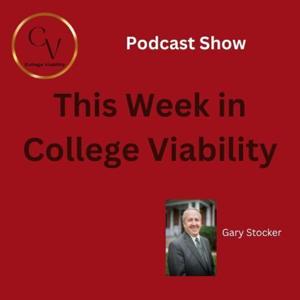


Many thanks to the increasing number of folks listening to and downloading the podcast. I am grateful.
Here are the stories and commentary for the final 2023 'This Week in College Viability (TWICV)' podcast.
1. Public flagships are both booming and flailing
2. Buch of stuff on more small college struggles
3. MSU BOT pledges to not interfere with new president. . . Yes, and Santa comes down all of our chimneys in one night.
4. A story on college facilities: What are the risks of a catastrophe?
5. Pets on campus at Ferris state
6. Young Workers Still Benefit from a College Degree
Why do I do this podcast? There is no joy in chronicling a crashing industry. Yet, there remain millions of students in colleges and there always will be. It is those colleges whose last dollar is circling the financial drain that are hurting this nation and too many of its students.
Higher education will continue with a smaller number of colleges and a smaller number of degrees and majors.
My role is to lovingly point out the business and economic dilemma that higher education faces. Do I do it with sarcasm and ridicule. Guilty. I believe that my counter-perspective is having an impact on the market. Students and parents are becoming more aware of the risks of choosing financially-challenged colleges.
I am right that there will be massive consolidation. I just don’t know what that time frame will be.
Show note story links:
The Latest Program and Job Cuts from IHE
Most Public Flagships Are Booming. Why Are a Handful Flailing?
As Manhattan College Restructures, Tenured-Faculty Jobs Hang in the Balance
Columbia College adjunct faculty strike leaves students in limbo
With Small Schools Struggling, Notre Dame College's Future in Flux
MSU board pledges to not interfere in new president’s administration
State of Facilities in Higher Education (2023)
What does the future hold for Northeast Ohio's small private colleges and universities?
Loras College: ENDURING VALUES / VIBRANT VISION Campaign
Ferris State University to allow students to live with pets on campus
Don’t Believe the Doubters: Young Workers Still Benefit from a College Degree
The College Viability Manifesto
2023 College Viability Product links
Parent's College Viability app
2023 Faculty & Staff College Viability app - Essentials
2023 College Viability Suite for Private and Public Colleges
2023 Executive Analysis College Viability app
Click here to get our 'Uh Oh' College podcasts sent to your mailbox.
College Viability YouTube Channel
College Viability Podcast channel
This Week In College Viability (TWICV) where we look out for the best interests of faculty, staff, students, their families and others in higher education.
The December 18th podcast includes:
Show Note Links:
Methodist University ends 4 majors, lays off 30 faculty, staff to cut costs
'Not an easy process': Bradley University announces final decisions on program cuts
When a college abruptly closes, what happens to its students?
Why Higher Ed Needs to Be Disrupted
Purchase: Whatever it is, I don't like it. by Brian Rosenberg
Nearly half of companies say they plan to eliminate bachelor’s degree requirements in 2024
The Economics of Small US Colleges Are Faltering (This is behind a pay firewall.)
Here is the email sign up link. I will send you the 2023 Faculty and Staff College Viability link on December 31st. (If you want the link earlier, drop me an email at [email protected]
2023 College Viability Product links
Parent's College Viability app
2023 Faculty & Staff College Viability app - Essentials
2023 College Viability Suite for Private and Public Colleges
2023 Executive Analysis College Viability app
College Viability YouTube Channel
College Viability Podcast channel
Dr. Brian Rosenberg is my guest today. His recent book: Whatever it is, I don’t like it, is fascinating in many ways. The 7 chapters are exquisitely balanced and logical as they step the reader through where HE has been, where it needs to go, and how to get there.
The industry is changing. Sticking ones head in the proverbial sand and hoping for the best is a dangerous and problematic approach.
There are folks who will move forward, Dr. Rosenberg offers guidance to them. The first-movers will be at a distinct competitive advantage.
Wait for change, make the change, hide from the change. Whatever it is, I don’t like it, can help you decide which of those roles you want for yourself and/or your organization.
Here are links to purchase the book.
Harvard Education Press
Amazon
Here is the Harvard Press description of Whatever it is, I don’t like it,
An invigorating work that identifies obstructions to transformative change in higher education and offers paths to break through.
In “Whatever It Is, I’m Against It,” president emeritus of Macalester College Brian Rosenberg draws on decades of higher education experience to expose the entrenched structures, practices, and cultures that inhibit meaningful postsecondary reform, even as institutions face serious challenges to their financial and educational models. A lively insider’s account, the book pinpoints factors that hinder the ability of U.S. colleges and universities to be creative and entrepreneurial amid calls to improve affordability, access, and equity for students.
Through pithy personal stories of divisive town hall meetings, multiyear college governance battles, and attempts at curricular reform, Rosenberg illustrates internal and external dynamics that impede institutional evolution. Pressures such as declining enrollment, escalating costs, and an oversupply of PhDs in academia have long signaled a grave need for reform within a profession that, as Rosenberg ruefully acknowledges, lacks organizational flexibility, depends greatly on reputation and ranking, and retains traditions, from the academic calendar to grading systems, that have remained essentially the same for decades.
Rosenberg looks outside the U.S. system to find possible antidotes in innovative higher education models such as student-centered and experiential learning approaches. This thought-provoking work offers ample evidence for presidents, chancellors, deans, provosts, and faculty to consider as they plan their missions to achieve institutional transformation.
It is 2 weeks before Christmas and there is no change in the news coming out of higher education. The news continues to be less than merry and bright for many, many colleges in our country.
Show Note links:
Missouri's Park University undergoing changes amid sharp enrollment drop
Facing a $6.2 million budget shortfall, Saint Martin’s rolls back raises. Faculty aren’t happy
Christian Brothers University announces multiple faculty cuts, eliminates a dozen programs
The College of Saint Rose closes, sparking uproar from community
Saint Rose students protest college closure, demand answers
Merger proposals fell through trying to save Saint Rose, County eyes potential future of property
Alabama’s higher education enrollment still below pre-pandemic peaks, says state commission
St. Augustine’s University president fired after school loses accreditation
Fresno Pacific graduate fears the university is headed toward bankruptcy | Opinion
Stephens College promise program offers free tuition to qualifying students
Dr. Chuck Ambrose, co-author with Michael Nietzel of 'Colleges on the Brink" is a formidable college leader. He shares his perspective on decades in higher education to characterize the current state of higher education and to detail the work he and Mr. Nietzel did in providing substantive guidance to college leaders facing the financial, enrollment, outcome challenges and more.
In particular, Ambrose and Nietzel address how colleges on the brink of financial distress and even closure can use something called financial exigency to their advantage to recover and prosper.
Here is a link to order / pre-order "Colleges on the Brink".
From Amazon:
Colleges on the Brink is about the financial crises many colleges are facing in the post-pandemic era and how they can be resolved. The tools described require changing how colleges spend money while still maintaining core academic values. Ambrose and Nietzel discuss the conditions involving financial exigency and other major budget overhauls, and they outline how to maximize the likelihood institutions can regain financial health. The challenge these colleges face is to come back from the brink and become leaner, financially stable institutions, ready to provide the education students need.
In this week's episode of This Week, the College of St. Rose - some extensive coverage of the closure and the reactions associated with that.
Our regular cutbacks and layoffs list.
Bacone College graduates no one and is on the auction block for failing to pay a vendor. We'll briefly talk about that. Birmingham Southern College gets $7.5 million in public loans. We'll show you the math that says that will last about two months. Temple University, their enrollment leader, has some strange thoughts. Boards continue to do poor work in hiring college presidents. At Webster University, their bonds go further into junk status.
Click to get free College Viability app for private colllege enrollment tracking
Show links:
Fontbonne University to drop 21 degree programs and eliminate 19 faculty positions
University of Nebraska-Lincoln proposes staff cuts to remedy $12M deficit
College of Saint Rose asks state, Albany officials for emergency funds
Reactions come out after College of Saint Rose announces impending closure
Saint Rose students demand transparency and apology over abrupt college closure announcement
'HOPING SOME SORT OF MIRACLE HAPPENS': BACONE COLLEGE IN MUSKOGEE AT RISK OF CLOSING
City of Birmingham agrees to loan Birmingham-Southern College $5 million (Note: this one is behind a pay firewall.)
Temple grapples with low enrollment numbers, budget cuts
National college completion rate stagnates at 62.2%, new data finds
Webster University’s bond rating falls further into junk status
College Viability products
Parent's College Viability app
2023 Faculty & Staff College Viability app - Essentials
2023 College Viability Suite for Private and Public Colleges
2023 Executive Analysis College Viability app
Jon Nichols, author of 'Requiem for a College' (2022) joins me in this first special This Week in College Viability (TWICV) podcast -
The Closing of a College - The College of St. Rose (NY)
Jon's experience in living through a college closure at St. Joseph's (IN) in 2017 and in analyzing what went wrong at the college provides the basis for this episode. He shares what the faculty, staff, and student at The College of St. Rose are going through. He provides guidance on recovering from this trauma and shares how this will continue to happen at private colleges throughout the United States.
Here is Jon's guidance to all parties at The College of St. Rose: "The only thing that will help will be time. It just is going to take time and it's going to mean, as I was told with expert help after it happened to me, it's just putting one foot in front of the other every single day. Keep moving. It will get better. It is a cliche, but one door closes, new one opens. It's just going to be hell in the hallway for a while you're trying to get to that next opportunity in a time when the world feels right again."
You can get a copy of Jonathon Nichol's 2022 book, 'Requiem for a College' here. It details his emotional experience with the closure of his college and provides in depth reporting and analysis of what went wrong and why.
Use one of our series of College Viability apps to compare the financial health and viability of your college as a student, faculty, staff member or community stakeholder.
Here are links to our College Viability app products.
2023 College Viability Product links
Parent's College Viability app
2023 Faculty & Staff College Viability app - Essentials
2023 College Viability Suite for Private and Public Colleges
2023 Executive Analysis College Viability app
This week we have still more cutback and layoff announcements.
Here are the links to the stories.
UMass Chan Medical School to lay off 70 --- Boston Business Journal, Grant Welker
University of Nebraska at Kearney to cut around 2 dozen faculty positions
Lakeland Community College to Lay Off 10% of Staff
Baldwin Wallace Thought It Faced a $3 Million Budget Deficit. Then It Discovered It Was Actually $20 Million
Small Colleges Turning To These Tuition Deals To Boost Enrollment
The Cost Of College Continues To Decline
Minnesota started offering free public college tuition. Now North Dakota State University is, too.
2023 College Viability Product links
Parent's College Viability app
2023 Faculty & Staff College Viability app - Essentials
2023 College Viability Suite for Private and Public Colleges
2023 Executive Analysis College Viability app
Today’s podcast includes: does a high tuition price indicate a high quality college?, ugly enrollment increase announcements, Lyon College (AR) wants to build a vet school and dental school, Fitch ratings continues to frown on higher education finances, a story out of Pittsburgh, and 2 more colleges try sports as a financial lifeline.
Here is the link to get this podcast sent to your inbox.
Show note story links:
Lyon College still plans to build veterinary, dental schools despite property deal falling through
Lower Tuition Growth Prospects Will Constrain Some US Higher Ed Margins
CLIFF-HANGER: Local universities are grappling with enrollment challenges that are poised to worsen (This one is behind a pay firewall.)
Fontbonne University thought football could boost enrollment. Half the team left instead.
Northern Kentucky University adds 6 new sports seeking enrollment growth, balanced budget (This one is behind a pay firewall.)
2023 Product links
Parent's College Viability app
2023 Faculty & Staff College Viability app - Essentials
2023 College Viability Suite for Private and Public Colleges
2023 Executive Analysis College Viability app
An inside look at how I put a podcast together. . . . . . .
Special Edition Podcast of TWICV.
This Small College Was Out of Options. Will Its Creditors Give It a Break?
Re: Lake Erie College in Ohio
By David Jesse and Dan Bauman NOVEMBER 13, 2023
https://www.chronicle.com/article/this-small-college-was-out-of-options-will-its-creditors-give-it-a-break?sra=true
Credit to David Jesse and Dan Bauman for exceptional reporting and Schuller for opening up with the LEC story. Trust me, she is one of the few college leaders brave enough to share, in real time, the challenges her college is facing with its bond holders – even though it is going to result in some level of self-fulfilling prophecy.
Really good story and timely story about the hidden financial time bomb for many private colleges.
Lake Erie College Jennifer N. Schuller, President in August of this year promoted from vice president of advancement
It wasn’t until April of this year that board members became more and more concerned about what looked like financial stress, officials said. They hired an outside firm to look under the hood. The findings were shocking.
History from the Chronicle reporters:
In 2019, Lake Erie issued just under $30 million in revenue bonds. That money was targeted for refinancing existing debt and upgrades to campus facilities, including the school’s equestrian center, its centerpiece program.
History and . . . .Go to the data From CV App: 14-21
Tuition & fee revenue flat down 400K
FTE enrollment: Down year after year. (Image from my notes does not paste to podcast software)
Here is a link to the 2023 Executive Analysis version of the College Viability app. (I will throw in the public college version of the app for an end-of-the-data year subscription rate Both the public and private college apps for a total $947. They retail at $1,500 each.)
Get these podcast updates sent directly to your inbox.
4 and 6 year grad rates both about @ 40% and 45% respectively
INSTITUTIONAL GRANTS flat at $14M 2014-2021
Endowment about $33M (down just a couple of bucks over 8 years.)
“It is believed that there was a continued effort to shelter all stakeholders from LEC’s challenged and declining financial position, funds were somehow located to fill in the gaps, new initiatives were promised but not enacted, and unachievable projections presented,” the college wrote in a June 30 slideshow to its bondholders. “These combined efforts made it difficult to discern the financial stress until that financial stress became so great it could no longer be hidden.”
The issue here may or may not be the college itself, but it is certainly about a BOT that was absolutely clueless about an organization for which they accepted fiduciary responsibility. This continues to happen and will continue to happen even more without changes to the mostly casual relationships too many BOT’s have with the colleges they, in theory, oversee.
Couldn’t pay vendors Out to as much as 178 days – that’s 6 months
Had to get bond holders to cut them a break on payments
Bond holders typically get dibs when an organization (like a college) closes. LEC is asking their bond holders to take a back seat to other financial stakeholders. Now remember, that the banks and companies holding these loans/bonds have a fiduciary responsibility to their customers – just as the college leaders have their own fiduciary responsibilities.
With some exceptional reporting, David Jesse and Dan Bauman describe the business challenge that the bond holders for LEC have.
In the end, debt financing is ultimately meant to generate a return on investment for creditors. The dilemma for creditors is: Would a payment pause actually allow Lake Erie College to eventually make good on all the principal and interest it would owe across the next 30-plus years? Or, will creditors in effect be allowing Lake Erie to just forgo paying down its debts right up until the restart of repayment forces the institution to close, thereby leaving the college’s bondholders to duke it out with other creditors in bankruptcy court for the bondholders’ share of the college’s assets.”
You and I borrow ……………………………. The dog ate my checkbook or other rationalizations are not likely to be successful. The same is true for any business organization like colleges.
In the end, the rep for the bond holders said: “Nope”.
“I can say with confidence — we’re going to make it,” Schuller told The Chronicle. She has to say that. . .
I don’t know how many students and their families in the LEC region read the Chronicle. Probably not enough. But bad news does tend to percolate out. This kind of news will most likely result in a self-fulfilling prophecy. How many families, when most college decisions are made on the margins, will say ‘not LEC’ next April and if its still around subsequent Aprils.
Scary thought: What happens if bond holders become even more concerned with the financial plighy of colleges and call their bonds in immediately.
From the publisher's feed

90,986 Listeners

78,354 Listeners

31,946 Listeners

38,718 Listeners

8,751 Listeners

2,814 Listeners

4,345 Listeners
5,438 Listeners

111,866 Listeners

56,429 Listeners

19,147 Listeners

369 Listeners

142 Listeners

5,549 Listeners

15,908 Listeners