
Sign up to save your podcasts
Or



Based on Podcast App listening data
Marc Seitz, co-founder of Papermark, built an open source DocSend alternative in a single weekend in 2023 and has bootstrapped it to $3M in ARR with 3,000 paying customers. He broke $1M in September 2025 and $2M just 4 months later, adds about 100 signups a day from a free plan, and runs the Munich company 50/50 with his wife with zero outside funding. He breaks down how 8,900 GitHub stars and 60,000 teams turn into revenue, why open source contributions are fading in the age of AI coding tools, and whether he would sell if Dropbox offered $30M in cash.
Topics: bootstrapped SaaS, open source software, commercial open source, virtual data rooms, document sharing, DocSend alternative, product-led growth, freemium, building in public, husband and wife co-founders.
Siva Surendra, CEO of Lyzr, ended 2024 with $0 in revenue. Eighteen months later his AI agent company closed Q2 2026 at $12M ARR, is adding $1–3M of new ARR every month, runs at 95% gross margin, and is on track for $30M by year-end. Potentially $50M if one federal government deal lands.
In this interview Siva reveals how Lyzr went from $650K ARR in September 2025 to $12M in nine months (20x), why investors paid a 76x ARR multiple on his $8M Series A led by Rocketship with Accenture Ventures, and how his valuation jumped from $50M to $250M in just four months. He also explains why he built an AI SDR to $4M in contracted ARR in three months and then shut it down, how he beat Palantir on a $2M federal contract with a 10-day prototype, and why he says a $400M acquisition offer would be too low.
You'll hear the numbers behind the enterprise AI playbook: 32 enterprise customers paying $250K–$1M each, 80,000 builders on the platform, 400 inbound leads a month converting at 60%, and Lyzr Optimus (a sovereign, on-premise AI appliance priced from $10K to $1M that supports 10,000 concurrent users and costs 95% less than frontier APIs like OpenAI and Anthropic). Siva is now raising a $100M Series B.
Atticus LeBlanc, CEO of PadSplit, rents furnished rooms for under $30 a night, has 25,000 of them filled tonight, and owns none of the real estate. PadSplit is the largest co-living marketplace in the US: 82 units at the end of 2018, 34,000 today, over $250M a year in rent flowing through the platform, and 70% growth three years in a row.
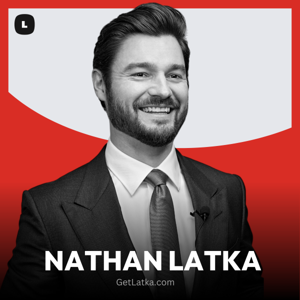
In this interview, Nathan Latka breaks down the marketplace business model behind it: an 8% take rate (roughly $60,000 per day), the 10-day rent clawback that funds customer acquisition, an 8-day average room refill time, and a 9.5-month average stay where 25% of tenants stay 12+ months. Atticus also explains why he chose the Airbnb model over owning property like Invitation Homes, how real estate investors and small landlords earn higher yields renting by the room, and how a crowdfunding partner is buying up performing PadSplit homes.
On the funding side: 77 investor meetings for his 2021 Series B and one yes, $40M in total equity raised, and a new Orix credit facility that landed after he got the company near break-even. He answers "hell no" to a $150M all-cash offer and explains why.
Topics: affordable housing, co-living, real estate investing, rental property, proptech, marketplace business model, two-sided marketplace, take rate, venture capital vs debt financing, public benefit corporation, bootstrapping to break-even, Atlanta startups.
Subscribe on YouTube: https://www.youtube.com/@NathanLatkawatch?sub_confirmation=1 Subscribe on iTunes: https://podcasts.apple.com/us/podcast/top-founders/id1023761733 Subscribe on Spotify: https://open.spotify.com/show/3AA9buFn8oxJf8WSDOUks5
Looking for funding? Visit https://founderpath.com/
Jonathan Adly spent 15 years as a licensed pharmacist before writing the first line of code for TJM Labs in November 2024 — and 18 months later he's at $25M ARR, 40% EBITDA, 450 pharmacies, and $100M raised without ever making a pitch deck.
His pharmacy AI agents cost $45,000 a year, replace 2–3 human technicians each, and now fill 500,000 prescriptions every day. In this episode he breaks down the $1M → $15M → $25M ARR run, why he took a $75M Series B from Elephant while already profitable, how he values an AI company at 15X+ off public comps, and the napkin math from 450 pharmacies to a $1.8B opportunity.
Vadim Yasinovsky, co-founder of pdfFiller and CEO of airSlate (parent of pdfFiller, signNow, DocHub, US Legal Forms, airSlate Flow), breaks down how a plain-looking PDF editor page became a $106M/year product with 866,000 paying customers — inside a company doing $200M in revenue across 1.1 million customers at an average of $180/year.
He raised just $150M total (last round: $52M at a $1.25B valuation in June 2022) and now says the company is optimistically worth $800M — despite doubling revenue since. He bought signNow at $3M and grew it to $35M. He built an SEO machine on 4.8 billion keywords and 35 million pages, and now says that playbook is dead within 9–12 months as ChatGPT and AI search take over.
In this episode:
Topics: SaaS, SEO, programmatic SEO, AI search, ChatGPT, document automation, e-signature, PDF editor, legal forms, SMB software, bootstrapping, vertical SaaS, M&A, capital efficiency.
Jeff Lu quit Google Cloud in 2022 to build his own AI video models at Akool, a generative AI platform for avatars, face swap, and video translation. He skipped the giant foundation models and trained small ones for specific tasks on rented servers, then watched revenue go from $100K in 2022 to $3M in 2023, $13M in 2024, $25M in 2025, and over $3M in June 2026 alone. He breaks down why Coca-Cola picked him over the foundation models and now pays him $4m per year. He'll share how he's driven huge usage (500,000 images and videos created daily) and what he'd say if Google offered $500M cash.
Akool revenue data: https://getlatka.com/companies/akool.com
Antoine Fort launched Qobra in 2020 with a $100K pre-seed from 7 angels, and his first investor was also his first customer. He started by cold calling with a phone list from a provider later shut down over European privacy law (GDPR), charging $10K/year. Today Qobra is at about $30K/year per customer, 250+ customers, and roughly $7–8M ARR. Along the way, one meme ad closed an $80K/year deal, and a single sales rep on the platform earned $1.5M in commissions (75x the average). So when Nathan asks if he'd sell for $100M cash today, his answer is surprisingly honest.
Qobra is an AI-first sales compensation and commission software platform. Antoine covers his $5M seed and $10M Series A, the $2M in debt he raised to limit dilution, the $200K–300K/year he spends on LinkedIn, YouTube and Google ads, his G2 and SEO glossary playbook, and the three AI agents Qobra is building to replace commission consultants.
Sevan Marian, co-founder and CEO of Fleet, bootstrapped his Paris-based laptop rental company for 7 straight years to roughly $40M in annualized revenue and close to $10M in yearly profit (EBITDA), without raising a single dollar of VC. His trick: customers pay about $50/month on 36-month contracts, and Fleet sells each contract to a bank that pays it upfront on day one. That's how he's financed 50,000+ devices across 20 countries without holding inventory. In early 2026 he sold about 25% of the company at a $100M valuation, and every dollar went out to the team: employees cashed out 100% of their shares, worth several million euros.
At 23, Alex Jekowsky started building Cents, an all-in-one software, hardware, and payments platform for laundromats, dry cleaners, and shared laundry rooms.
In 2025, Cents generated $60 million in revenue, up 67%, with just 80 employees and EBITDA margins above 20%. The company now has 99% customer retention, powers laundry rooms in nearly 7,000 apartment buildings, and recently raised a $140 million Series C at an approximately $800 million valuation.
In this episode, Alex reveals:
• How Cents grew from $700,000 to $60 million in four years • Why its first customer was a 73-location laundry operator • How Cents combines software, payments, and custom-built hardware • Why the company generates roughly $750,000 in revenue per employee • How Cents maintains 99% customer retention • Why Alex acquired a hardware company instead of continuing to build everything internally • How the $140 million financing included a $30 million employee tender • Why founders should avoid raising at valuations that eliminate future options • How Alex plans to turn an overlooked industry into a multibillion-dollar company
Froda generated $57 million in revenue in 2025 by lending to the small businesses traditional banks often overlook.
In this episode, Nathan Latka sits down with Froda co-founder Oliver Mohseni to unpack the economics behind the startup bank. Froda has supported 150,000 businesses across seven markets and funded approximately $3.45 billion since launch.
Oliver explains how Froda uses retail deposits, automated underwriting, and embedded partnerships with banks, fintech companies, payment providers, and software platforms to scale its lending operation.
Listen to learn:
• How Froda makes money on an average loan of just $23,000 • Why its banking license and retail deposits create an advantage • How it prices loans at approximately 16% APR while managing credit losses • Why embedded lending helped Froda expand across Europe • How the company built a roughly $500 million active loan book
From the publisher's feed

534 Listeners
2,700 Listeners

1,092 Listeners

1,253 Listeners
2,329 Listeners
2,175 Listeners
3,983 Listeners

221 Listeners

4,449 Listeners

2,632 Listeners

278 Listeners
213 Listeners
655 Listeners
259 Listeners
245 Listeners