
Sign up to save your podcasts
Or

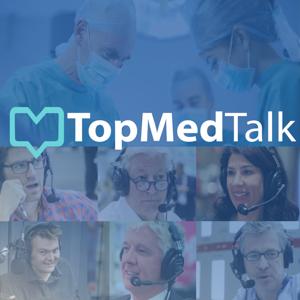


With questions from the online audience, this piece looks at the "not too much and not too litte" sweet spot regarding fuel, fluid and oxygen; where is it and how do we get there, according to our distinguished panel?
This podcast works well as a companion piece to the following talks which have already been released here on TopMedTalk:
Helen McKenna, "Fuel, can you have too much?" https://www.topmedtalk.com/ebpom-2020-london-fuel-can-you-have-too-much/
Tim Miller "Optimising fluid and hemodynamic management during major surgery" https://www.topmedtalk.com/ebpom-london-2020-optimizing-fluid-and-hemodynamic-management-during-major-surgery/
Dan Martin "Perioperative Oxygenation" https://www.topmedtalk.com/ebpom-london-2020-perioperative-oxygenation/
Presented by Mike Grocott and Dennie Levett with their panelists; Tim Miller, Associate Professor of Anesthesiology from Duke University Medical Centre, Helen McKenna, is in the final year of her PhD at University College London, investigating bioenergetic and redox function in critically ill patients and Dan Martin, OBE anaesthetist and intensivist at the Royal Free Hospital and Reader at University College London (UCL).
"I just feel there is some intrinsic value to, you know, a human presence"
This piece tells the story of an anesthesiologist who, once vaccinated, decided to go the extra mile and work out a way to spend some quality time with his COVID-19 patients. Hear how he went through the appropriate procedures to arrange for them to be able to have as much human interaction as was safely possible.
"With vaccination with full PPE, N-95, you know, face shield, gloves, gown, all the rest of it, you are very low risk"
Read more here: https://www.statnews.com/2021/01/27/vaccinated-health-care-workers-immunity-spend-time-visiting-covid-19-patients/
Presented by TopMedTalk's Nick Margerrison with his guest Dr. Ben Moor, Anesthesiologist at Beth Israel Deaconess Hospital in Plymouth, Boston.
Part 2 of this conversation continues the momentum of Part 1 with a conversation about electronic medical records (EMR), how important data is to the process, the need for those who collect it to understand it and then, more broadly, the importance of putting the patient at the heart of what you do.
Presented by Desiree Chappell with Vicki Morton, Director of Clinical and Quality Outcomes at Providence Anesthesiology Associates, P.A, Cheryl Crisafi, Cardiac Surgery Care Coordinator Nurse at Baystate Medical Center in Springfield, MA and Gina McConnell, ERAS Coordinator for all WakeMed health systems.
This piece is a two part conversation about the essence of what many of TopMedTalk's listeners do; Enhanced Recovery. A fascinating conversation between a number of experts in the field the conversation presented here was part of the hugely popular EBPOM Chicago 2020 meeting. For more on Evidence Based Perioperative Medicine (EBPOM) go to www.ebpom.org
This first part of the conversation covers what the main elements of an Enhanced Recovery After Surgery program entail, what literature our contributors favor and what service lines include enhanced recovery at their practice.
Presented by Desiree Chappell with Vicki Morton, Director of Clinical and Quality Outcomes at Providence Anesthesiology Associates, P.A, Cheryl Crisafi, Cardiac Surgery Care Coordinator Nurse at Baystate Medical Center in Springfield, MA and Gina McConnell, ERAS Coordinator for all WakeMed health systems.
How important is it to screen patients and measure their fitness prior to surgery? What is exercise training in the preoperative period?
There is a very clear relationship between physical fitness and mortality. Importantly, when we think of prehabilitation, or exercise training, it's good to remember that you get the greatest benefit in the most unfit patients, in terms of mortality reductions. The "pandemic ... of physical inactivity worldwide" is believed to cause more than 5 million deaths annually. The advantage of fitness in terms of predicting perioperative outcomes is it is an important modifiable risk factor before major surgery; we can modify health behaviors and exercise and we can sometimes optimize comorbidities before surgery. Exercise is real medicine!
Originally part of the hugely successful EBPOM Live from London 2020 conference this piece is nicely complimented by the panel discussion which TopMedTalk has also released free of charge here: https://www.topmedtalk.com/ebpom-london-2020-prehabilitation-update/
Presented by Denny Levett, Professor in Perioperative Medicine and Critical Care at Southampton University Hospital NHS Foundation trust and Honorary Associate Professor at the University of Southampton.
"Accelerated surgery is not a panacea"
This piece, presented in two parts, is a discussion about enabling enhanced recovery. Originally part of EBPOM London this is an 'as live' discussion with four of the main presenters from the conference.
Get more detail on nutrition, hip fractures, psychological optimisation and discover both where the difficulties are and what opportunities they provide. For more of this sort of content go now to www.ebpom.org to find out more about how you can be part of Evidence Based Perioperative Medicine.
Presented by Professor Denny Levett and Jugdeep Dhesi with their guests P.J. Devereaux, cardiologist, clinical epidemiologist, and perioperative care physician, Professor in the Departments of Health Research Methods, Evidence, and Impact (HEI) and Medicine, Director of the Division of Perioperative Care, McMaster University, Associate Deputy Director of the Population Health Research Institute, President of the Society of Perioperative Research and Care, Chloe Grimmett, National Institute of Health Research (NIHR) post-doctoral Research Fellow and Senior Research Fellow for the Macmillan Survivorship Research Group at the University of Southampton, Dr Paul Wischmeyer, Professor of Anaesthesiology and Surgery at Duke Anesthesiology.
"Accelerated surgery is not a panacea"
This piece, presented in two parts, is a discussion about enabling enhanced recovery. Originally part of EBPOM London this is an 'as live' discussion with four of the main presenters from the conference.
Get more detail on nutrition, hip fractures, psychological optimisation and discover both where the difficulties are and what opportunities they provide. For more of this sort of content go now to www.ebpom.org to find out more about how you can be part of Evidence Based Perioperative Medicine.
Presented by Professor Denny Levett and Jugdeep Dhesi with their guests P.J. Devereaux, cardiologist, clinical epidemiologist, and perioperative care physician, Professor in the Departments of Health Research Methods, Evidence, and Impact (HEI) and Medicine, Director of the Division of Perioperative Care, McMaster University, Associate Deputy Director of the Population Health Research Institute, President of the Society of Perioperative Research and Care, Chloe Grimmett, National Institute of Health Research (NIHR) post-doctoral Research Fellow and Senior Research Fellow for the Macmillan Survivorship Research Group at the University of Southampton, Dr Paul Wischmeyer, Professor of Anaesthesiology and Surgery at Duke Anesthesiology.
This piece is an informative conversation about the models of prehabilitation from a number of different angles. Questions come in from an online audience as our panelists tackle the topic from their respective areas.
What are the risks and how are they mitigated? Where does your funding come from and why? How safe is iron for cancer patients?
The link to Safe Fit self referal is here: https://www.macmillan.org.uk/cancer-information-and-support/get-help/physical-help/safefit%20#refer_yourself_to_this_service
Presented by Denny Levett, Professor in Perioperative Medicine and Critical Care at Southampton University Hospital NHS Foundation trust and Honorary Associate Professor at the University of Southampton and Gerard Danjoux, consultant in Anaesthesia and Sleep Medicine at South Tees Hospitals NHS Foundation Trust with their guests John Moore, Clinical Director for Intensive Care at Manchester Royal Infirmary and Medical Lead for Enhanced Recovery After Surgery, Professor Sandy Jack, PhD, Consultant Clinician Scientist in The Anaesthesia and Critical Care Research Unit at University Hospital Southampton NHS Foundation Trust, Honorary Senior Lecturer at the University of Liverpool, University of Southampton and University College London and Rachel Barlow, National Lead, Enhanced Recovery, Prehabilitation and Optimisation, at Cardiff and Vale health board, Wales.
"In the United States approximately 112,000 patients annually are at risk for adverse events associated with discharge from the operating room with residual neuromuscular blockade"
This talk highlights the latest thinking on both monitoring and management of neuromuscular blockade. Where does the data lead us to? How big a problem do they suggest poor efficiency in this area is? What are the realities behind postoperative pulmonary complications? How can we reduce the risk of residual block?
Presented by Glenn Murphy, Jeffery S. Vender Chair of Anesthesiology Research and Education and Director of Cardiac Anesthesia and Clinical Research at NorthShore University HealthSystem, a hospital affiliated with the University of Chicago Pritzker School of Medicine.
"As a cardiac surgeon, I feel like I'm hearing more and more about ERAS than ever before"
"The CSCS Beat - more than just matters of the heart" is a fantastic new podcast from The Canadian Society of Cardiac Surgeons (CSCS); this piece sees TopMedTalk teaming up with them to tackle their first episode on the subject of Enhanced Recovery After Surgery and perioperative medicine.
What is ERAS? How is it being implemented? Why is it so successful?
If you'd like to hear more of "The CSCS Beat" their iTunes profile is here: https://podcasts.apple.com/ca/podcast/the-cscs-beat-more-than-just-matters-of-the-heart/id1559309108?l=fr
Presented by Ansar Hassan with his guests Desiree Chappell, lead presenter for TopMedTalk, Certified Registered Nurse Anesthetist (CRNA) and Vice President of Clinical Quality for NorthStar Anesthesia and Monty Mythen, TopMedTalk's Editor in Chief, Professor of Anesthesia and Critical Care at the University College London, co-president of the International Board of Perioperative Medicine and Rakesh C. Arora, Chief of Cardiac Surgery and a Critical Care specialist at St. Boniface hospital, Winnipeg, Manitoba, co-founder of the Canadian Cardiovascular Critical Care Society, President of the Canadian Society of Cardiac Surgeons and Dan Engelman, Medical Director of the Heart, Vascular and Critical Care Units at Baystate Medical Center, Associate Professor of Surgery at The University of Massachusetts-Baystate Medical School
From the publisher's feed
1,866 Listeners
498 Listeners
298 Listeners
892 Listeners
1,472 Listeners

87,077 Listeners

3,353 Listeners

111,868 Listeners

56,446 Listeners
1,157 Listeners

187 Listeners

430 Listeners
235 Listeners

15,915 Listeners
269 Listeners