
Sign up to save your podcasts
Or

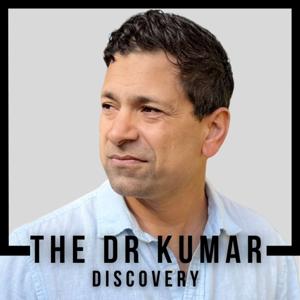

PTSD is often misunderstood as a malfunction; in reality, it is a survival system working exactly as intended, just in the wrong environment.
In this episode of The Dr. Kumar Discovery, Dr. Ravi Kumar sits down with Dr. Trey Tippens, a clinical psychologist and former Army Sergeant who treated severe trauma cases at Walter Reed National Military Medical Center. They reframe PTSD not as a sign of being "broken," but as a learned survival process that keeps individuals alive in dangerous environments but becomes maladaptive back at home.
The discussion explores the "Shattered Assumptions" model—explaining why some develop PTSD while others don't—and dives into the mechanics of recovery. From gold-standard talk therapies to innovative medical interventions, they outline the path toward reclaiming a sense of safety.
What You’ll Learn:
Dr. Trey Tippens is a former Sergeant and Walter Reed-trained psychologist who specializes in military culture and trauma recovery. He has spent years helping people move from being defined by their trauma to having control over their future.
If you enjoyed this episode, make sure to subscribe, rate, and review it on Apple Podcasts, Spotify, and YouTube Podcasts. Instructions on how to do so are here.
Episode Highlights:
[00:00:27] Reframing trauma symptoms as adaptive tools used in the wrong context.
[00:03:21] Dr. Tippens' journey from the field artillery to Walter Reed.
[00:06:55] Understanding it as a learned process from threatening environments.
[00:08:44] Why war-zone behaviors like "scanning for IEDs" fail to fit a home environment?
[00:10:48] How early trauma shapes a person's fundamental worldview and sense of security?
[00:12:35] Exploring the delta between the world we expect and the reality we discover.
[00:15:17] The reality of hyperarousal and the instinctual "patrols" of one's own home.
[00:19:34] A breakdown of Prolonged Exposure (PE) and Cognitive Processing Therapy (CPT).
[00:27:01] Using bilateral stimulation to desensitize the brain to traumatic memories.
[00:31:28] A physical procedure to temporarily "break" the hyperarousal scale.
[00:37:05] The clinical potential of MDMA and Psilocybin and the challenge of "blinding" studies.
[00:41:40] How trauma is transmitted through biology and childhood modeling?
[00:45:32] Moving beyond being a victim to finding "steel in the soul."
Episode Resources:
 View all episodes
 By Dr Ravi Kumar MD
5
6868 ratings
PTSD is often misunderstood as a malfunction; in reality, it is a survival system working exactly as intended, just in the wrong environment.
In this episode of The Dr. Kumar Discovery, Dr. Ravi Kumar sits down with Dr. Trey Tippens, a clinical psychologist and former Army Sergeant who treated severe trauma cases at Walter Reed National Military Medical Center. They reframe PTSD not as a sign of being "broken," but as a learned survival process that keeps individuals alive in dangerous environments but becomes maladaptive back at home.
The discussion explores the "Shattered Assumptions" model—explaining why some develop PTSD while others don't—and dives into the mechanics of recovery. From gold-standard talk therapies to innovative medical interventions, they outline the path toward reclaiming a sense of safety.
What You’ll Learn:
Dr. Trey Tippens is a former Sergeant and Walter Reed-trained psychologist who specializes in military culture and trauma recovery. He has spent years helping people move from being defined by their trauma to having control over their future.
If you enjoyed this episode, make sure to subscribe, rate, and review it on Apple Podcasts, Spotify, and YouTube Podcasts. Instructions on how to do so are here.
Episode Highlights:
[00:00:27] Reframing trauma symptoms as adaptive tools used in the wrong context.
[00:03:21] Dr. Tippens' journey from the field artillery to Walter Reed.
[00:06:55] Understanding it as a learned process from threatening environments.
[00:08:44] Why war-zone behaviors like "scanning for IEDs" fail to fit a home environment?
[00:10:48] How early trauma shapes a person's fundamental worldview and sense of security?
[00:12:35] Exploring the delta between the world we expect and the reality we discover.
[00:15:17] The reality of hyperarousal and the instinctual "patrols" of one's own home.
[00:19:34] A breakdown of Prolonged Exposure (PE) and Cognitive Processing Therapy (CPT).
[00:27:01] Using bilateral stimulation to desensitize the brain to traumatic memories.
[00:31:28] A physical procedure to temporarily "break" the hyperarousal scale.
[00:37:05] The clinical potential of MDMA and Psilocybin and the challenge of "blinding" studies.
[00:41:40] How trauma is transmitted through biology and childhood modeling?
[00:45:32] Moving beyond being a victim to finding "steel in the soul."
Episode Resources:

8,748 Listeners

370,110 Listeners

3,767 Listeners

3,457 Listeners

9,231 Listeners

7,995 Listeners
29,207 Listeners

19,524 Listeners

18,151 Listeners

10,800 Listeners

12,143 Listeners

8,873 Listeners

1,211 Listeners

1,737 Listeners